
Localizing Justice: State Mandates for Police Accountability
Federal gridlock demands a localized approach to law enforcement accountability.
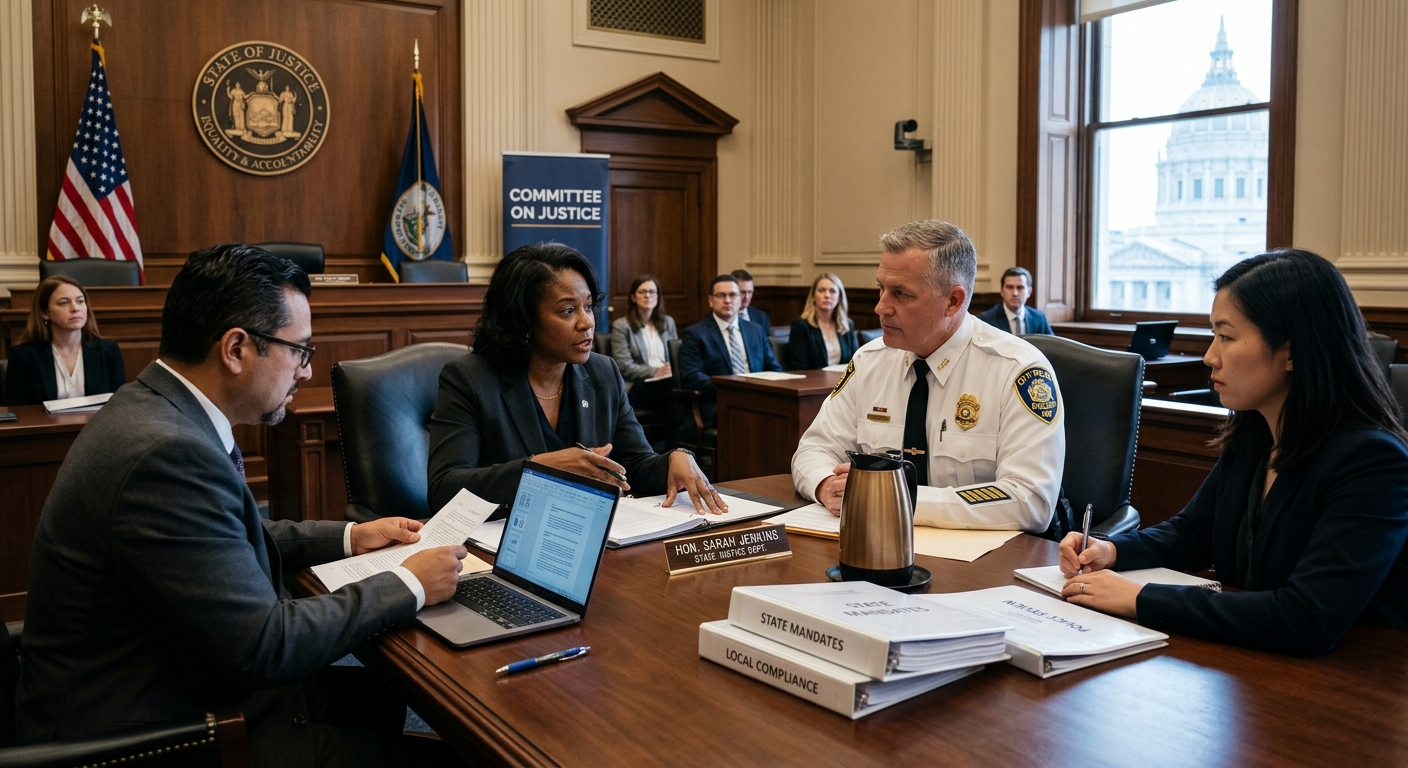
The Localization of Law Enforcement Oversight
For decades, the national discourse surrounding law enforcement misconduct has predominantly focused on federal intervention. High-profile tragedies frequently prompt public outcry directed at Congress, the Department of Justice, and the Supreme Court, urging sweeping federal legislation to reign in excessive force and civil rights violations. However, this centralized focus fundamentally misunderstands the structural reality of American policing. The power to transform law enforcement practices, enforce strict accountability, and safeguard constitutional rights lies overwhelmingly at the state and local levels.
A 2024 analysis published in PubMed Central (NIH) highlighted a stark statistical reality: approximately 60 percent of individuals killed by law enforcement in the United States were killed by municipal police, while another 29 percent were killed by county police. Combined, nearly 90 percent of fatal law enforcement encounters involve local and county agencies. Federal and tribal authorities account for a minuscule fraction of these incidents. Consequently, attempting to solve a hyper-local crisis strictly through federal mandates is an uphill battle. If meaningful change is to occur, city councils, mayors, county commissioners, and state legislatures must embrace their inherent authority and obligation to regulate the armed agents operating within their jurisdictions.
Federal Stagnation and the Data Void
The reliance on the federal government to implement nationwide police reform has repeatedly yielded disappointing results. Broad legislative efforts often become hopelessly gridlocked in partisan battles. A prime example is the stalling of ambitious reform packages in the U.S. Senate following the social unrest of 2020. Disagreements over key accountability mechanisms resulted in a legislative stalemate, leaving communities without the federal civil rights protections they demanded.
Furthermore, federal attempts to track and monitor misconduct have suffered from instability. In December 2023, the Bureau of Justice Statistics launched the National Law Enforcement Accountability Database (NLEAD) to serve as a centralized repository documenting instances of officer misconduct. However, by early 2025, the database was officially decommissioned following executive branch shifts, permanently stalling federal efforts to maintain a transparent, nationwide ledger of disciplinary actions.
Similarly, the FBI’s National Use-of-Force Data Collection program has historically struggled with participation. Because the federal government cannot easily compel local departments to report their data—relying instead on voluntary submissions—the resulting statistics are often incomplete. This data void underscores the necessity for state and municipal governments to mandate their own rigorous reporting requirements, ensuring transparency without waiting for federal coordination.
Bypassing the Shield: Dismantling Legal Immunities Locally
One of the most formidable barriers to police accountability in the United States is the legal doctrine of qualified immunity. Established by the Supreme Court, this doctrine shields government officials, including police officers, from personal liability in civil lawsuits unless the plaintiff can prove the official violated a “clearly established” statutory or constitutional right. In practice, this creates an almost insurmountable hurdle for victims of excessive force, as courts frequently dismiss cases if an identical scenario has not previously been litigated and ruled unconstitutional.
Because qualified immunity is deeply embedded in federal jurisprudence, efforts to abolish it nationally have met fierce resistance. However, state governments possess a powerful bypass mechanism: they can rewrite state-level civil rights laws. By creating direct causes of action under state constitutions and explicitly prohibiting the use of qualified immunity as a defense in state courts, legislators can restore the ability of citizens to seek redress.
When states remove these sweeping legal protections, they shift the paradigm of accountability. Officers and departments are forced to operate with the knowledge that unlawful actions carry tangible, legal consequences. This not only provides justice for victims but also acts as a powerful deterrent against future misconduct, fundamentally altering the risk-reward calculus of excessive force.
Pioneering Legislation: The Colorado Framework
The state of Colorado stands as a primary example of how local governments can successfully circumvent federal gridlock to enact sweeping reforms. In 2020, the state legislature passed the Enhance Law Enforcement Integrity Act (Senate Bill 20-217). This landmark legislation represented a paradigm shift in state-level oversight.
Crucially, the Act created a new state-level cause of action allowing individuals to sue officers who violate their civil rights. The law explicitly bars officers from using qualified immunity as a defense in these state-level claims. If a court finds that an officer acted without good faith, the officer can be held personally liable for a portion of the damages, up to $25,000. Furthermore, the Colorado legislation mandated the statewide deployment of body-worn cameras by July 2023, strict data collection requirements on all officer-initiated contacts, and the unedited release of video footage following incidents of alleged misconduct.
The Economic Imperative for Municipalities
Beyond the moral and ethical obligations to protect civil rights, local governments face a severe financial imperative to reign in police misconduct. When law enforcement officers engage in unlawful behavior, it is the taxpayers who ultimately foot the bill for the resulting settlements and judgments.
Major cities across the United States spend millions—sometimes tens of millions—of dollars annually settling lawsuits related to false arrests, excessive force, and wrongful death. These funds are drawn directly from municipal budgets, representing a massive opportunity cost. Every dollar spent settling a police brutality claim is a dollar siphoned away from public schools, infrastructure improvements, public health initiatives, and community development programs.
The financial opacity surrounding these payouts is a growing concern. In 2026, federal legislation like the proposed Cost of Police Misconduct Act aimed to force local agencies to track and report the hidden costs of these settlements, including legal fees and insurance premium spikes. For local mayors and city councils, enacting strict accountability measures is not just a matter of social justice; it is a matter of basic fiscal responsibility. Failing to discipline officers with a history of complaints exposes the municipality to devastating financial liabilities.
Actionable Frameworks for City and County Leaders
State and local governments do not need to wait for a national consensus to implement evidence-based reforms. There are several immediate, actionable steps municipalities can take to assert control and foster an environment of accountability:
- Independent Civilian Oversight: Establish civilian review boards equipped with independent investigative authority and subpoena power. Internal affairs departments often suffer from inherent biases; external oversight ensures investigations are conducted impartially.
- Strict Body-Worn Camera Policies: Simply purchasing body cameras is insufficient. Local ordinances must dictate exactly when cameras must be activated, mandate severe disciplinary action for tampering or failing to record, and establish strict timelines for the public release of footage following use-of-force incidents.
- Demilitarization of Local Forces: City councils should tightly restrict or outright ban the acquisition of surplus military-grade weaponry and vehicles through federal programs. Research indicates that outfitting local police with military equipment correlates with an increase in violence perpetrated by law enforcement without proportionally improving officer safety.
- Revamping Union Contracts: Local governments negotiate collective bargaining agreements with police unions. City leaders must refuse to sign contracts that include provisions shielding disciplinary records from the public, delaying officer interrogations following shootings, or expunging misconduct records after short periods.
Redefining the Scope of Public Safety
Enhancing accountability also requires reevaluating the very scope of local law enforcement. Legal scholars and public policy experts emphasize that police are frequently dispatched to manage social crises—such as severe mental health episodes, homelessness, and substance abuse—for which they are neither adequately trained nor properly equipped.
This over-reliance on armed officers for routine public health interventions increases the statistical probability of encounters escalating into violence. Local governments have the power to fundamentally restructure emergency response paradigms. By redirecting municipal funding toward specialized, unarmed crisis response teams composed of social workers and medical professionals, cities can reduce unnecessary police interactions. This not only mitigates the risk of violence but also frees up law enforcement resources to focus on investigating serious crimes, thereby improving overall community safety and fostering deeper public trust.
Comparing Federal vs. State Spheres of Influence
To better understand why localized action is superior, one must evaluate the distinct operational realities of federal versus state jurisdictions regarding law enforcement.
| Factor | Federal Government | State and Local Governments |
|---|---|---|
| Jurisdictional Scope | Limited to federal agencies (FBI, DEA) and broad constitutional oversight. | Direct command over 90%+ of all law enforcement officers (municipal and county). |
| Policy Implementation | Slow, requires bipartisan congressional approval, subject to shifting executive priorities. | Rapid, localized execution tailored to specific community needs and demographics. |
| Funding & Budgeting | Provides grants and surplus equipment (often encouraging militarization). | Controls base funding, allocates resources, and pays for misconduct settlements. |
| Legal Immunity | Bound by Supreme Court interpretations of Qualified Immunity. | Can draft independent state civil rights laws bypassing federal immunity doctrines. |
Frequently Asked Questions (FAQs)
What is qualified immunity and why is it controversial?
Qualified immunity is a judicially created legal doctrine that protects government officials, including police officers, from being held personally liable for constitutional violations—like the right to be free from excessive force—unless the right was “clearly established” at the time. It is controversial because courts frequently use it to dismiss lawsuits against officers even when excessive force is evident, simply because an identical previous case does not exist.
Can a city or state overrule a federal Supreme Court doctrine?
States cannot overrule federal law or Supreme Court interpretations of federal statutes. However, they can bypass them. States have their own constitutions and can pass laws allowing citizens to sue officers for violating state civil rights, explicitly stating that qualified immunity cannot be used as a defense in those state-level lawsuits.
Why is data collection on police violence so difficult in the US?
The United States has a highly decentralized law enforcement system featuring roughly 18,000 independent agencies. Historically, federal reporting programs have been voluntary, meaning many local departments simply choose not to submit their use-of-force statistics. This makes state-level mandates for data collection vital for transparency.
How do police misconduct settlements impact taxpayers?
When a victim of police brutality successfully sues a city or police department, the financial settlement or court judgment is paid using municipal funds. This money is drawn from the city’s general budget or insurance pools funded by taxpayer dollars, diverting money away from community services like education and infrastructure.
What are non-police crisis response teams?
Non-police crisis response teams are specialized units typically consisting of paramedics, crisis counselors, and social workers. Instead of dispatching armed police officers to 911 calls involving mental health crises, substance abuse, or homelessness, cities deploy these unarmed professionals who are explicitly trained in de-escalation and behavioral health care.
Conclusion
The persistence of police violence and the systemic failure to hold officers accountable constitute a profound crisis in American civil rights. While the instinct to look toward the federal government for comprehensive solutions is understandable, it is a fundamentally flawed strategy. The mechanics of policing are localized, the financial burdens of misconduct are localized, and the political power to enact rapid, sweeping changes rests firmly in the hands of state legislatures and city councils. By dismantling legal shields, imposing strict operational transparency, and fundamentally rethinking the footprint of armed law enforcement in everyday life, local governments can fulfill their most basic duty: ensuring that the entities designed to protect the public do not become a threat to it.
References
- Who are the “police” in “police violence”? Fatal violence by U.S. law enforcement agencies across levels of government — PubMed Central (NIH). 2024-04-04. https://www.ncbi.nlm.nih.gov/pmc/articles/PMC10996160/
- National Law Enforcement Accountability Database — Bureau of Justice Statistics. 2024-12-11. https://bjs.ojp.gov/national-law-enforcement-accountability-database
- SB20-217 Enhance Law Enforcement Integrity — Colorado General Assembly. 2020-06-19. https://leg.colorado.gov/bills/sb20-217
- Kaine & Beyer Introduce Bill To Increase Transparency About Cost Of Federal, State, And Local Police Misconduct — U.S. Senator Tim Kaine. 2026-01-29. https://www.kaine.senate.gov/
- Policing Accountability, Reform, and the Criminal Justice System — Vanderbilt Law School. 2025-10-24. https://law.vanderbilt.edu/
- The Effectiveness and Implications of Police Reform: A Review of the Literature — Illinois Criminal Justice Information Authority. 2022-10-27. https://icjia.illinois.gov/
Similar Articles








Read full bio of Sneha Tete




