
Landlord Entry Rules By State: 2025 Guide For Tenants, Owners
Essential guide to notice periods landlords must provide before entering rental properties across U.S. states.
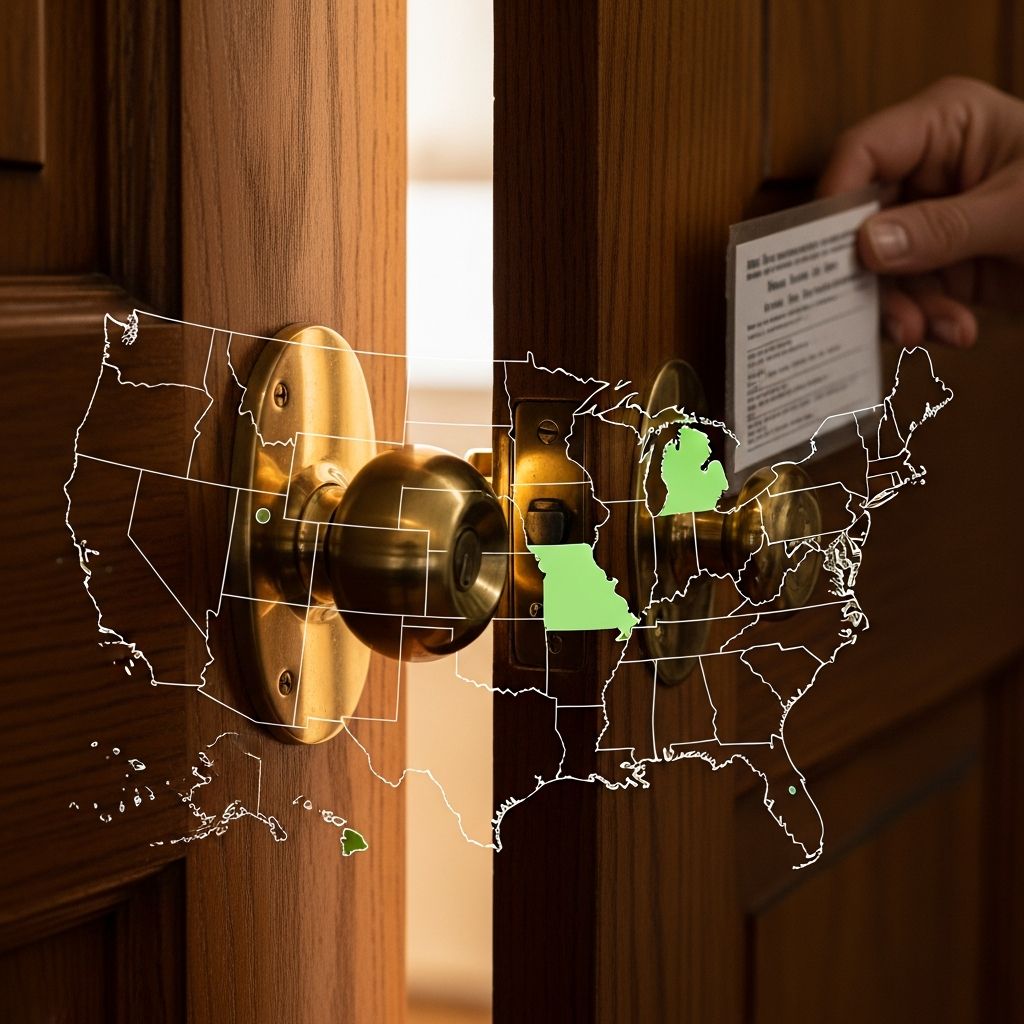
Landlords hold the right to access rental properties for essential tasks like maintenance and inspections, but this privilege is strictly regulated by state laws to safeguard tenant privacy. These regulations specify when and how entry is permitted, balancing property management needs with residents’ rights to quiet enjoyment. Understanding these rules prevents legal conflicts and fosters positive landlord-tenant relationships.
Why Notice Requirements Exist
Notice rules stem from the principle that a rented unit is the tenant’s home, deserving protection from unwarranted intrusions. Most states mandate advance warning for non-emergency visits, typically ranging from 24 to 48 hours. This allows tenants to prepare or reschedule if needed. Emergencies, however, override these rules to address immediate threats like floods or gas leaks.
State variations reflect local priorities: some emphasize minimal disruption during business hours, while others permit tenant consent to shorten notice. Always check local ordinances, as cities may impose stricter standards.
Core Principles of Lawful Entry Across States
Landlords generally need a valid reason for entry, such as repairs, inspections, or pest control. Entry must occur at reasonable times, often 8 a.m. to 8 p.m. Written notice is recommended everywhere to document compliance, even if not explicitly required.
- Valid Purposes: Repairs, inspections, appliance servicing, pre-move-out walkthroughs, and property showings to prospects.
- Prohibited Reasons: Curiosity, harassment, or unrelated personal visits.
- Tenant Obligations: Residents cannot unreasonably deny access for legitimate needs.
State-by-State Breakdown of Notice Periods
Requirements differ significantly. Below is a detailed table summarizing key states’ rules, drawn from statutory language and official interpretations. Note: These apply to non-emergency scenarios unless specified.
| State | Notice for Non-Emergencies | Reasonable Hours | Emergency Exceptions | Key Statute |
|---|---|---|---|---|
| Florida | At least 24 hours for repairs (updated 2022); reasonable notice otherwise, often 12-24 hours | 7:30 a.m. – 8 p.m. | No notice needed for imminent threats like fires or floods | Fla. Stat. § 83.53 |
| California | 24 hours written notice | Reasonable times | Immediate dangers exempt | Cal. Civ. Code § 1954 |
| New York | Reasonable notice; entry only with tenant consent or court order in most cases | Reasonable times | Emergencies allow immediate access | NY Real Prop. Law § 235-b |
| Texas | No statutory minimum; reasonable notice customary (24 hours recommended) | Reasonable times | No notice for emergencies | Tex. Prop. Code § 92.0081 |
| Illinois | At least 2 days for pest control; reasonable notice otherwise | 8 a.m. – 8 p.m. | Exemptions for safety risks | 765 ILCS 705/1.4 |
| Washington | 48 hours or as agreed in lease | 9 a.m. – 8 p.m. | No advance notice required | RCW 59.18.150 |
| Massachusetts | Reasonable notice; no specific hours mandated | Reasonable times | Emergencies permitted | Mass. Gen. Laws ch. 186, § 15B |
This table highlights patterns: Western states like California and Washington favor longer notices, while Southern states like Texas offer flexibility. Florida’s 2022 shift to 24 hours for repairs reflects a tenant-protection trend.
Delving into Florida’s Specific Guidelines
Florida Statute § 83.53 outlines landlord access comprehensively. Landlords may enter upon reasonable notice for repairs at reasonable times. Post-2022 amendments clarified ‘reasonable’ as at least 24 hours for repair entries, up from prior interpretations of 12 hours. Other scenarios include tenant abandonment (half a payment period) or preservation needs, like securing against storms.
Notice delivery can be written, email, or posted, but documentation is crucial. A sample notice might read: ‘This confirms entry on [date] between [time] for [purpose], per Fla. Stat. § 83.53.’ Tenants must not block reasonable access, or risk lease remedies.
Best Practices for Delivering Effective Notice
To minimize disputes:
- Specify date, time window (e.g., 10 a.m.-12 p.m.), purpose, and contact info.
- Use multiple methods: text, email, door post.
- Request confirmation of receipt.
- Honor tenant requests for alternate times if feasible.
- Knock and announce upon arrival.
Leases should include an access clause mirroring state law, signed by tenants.
Emergency Access: When Notice Is Waived
All states exempt true emergencies: gas leaks, active floods, fires, or imminent harm. ‘Imminent’ means immediate risk, not routine issues. Document post-entry with photos and reports to justify actions. For suspected non-emergencies, err toward notice.
Tenant Protections and Remedies for Violations
Illegal entry—without notice or valid reason—may constitute trespass, harassment, or quiet enjoyment breach. Tenants can sue for damages, withhold rent (via escrow in some states), or terminate leases. Document violations with timestamps, photos, and witness statements. Consult local housing authorities or attorneys promptly.
Landlords facing false claims should retain notice proofs and maintenance logs.
Showings and End-of-Lease Inspections
During lease terms, showings require standard notice. At expiration, some states allow increased access with notice. Florida permits showings under reasonable notice, respecting tenant schedules. Pre-move-out inspections often need 24-48 hours’ warning.
Frequently Asked Questions
Can a landlord enter without notice in any non-emergency case?
No, except if tenant consents, is absent extended periods, or unreasonably refuses. Emergencies always exempt.
What if my lease specifies less notice than state law?
State law prevails; lease cannot waive tenant rights.
Is email notice sufficient?
Yes in most states, including Florida, if tenant provided the address and confirms receipt.
What constitutes ‘reasonable time’?
Typically daytime hours, avoiding nights/weekends unless agreed. Florida: 7:30 a.m.-8 p.m.
Can tenants change locks?
Only with landlord permission and key provision; unilateral changes violate most laws.
Navigating Local Variations and Updates
Beyond states, counties/cities add rules. Hillsborough County, FL, echoes state 12-24 hour standards. Track legislative changes—Florida’s 2022 update is recent proof. Join landlord associations for alerts.
For multi-unit buildings, HOAs may impose extra protocols. International readers: U.S. rules don’t apply abroad; consult local codes.
Building Strong Landlord-Tenant Relations
Compliance builds trust. Communicate openly, respect privacy, and address issues proactively. Tenants: Respond promptly to notices. This mutual respect reduces litigation risks.
References
- The 2025 Florida Statutes (Chapter 83, Section 53) — Florida Legislature. 2025. https://www.leg.state.fl.us/statutes/index.cfm?App_mode=Display_Statute&URL=0000-0099/0083/Sections/0083.53.html
- Renters and Landlords Rights & Responsibilities — Hillsborough County, FL (hcfl.gov). Accessed 2026. https://hcfl.gov/residents/property-owners-and-renters/renters-and-landlords/renters-and-landlords-rights-and-responsibilities
- Florida Landlords Now Required to Serve 24 Hours’ Notice for Repairs — Kelley Grant Law. 2022-07-01. https://kelleygrantlaw.com/florida-landlords-now-required-to-serve-24-hours-notice-for-repairs/
- Rights and Duties of Tenants and Landlords — The Florida Bar. Accessed 2026. https://www.floridabar.org/public/consumer/tip014/
Similar Articles








Read full bio of Sneha Tete


