
Starting a Sole Proprietorship in Washington, D.C.
Comprehensive guide to launching your solo business in D.C.: from naming and licensing to taxes and compliance essentials.
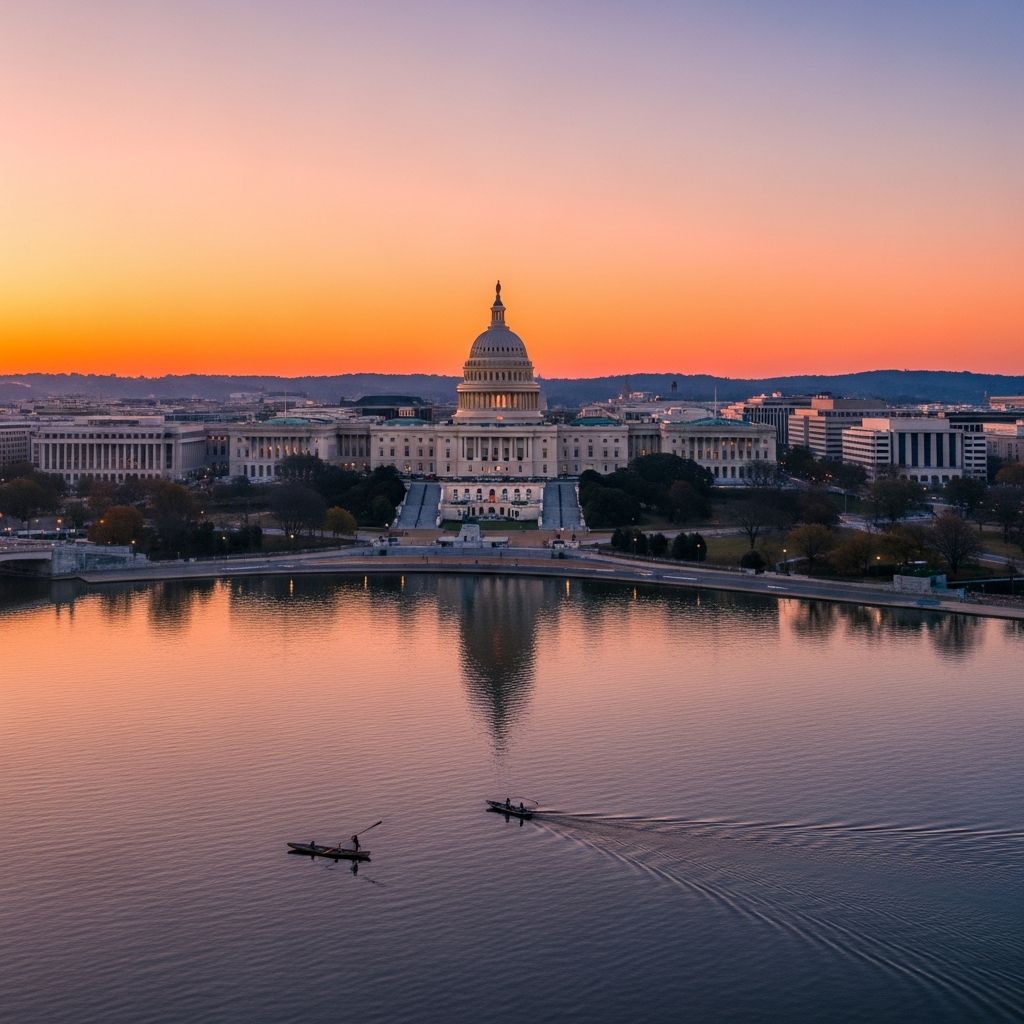
Launching a solo venture in Washington, D.C. as a sole proprietorship offers a straightforward path for entrepreneurs seeking minimal bureaucracy. This business structure automatically forms when an individual begins operations, blending personal and business liabilities while passing income directly to the owner’s tax return. Ideal for freelancers, consultants, and small service providers, it requires no formal state filing but demands attention to local regulations, licensing, and taxes to operate legally.
Understanding the Sole Proprietorship Model in D.C.
A sole proprietorship in the District of Columbia represents the simplest business form, where the owner is the business. No separate legal entity exists, meaning unlimited personal liability for debts and obligations. Profits and losses flow through to the owner’s personal federal and D.C. income tax returns via Schedule C of Form 1040. This setup avoids corporate formalities but exposes personal assets to business risks, prompting many to consider alternatives like single-member LLCs for protection.
Key advantages include ease of setup, full decision-making control, and simplified taxation. However, disadvantages encompass personal liability exposure and challenges scaling with partners or investors. In D.C., over 70% of small businesses start this way due to low barriers, but compliance with District-specific rules is crucial for sustainability.
Selecting and Securing Your Business Name
Choosing a distinctive name is the first practical step. You can operate under your legal name without registration, simplifying the process. For a different name—known as a “doing business as” (DBA) or trade name—D.C. law mandates registration with the Department of Licensing and Consumer Protection (DLCP). This prevents consumer confusion and protects your brand.
- Check Availability: Search the DLCP’s corporate and trade name database online to ensure uniqueness. Avoid names implying government affiliation or restricted terms like ‘bank’ without approval.
- Register DBA: File a Trade Name Registration form with DLCP for $50. Include your true name, address, and proposed trade name. Approval typically takes 5-10 business days.
- Trademark Protection: Optionally, pursue federal trademark via USPTO or D.C. trademark for broader safeguards, especially if expanding regionally.
Table of Name Requirements:
| Scenario | Action Required | Cost | Authority |
|---|---|---|---|
| Using Legal Name | None | $0 | N/A |
| DBA/Trade Name | Register with DLCP | $50 | DLCP |
| Professional Services | DBA + Professional License | $50 + Varies | DLCP + Relevant Board |
Navigating Licensing and Permit Essentials
While no general registration forms a sole proprietorship, D.C. enforces a Basic Business License (BBL) for most operations. This two-part requirement covers location-based and activity-based approvals via the DLCP portal.
- Basic Business License: Mandatory for all businesses. Use the DC Business Portal to apply, selecting your industry for tailored endorsements. Processing takes 5-15 days; fees start at $200 annually.
- Home-Based Operations: Secure a Home Occupation Permit from the Department of Consumer and Regulatory Affairs (DCRA) alongside BBL. Limits apply to traffic, signage, and storage.
- Commercial Spaces: Obtain zoning clearance and building permits if leasing office or retail space.
- Professional Licenses: Regulated fields like law, medicine, or cosmetology require specific DLCP or board approvals. Lawyers, for instance, are exempt from BBL due to D.C. Bar oversight.
Streamline by using DLCP’s step-by-step wizard: register trade name, secure IRS/D.C. tax ID, then apply for BBL. Non-compliance risks fines up to $1,000 daily.
Tax Registrations and Obligations
Sole proprietors report business income on personal returns, but D.C. mandates additional steps for compliance. Register via the Office of Tax and Revenue (OTR) using Form FR-500 for sales, use, and withholding taxes.
- Federal EIN: Optional without employees but recommended for banking and identity protection. Apply free online via IRS; instant issuance.
- D.C. Tax Registration: FR-500 identifies obligations like unincorporated business franchise tax on D.C.-sourced income. File quarterly or annually based on revenue.
- Sales Tax: If selling taxable goods/services, collect 6% and remit to OTR.
- Employment Taxes: Hiring staff triggers payroll withholding, unemployment insurance via Department of Employment Services (DOES), and workers’ compensation insurance.
Deductible expenses include home office, supplies, and mileage. Consult OTR’s Business Resource Center for filing calendars and tools.
Setting Up Business Finances and Insurance
Separate personal and business finances to simplify accounting and taxes. Open a dedicated bank account using your SSN/EIN and DBA certificate.
- Banking: Choose business checking with low fees; provide ID, DBA proof, and license.
- Bookkeeping: Track income/expenses via QuickBooks or spreadsheets for Schedule C accuracy.
- Insurance: General liability protects against claims; workers’ comp required with employees. Home-based? Add business riders to homeowners’ policy.
Consider LLC conversion for liability shields without tax changes—file Articles of Organization for $99 with DLCP.
Daily Operations and Growth Strategies
Beyond setup, focus on contracts, marketing, and scaling. Use written agreements for clients to mitigate disputes. Update marketing with licensed name. Monitor zoning for expansions.
For growth, evaluate LLC transition: retains pass-through taxation but adds asset protection. D.C.’s thriving economy supports solopreneurs in tech, consulting, and services.
Frequently Asked Questions
Q: Do I need to register my sole proprietorship in D.C.?
A: No formal entity registration is required; it forms automatically upon starting business activities. However, obtain BBL and register DBA if applicable.
Q: What is the cost to start?
A: Minimal—$50 for DBA, $200+ for BBL. EIN and banking are free/low-cost.
Q: Can I operate from home?
A: Yes, with Home Occupation Permit and BBL, adhering to residential limits.
Q: Do I need an EIN?
A: Required with employees; recommended otherwise for banking/taxes.
Q: How do taxes work?
A: Personal return via Schedule C; register with OTR for D.C. taxes.
Q: What if I want liability protection later?
A: Form a single-member LLC ($99 filing) without changing tax treatment.
References
- How to start a Sole Proprietorship in D.C. (2026 Guide) — LLC University. 2026. https://www.llcuniversity.com/sole-proprietorship-district-of-columbia/
- Becoming a Sole Proprietor in the District of Columbia — Digital Media Law Project. N.D. https://www.dmlp.org/legal-guide/becoming-sole-proprietor-district-columbia
- How to Start a Sole Proprietorship in Washington, D.C. — Nolo. 2023. https://www.nolo.com/legal-encyclopedia/how-establish-sole-proprietorship-district-columbia.html
- § 47–2855.02. Registration required. — D.C. Law Library (Official Code). N.D. https://code.dccouncil.gov/us/dc/council/code/sections/47-2855.02
- New Business Registration — DC Office of Tax and Revenue (.gov). N.D. https://otr.cfo.dc.gov/page/new-business-registration
- Steps to Obtaining a Basic Business License — DLCP DC.gov (.gov). N.D. https://dlcp.dc.gov/node/1618236
Similar Articles








Read full bio of medha deb


