
Starting A Nonprofit In Virginia: Step-By-Step Legal Guide
Comprehensive guide to legally establishing and operating a tax-exempt nonprofit organization in Virginia, from incorporation to ongoing compliance.
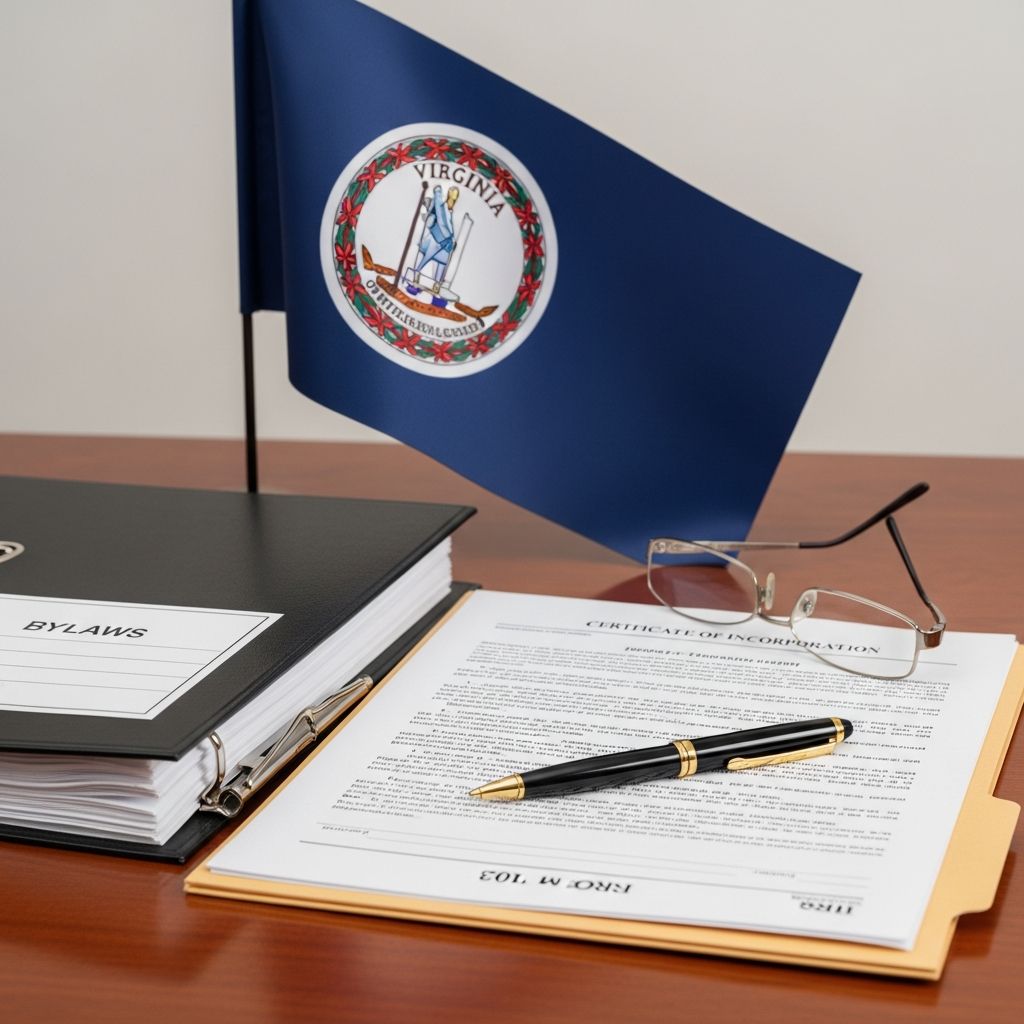
Establishing a nonprofit organization in Virginia offers a structured way to pursue charitable, educational, religious, or scientific missions while benefiting from tax exemptions. Virginia’s business-friendly environment, overseen by the State Corporation Commission (SCC), makes it straightforward to form a nonstock corporation—the standard structure for nonprofits. This guide outlines every phase, from initial planning to sustained operations, drawing on official state procedures to help you build a compliant entity ready for impact.
Selecting and Securing Your Organization’s Name
The foundation of your nonprofit begins with a distinctive name that reflects its purpose and complies with Virginia regulations. Names must be unique, not misleading, and available within the state. Use the SCC’s online business entity search tool to verify availability before proceeding. Nonprofits typically do not require specific suffixes like ‘Inc.’ or ‘Corp.’, but including ‘Foundation’ or ‘Association’ can clarify intent.
To protect your chosen name prior to full incorporation, submit a name reservation application via the SCC website for a modest fee, typically around $10. This holds the name for up to 120 days, providing flexibility if incorporation is delayed.
- Conduct a thorough SCC database search for conflicts.
- Avoid names implying government affiliation or restricted activities.
- Reserve early to prevent others from claiming it.
Assembling Leadership: Directors and Incorporators
Virginia law mandates at least one director for a nonstock corporation, though the IRS recommends a minimum of three unrelated individuals aged 18 or older for 501(c)(3) eligibility. An odd number of directors helps avoid voting deadlocks. Directors oversee governance, set policies, and ensure fiduciary duties like loyalty and care are upheld.
Incorporators—those filing the formation documents—may appoint initial directors if not named in the articles. No residency requirement exists, but diversity in skills and backgrounds strengthens board effectiveness. Officers such as president, secretary, and treasurer are elected by the board; no single person can hold more than two roles simultaneously.
| Role | Minimum Requirements | Key Responsibilities |
|---|---|---|
| Directors | 1 (3 recommended for IRS) | Governance, policy-making, oversight |
| President | Board-elected | Leads meetings, represents organization |
| Secretary | Board-elected | Records minutes, maintains records |
| Treasurer | Board-elected | Manages finances, reports |
Preparing and Filing Articles of Incorporation
The pivotal legal step is submitting Articles of Incorporation to the SCC, creating your nonstock corporation upon approval. Use the SCC’s Form SCC819NP, available online, which requires details like name, purpose, registered agent, and director info (optional). Crucially, include IRS-mandated language for tax-exempt potential: a purpose clause limited to 501(c)(3) activities, prohibitions on private inurement and substantial lobbying, and a dissolution clause directing assets to another exempt entity.
Filing options include online via the Clerk’s Information System (CIS) or mail. The fee is $75 as of 2025, with processing in 3-5 business days online. Upon acceptance, the SCC issues a certificate, marking your entity’s birth.
Required Article Elements
- Corporate name and purpose statement
- Registered agent name and Virginia street address
- Provision for director/management structure
- IRS-specific tax-exempt clauses
- Incorporator signature
Drafting Comprehensive Bylaws
Bylaws serve as your nonprofit’s internal rulebook, adopted by the initial board post-incorporation. They detail membership (if any), board election procedures, meeting protocols, officer duties, amendment processes, and dissolution triggers. Virginia statute (Va. Code § 13.1-823) requires bylaws to align with law and articles.
Hold an organizational meeting to ratify bylaws, appoint officers, and authorize tax applications. Minutes should document unanimous support for formation and 501(c)(3) pursuit, articulating the mission clearly.
Obtaining Federal Identification and Tax Exemption
Secure an Employer Identification Number (EIN) instantly via the IRS website—no fee required. This acts as your nonprofit’s tax ID for banking, hiring, and filings.
For 501(c)(3) status, submit Form 1023 (or streamlined 1023-EZ for smaller orgs) with bylaws, articles, and financial projections. Approval grants federal income tax exemption, vital for deductibility of donor contributions. Expect IRS review in 3-12 months.
State-Level Tax Exemptions and Registrations
Post-federal approval, apply for Virginia sales, use, and income tax exemptions through the Virginia Department of Taxation. Property tax relief may apply via local assessors. No general state business license exists, but cities often require local permits.
If soliciting donations, register with the Virginia Department of Agriculture and Consumer Services (VDACS) Office of Charitable and Regulatory Programs using Form 102. Fees range from $100-$425 based on revenue; renew annually within 4.5 months of fiscal year-end.
Local Permits, Licenses, and Operational Setup
Check municipal requirements for business licenses, zoning, or professional permits based on activities. Open a dedicated bank account using your EIN and incorporation certificate. Implement accounting systems compliant with nonprofit standards to track restricted funds.
Ongoing Compliance and Annual Obligations
Sustained success demands vigilance: file SCC annual reports by year-end (minimal fee), VDACS renewals, and IRS Form 990 series (990-N for small orgs). Boards must meet regularly, maintain minutes, and monitor for conflicts. Failure risks penalties or revocation.
- SCC Annual Report: Due annually, online filing.
- Charitable Registration Renewal: Revenue-based fee.
- Federal 990: Varies by gross receipts.
- State Tax Returns: As applicable.
Frequently Asked Questions
Can a nonprofit in Virginia operate without a board of directors?
No, Virginia requires at least one director unless members vote to eliminate it, but IRS prefers three for tax exemption.
What is the cost to incorporate a Virginia nonstock corporation?
The SCC filing fee is $75; additional costs for name reservation ($10) or assumed names.
Does Virginia require nonprofits to have members?
No, articles can specify no members; bylaws govern if included.
How long does IRS 501(c)(3) approval take?
Typically 3-12 months; user fee applies to Form 1023.
Are there fundraising registration fees in Virginia?
Yes, $100 minimum, scaling to $425 for higher revenue via VDACS.
Forming a Virginia nonprofit demands precision but unlocks powerful tools for mission-driven work. Consult legal experts for tailored advice, especially on IRS language.
References
- 7 Legal Steps to Creating a Nonprofit Organization in Virginia — DurretteCrump PLC. 2025. https://www.dlgva.com/7-legal-steps-to-creating-a-nonprofit-organization-in-virginia/
- How to Form a Virginia Nonprofit Corporation — Nolo. 2025. https://www.nolo.com/legal-encyclopedia/forming-nonprofit-corporation-virginia-36091.html
- Forming and Maintaining a Nonprofit Virginia Edition — 501c3.org. 2012 (authoritative guide, remains relevant for core processes). https://www.501c3.org/wp-content/uploads/2012/08/Forming-and-Maintaining-A-Nonprofit-Virginia.pdf
- Starting a Nonprofit in Virginia: A Step-by-Step Guide — Paybee. 2025. https://w.paybee.io/post/starting-a-nonprofit-in-virginia
- Virginia Nonprofit Document Requirements — BryteBridge. 2025. https://brytebridge.com/nonprofit-requirements/virginia/
- Virginia Nonprofit State Requirements — BryteBridge. 2025. https://brytebridge.com/nonprofit-requirements/virginia/
- How-To Guide: Form a New VA Nonstock Corporation — Virginia SCC. 2025. https://pxl-sccvirginiagov.terminalfour.net/prod01/channel_3/media/sccvirginiagov-home/business-home/online-help/How-To-Guide—Form-a-New-VA-Nonstock-Corporation.pdf
Similar Articles








Read full bio of Sneha Tete


