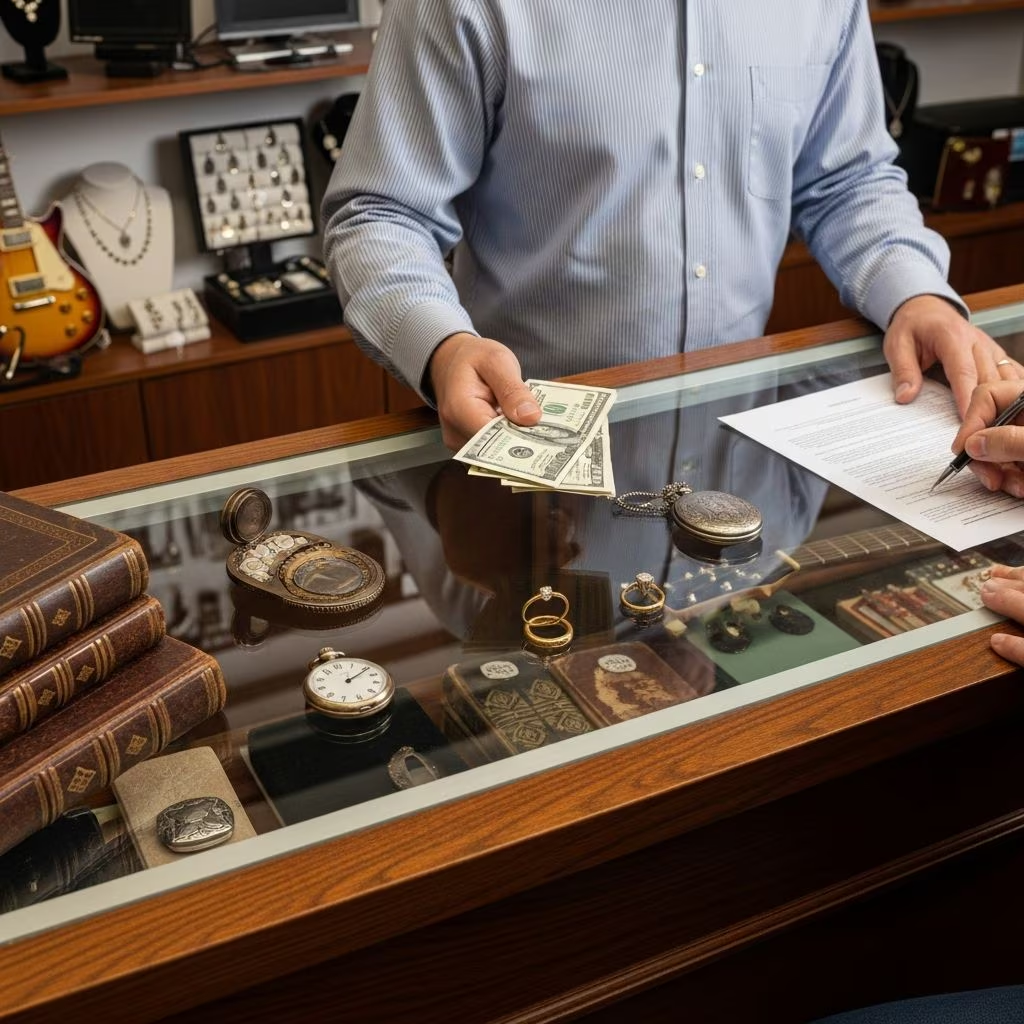
Opening a pawn shop can be a profitable way to provide short-term credit and secondhand goods to your community, but it is also one of the more heavily regulated small business models in the United States. To succeed, you must understand pawnbroking laws, federal compliance duties, startup costs, and the practical realities of valuing collateral and managing risk.
This guide walks through the major steps involved in launching a pawn shop, focusing on legal compliance, financial planning, and everyday operations so you start on solid ground.
Understanding How Pawn Shops Work
A pawn shop typically offers customers two main options:
- Collateral loans based on the value of an item the customer leaves as security (the “pawn”).
- Outright purchase of used goods that the shop can later resell at a profit.
In a collateral loan, the pawnbroker advances money at an agreed interest rate and keeps the item as security until the loan plus fees are repaid. If the customer does not repay within the prescribed period, state law usually permits the pawnbroker to sell the item to recover the loan amount and charges.
Because pawn transactions are often small-dollar loans secured by personal property, lawmakers treat pawn shops differently from typical retailers and from standard consumer lenders. This means you will interact with both consumer protection rules and secondhand dealer regulations.
Researching Law and Regulation Before You Start
Before you draft a business plan, research the legal framework that applies in your state and city. Some locations cap pawn finance charges and strictly define redemption periods, while others leave more room for contractual terms.
Key areas to investigate
- State pawnbroker statutes – Most states have specific pawnbroking or pawnshop laws that govern licenses, interest limits, recordkeeping, and reporting obligations.
- Local ordinances – Cities and counties frequently impose zoning rules, additional permits, and special operating conditions for pawn shops.
- Federal laws – Pawn shops that extend consumer credit must comply with certain federal consumer finance rules.
- Truth in Lending Act (TILA) requires clear disclosure of finance charges and annual percentage rates for consumer loans.
- Equal Credit Opportunity Act (ECOA) prohibits discrimination in credit transactions based on protected characteristics.
- Bank Secrecy Act (BSA) and anti–money laundering duties can apply to certain financial intermediaries.
- Firearms and precious metals – If you plan to handle guns or certain types of bullion, additional federal and state licenses apply.
Because pawnbroking laws differ widely by jurisdiction, many new owners consult a local attorney familiar with consumer credit and secondhand dealer regulations to interpret statutes and draft compliant forms.
Licensing and Registrations for a Pawn Shop
Operating without proper licenses can lead to fines, forced closure, or even criminal penalties. Work backwards from your planned services to list every required authorization.
Common licenses and registrations
| License / Registration | Who Issues It | What It Covers |
|---|---|---|
| Business license | City or county clerk | General authority to operate a business in the locality. |
| Pawnbroker or pawn shop license | State agency or local licensing board | Permission to conduct pawn transactions under state pawnbroking law. |
| Secondhand dealer permit | City, county, or state | Authorizes buying and reselling used goods, often with recordkeeping obligations. |
| Firearms license (FFL) | U.S. Bureau of Alcohol, Tobacco, Firearms and Explosives (ATF) | Required for dealing in or pawning firearms, including strict transfer and background check rules. |
| Precious metal or jewelry dealer permit | State or local authority | May be needed for buying gold, silver, or high-value jewelry from the public. |
Tax and business registrations
- Apply for an Employer Identification Number (EIN) with the IRS to use for taxes and business banking.
- Register with your state department of revenue if you must collect sales tax on retail sales.
- Choose and register a business entity (sole proprietorship, LLC, corporation, etc.) under state law to address liability and ownership issues.
Planning Your Pawn Shop Business Model
Once you know what you are legally allowed to do, refine how you will earn revenue and manage risk. A written business plan can help clarify strategy for lenders, investors, and partners.
Key elements of a pawn shop business plan
- Market analysis – Define the neighborhood you will serve, demographic trends, competing pawn shops, and other lenders (like payday lenders or title lenders).
- Services and specialization – Decide whether you will focus on jewelry, tools, electronics, musical instruments, collectibles, firearms, or a broad mix of items.
- Loan terms and pricing – Within legal limits, determine your standard interest rate, fees, and maximum loan size for typical items.
- Risk policies – Set procedures for appraisals, verification of ownership, and handling suspected stolen property.
- Financial projections – Estimate startup costs, monthly overhead, expected loan volume, redemption rates, and sales margins.
Consider preparing at least a 12–24 month cash-flow projection. Pawnbroking is capital-intensive: you must have enough working capital to fund loans, buy inventory, and endure slow seasons without compromising on compliance or security.
Estimating Startup Costs and Securing Capital
Startup expenses vary dramatically by location and shop size, but several cost categories are typical of most pawn businesses.
Typical startup cost categories
- Licensing and legal fees – Application fees, background checks, local permits, and professional advice.
- Real estate – Security deposit, build-out, rent, and ongoing utilities.
- Security and equipment
- High-quality safes and vaults.
- Alarm and camera systems; insurers often expect robust security for pawned goods.
- Showcases, shelving, and locking display cases.
- Computer systems and pawn management software for tracking loans and items.
- Initial loan fund – Pool of capital earmarked specifically for making pawn loans.
- Inventory purchases – Seed stock for your shelves if you are not relying solely on pawned items.
- Insurance premiums – Property, liability, and other coverages (discussed below).
- Marketing and signage – Exterior signs, online presence, and initial advertising.
Financing options
Pawn shop owners frequently combine personal savings, bank credit lines, and sometimes private investors. When approaching lenders, be prepared with:
- A clear written business plan and cash-flow projections.
- Evidence you understand applicable laws and have or will obtain the correct licenses.
- Collateral you can pledge, if required by the bank.
Banks and regulators often view pawn activity as higher risk because it involves cash handling, small-dollar loans, and stolen property concerns, so a strong compliance and security plan can make financing discussions smoother.
Insurance and Risk Management
Proper insurance is crucial because you are storing other people’s property while also handling your own inventory and large amounts of cash. Insurers and risk professionals recommend a combination of policies tailored to pawnbrokers.
Common insurance coverages
- Property insurance – Covers your building (if owned) and contents, including inventory, against events like fire or theft.
- Bailee’s coverage – Protects customer property that is in your custody under pawn or repair agreements.
- General liability insurance – Helps cover claims for injuries or property damage suffered by customers on your premises.
- Business interruption insurance – Provides income replacement if a covered event forces you to close temporarily.
- Employee dishonesty or crime insurance – Addresses risks of theft or fraud by staff members.
Work with an insurance professional who has experience with pawn or jewelry businesses, as they better understand security expectations, valuation issues, and local risk patterns.
Picking a Location and Designing the Store
Your physical location strongly affects both the volume of walk-in business and the security challenges you face.
Location considerations
- Foot and vehicle traffic – Busy commercial corridors near residential neighborhoods often generate repeat customers.
- Visibility and reputation – A well-lit, professional storefront can help distinguish your business from stereotypes about pawn shops.
- Zoning compliance – Confirm that local zoning permits pawnbroking and that you meet any distance requirements from schools or residential areas.
- Police response and safety – Proximity to police patrol routes and ease of emergency access can enhance safety.
Store layout and customer experience
- Place loan counters in a secure but approachable area with privacy for discussing financial details.
- Use organized displays to showcase merchandise and make browsing easy.
- Ensure good lighting and signage to project professionalism and deter crime.
- Separate storage areas for pawned items from retail shelves and employee-only spaces.
A professional and transparent environment can help attract customers who may never have used a pawn shop before but need short-term credit or affordable secondhand goods.
Building Procedures for Transactions
Written procedures improve consistency, reduce legal risk, and help you train staff effectively.
Pawn loan workflow
- Item evaluation – Inspect the item for condition, authenticity, and marketability. Use reference guides and, where appropriate, testing equipment (for precious metals or electronics).
- Ownership verification – Record customer identification, and follow any local rules on reporting serial numbers or suspected stolen goods to law enforcement.
- Loan offer – Quote a loan amount and disclose interest and fees in writing. Ensure the customer understands due dates and consequences of nonpayment in compliance with TILA.
- Contract and ticket – Prepare a written pawn ticket or contract containing legally required information and provide a copy to the customer.
- Secure storage – Tag and store the item securely, linked to the customer’s record in your software.
- Redemption or forfeiture – On repayment, return the item; if not redeemed within the statutory or contract period, process it for retail sale as permitted by law.
Buying and reselling goods
- Check local rules on holding periods before resale of purchased items.
- Maintain detailed records of each purchase, including customer ID and description of the goods.
- Train staff to recognize stolen or counterfeit items and to follow reporting procedures when required.
Working With Law Enforcement and Recordkeeping
Cooperation with law enforcement is an expected part of running a pawn shop and can help protect your business reputation.
- Some jurisdictions require regular electronic or paper reports of transactions to police, especially for jewelry, electronics, and other theft-prone items.
- Officers may review records or request to hold items suspected as stolen, subject to state law methods for resolving ownership claims.
- Accurate records also help you resolve disputes with customers about amounts owed, redemption dates, and condition of property.
Use a reliable point-of-sale and pawn management system to keep consistent records of loans, redemptions, forfeitures, purchases, and sales. Good records will be invaluable during licensing audits and for your own financial analysis.
Hiring and Training Staff
Your staff must be comfortable handling money, evaluating merchandise, and interacting with people under financial stress. Training should cover both technical skills and ethics.
Training topics
- Legal requirements – What information must be collected, how to complete forms, and how to respond to law enforcement requests.
- Customer communication – Explaining loan terms, fees, and deadlines clearly and respectfully.
- Appraisal basics – Recognizing hallmarks on jewelry, checking serial numbers, testing electronics, and spotting obvious red flags.
- Security awareness – Cash-handling policies, opening and closing procedures, and safety protocols during high-risk interactions.
Marketing and Community Reputation
Pawn shops often rely on repeat customers who return for multiple loans each year. A reputation for fairness and transparency can be more valuable than aggressive advertising.
Low-cost marketing ideas
- Create a simple, mobile-friendly website describing your services, hours, and location.
- Claim your online business profiles on major search and map platforms so customers can find you easily.
- Use clear signage at the storefront to communicate that your shop is clean, professional, and welcoming.
- Encourage satisfied customers to leave reviews, within the boundaries of applicable advertising and fair lending rules.
Frequently Asked Questions (FAQs)
Q: How long does it usually take to open a pawn shop?
A: The timeline largely depends on how quickly you can secure a location and obtain licenses. In some states, licensing alone may take several months because of background checks and public notice requirements, so plan for a multi-month startup period.
Q: Do I need prior experience to own a pawn shop?
A: Prior experience with retail, lending, or jewelry and electronics is helpful but not mandatory. Many owners learn through industry associations, training courses, and working closely with experienced appraisers and compliance professionals.
Q: Are pawn shops regulated like banks?
A: Pawn shops are not banks, but they are subject to several consumer finance and anti-discrimination laws, including Truth in Lending and the Equal Credit Opportunity Act when they issue consumer loans. They also face extensive state-specific rules that banks may not have.
Q: What happens if a customer never redeems a pawned item?
A: After any legally required grace or notice period, the loan typically goes into forfeiture, and you may sell the item to recover your investment, consistent with state law and the terms of your contract. You must follow local rules about notices, timing, and accounting for any surplus or deficiency.
Q: Can I run a pawn shop that only buys and sells and does not make loans?
A: In some jurisdictions, you can operate purely as a secondhand dealer or reseller, but you will still need to comply with relevant local permits, recordkeeping, and stolen-property reporting rules. You may not need a pawnbroker license if you never extend credit, depending on the law in your state or city.
References
- Pawnshops — Federal Reserve Bank of St. Louis. 2015-01-01. https://research.stlouisfed.org/publications/regional/2015/01/01/pawnshops/
- Truth in Lending Act (TILA) — Consumer Financial Protection Bureau. 2024-01-01. https://www.consumerfinance.gov/compliance/compliance-resources/other-applicable-requirements/truth-lending-act/
- Bank Secrecy Act, Anti-Money Laundering, and Office of Foreign Assets Control — Federal Financial Institutions Examination Council. 2023-06-01. https://bsaaml.ffiec.gov/
- How to Become a Federal Firearms Licensee (FFL) — Bureau of Alcohol, Tobacco, Firearms and Explosives. 2024-03-01. https://www.atf.gov/firearms/how-become-ffl
- Secondhand Dealers and Pawnbrokers Model Ordinance — City of Seattle (example municipal code resource). 2022-05-01. https://www.seattle.gov/business-regulations/secondhand-dealers-and-pawnbrokers
- Apply for an Employer Identification Number (EIN) Online — Internal Revenue Service. 2024-02-01. https://www.irs.gov/businesses/small-businesses-self-employed/apply-for-an-employer-identification-number-ein-online
- Jewelry and Pawn Shop Insurance — Insurance Information Institute. 2023-08-15. https://www.iii.org/article/jewelry-and-pawn-shop-insurance