
Standing Together: Unity Against Discriminatory Laws
How community mobilization and legal challenges defend immigrant rights.
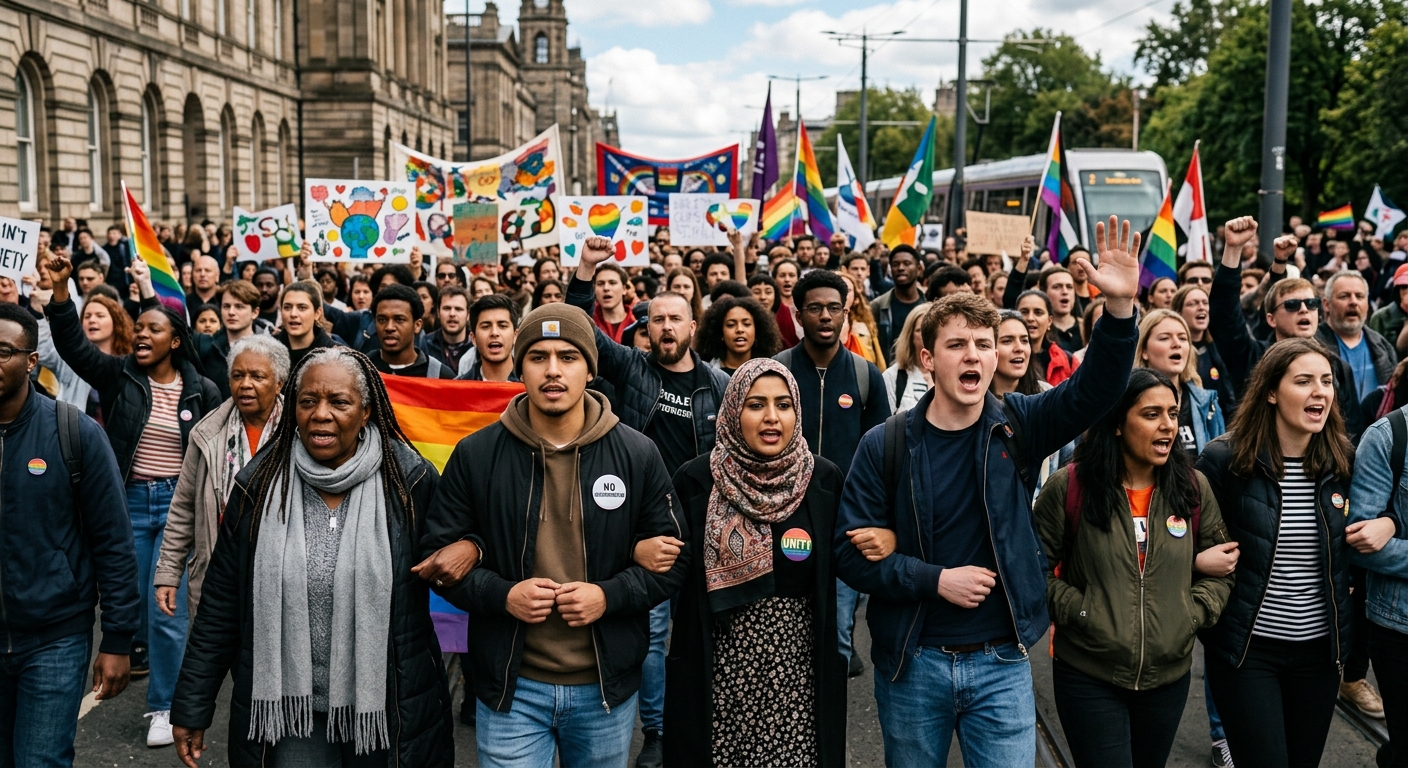
The pursuit of equality and justice is a continuous endeavor, requiring constant vigilance and unwavering solidarity. In the face of state-level legislation designed to marginalize and target foreign-born residents, the necessity for a united front becomes paramount. Communities across the nation are recognizing that defending the constitutional rights of marginalized groups requires both sophisticated legal strategies and robust, on-the-ground mobilization. The spirit of standing united—binding together neighbors, activists, and legal scholars—serves as the ultimate bulwark against systemic discrimination and xenophobia.
The Rise of State-Driven Enforcement Overreach
Over the last two decades, a troubling trend has emerged in the American political landscape: individual states attempting to usurp federal authority by enacting their own aggressive immigration enforcement statutes. Frustrated by congressional gridlock on comprehensive federal reform, some state legislatures have passed bills that mandate local law enforcement officers to interrogate individuals about their status during routine stops. These policies—often colloquially referred to as “show me your papers” laws—create an environment ripe for racial profiling and civil rights abuses.
Such legislation fundamentally alters the relationship between community members and local police. When local officers act as immigration agents, people are deterred from reporting crimes, seeking medical attention, or participating in public life. The fear of arbitrary detention and family separation sends a chilling effect through entire neighborhoods, ultimately replacing a unified federal framework with a patchwork of punitive local directives.
Preemption Doctrine and Supreme Court Precedent
In response to this overreach, civil rights organizations have consistently turned to the federal judiciary to reaffirm the supremacy of federal law. The constitutional framework of the United States delegates the power to regulate immigration exclusively to the federal government. This principle, known as the preemption doctrine, prevents states from creating parallel enforcement systems.
The landmark 2012 Supreme Court decision in Arizona v. United States stands as a pivotal moment in this legal struggle . In this ruling, the Court struck down several provisions of a controversial state law, reinforcing that states cannot implement policies that undermine federal enforcement priorities. The Court made it clear that the federal government retains broad, exclusive authority over the admission, regulation, and removal of noncitizens. This legal precedent remains a cornerstone in the ongoing effort to dismantle copycat legislation introduced in other jurisdictions.
Federal Protections Against National Origin Discrimination
Beyond the structural arguments of federal preemption, discriminatory state laws frequently violate fundamental civil rights protections. The Fourteenth Amendment guarantees equal protection under the law to all persons within a state’s jurisdiction. When state laws disproportionately target individuals based on perceived race, ethnicity, or spoken language, they cross a dangerous line into national origin discrimination.
The U.S. Department of Justice (DOJ) actively enforces Title VI of the Civil Rights Act of 1964, which prohibits discrimination on the basis of race, color, and national origin in programs receiving federal financial assistance . National origin discrimination can manifest through harassment based on a person’s accent or cultural customs. When local law enforcement agencies employ racial profiling to enforce state mandates, they run afoul of these federal protections. Advocates emphasize that physical appearance or language proficiency must never be weaponized as probable cause for detention.
Grassroots Mobilization: Empowering Communities
While courtrooms provide a vital arena for challenging unconstitutional laws, the true power of the civil rights movement lies in grassroots mobilization. Legal victories alone cannot alleviate the immediate fear that discriminatory laws inject into communities. To bridge this gap, organizations launch mobile advocacy campaigns, taking their message directly to the people.
These cross-country campaigns operate on the principle that knowledge is power. Advocates and community organizers travel thousands of miles to host town hall meetings, distribute detailed “Know Your Rights” materials, and facilitate direct conversations with affected residents. These initiatives demystify complex legal proceedings and gather crucial testimonies to strengthen future litigation.
By teaching individuals how to safely interact with law enforcement, how to invoke their right to remain silent, and how to access legal representation, these campaigns empower communities to resist intimidation. Furthermore, grassroots tours foster a profound sense of solidarity. When isolated individuals realize they are part of a nationwide network standing together against injustice, their fear often transforms into resilient civic engagement.
Protecting Mixed-Status Families
The impact of anti-immigrant legislation extends far beyond targeted individuals; it profoundly affects millions of U.S. citizens living in mixed-status families. According to data compiled by the American Immigration Council, millions of U.S. citizen children reside with at least one undocumented family member . State laws that threaten family unity through aggressive local enforcement inflict severe psychological and economic trauma on these children.
When parents are afraid to drop their children off at school or commute to work due to the risk of a traffic stop turning into a deportation proceeding, the entire family unit suffers. Grassroots coalitions work tirelessly to highlight these collateral consequences, emphasizing that punitive state laws are fundamentally anti-family. By centering the stories of young students and their parents, advocates humanize the complex debate and demonstrate the urgent need for compassionate, unified policies.
The Human and Economic Toll
The practical implementation of localized enforcement inevitably leads to severe economic and social disruptions. Beyond the moral implications of racial profiling, these laws devastate local economies. When marginalized populations are driven into the shadows, they reduce their participation in the marketplace. Consumer spending drops, essential sectors like agriculture and construction face immediate labor shortages, and local tax revenues decline precipitously.
Moreover, the burden on local law enforcement agencies increases exponentially. Police departments are forced to divert scarce resources away from investigating violent crimes, instead spending countless hours acting as auxiliary agents for civil infractions. This shift compromises public safety and destroys the hard-won trust between police officers and the communities they serve. A community where victims and witnesses are too afraid to call emergency services is inherently less safe for everyone.
Building Intersectional Coalitions
The fight against discriminatory state laws is part of a broader, intersectional struggle for civil rights in the United States. Organizations dedicated to protecting marginalized populations frequently form alliances with racial justice groups, labor unions, and religious organizations. This collaborative approach recognizes that systemic discrimination often targets multiple vulnerable identities simultaneously.
For instance, workers’ rights advocates heavily invest in these battles because undocumented workers are exceptionally vulnerable to workplace exploitation, wage theft, and unsafe working conditions. When state laws make it easier to deport workers who speak out against abusive employers, overall labor standards degrade for all workers, regardless of citizenship. By building broad coalitions, advocates pool their resources and demonstrate that the fight for human dignity transcends single-issue politics.
Rapid Response Networks and Legal Defense Funds
Another critical innovation born out of community mobilization is the creation of rapid response networks and universal representation programs. In communities facing heightened threats of local enforcement sweeps, grassroots organizers have established emergency hotlines. These networks allow neighbors to report law enforcement activity in real-time, dispatching trained legal observers to ensure constitutional rights are not violated.
Simultaneously, progressive municipalities and state governments have begun funding legal defense programs to ensure noncitizens have access to legal counsel. Unlike the criminal justice system, individuals in civil immigration proceedings are not guaranteed a public defender. This structural inequity means navigating complex proceedings often depends entirely on a person’s ability to afford private counsel. By establishing public-private partnerships to fund attorneys, communities ensure that due process is a tangible reality.
The Enduring Legacy of Constitutional Defense
Throughout history, the defense of constitutional rights has required both legal ingenuity and public pressure. The organizations leading today’s charge, including groups like the ACLU’s Immigrants’ Rights Project, operate in the proud tradition of the civil rights movement . They systematically build legal arguments that challenge indefinite detention, the denial of bail, and expanded expedited removal processes.
Legal scholars argue that the fundamental protections embodied in the U.S. Constitution—specifically the guarantees of due process and equal protection—apply to every person within the territorial boundaries of the United States. The ongoing legal battles against punitive state laws continuously refine these constitutional interpretations. Each injunction won against a discriminatory bill not only protects immediate families but also sets vital legal precedents that deter other states from attempting similar legislative maneuvers.
Conclusion
The movement to protect marginalized residents from discriminatory state legislation relies on a multifaceted approach that honors the power of unity. While the challenges posed by localized anti-immigrant laws are formidable, the collective response from civil rights organizations, community organizers, and allied citizens is undeniably stronger. By fighting unconstitutional overreach in federal courts, enforcing civil rights protections against national origin discrimination, and educating populations through relentless grassroots mobilization, advocates are building a resilient shield against xenophobia.
Standing together is an active, ongoing commitment to upholding the dignity and rights of every individual. As political landscapes continue to shift, the unwavering solidarity of affected communities remains the most critical force in the enduring pursuit of equality for all.
Frequently Asked Questions
Why are state-level immigration laws often challenged in federal court?
State-level immigration laws are frequently challenged under the preemption doctrine. The U.S. Constitution grants the federal government exclusive authority to regulate immigration. When states attempt to create their own enforcement mechanisms, they interfere with federal law and priorities, prompting the federal judiciary to strike them down, as seen in the landmark case Arizona v. United States.
What constitutes national origin discrimination?
National origin discrimination involves treating people unfavorably because they are from a particular country or part of the world, because of their ethnicity or accent, or because they appear to be of a certain ethnic background. The U.S. Department of Justice enforces federal laws, such as Title VI of the Civil Rights Act of 1964, to protect individuals from such systemic discrimination.
How do “Know Your Rights” campaigns assist communities?
“Know Your Rights” campaigns empower individuals by educating them on their core constitutional protections, such as the right to remain silent and the right to legal counsel. This crucial knowledge reduces fear, prevents self-incrimination during arbitrary stops, and significantly strengthens community resilience against discriminatory enforcement practices.
What is a mixed-status family and how are they affected?
A mixed-status family is a household whose members hold different citizenship or immigration statuses. For example, a family might consist of undocumented parents and U.S. citizen children. State-level anti-immigrant laws disproportionately harm these families by threatening them with separation, creating significant psychological trauma, and destabilizing their economic security.
References
- Arizona v. United States, 567 U.S. 387 — Supreme Court of the United States. 2012-06-25. https://www.supremecourt.gov/opinions/11pdf/11-182b5e1.pdf
- Title VI of the Civil Rights Act of 1964 — U.S. Department of Justice. 2025-03-24. https://www.justice.gov/crt/fcs/TitleVI-Overview
- Immigrants’ Experiences Differ Wildly Depending on Which State They Live In — American Immigration Council. 2025-05-12. https://www.americanimmigrationcouncil.org/research/immigrants-experiences-differ-wildly-depending-which-state-they-live
- Immigrants’ Rights and Detention — American Civil Liberties Union. 2024-01-01. https://www.aclu.org/issues/immigrants-rights
Similar Articles








Read full bio of medha deb


