
Spotting Prize and Grant Scams Before They Steal Your Money
Learn how fake prizes and bogus grants work so you can recognize red flags, avoid losses, and report scammers effectively.
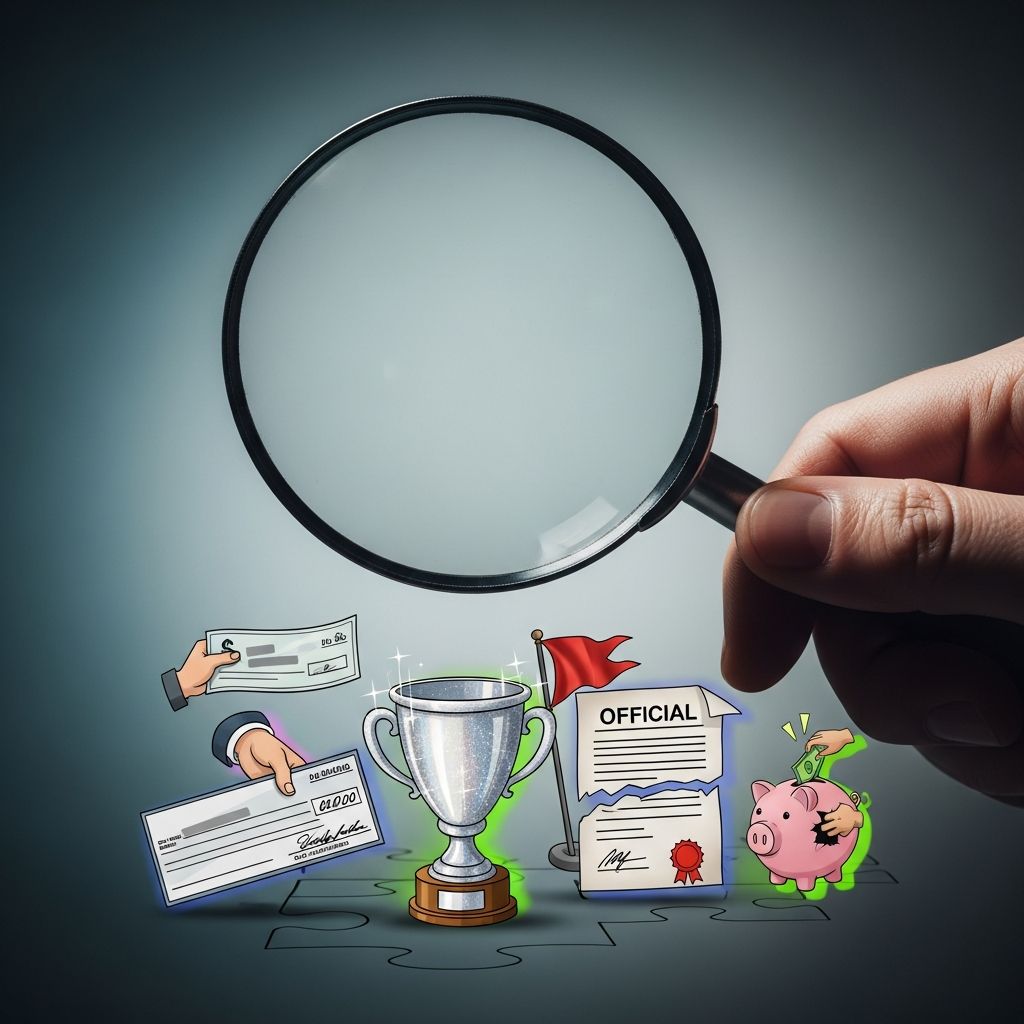
Scammers know that words like “winner,” “grant approved,” and “urgent payout” grab attention. They use fake prizes and bogus grants to pressure people into sending money or sharing sensitive information. Understanding how these scams really work is the best way to keep your finances and identity safe.
Why Fake Prizes and Grants Are So Effective
Fraudsters rely on emotion, not logic. When you are told you have won a big prize or qualified for a government grant, it can be difficult to pause and double-check the facts. Yet real government grants for individuals are rare and are almost always awarded to organizations, not private citizens seeking personal benefits. Real federal grants never require an upfront fee to apply or receive funds.
In the same way, legitimate sweepstakes and lotteries do not make winners pay to get their prize. If someone demands a fee before you can claim a prize, they are using a classic scam tactic that consumer protection agencies have warned about for years.[10]
Common Types of Prize and Grant-Related Scams
Fraudsters package the same basic tricks in different ways. Below are some of the most frequent schemes that target consumers.
1. Fake Sweepstakes and Lottery Wins
In a fake sweepstakes, lottery, or contest scam, you receive a message claiming you hit a jackpot or were “randomly selected” as a winner. In reality, there was no real drawing and no real prize.
- Unexpected calls or messages saying you won a national or foreign lottery you never entered.
- Emails or texts with official-looking logos for well-known brands or government agencies that never actually ran a contest for you.
- Claims that you were “pre-qualified” thanks to your taxes, your age, or your good credit.
Government agencies and grant programs warn that scammers often misuse the names and logos of real institutions to appear legitimate.
2. Bogus Government Grant Offers
Grant scams piggyback on the idea of “free government money.” In reality, genuine federal grants are usually awarded to universities, local governments, and nonprofits to support public projects or research—not to pay personal bills, medical expenses, or credit card debt.
Common features of fake grant offers include:
- Being told you qualify for a grant because you “paid your taxes on time” or were “chosen by a new federal program.”
- Requests for bank account or Social Security numbers so the scammer can supposedly deposit the grant.
- Demands for “processing fees,” “registration fees,” or “taxes” before funds are released.
3. Advance-Fee Scams Disguised as Prizes or Grants
Advance-fee fraud happens when you are promised a large sum of money—but only if you pay something first. Once you send the payment, the scammer disappears.
These demands might be labeled as:
- Customs or import duties for a foreign lottery win.
- Taxes owed on your “jackpot.”[10]
- Legal, administrative, or “Homeland Security paperwork” fees.
- Insurance or courier charges.
Financial institutions and government oversight offices consistently warn that you should never pay fees or taxes upfront to receive a prize or grant; any such request is a red flag for fraud.
4. Sales Pitches Masquerading as Grant Help
Some operations do not promise a direct payout but sell expensive “grant information kits” or “grant research services.” Often, the material is low quality, inaccurate, or already available for free from official websites.
- Telemarketers or websites claiming you are “guaranteed” a grant if you buy their guide or membership.
- Upselling additional services like grant-writing or research for hundreds or thousands of dollars.
- Lists of supposed grants that are outdated, inapplicable, or for organizations only.
How Scammers Contact You
Fraudsters use every communication channel they can. The technology may change, but the core pitch is the same.
- Phone calls and robocalls: A caller claims to represent an official-sounding agency, sometimes giving a fake ID number and government address.
- Text messages: Short, urgent texts with links to claim your prize or grant; clicking may lead to phishing sites or malware.
- Email: Messages using copied logos and signatures to resemble banks, lotteries, or government entities.
- Social media and messaging apps: Direct messages from hacked accounts or fake profiles claiming that a friend “got money” through a special program and you can, too.
- Postal mail: Official-looking letters, checks, or certificates claiming you have already won.
Red Flags That Almost Always Mean “Scam”
Many prize and grant scams share the same warning signs. Recognizing them quickly can save you money and stress.
| Warning Sign | Why It’s Risky |
|---|---|
| You must pay a fee or buy something to get your prize or grant. | Legitimate prizes and government grants do not require upfront payments for fees, taxes, or processing.[10] |
| Pressure to act immediately or “before the deadline ends.” | Scammers use urgency so you decide quickly and skip verification. |
| Requests for payment via gift cards, wire transfer, cryptocurrency, or cash by mail. | These methods are hard to trace and nearly impossible to reverse once sent. |
| Requests for sensitive personal or financial information. | Fraudsters can commit identity theft or drain your accounts using bank numbers or Social Security numbers. |
| You are told to keep the win or grant “secret.” | Keeping you isolated prevents you from asking others for a second opinion. |
| Caller ID, email, or website looks slightly off. | Scammers spoof phone numbers and copy logos but may use unusual domains or spelling errors. |
How Real Prizes and Grants Work
Knowing how legitimate programs operate makes it easier to spot counterfeits.
Legitimate Sweepstakes and Prize Promotions
- Require no purchase or fee to enter or to claim the prize.
- Provide clear, written rules explaining eligibility, odds, and how winners are selected.
- Notify winners using contact methods disclosed in the rules and identify the sponsor.
- May require a tax form for large prizes, but taxes are owed directly to tax authorities, not paid to the promoter.
Legitimate Government Grants
- Are usually awarded to organizations, researchers, and public bodies for specific projects that benefit the public.
- Are listed on official portals, and applying is free.
- Never require payment solely to find, apply for, or receive a grant.
- Involve written applications, eligibility criteria, and often competitive review—not random phone calls or social media messages.
Safe Payment Practices: What Not to Do
Scammers prefer payment methods that are fast, irreversible, and hard to track. If anyone claiming to offer a prize or grant asks for one of the following, stop immediately.
- Gift cards (retail, gaming, or online platform cards): You are asked to read off the numbers or send photos of the back.
- Wire transfers through money transfer services: These are like sending cash—very difficult to recover.
- Cryptocurrency: Payments are typically irreversible and pseudonymous.
- Cash by mail: Scammers may suggest hiding cash in books or packages labeled as gifts.
If any supposed prize or grant provider is pushing one of these payment options, treat it as a strong indication of fraud.
Practical Steps to Protect Yourself
Before you respond to any unexpected claim of money owed to you, take a few minutes to investigate.
1. Slow Down and Verify
- Search online for the organization’s name plus the word “scam” or “complaint.”
- Look up government agencies directly using official websites, not links provided in emails or texts.
- Call a verified phone number from an official site—not the number given in the message.
2. Guard Your Information
- Never share your Social Security number, bank account, debit or credit card details with someone who contacted you unexpectedly.
- Do not send photos of your ID, checks, or payment cards to unknown individuals.
- Use strong, unique passwords and enable multi-factor authentication where possible.
3. Double-Check with Friends and Family
- If a message appears to come from a friend about a prize or grant, contact them through another channel to confirm.
- Talk to someone you trust before sending money or personal information, especially under pressure.
4. Use Only Official Sources for Grants
- Rely on well-known government portals and official agency pages for accurate grant information.
- Be skeptical of anyone guaranteeing approval or suggesting they have “inside access” to grant funds.
If You Already Sent Money or Information
If you realize you have responded to a scam, acting quickly may help limit the damage.
- Contact your bank or card issuer right away to report unauthorized transactions and request that cards be canceled or replaced.
- Alert the company that issued any gift cards you used—sometimes, balances can be frozen if reported quickly.
- Monitor your credit reports for new accounts or other suspicious activity, and consider placing a fraud alert or security freeze.
- Change passwords on email and financial accounts if you shared any login details.
How and Where to Report Prize and Grant Scams
Reporting scams helps enforcement agencies track patterns, shut down operations, and warn others. You can report:
- Fake government grant offers or misuse of agency names to the relevant inspector general or official fraud reporting pages.
- Phishing emails to the impersonated institution (for example, a bank, government office, or known lottery).
- Suspicious calls to your phone provider, which may be able to block or label likely scam callers.
Include as much detail as possible—phone numbers, email addresses, screenshots, dates, and the exact wording used by the scammer. That information can be extremely valuable to investigators.
Frequently Asked Questions (FAQs)
Q1: I received a call saying I was awarded a government grant but must pay a fee first. Is that ever legitimate?
No. Applying for genuine federal grants is free, and you never have to pay to receive a grant award. Requests for upfront “processing” or “registration” fees are a hallmark of grant scams.
Q2: Can I really win a lottery or sweepstakes I never entered?
Legitimate sweepstakes and lotteries only pick winners from people who actually entered. If you do not remember entering, or the caller cannot clearly identify the contest and sponsor, you can safely assume it is a scam.[10]
Q3: The caller knew my name and address. Doesn’t that prove they’re real?
No. Scammers often buy or steal personal data from breaches or public records. Having basic personal details does not mean they are legitimate; it only means your information is circulating.
Q4: What if my caller ID shows a government agency or bank?
Caller ID can be faked using inexpensive technology. Government agencies and banks have repeatedly warned that they do not rely on cold calls to award prizes or grants. Hang up and call the organization back using a verified phone number from its official website.
Q5: Are there real places to find grants without being scammed?
Yes. For public or organizational grants, use official government grant portals and agency sites, which list active opportunities and explain eligibility and application steps. Avoid anyone who guarantees approval or charges large fees to “find” or “unlock” grants for you.
References
- Grant Fraud — Grants.gov. 2023-08-15. https://www.grants.gov/learn-grants/grant-fraud.html
- Grant-Related Scams — Grants.gov. 2023-08-15. https://www.grants.gov/learn-grants/grant-fraud/grant-related-scams.html
- Fake Prize, Sweepstakes, and Lottery Scams — Federal Trade Commission. 2023-05-02. https://consumer.ftc.gov/articles/fake-prize-sweepstakes-and-lottery-scams
- Grant Fraud — U.S. Department of Health and Human Services, Office of Inspector General. 2022-11-10. https://oig.hhs.gov/fraud/grant/
- Fraud Alerts — U.S. Department of the Treasury, Office of Inspector General. 2024-04-01. https://oig.treasury.gov/fraud-alerts
- Government Grant Scams — eFraud Prevention. 2023-03-20. https://efraudprevention.com/security/Government_grant_scams.html
- Grant Scams — Minnesota Attorney General’s Office. 2023-06-05. https://www.ag.state.mn.us/consumer/Publications/PhonySolicitationforGrants.asp
Similar Articles








Read full bio of medha deb


