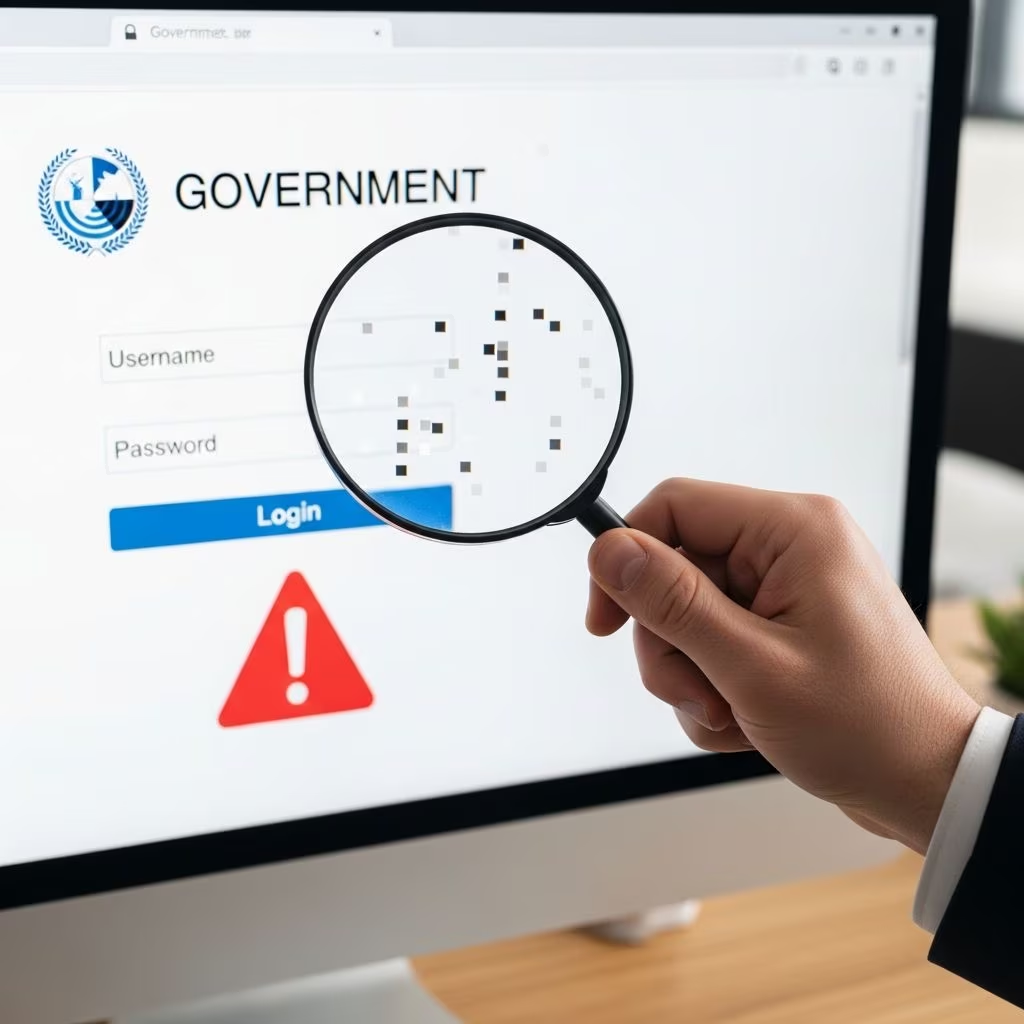
Fraudsters around the world increasingly pretend to be government officials to trick people into handing over money or personal information. These schemes, often called government impostor scams, use fear, urgency, and the appearance of official authority to pressure you into acting before you have time to think.
This guide explains how these scams work, the warning signs to watch for, and the practical steps you can take to protect yourself and your family.
Why Government Impostor Scams Are So Convincing
Criminals understand that many people are intimidated by the idea of being contacted by a government agency. By exploiting that fear, scammers can get victims to bypass their normal skepticism and act quickly.
Fraudsters often:
- Drop the names of well-known agencies, like the Federal Trade Commission (FTC), Social Security Administration (SSA), or Internal Revenue Service (IRS).
- Use spoofed caller ID to make it look like a legitimate government number is calling you.
- Threaten arrest, legal action, or loss of benefits unless you pay immediately.
- Claim you are owed a refund or benefit, but must pay a “fee” first.
According to the FTC, impostor scams (including those involving fake government officials) are consistently among the most commonly reported fraud categories and cause significant financial losses every year.
Common Storylines Used by Fake Government Officials
While scammers regularly adjust their tactics, most government impostor scams follow a few recurring scripts. Knowing these patterns helps you see the scam before it hooks you.
1. The Fake Debt or Tax Bill
In this scenario, the caller or email claims you owe money to a government agency and must pay right away.
- They might say you failed to pay taxes and will be arrested.
- They might claim unpaid fines, penalties, or court fees.
- They often demand payment through wire transfers, gift cards, or cryptocurrency.
Legitimate government agencies do not demand instant payment by gift card, wire transfer, or crypto, and they do not threaten arrest over the phone for non-payment.
2. The Suspicious Activity or Legal Case
Here the scammer claims your identity or accounts are connected to a crime or security problem.
- They may say your Social Security number has been “suspended” due to suspicious activity.
- They might claim there is a “case file” or “warrant” in your name.
- They often insist you must confirm sensitive information or move your money to a “safe account.”
Government agencies do not suspend Social Security numbers and do not ask you to move money to protect it. Those are tactics used by scammers to steal your savings.
3. The Prize, Refund, or Benefit
Some impostor scams use a positive spin instead of threats.
- You are told you won a grant, prize, or lottery run by a government agency.
- You may be promised a refund for overpaid taxes, utilities, or government fees.
- They say you must first pay processing fees, customs charges, or “release” fees.
Real government benefits or refunds do not require you to pay upfront. If someone asks for money so you can receive money, that is a major warning sign.
4. The Regulatory or Compliance Threat
Businesses can also be targeted by impostors claiming to be from agencies like the FTC or state regulators.
- They might allege you are in violation of a rule or regulation.
- They threaten large fines or enforcement actions unless you pay or sign documents.
- They may invoke data privacy, telemarketing, or advertising violations to appear sophisticated.
Real regulators follow established procedures, provide written notices, and do not ask for immediate payment over the phone or through unofficial channels.
Red Flags That Signal a Government Impostor Scam
Even if a call, text, or email looks official, there are consistent warning signs that reveal the fraud. Watch for these red flags:
| Red Flag | Why It Indicates a Scam |
|---|---|
| Unexpected contact about urgent legal or financial matters | Real agencies usually send official letters first; they do not surprise you with immediate threats. |
| Demands for instant payment | Pressure to “pay now or else” is a classic scam tactic. |
| Requests to pay with gift cards, cryptocurrency, or wire transfer | These payment methods are hard to trace and commonly used by fraudsters. |
| Threats of arrest, deportation, or loss of benefits over the phone | Real legal processes do not begin or end with a single phone call. |
| Requests for your full Social Security number, bank PINs, or online passwords | Legitimate agencies do not ask for complete sensitive credentials in unsolicited communications. |
| Caller insists you must not hang up or speak to anyone else | Isolation and urgency are used to prevent you from verifying the story. |
How Real Government Agencies Communicate
Understanding how real agencies operate makes it easier to tell them apart from impostors.
- Written notices first: Agencies like the IRS typically contact you by mail before any phone call about taxes or debts.
- No demand for unusual payments: Government agencies do not require payment via gift cards, prepaid debit cards, cryptocurrency, or peer-to-peer payment apps.
- Verification options: Real officials will not object if you hang up, look up an official number on your own, and call back.
- Clear due process: If there is a real legal issue, there are formal notices, clear appeal rights, and ways to dispute the claim.
- Official contact channels: Government websites use .gov domains and publish phone numbers and addresses you can independently verify.
Steps to Take If You Are Contacted by a Suspected Impostor
You do not need to figure out, in the moment, whether the caller or email is definitely a scam. Focus on slowing the interaction down and moving it to a channel you can verify.
1. Do Not Pay or Share Sensitive Information
- Refuse to provide bank account numbers, Social Security numbers, or passwords.
- Do not agree to send money or buy gift cards “to fix the problem.”
- If you feel pressured, simply end the call or stop responding.
2. Hang Up and Verify Using Official Contact Information
- Look up the agency’s contact details yourself on a trusted .gov website, not from the message you received.
- Call or write to the agency using the information you found independently.
- Ask whether they actually contacted you and whether there is any issue with your account or benefits.
3. Preserve Evidence
- Take screenshots of text messages or emails.
- Record the phone number, time, and any instructions you were given.
- Keep receipts or transaction information if you already sent money (this may help with reporting and potential recovery).
4. Report the Scam
Reporting impostor scams helps authorities spot patterns, warn others, and sometimes shut down fraudulent operations.
- File a report with your national consumer protection or fraud-reporting agency (for example, in the U.S., the FTC accepts complaints online and uses them to track scam trends).
- Notify your state or local consumer protection office or attorney general, if applicable.
- If you shared bank or credit card details, contact your financial institution immediately to dispute unauthorized charges and request new account numbers.
Protective Steps to Reduce Your Risk
You can strengthen your defenses before a scammer ever contacts you.
- Use call blocking tools: Many phone carriers offer blocking or labeling tools for suspected spam or fraud calls.
- Enable multi-factor authentication (MFA): Adding MFA to your email and bank accounts makes it harder for criminals to break in, even if they get some of your information.
- Monitor your financial accounts: Check statements regularly and set up alerts for large or unusual transactions.
- Review your credit reports: In many countries, you can access credit reports at least once a year to check for unfamiliar accounts or inquiries.
- Talk with family: Discuss scams with older relatives, teenagers, and anyone who may be more trusting of authority figures.
Special Considerations for Older Adults
Older adults are often targeted by impostor scams because they may be more likely to answer phone calls, have retirement savings, or feel pressure to cooperate with authority. The FTC has reported that adults over 60 experience substantial losses in various fraud categories, including government impostor schemes.
Family members and caregivers can help by:
- Encouraging loved ones not to answer calls from unknown numbers.
- Helping them verify suspicious communications directly with agencies.
- Reviewing bank and credit statements for unexplained withdrawals.
- Practicing scripts they can use to end suspicious calls politely but firmly.
How Businesses Can Guard Against Regulatory Impostor Scams
Organizations, especially small businesses, may receive fake calls, emails, or letters claiming to be from regulators or enforcement agencies. To reduce risk:
- Centralize responses: Designate a single person or team to handle and verify regulatory contacts.
- Verify independently: Use official .gov contact information to confirm any serious allegation or request.
- Train employees: Teach staff not to send payments or sensitive data in response to surprise calls or emails, even if they mention real laws or rules.[10]
- Document everything: Keep a record of all contacts that claim to come from regulators; this helps when reporting potential impostors.
Frequently Asked Questions (FAQs)
Q1: Can the FTC or another agency call me about a case?
A: Government agencies may sometimes call you, but they do not start legal action with an unexpected threatening call or demand payment by gift card, wire transfer, or cryptocurrency. If you are unsure, hang up and call back using an official number from a .gov site.
Q2: What if the caller already knows part of my personal information?
A: Scammers often use data from breaches or public records to sound convincing. Do not assume a call is legitimate just because the caller knows your name, address, or the last four digits of your Social Security number. Still verify the contact independently.
Q3: I already paid a scammer pretending to be a government agency. What can I do?
A: Contact your bank, credit card issuer, or payment service immediately to report the fraud and ask whether the payment can be stopped or reversed. Then, report the scam to your national consumer protection authority and local law enforcement. Keep all receipts and communication records to support your report.
Q4: Can caller ID tell me whether a government call is real?
A: No. Caller ID information can be faked, a tactic called spoofing. Do not rely on caller ID alone. If a caller claims to be from a government office, hang up and call back using an official phone number you find yourself.
Q5: Are emails from .gov addresses always safe?
A: A .gov address is a good sign, but you should still be careful with attachments and links. Instead of clicking directly, you can go to the agency’s main website by typing the address into your browser and navigate from there.
References
- Consumer Protection — Federal Trade Commission. 2025-05-01. https://www.ftc.gov/consumer-protection
- Protecting Older Consumers 2024–2025: A Report of the Federal Trade Commission — Federal Trade Commission. 2025-12-01. https://www.ftc.gov/reports/protecting-older-consumers-2024-2025-report-federal-trade-commission
- Rules — Federal Trade Commission. 2025-04-30. https://www.ftc.gov/legal-library/browse/rules
- FTC Rule on Unfair or Deceptive Fees to Take Effect on May 12, 2025 — Federal Trade Commission. 2025-05-09. https://www.ftc.gov/news-events/news/press-releases/2025/05/ftc-rule-unfair-or-deceptive-fees-take-effect-may-12-2025
- Consumer Protection Laws and Regulations: USA 2025 — ICLG. 2025-04-09. https://iclg.com/practice-areas/consumer-protection-laws-and-regulations/usa
- Business Guidance — Federal Trade Commission. 2025-03-15. https://www.ftc.gov/business-guidance