
Spotting and Avoiding Government Imposter Scams
Learn how fake “official” calls, emails, and letters try to scare you into paying and what you can do to stay safe.
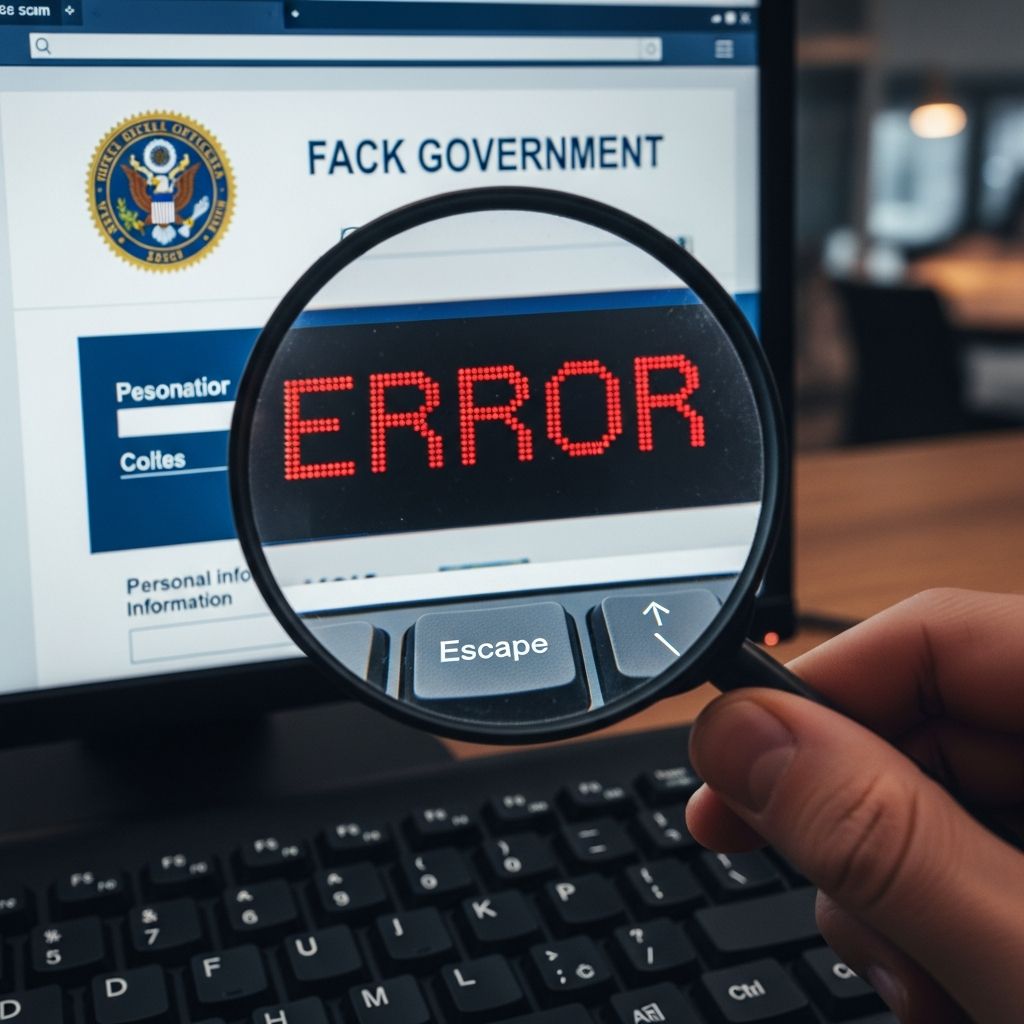
Scammers know that the name of a government agency can instantly create fear and urgency. By pretending to be from the IRS, Social Security, the Federal Trade Commission (FTC), or local law enforcement, they pressure people into sending money or sharing personal information. Understanding how these schemes work is the best way to stop them before they steal your money or identity.
What Is a Government Imposter Scam?
A government imposter scam happens when someone falsely claims to work for a government office or program and uses that lie to get your money, personal details, or access to your accounts. These contacts can arrive by phone, text, email, social media, or even in person.
Scammers rely on three powerful tactics:
- Authority: Using the name, logo, or language of a real agency to seem official.
- Fear: Threatening fines, arrest, lawsuits, or the loss of benefits if you do not cooperate immediately.
- Urgency: Claiming you must act “right now” before a deadline or penalty hits.
According to the Federal Trade Commission, people routinely report losing money to fraudsters posing as agents of the IRS, Social Security Administration, immigration authorities, or law enforcement.
Common Types of Government Imposter Scams
While the details change, most government imposter scams fall into a few main patterns. Knowing these patterns makes them much easier to spot.
1. Tax and IRS-Style Threats
In these scams, the caller or email claims you owe unpaid taxes or have filed incorrectly. They may say you will be arrested, your license will be suspended, or your bank accounts will be frozen unless you pay immediately.
- They often demand payment via wire transfer, gift cards, or cryptocurrency.
- They may spoof caller ID so it appears to come from an IRS office.
- They may use fake case numbers or badge numbers to sound convincing.
The Internal Revenue Service and other tax agencies do not demand immediate payment in unusual ways or threaten arrest during a first contact.
2. Social Security and Benefits Scams
These scammers claim to be from Social Security or another benefits program. They might say your Social Security number has been used in a crime, that your benefits will stop, or that your account has been suspended.
- They pressure you to confirm your Social Security number, bank account, or card details.
- They may tell you to move money into a “safe” account that they control.
- They might ask for an upfront fee to restore benefits or fix the supposed problem.
Social Security and similar agencies do not call to threaten arrest or demand payment to protect your account or benefits.
3. Law Enforcement and Court Scams
Fraudsters may pretend to be police, federal agents, or court officials. Their stories often involve supposed warrants, jury duty fines, or criminal investigations.
- They might say you missed jury duty and must pay a fine immediately.
- They threaten to send officers to your home or workplace.
- They demand payment through gift cards, payment apps, or wire services.
Real law enforcement agencies do not demand payment over the phone or by gift card to cancel a warrant or avoid arrest.
4. Grants, Refunds, and Prize Offers
Instead of threats, some imposter scams use promises. The caller or email claims that a government program has selected you for a grant, refund, or special benefit payment.
- They may say you have to pay fees or taxes upfront to release the funds.
- They often ask for banking information, supposedly to deposit the money.
- They might direct you to fake websites that look like real government portals.
Real government grants and benefits programs do not ask you to pay a fee to receive money.
Red Flags: Signs You Are Dealing with a Fake Official
Regardless of the story, government imposters reuse the same warning signs. If you notice any of these, stop and verify before doing anything else.
| Warning Sign | What It Means |
|---|---|
| Demand for instant payment | Scammers try to rush you so you cannot think or verify. |
| Threats of arrest, deportation, or lawsuit | Government agencies do not resolve serious legal matters only by phone or text. |
| Requests for gift cards, wire transfers, or crypto | These methods are hard to trace and are a favorite tool of scammers. |
| Demands for your full Social Security or bank numbers | Legitimate agencies rarely ask for sensitive data over unsolicited calls or emails. |
| Caller ID that looks official but unusual communication | Fraudsters can spoof numbers; trust what is said, not the display. |
| Pressure to keep the call secret | Scammers fear that a friend or family member will recognize the scam. |
What Real Government Agencies Do — and Do Not — Do
Knowing standard government practices allows you to compare what you are hearing with how genuine agencies operate. When there is a mismatch, that is a strong clue something is wrong.
Practices Genuine Agencies Commonly Use
- Multiple written notices: Most agencies communicate by postal mail first, especially about taxes, benefits, or enforcement actions.
- Secure websites: Real government websites typically use addresses ending in
.gov, which are controlled more strictly than other domains. - Formal appeal and dispute processes: You usually have time and procedures to contest decisions, not a single phone call.
Behaviors Legitimate Agencies Will Not Use
- They will not demand that you pay with gift cards, cryptocurrency, or wire services.
- They will not ask you to share your full Social Security number or bank details over an unsolicited call, text, or email.
- They will not threaten arrest in a few minutes if you do not pay at once.
- They will not instruct you to move money into a new account to “protect” it.
- They will not ask you to keep the communication secret from family, your bank, or your lawyer.
The Federal Trade Commission emphasizes that if someone claiming to be from the government pressures you to act immediately or pay in odd ways, it is almost certainly a scam.
How to Protect Yourself Before a Scammer Contacts You
Preparing ahead of time reduces the chance that fear or surprise will cloud your judgment. These steps help you stay ready.
- Talk with family and caregivers: Make sure everyone in your household—especially older relatives—knows about government imposter scams and common red flags.
- Use call blocking tools: Many mobile devices and phone carriers offer ways to block likely scam calls or label them as suspicious.
- Protect your personal data: Shred sensitive documents and be cautious about sharing personal details online that can be used to answer “security” questions.
- Monitor financial accounts: Review bank and card statements regularly and set up alerts for large or unusual transactions.
- Know the official contact channels: Visit agencies’ official
.govsites and note their correct phone numbers and online portals for later verification.
What to Do If You Receive a Suspicious Call, Message, or Visit
If you suspect a government imposter is contacting you, your actions in the next few minutes can prevent losses.
Step 1: Stop the Conversation
- Hang up the phone or close the message without clicking links or downloading attachments.
- Do not respond to questions or confirm personal information, even if they already know part of it.
Step 2: Independently Verify the Claim
- Look up the agency’s contact information on its official
.govwebsite or on a statement you already have. - Use that verified phone number or portal to ask whether the agency contacted you and why.
- Do not use numbers, links, or email addresses that came from the suspicious message.
Step 3: Report the Scam
- In the United States, you can report government imposter scams to the FTC through its official complaint system.
- You may also notify your state or local consumer protection office.
- If you lost money, contact your bank, card issuer, or payment service immediately and ask whether a reversal is possible.
If You Already Paid or Shared Information
Even if you realize it was a scam after the fact, taking quick steps can limit further harm.
- Contact your financial institutions: Tell them what happened, ask about stopping or reversing payments, and request new card numbers if needed.
- Change passwords: Update logins for bank, email, and any accounts that use similar passwords.
- Consider a fraud alert or credit freeze: Credit bureaus allow you to place alerts or freezes that make it harder for identity thieves to open new accounts in your name.
- Watch your credit reports: Check for new accounts or inquiries you do not recognize.
- Report identity theft: If your personal information was exposed, follow the recovery steps recommended by federal consumer protection resources.
Special Risks for Older Adults and Caregivers
Older adults lose more money per scam incident than many younger people, and government imposters frequently target them. Caregivers and family members can help by staying engaged and creating open communication about unusual calls or requests.
- Encourage older relatives to pause before paying any unexpected demand, no matter how official it sounds.
- Set up a simple rule: never send money or share account details without speaking to a trusted family member first.
- Consider being added as a trusted contact on bank or investment accounts so institutions can reach out to you if they notice unusual activity.
Frequently Asked Questions (FAQs)
How can I tell if a call from a government agency is real?
Genuine agencies usually begin with letters sent by postal mail, give you time to respond, and offer clear appeal rights. If a caller demands immediate payment, asks for gift cards or cryptocurrency, or threatens arrest, hang up and verify using contact information from the agency’s official .gov site.
Is it safe to trust a caller ID that shows a government number?
No. Caller ID can be spoofed, meaning scammers can make their number appear to be from a real agency. Always assume the display can be faked and verify through official channels you look up yourself.
What should I do if I gave a scammer my Social Security number?
Report the incident to appropriate identity theft resources, monitor your credit, and consider placing a fraud alert or credit freeze with the major credit bureaus. Also watch for mail or emails about accounts you did not open.
Can I get my money back after paying a government imposter?
It depends on how you paid. Banks and card issuers sometimes can reverse credit or debit card transactions if you report them quickly, while gift card and wire transfer payments are much harder to recover. Contact your financial institution immediately and explain that you were scammed.
Why do scammers keep targeting people with these schemes?
Government names carry authority, and many people are unsure how official agencies normally communicate. That confusion gives scammers a powerful tool. Reports to the FTC and other agencies show that imposter scams remain among the most common and costly forms of fraud.
References
- Consumer Protection — Federal Trade Commission. 2025-05-01. https://www.ftc.gov/consumer-protection
- Protecting Older Consumers 2024–2025: A Report of the Federal Trade Commission — Federal Trade Commission. 2024-10-18. https://www.ftc.gov/reports/protecting-older-consumers-2024-2025-report-federal-trade-commission
- Rules — Federal Trade Commission. 2024-09-10. https://www.ftc.gov/legal-library/browse/rules
- Competition and Consumer Protection Guidance Documents — Federal Trade Commission. 2024-06-30. https://www.ftc.gov/enforcement/competition-consumer-protection-guidance-documents
- Consumer Sentinel Network Data Book 2023 — Federal Trade Commission. 2024-02-08. https://www.ftc.gov/reports/consumer-sentinel-network-data-book-2023
Similar Articles








Read full bio of medha deb


