
Spotting and Avoiding FTC Impersonator Scams
Learn how to recognize, avoid, and report scams where criminals pretend to be the Federal Trade Commission or other government agencies.
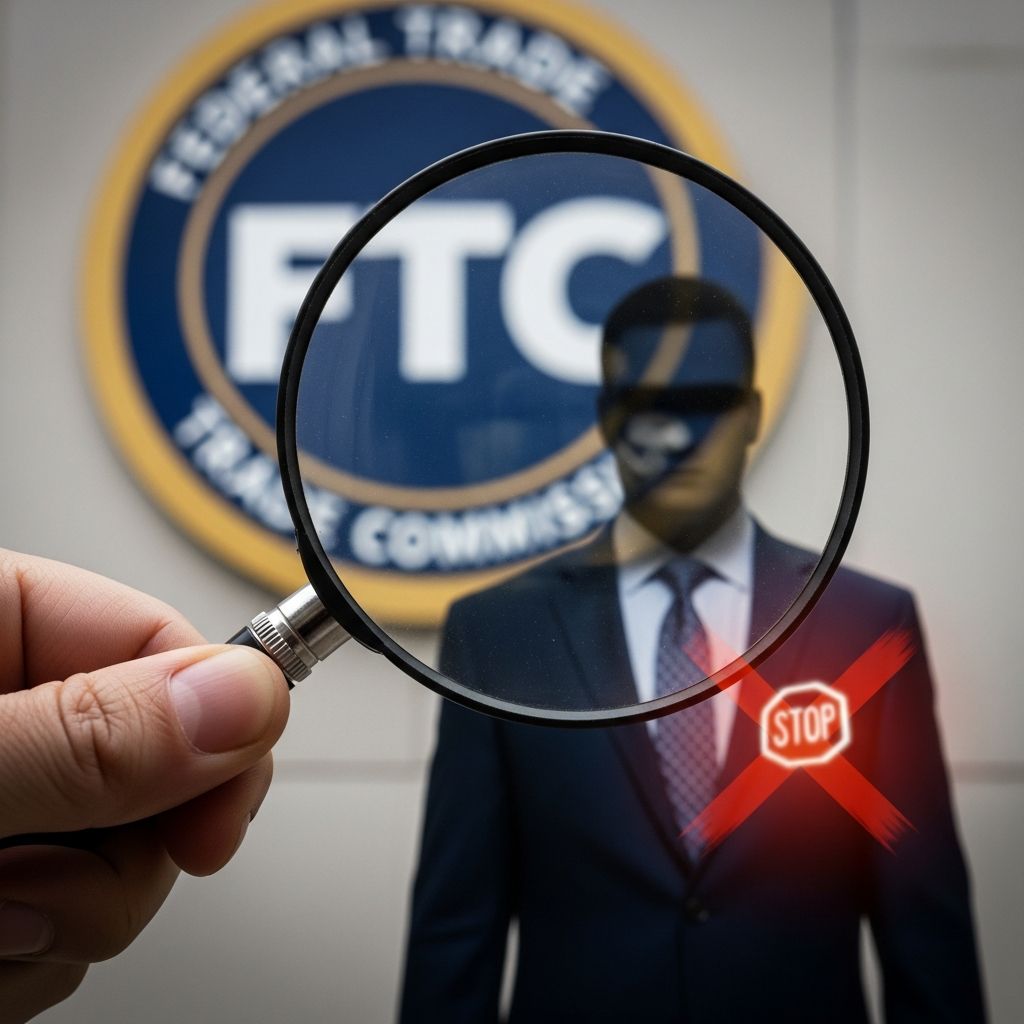
Scammers have learned that many people recognize the Federal Trade Commission (FTC) as a trusted government agency that fights fraud and protects consumers. Because of that trust, criminals increasingly pretend to be FTC employees to steal money and personal information. Understanding how these schemes work, what they look like, and how the real FTC operates can help you avoid costly losses and identity theft.
Government impersonation scams are widespread in the United States. The FTC reports that people lost more than $2.7 billion to business and government imposters in just one year, with a median individual loss of $1,000. These scams are often convincing, urgent, and frightening—but you can stay safe by knowing a few key rules.
1. Why Scammers Pretend to Be the FTC
Impersonator scams work because they exploit trust and fear at the same time. The FTC is a federal agency that enforces consumer protection and antitrust laws. Scammers take advantage of this reputation in several ways:
- Authority: People are more likely to respond when they believe a message is from a government agency.
- Urgency: Criminals claim that you are under investigation, owe a fine, or must immediately act to protect your money.
- Legitimacy: Fraudsters may use stolen FTC logos, made-up badge numbers, or forged documents to look official.
The ultimate goal is almost always the same: to get you to send money, share sensitive data, or provide access to your accounts.
2. Common Stories Used by FTC Impersonators
Scammers reuse a small set of believable stories, adjusting details to fit your situation. Here are some of the most frequent narratives reported to government agencies and consumer protection groups.
2.1 “You’re Owed a Refund or Settlement”
In this version, the scammer claims the FTC has recovered money from a company that cheated you, and that you are entitled to a refund. They may say you:
- Were overcharged by a bank, retailer, or tech company
- Are part of a lawsuit settlement
- Will receive money for being a victim of identity theft or a data breach
The hook is that you must pay a “processing fee,” taxes, or insurance before the money can be released. Any demand for advance payment is a clear sign of a scam.
2.2 “There Is a Case Against You”
Another approach is to frighten you into quick action by claiming you are in legal trouble. For example, the caller or email might say:
- The FTC has opened a case for fraud or identity theft in your name
- You ignored previous notices and now face arrest or large fines
- Your Social Security number has been suspended due to suspicious activity
The scammer will then insist that you verify your identity, share bank or Social Security details, or pay a “bond” to avoid immediate consequences.
2.3 “We’re Protecting You from a Scam—Move Your Money Now”
In some cases, impersonators pretend they are helping you avoid fraud. They might say your bank, investment custodian, or payment app is under investigation, and that you must:
- Transfer funds to a new “safe” account
- Purchase gift cards that will be “reimbursed” later
- Send cryptocurrency so the FTC can “trace” the criminals
No legitimate government agency will ever direct you to move your money in these ways. If someone does, you are dealing with a scam.
3. How the Real FTC Contacts People
Knowing what the FTC does not do is one of the best defenses against impersonation. According to official guidance, the FTC does not ask you to send money or give sensitive account information to receive a refund, and it does not threaten arrest over the phone or by email.
| What the real FTC may do | What an FTC impersonator often does |
|---|---|
| Send informational emails or letters that do not require payment to get a refund. | Demand that you pay fees, taxes, or insurance before receiving any refund. |
| Ask you to complete secure online claim forms hosted on official .gov domains. | Send links to lookalike websites or forms hosted on non-government domains. |
| Publicly list refund programs and press releases on its official website. | Insist that your refund or case is secret and that you must not speak to anyone else. |
| Communicate in a professional tone and allow you time to verify information. | Use threats, shouting, or extreme urgency—saying you must act immediately. |
| Never requests payment with gift cards, wire transfers, or cryptocurrency. | Insists on payment via gift cards, wire, peer-to-peer apps, or crypto wallets. |
4. Red Flags That an “FTC” Message Is Fake
While impersonators constantly update their scripts, the warning signs stay much the same across phone, email, text, and social media.
- Demands for immediate payment: Any request to pay right away—especially using gift cards, wire transfers, person-to-person payment apps, or cryptocurrency—is a major red flag.
- Threats of arrest or legal action: Claims that agents are on the way to arrest you, or that you will be jailed if you do not pay, signal a scam.
- Requests for sensitive information: The real FTC will not call, text, or email to ask for your Social Security number, full bank account numbers, PINs, or online banking passwords.
- Unsolicited contact about a prize or refund: If you do not remember dealing with the business or situation being described, be suspicious of any sudden refund or settlement offer.
- Suspicious email addresses or web links: Look carefully at domain names. Official U.S. government websites end in
.gov, not.com,.org, or misspelled lookalikes. - Pressure to keep the call secret: Scammers may tell you not to hang up, not to talk to anyone, or not to contact your bank. Legitimate agencies do not impose secrecy like this.
5. Safe Ways to Respond in the Moment
When you receive an unexpected call, message, or letter that says it is from the FTC, your safest first step is to slow down. You do not need to decide anything while you are on the phone or looking at a message.
5.1 If You Receive a Phone Call
- Hang up. You do not owe the caller an explanation.
- Do not press any buttons or respond to prompts in a robocall; that can lead to more calls.
- Independently look up the official contact information for the FTC or the agency mentioned, using a trusted source.
- If you want to check the story, call back using a phone number from an official government website, not from caller ID or the message.
5.2 If You Receive an Email, Text, or Direct Message
- Do not click links or open attachments.
- Do not reply or send any codes, images of gift cards, or screenshots of your account.
- Delete the message after you take any screenshots you may need to report the scam.
- Type the government agency’s official web address into your browser instead of using links in the message.
6. Protecting Your Money and Personal Data
If you interacted with an impersonator, there are steps you can take right away to reduce further harm. Many of these measures are also smart general protections against future scams.
6.1 If You Paid a Scammer
Act quickly. The sooner you contact your financial institution, the better your chances of limiting losses.
- Credit or debit card: Contact the card issuer to dispute the charge and request a new card number.
- Bank transfer or wire: Immediately call your bank and ask whether the transfer can be reversed or frozen.
- Peer-to-peer payment app: Use the app’s dispute process and notify your bank; some providers can cancel pending transfers.
- Gift cards: Reach out to the card issuer (such as the retailer or card brand) and report the card as used in a scam. They may not always be able to help, but acting fast is critical.
- Cryptocurrency: Contact the exchange or platform you used. Transactions are usually irreversible, but the platform may flag accounts or provide records for law enforcement.
6.2 If You Shared Personal Information
Giving scammers access to your identifying details can lead to account takeover or identity theft. U.S. government and consumer agencies recommend taking the following kinds of steps depending on what you shared.
- Social Security number: Consider placing a fraud alert or credit freeze with major credit bureaus, and monitor your credit reports.
- Online banking passwords: Change passwords immediately and enable multi-factor authentication (MFA) if available.
- Other account credentials: Change passwords for any accounts that use the same or similar passwords, and avoid reusing passwords in the future.
- Copies of ID documents: Contact the issuing agency (for example, your state motor vehicle department) if you believe your driver’s license or another government ID is compromised.
7. How and Why to Report an FTC Impersonator Scam
Even if you did not lose money, reporting an impersonation attempt helps law enforcement understand patterns, shut down phone lines and websites used by scammers, and warn others. Federal agencies use such reports to prioritize investigations and consumer education efforts.
- Report to the real FTC: Use the complaint assistant and fraud reporting tools on the FTC’s official website.
- Notify your state attorney general: State consumer protection offices also track scams and may offer state-level remedies.
- Tell your bank or payment provider: They may block additional transactions or flag suspicious activity.
Include as many details as you can recall, such as phone numbers, email addresses, website links, payment instructions, and screenshots. This information can be valuable for investigations.
8. Building Long-Term Scam Awareness
Impersonator scams will continue to evolve, but the basic principles for staying safe do not change. Many government and nonprofit consumer protection organizations recommend ongoing steps such as education, account monitoring, and open conversations with friends and family.
- Stay informed: Periodically review alerts and consumer education materials from official government consumer protection websites.
- Use strong, unique passwords: A password manager can help you create and store long, random passwords.
- Turn on multi-factor authentication: Add an extra layer of security to banking, email, and social media accounts wherever possible.
- Review statements and credit reports: Regular review helps you quickly spot unauthorized transfers or new accounts.
- Talk with family members: Discuss common scams with older relatives, new adults, and anyone who handles family finances.
Frequently Asked Questions (FAQs)
Q1: How can I check whether an FTC refund offer is real?
Go directly to the FTC’s official website and look for recent refund announcements or press releases. Real refund programs are publicly listed and will not require you to pay fees to receive money.
Q2: What should I do if someone calls saying they are from the FTC and threatens to arrest me?
Hang up immediately. The FTC does not threaten arrest or demand payment by phone. After ending the call, you can contact the agency through its official website if you want to report the incident.
Q3: Can my caller ID prove that a call is really from the FTC?
No. Scammers often “spoof” caller ID so that it appears to come from a government number. Caller ID alone is not reliable proof of who is calling.
Q4: Is it safe to click links in an email that uses the FTC logo?
Not necessarily. Logos and graphics are easy to copy. Instead of clicking the link, type the official web address for the FTC into your browser or use a bookmark you already trust.
Q5: I lost money to someone pretending to be a government agent. Will I get my money back?
Recovery is not guaranteed, but contacting your bank or payment provider quickly can sometimes limit losses, reverse transactions, or help law enforcement trace funds. Reporting the scam also helps authorities build cases against fraudsters.
References
- Imposter Scams: Reports, Losses, and What You Can Do — Federal Trade Commission. 2024-10-10. https://www.ftc.gov/news-events/news/press-releases/2024/10/new-ftc-data-show-business-government-imposter-scams-cost-consumers
- About the Federal Trade Commission — Federal Trade Commission. 2023-11-03. https://www.ftc.gov/about-ftc
- How to Recognize and Report Spam Text Messages — Federal Communications Commission. 2024-04-22. https://www.fcc.gov/consumers/guides/spam-unwanted-text-messages-and-email
- Protecting Older Consumers 2024-2025: A Report of the Federal Trade Commission — Federal Trade Commission. 2024-10-17. https://www.ftc.gov/reports/protecting-older-consumers-2024-2025-report-federal-trade-commission
- Consumer Protection Basics — USA.gov. 2024-01-05. https://www.usa.gov/consumer-protection
Similar Articles








Read full bio of medha deb


