
Spartanburg DSS: Guide to Local Social Services
Understand how the Spartanburg County Department of Social Services helps with safety, food, income support, and family stability.
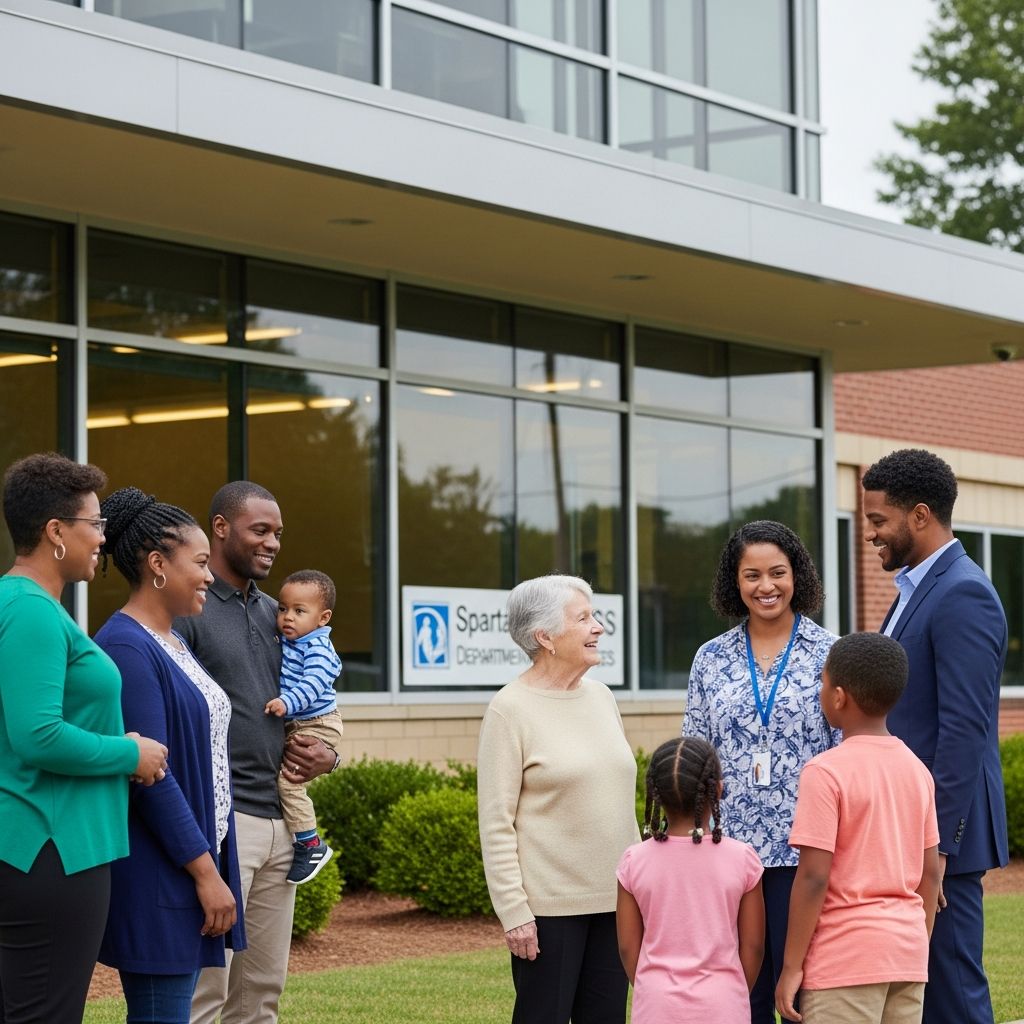
The Spartanburg County Department of Social Services (DSS) is the main public agency in Spartanburg, South Carolina that helps protect children and vulnerable adults, supports families in crisis, and connects low-income residents with critical benefits such as food and temporary cash assistance.
This guide explains what the office does, who it serves, how to contact staff, and what to expect when seeking help.
1. Location, Contact Details, and Office Basics
The Spartanburg County DSS is part of the statewide South Carolina Department of Social Services system and operates as the local county office for the Upstate region.
1.1 Office Address and Main Numbers
| Item | Details |
|---|---|
| Office name | Spartanburg County Department of Social Services |
| Street address | 630 Chesnee Hwy, Spartanburg, SC 29303 |
| Main telephone | (864) 596-3001 |
| Main fax | (864) 596-3141 |
| SNAP/TANF fax | (864) 562-4261 |
| Office hours | Monday–Friday, 8:30 a.m. – 5:00 p.m. (excluding state holidays) |
1.2 Key Regional and Statewide Contacts
- County Director: The Spartanburg office is led by a county director who oversees local child welfare, benefits, and other services.
- 24/7 Abuse & Neglect Hotline: 1-888-CARE4US (1-888-227-3487) for reporting suspected abuse or neglect of a child or vulnerable adult anywhere in South Carolina.
- State Office: South Carolina DSS, 1535 Confederate Avenue, Columbia, SC 29201-1915.
Residents can call the statewide hotline at any time, even when the local office is closed, to report immediate concerns involving safety.
2. Core Missions of Spartanburg DSS
Under state and federal law, DSS has several primary responsibilities, many of which are carried out at the county level.
- Protecting children from abuse and neglect and, when possible, keeping families safely together.
- Safeguarding vulnerable adults who cannot protect themselves due to age, disability, or illness.
- Providing economic support through food assistance (SNAP) and Temporary Assistance for Needy Families (TANF).
- Finding stable homes for children through foster care and adoption when they cannot safely remain with their parents.
- Supporting caregivers and kin who step in when a child’s parents cannot provide care.
These duties are grounded in state statute and in federal child welfare and public benefit laws such as Title IV-B and Title IV-E for child welfare and the federal SNAP and TANF programs.
3. Services Available to Spartanburg Residents
While each case is unique, many families in Spartanburg interact with DSS through several major programs administered or coordinated by the county office.
3.1 Child Protection and Family Preservation
Child protection is one of DSS’s most visible roles. When someone reports suspected abuse or neglect, DSS assesses the situation and decides what intervention is necessary.
Common activities include:
- Screening reports made to the hotline.
- Investigating allegations of child abuse or neglect.
- Working with families on safety plans and services so children can remain at home when it is safe.
- Seeking court involvement when a child must be removed for safety.
- Coordinating services such as counseling, parenting education, or substance use treatment through community providers.
DSS focuses on reunification whenever safely possible, consistent with federal child welfare policy that emphasizes maintaining family connections when they do not pose a risk to the child.
3.2 Foster Care and Adoption
If a child cannot remain safely at home, DSS may place the child in foster care while the agency and the court system work with the family on a long-term plan.
Spartanburg DSS helps with:
- Identifying and licensing foster parents willing to care for children and teens.
- Exploring kinship placements with relatives or close family friends.
- Supporting foster families with training and caseworker visits.
- Arranging permanency through reunification, guardianship, or adoption.
The state offers regional adoption and kinship care contacts, including a foster home licensing line and an Upstate adoptions number, which work closely with county offices like Spartanburg.
3.3 Food Assistance (SNAP)
The Supplemental Nutrition Assistance Program (SNAP), formerly known as “food stamps,” is a federal program that helps low-income households buy food.
Through Spartanburg DSS residents can:
- Apply for SNAP benefits or recertify existing benefits.
- Submit verification documents by fax or email, including income and household information.
- Get information about using the Electronic Benefit Transfer (EBT) card at authorized retailers.
SNAP is designed to reduce food insecurity, which the U.S. Department of Agriculture describes as limited or uncertain access to adequate food, and is one of the largest anti-hunger programs nationwide.
3.4 Temporary Assistance for Needy Families (TANF)
TANF provides time-limited cash assistance for qualifying low-income families with children and typically includes a strong focus on employment and job readiness.
Through TANF, DSS may help families with:
- Basic needs, such as rent, utilities, and essential supplies.
- Job search assistance, training, and work experience opportunities.
- Support for relatives who are caring for a child who is not their own (kinship caregivers).
South Carolina’s TANF program is structured to encourage work while providing a safety net for children during periods of unemployment or underemployment.
3.5 Other Supports and Referrals
Depending on local resources and statewide initiatives, the Spartanburg office may also connect families to:
- Child care financial assistance and vouchers.
- Child support enforcement services through the state’s child support program.
- Food distribution networks and community food pantries supported by DSS commodities programs.
- Community-based organizations providing housing, health, domestic violence, or mental health services.
In many cases, DSS is the entry point that links residents with a wide network of public and nonprofit partners throughout the Upstate region.
4. Who Can Receive Help?
Eligibility criteria vary depending on the program and may be set by federal law, state regulations, or internal policies.
4.1 Geographic Coverage
- Spartanburg County residents are generally served by the Spartanburg DSS office for county-based programs.
- Some services, such as statewide hotlines or adoption, are organized regionally but remain available to Spartanburg residents.
4.2 Program-Specific Eligibility
Although the county office can explain requirements in detail, in general:
- SNAP is available to low-income individuals and families who meet income, resource, and citizenship or immigration requirements set by federal rules.
- TANF typically serves families with children under 18 where income and resources fall below established thresholds and adults agree to participate in work-related activities.
- Child protective services involvement does not depend on income; it is based on safety concerns for a child.
- Adult protective services focus on vulnerable adults who may be abused, neglected, or exploited and unable to protect themselves.
Because rules can change, applicants are encouraged to talk directly with a caseworker or check the official South Carolina DSS website for current requirements.
5. How to Apply or Make a Report
The process for getting help depends on whether you are applying for benefits or reporting a safety concern.
5.1 Applying for SNAP or TANF
Residents can generally start an application in several ways, using statewide systems that are processed through their local county office.
- Completing an online application through the state’s DSS benefits portal.
- Printing and mailing or delivering a paper application to the Spartanburg office.
- Calling the office for guidance on how to apply and what documents are needed.
- Submitting verification materials by fax using the SNAP/TANF fax line listed for Spartanburg.
After submission, DSS reviews the application, may schedule an interview, and then issues a written notice of approval or denial according to state and federal rules.
5.2 Reporting Abuse or Neglect
Anyone who suspects that a child or vulnerable adult is being abused or neglected should make a report as soon as possible.
- 24/7 hotline: Call 1-888-CARE4US (1-888-227-3487). Reports can be made anonymously where permitted by law.
- Local office: During regular business hours, callers may also contact the Spartanburg office at (864) 596-3001 to be connected with staff.
- Law enforcement: In an emergency, call 911. Law enforcement often coordinates with DSS on investigations involving children or vulnerable adults.
To protect privacy and ensure urgent response, DSS asks that people use telephone hotlines rather than email when reporting abuse or neglect.
6. Accessibility, Communication, and Accommodations
Because social services agencies serve many people with disabilities and language needs, accessibility and communication supports are important.
- The statewide DSS system provides an Americans with Disabilities Act (ADA) contact at the state office level to address accommodation requests and concerns.
- Interpreter services and language access resources are available across DSS programs, including telephonic interpretation for non-English speakers.
- The main Spartanburg numbers can connect callers with regional lines for foster care, adoption, and kinship care that also provide informational support.
Residents with specific accessibility questions about the Spartanburg office can call ahead to discuss any needed assistance or alternative formats.
7. Working with DSS: Rights, Responsibilities, and Tips
When you work with DSS, whether for benefits or child welfare services, it can help to understand both your rights and your responsibilities.
7.1 General Rights When Receiving Services
While exact rights vary by program and law, clients generally can expect:
- To be treated respectfully and without discrimination based on race, color, national origin, sex, age, disability, or religion, in line with federal civil rights protections.
- To submit an application for benefits and receive a decision within timeframes set by federal and state law.
- To receive written notice if benefits are denied, reduced, or terminated and to request a fair hearing or appeal where allowed by law.
- To have their personal information handled according to confidentiality rules.
7.2 Responsibilities of Applicants and Participants
To keep services running smoothly, DSS typically expects clients to:
- Provide accurate and complete information about income, household size, and other eligibility factors.
- Report changes, such as new work income, changes in address, or a change in household members, within required timeframes.
- Attend scheduled interviews, assessments, and court hearings.
- Participate in work or training requirements for programs like TANF, unless formally exempt.
Failing to meet these responsibilities can affect eligibility, but individuals may have the right to explain circumstances or request reconsideration.
8. Frequently Asked Questions (FAQs)
Q1: Do I have to live in Spartanburg County to get help from this office?
In most cases, you must live in Spartanburg County to have your SNAP, TANF, or county-based child welfare case handled through the Spartanburg DSS office. Some programs and hotlines are statewide or regional, but your main caseworker for county services will usually be in the county where you live.
Q2: Can I apply for SNAP and TANF online instead of going in person?
Yes. South Carolina DSS provides online applications for many benefits, including SNAP and TANF, which are then processed by your local county office. You may still need to complete a phone or in-person interview, but starting online can save time.
Q3: What should I do if I suspect child abuse outside of business hours?
If you think a child is in danger, you do not have to wait for the local office to open. You can call the 24/7 Abuse & Neglect Reporting Hotline at 1-888-CARE4US (1-888-227-3487) at any time, or call 911 in an emergency.
Q4: Are services only for people receiving public benefits?
No. Some services, such as child protective or adult protective services, are focused on safety and are not limited by income or benefit status. However, programs like SNAP and TANF have financial eligibility rules that must be met.
Q5: How can I become a foster parent in Spartanburg?
Prospective foster parents in Spartanburg work through South Carolina DSS’s regional foster home licensing process. You can call the foster home licensing contact number listed for the Upstate region on the DSS website, and staff will guide you through orientation, background checks, training, and home assessment requirements.
References
- SC Department of Social Services – GetCareSC Provider Directory — South Carolina Department on Aging. 2023-08-01. https://www.getcaresc.com/provider/sc-department-social-services
- Department of Social Services – Spartanburg — LawHelp.org/SC. 2014-06-23. https://www.lawhelp.org/sc/organization/department-of-social-services-spartanburg
- Spartanburg County DSS Contact Information — South Carolina Department of Social Services. 2024-05-10. https://dss.sc.gov/contact-dss/upstate-region/spartanburg/
- Contact DSS — South Carolina Department of Social Services. 2024-04-18. https://dss.sc.gov/contact-dss/
- South Carolina Department of Social Services Homepage — South Carolina DSS. 2024-09-30. https://dss.sc.gov
- Characteristics and Circumstances of Those Who Use SNAP — U.S. Department of Agriculture, Food and Nutrition Service. 2023-06-15. https://www.fns.usda.gov/snap/characteristics-snap-households
Similar Articles








Read full bio of medha deb


