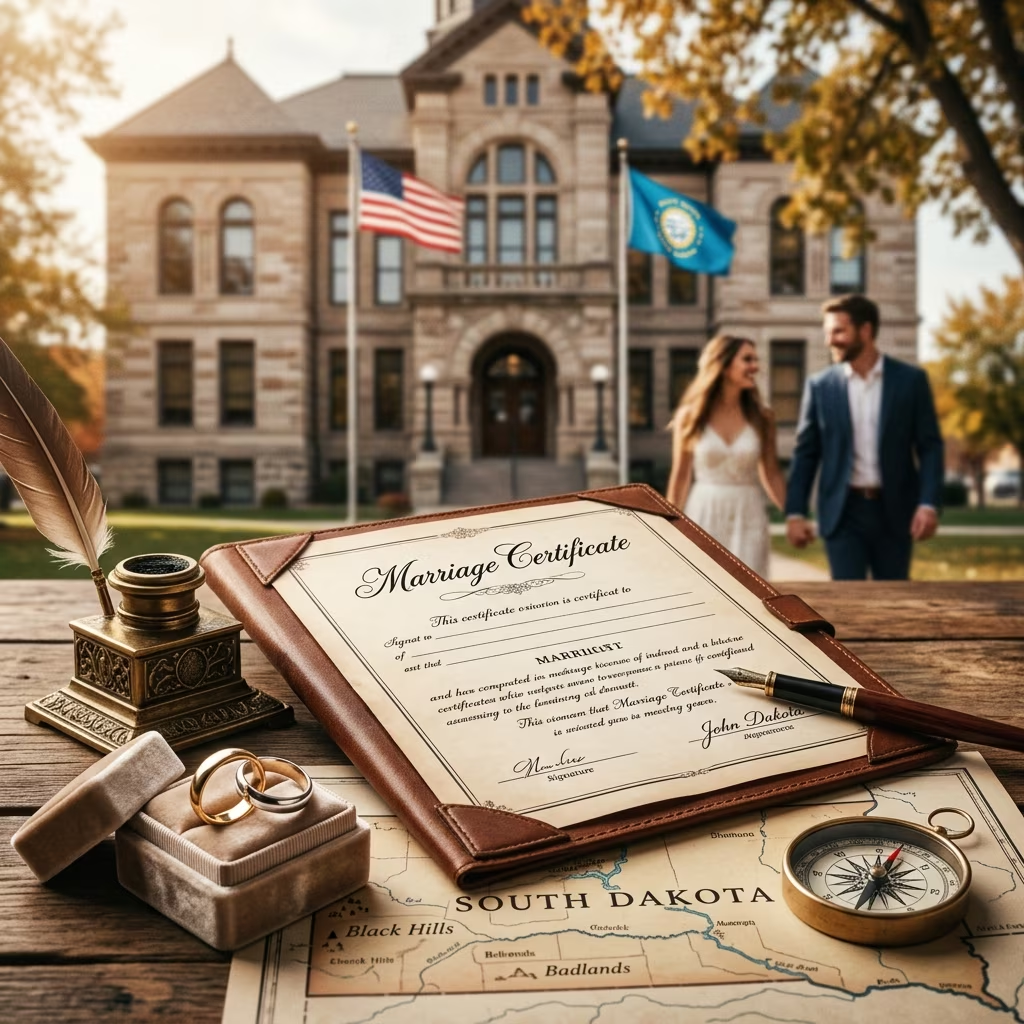
Couples who plan to marry in South Dakota must follow specific legal steps, but the process is generally straightforward, fast, and does not require a blood test or waiting period. The license is issued by county Register of Deeds offices, and once granted it is valid immediately and must be used within a limited time window.
This guide explains the main legal requirements, from age and identification rules through fees, officiants, timing, and what happens after the ceremony. Although it draws inspiration from public resources and official guidance, the explanations and structure here are original and written to be easy to follow for couples and families.
Overview of Marriage Licensing in South Dakota
In South Dakota, a marriage is legally recognized only after a valid license is issued and the ceremony is performed within the license validity period. The state sets baseline rules, and each county office administers those rules in practice.
- Licensing authority: Any county Register of Deeds office in South Dakota can issue a marriage license.
- Use of license: The marriage must be solemnized within the state; a South Dakota license cannot be used in another state.
- Validity period: The ceremony must occur within 90 days of issuance or the license expires.
- No residency requirement: You do not have to live in South Dakota to get married there, so the state is open to visitors as well as residents.
Because rules are set by statute, most counties follow the same core requirements, though there can be minor differences in office hours and payment methods.
Who Is Eligible to Marry? Age and Consent Rules
Age is one of the key eligibility factors in South Dakota’s marriage laws. State statutes restrict marriage for very young individuals and require additional consent for older minors.
Minimum age requirements
South Dakota recognizes different categories of applicants based on age:
- 18 years and older: Adults 18 or above may obtain a marriage license on their own, without parental consent.
- 16–17 years: Applicants aged 16 or 17 can marry only if a parent or legal guardian provides written consent before the license is issued.
- Under 16 years: State law does not permit marriage for persons under sixteen.
County offices will verify age through acceptable identification and will not issue a license if the age and consent requirements are not met.
Parental or guardian consent for minors
Where consent is required for 16- and 17-year-olds, the parent or guardian must typically appear or sign official forms at the Register of Deeds office. The consent is recorded along with the application, becoming part of the legal record associated with the marriage.
Identification and Application Details
Applicants must provide proof of identity and age and complete a formal application to receive a marriage license. South Dakota law and administrative guidance outline which documents are acceptable and what information is collected.
Accepted forms of identification
Both partners must appear in person at the Register of Deeds office and show valid identification. Commonly accepted documents include:
- Government-issued driver’s license (U.S. state license)
- State identification card
- Passport
- Military photo ID
- Tribal photo ID
- Certified birth certificate combined with a school or employment photo ID
- Certified birth certificate combined with a properly completed U.S. Department of Treasury Form 4029, as recognized in statute
Staff at the Register of Deeds office will compare application details with the identification presented to confirm accuracy and eligibility.
Information required on the application
The marriage license application gathers personal and legal details for both parties. While exact formats differ by county, applicants can expect to provide:
- Full legal names and dates of birth
- Current address and contact details
- Proof of age, via identification documents
- Social Security number, if issued (some guidance notes the number is needed even if the card is not physically presented)
- Planned surnames after marriage, limited to adopting a spouse’s surname or a hyphenated combination, consistent with county rules.
- Information about previous marriages, including date the last marriage legally ended, and sometimes supporting documentation such as a divorce decree or death certificate.
Applications are signed by both parties, often captured electronically, and processed on the same day in most counties.
Costs, Payments, and Office Practices
South Dakota sets a standard fee for marriage licenses, but the payment methods accepted can vary between counties.
License fee
The typical fee for a South Dakota marriage license is $40. This amount is charged by the county Register of Deeds office where the application is filed.
Payment methods
Payment practices differ by office, so couples should check with the specific county before visiting.
| Payment Method | Common Availability | Notes |
|---|---|---|
| Cash | Widely accepted | Some offices require cash only for license fees. |
| Credit / debit cards | Available at some offices | Often allowed with a small additional processing fee, such as $2.50. |
| Money orders / travelers checks | Accepted in some counties | Official guidance notes these may be accepted where personal checks are not. |
| Personal checks | Frequently not accepted | Several county offices explicitly state they do not accept personal checks for license fees. |
Because practices vary, couples are encouraged to contact the Register of Deeds office in advance, especially if they plan to pay by card or other non-cash methods.
Timing Rules: Validity, Waiting Period, and Same-Day Marriage
South Dakota is known for relatively flexible timing rules for marriage, which benefit residents and visitors alike. Key timing factors include when the license becomes effective and how long it remains valid.
No blood test requirement and no waiting period
Unlike some states that historically required blood tests for certain conditions before issuing marriage licenses, South Dakota does not require any blood test. The state also does not impose a waiting period between issuing the license and performing the ceremony.
Because of this, couples can obtain a license and marry on the same day, provided an officiant is available and all legal requirements are met.
License validity and expiration
Once issued, a South Dakota marriage license is valid immediately and remains effective for 90 days. The ceremony must occur within that 90-day period, or the license expires and can no longer be used.
The rule that licenses expire after 90 days is set by statute and reflected in county-level information, so couples planning far in advance should time their application accordingly to avoid issues.
Where and How the Ceremony Must Be Performed
Obtaining a license is only part of the legal process. To create a valid marriage under South Dakota law, the ceremony must be performed properly and by a person legally authorized to solemnize marriages.
Authorized officiants
South Dakota law allows several categories of officiants to solemnize a marriage:
- Justice of the South Dakota Supreme Court
- Judge of the circuit court
- Magistrate
- Any person authorized by a church or religious organization to perform marriages
Local county information sometimes notes additional practical considerations, such as whether justices of the peace are available in that county or whether couples should arrange private officiants.
Location rules
A South Dakota marriage license must be used for a ceremony performed within the state. The ceremony can take place in any county, not just the county where the license was issued.
Two adult witnesses must typically be present at the ceremony to sign the license, helping confirm that the marriage was solemnized in a lawful manner.
Duties After the Ceremony: Filing and Certified Copies
The legal process continues once the couple has been married. The license must be properly completed, signed, and returned so the marriage can be recorded and certified.
Returning the license
After the ceremony, the officiant and witnesses will sign the license, and the document must be returned to the issuing Register of Deeds office.
- The officiant is responsible for returning the completed license.
- The return generally must occur within 10 days of the ceremony.
- Failure to return the license means there may be no official record of the marriage, even if the ceremony occurred.
Couples should confirm with their officiant how and when the license will be filed to avoid delays in obtaining proof of marriage.
Obtaining certified copies
Once the license is filed and recorded, couples may order certified copies of the marriage record from the Register of Deeds office. These certified copies are often needed for name changes, benefits, immigration matters, and other legal procedures.
County offices typically charge a separate fee for each certified copy. The exact cost can vary, and couples should check the current price with the appropriate office when they request copies.
Practical Tips for Couples Planning a South Dakota Wedding
Although the legal requirements are relatively simple, planning ahead helps prevent administrative surprises, especially for out-of-state couples or those marrying during busy local events.
- Confirm office hours: Many Register of Deeds offices operate on standard weekday hours and may have cut-off times for same-day license issuance.
- Call ahead about payment methods: Because some offices accept only cash or travelers checks, verifying accepted payment methods ensures you can complete the application in one visit.
- Gather identification and prior marriage documents: Bringing valid photo ID and, if applicable, documentation that prior marriages have ended (such as a divorce decree) helps avoid delays.
- Plan for the 90-day window: Time your license application so the ceremony falls within the validity period and is not rushed or postponed beyond expiration.
- Coordinate with the officiant: Discuss who will return the completed license and how soon it will be filed, so you know when you can obtain certified copies.
Frequently Asked Questions About South Dakota Marriage Licenses
Do we need a blood test to get married in South Dakota?
No. South Dakota does not require any blood test to obtain a marriage license.
Is there a waiting period between getting the license and the ceremony?
No. There is no waiting period; once the license is issued, the couple may marry the same day, subject to officiant availability.
How long is a South Dakota marriage license valid?
The license is valid for 90 days from the date of issuance. The ceremony must be performed within that period or the license expires.
Can non-residents get married in South Dakota?
Yes. Residency is not required; visitors may obtain a marriage license and marry in South Dakota as long as they meet age, identification, and other legal requirements.
Where can we get a marriage license?
You can apply at any county Register of Deeds office in South Dakota. The ceremony may then be held anywhere in the state.
Who can officiate our wedding?
Authorized officiants include justices of the Supreme Court, circuit court judges, magistrates, and individuals empowered by a church or religious organization to solemnize marriages.
What happens if the officiant does not return the license?
If the completed license is not returned to the Register of Deeds within about 10 days, there may be no official record of the marriage, even if a ceremony took place.
Can we change our surnames when we marry?
Yes. The application allows couples to indicate the surnames they will use after marriage, typically limited to adopting a spouse’s surname or creating a hyphenated combination, consistent with county rules.
References
- Marriage Requirements — South Dakota Department of Health. 2024-05-01. https://doh.sd.gov/licensing-and-records/vital-records/marriage-requirements/
- South Dakota Marriage License Application Overview — South Dakota Department of Health. 2023-07-01. https://doh.sd.gov/media/ojfhfm4r/marriagelicenseapplication.pdf
- Marriage License Requirements – Minnehaha County — Minnehaha County Register of Deeds. 2024-01-15. https://www.minnehahacounty.gov/dept/rd/vital_records/marriages/marriages.php
- Register of Deeds – Marriage License — Pennington County Government. 2023-11-10. https://www.pennco.org/services/register_of_deeds/marriage_license.php
- How to Get a South Dakota Marriage License & Plan Your SD Wedding — The Meadow Barn. 2023-06-20. https://themeadowbarn.com/south-dakota-marriage-license/
- Marriage Licenses — Lincoln County, South Dakota. 2022-09-01. https://www.lincolncountysd.gov/191/Marriage-Licenses
- Marriage Can Be a Same Day Event in South Dakota — KELOLAND News. 2023-07-12. https://www.keloland.com/keloland-com-original/marriage-can-be-a-same-day-event-in-south-dakota/