
New York First-Offense DUI: Penalties, Process, and Defense
Understand how New York treats a first DUI/DWI, including penalties, license impact, court process, and practical defense options.
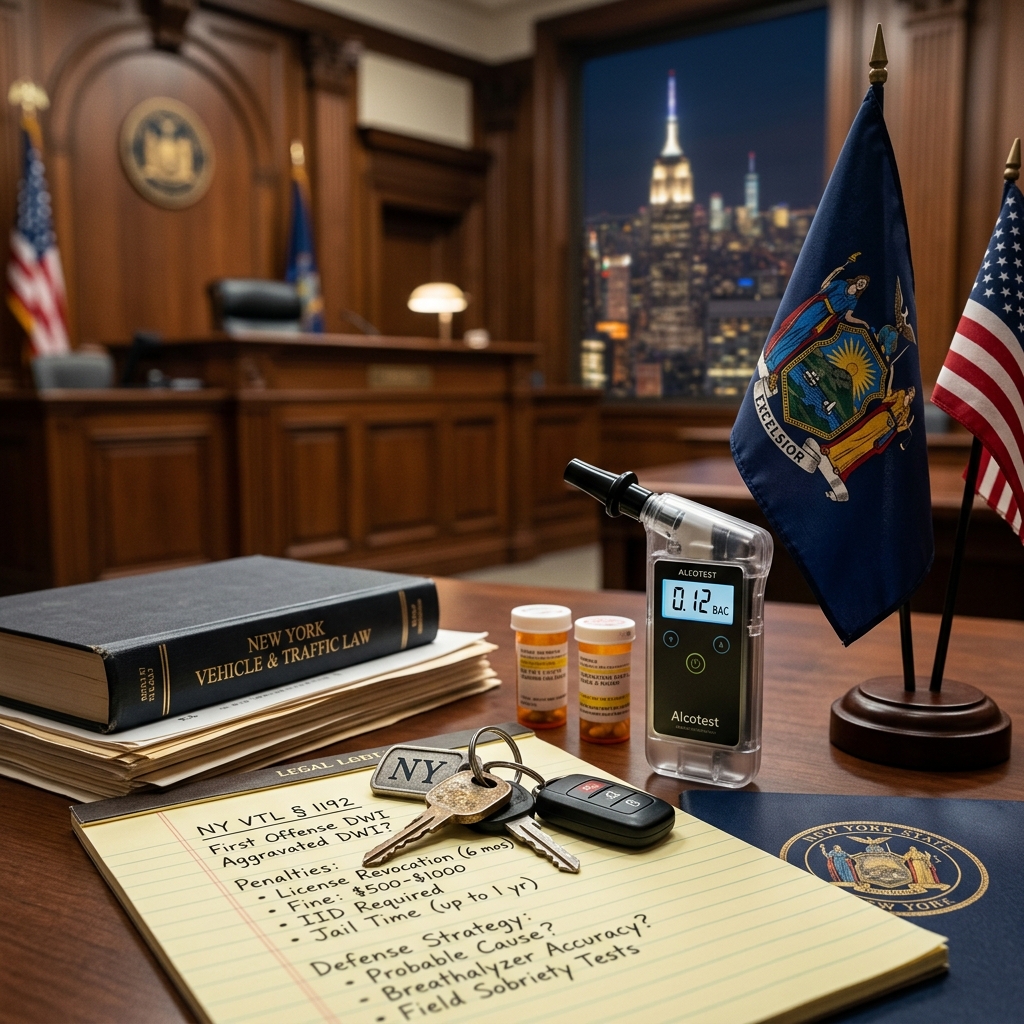
Facing a first DUI or DWI charge in New York is often overwhelming. You may be worried about jail, fines, losing your driver’s license, and how a conviction could affect your job and insurance. This guide explains in clear, practical terms how New York handles first-offense alcohol and drug driving violations, what penalties you might face, and what steps you can take to protect yourself.
Overview: How New York Classifies Alcohol and Drug Driving Offenses
New York does not use the term “DUI” in its statutes. Instead, it recognizes several distinct offenses, each with different consequences. Understanding which one you are charged with is the starting point for evaluating your case.
- DWAI (Driving While Ability Impaired by Alcohol) – a lower-level offense typically treated as a traffic infraction, not a crime.
- DWI (Driving While Intoxicated) – usually a misdemeanor criminal offense based on higher blood alcohol content (BAC) or clear signs of intoxication.
- Aggravated DWI – a more serious misdemeanor involving very high BAC (0.18 or above) or certain aggravating circumstances.
- DWAI-Drug and DWAI-Combination – offenses involving impairment by drugs or a mix of drugs and alcohol.
Although this article focuses on first offenses, New York law looks at your entire history of alcohol- or drug-related driving convictions. Multiple violations within 5 or 10 years lead to harsher penalties and sometimes felony charges.
DWAI vs DWI vs Aggravated DWI: Key Differences for First Offenders
The exact charge matters because penalties, criminal record consequences, and license actions are very different. Here is a simplified comparison.
| Offense Type | Classification | Typical BAC Range | Mandatory Fine (First Offense) | Max Jail Term | License Consequences |
|---|---|---|---|---|---|
| DWAI (Alcohol) | Traffic infraction | Below 0.08, but impaired driving observed | $300–$500 | Up to 15 days | 90-day suspension |
| DWI (Alcohol or DWAI-Drug) | Misdemeanor crime | 0.08–0.17 (alcohol) or impairment by drugs | $500–$1,000 | Up to 1 year | License revoked at least 6 months |
| Aggravated DWI | Misdemeanor (first offense) | 0.18 or higher | $1,000–$2,500 | Up to 1 year | License revoked at least 1 year |
Beyond these core penalties, New York adds mandatory surcharges and fees to every alcohol-related misdemeanor or felony, significantly increasing the financial impact of a conviction.
Penalties for a First DWAI in New York
DWAI is the least severe alcohol-related driving offense, but it still carries real consequences. It can be an outcome of plea negotiations in some DWI cases. For a first DWAI based solely on alcohol impairment, New York law includes:
- Fine: Between $300 and $500.
- Possible jail time: Up to 15 days (often avoided, but legally allowed).
- License suspension: 90 days suspension of driving privileges.
- Record implications: Treated as a traffic infraction, not a misdemeanor, but still an alcohol-related violation.
Although a DWAI is not a crime in the same way as a DWI, it can still raise insurance premiums and be counted against you if you are charged again with an alcohol-related driving offense within 5 or 10 years.
Penalties for a First DWI or DWAI-Drug
For most drivers charged with “DUI” in New York, the actual statutory offense is DWI (Driving While Intoxicated) or DWAI-Drug. Both are treated as misdemeanors for a first offense. The New York Department of Motor Vehicles (DMV) sets mandatory minimum penalties that apply regardless of the court’s discretionary sentence.
- Fine range: $500 to $1,000. The exact amount typically depends on BAC, circumstances, and any plea agreement.
- Maximum jail term: Up to one year in local jail.
- Mandatory license revocation: At least six months, even for a first DWI.
- Mandatory surcharges and fees: Additional charges of roughly $395 for misdemeanors, including a crime victim assistance fee and an alcohol-related fee.
In practice, many first-time offenders do not receive lengthy jail sentences, especially when there was no accident, injury, or other aggravating factor. However, the loss of driving privileges and the creation of a permanent criminal record are significant long-term consequences.
Penalties for a First Aggravated DWI
Aggravated DWI applies when your BAC is 0.18 or higher or when certain severe circumstances exist. The law treats these cases more harshly because the risk of serious harm to others is considered much higher.
- Fine range: $1,000 to $2,500 for a first aggravated DWI.
- Maximum jail term: Up to one year.
- Mandatory license revocation: At least one year.
- Criminal record: A misdemeanor conviction, but often treated more seriously by courts and prosecutors than standard DWI.
If a child is in the vehicle or there is serious injury or death, prosecutors may consider felony charges under separate statutes, even for a first offense. That scenario is beyond the scope of typical first-offense DWI but is worth noting as a potential risk in more severe fact patterns.
Mandatory Surcharges, Fees, and Other Financial Costs
Even if fines seem manageable, the overall financial impact of a first DUI-related conviction in New York is much higher once mandatory fees and indirect costs are included. For alcohol-related misdemeanors and felonies, New York law requires:
- Mandatory surcharge and crime victim assistance fee: Total around $395 for misdemeanors and $520 for felonies, with small additional amounts in certain local courts.
- Administrative fees: Possible ignition interlock device costs and DMV fees for license reinstatement or termination of suspension.
- Insurance impact: Substantial increases in auto insurance premiums; some drivers may need special high-risk insurance.
These financial penalties can easily exceed the fine itself, and because they are mandated by statute, neither the judge nor the prosecutor can waive them in most cases.
License Suspension and Revocation: What First Offenders Should Expect
For many people, losing the ability to drive is more disruptive than fines or short jail time. New York’s DMV imposes licensing consequences independently of the criminal court. That means your driver’s license can be suspended or revoked even if the criminal case is pending or resolved with a reduced charge.
- DWAI (alcohol): 90-day license suspension for a first offense.
- DWI or DWAI-Drug: License revoked for at least six months on a first offense.
- Aggravated DWI: License revoked for at least one year for the first violation.
In some cases, drivers may be eligible for limited driving privileges, such as a conditional license allowing travel to work, school, or treatment programs. Eligibility depends on factors like prior record, completion of required programs, and DMV rules at the time.
How a First DUI Case Moves Through the New York System
While every case is unique, the legal process for a first DWI or related charge generally follows a predictable path:
- Traffic stop and investigation
Officers observe driving behavior, request documents, and look for signs of impairment. They may conduct roadside sobriety tests and preliminary breath tests.
- Arrest and chemical testing
If impairment is suspected, you may be arrested and taken for a formal breath test, blood test, or both. Refusal can trigger separate administrative penalties, including license revocation.
- Arraignment
Your first court appearance, where charges are formally read, rights explained, and bail or release conditions set. This is also where you enter an initial plea.
- Pretrial phase
Evidence is exchanged and reviewed, motions may be filed to challenge the stop or testing procedures, and plea negotiations often occur.
- Resolution
The case may end with a plea agreement (for example, a reduction to DWAI) or proceed to trial if contested. Sentencing follows a conviction.
Because the consequences of admitting guilt can be long-lasting, it is common for defendants to seek legal counsel early to assess options and potential defenses.
Common Collateral Consequences of a First DWI Conviction
Beyond the penalties imposed by the court and DMV, a first DUI-related conviction can create broader personal and professional challenges.
- Employment issues: Certain jobs, especially those involving driving, security, or professional licensing, may be affected by a criminal record.
- Professional licensing: Some licensing boards require reporting of criminal convictions and may impose discipline or monitoring.
- Travel restrictions: A DWI conviction can complicate entry to some countries, depending on their immigration and border policies.
- Social and personal impact: Stigma, strained relationships, and stress associated with legal proceedings and financial obligations.
For first-time offenders, these collateral consequences often come as a surprise but are crucial to consider when deciding how to approach the case.
Defense Considerations and Practical Steps for First Offenders
The fact that you are charged does not automatically mean you will be convicted as originally charged. There are several practical steps a first-time defendant can take to improve outcomes:
- Review the legality of the traffic stop
Evidence may be challenged if the stop lacked a legitimate basis, such as observed traffic violations or reasonable suspicion of impairment.
- Examine testing procedures
Breath and blood tests must follow strict protocols. Errors in calibration, administration, or chain of custody can form the basis of legal challenges.
- Consider treatment and education programs
Voluntary enrollment in alcohol education or counseling can sometimes influence negotiation and sentencing, particularly for first-time offenders.
- Understand plea options
In some circumstances, charges may be reduced (for example, from DWI to DWAI), which can alter criminal record implications and license consequences.
Because New York’s penalties and rules are highly technical and occasionally updated, many defendants consult attorneys who focus on DWI/DUI cases to navigate these decisions effectively.
Frequently Asked Questions About First-Offense DUI in New York
Is every first DWI in New York a felony?
No. A standard first DWI in New York is typically a misdemeanor, not a felony. Felony charges become more likely with repeat offenses or severe circumstances such as serious injury or child passengers.
Will I automatically go to jail for a first DWI?
New York law allows up to one year in jail for a first DWI, but many first-time offenders receive non-jail outcomes, especially where there are no injuries or aggravating factors. However, the risk of jail depends on case details and judicial discretion.
Can I keep driving to work after a first DWI conviction?
Your license will be suspended or revoked for a period depending on the specific charge. You may be eligible for a conditional or restricted license, but eligibility and conditions are determined by the DMV and are not automatic.
What is the difference between DWI and DWAI?
DWAI (alcohol) is generally a lower-level traffic infraction based on impaired ability to drive, often with BAC below 0.08. DWI is a misdemeanor criminal charge, usually associated with BAC of 0.08 or higher or clear signs of intoxication.
How long will a first DWI stay on my record?
A DWI conviction creates a criminal record that can remain accessible to law enforcement, courts, and sometimes employers indefinitely. It also counts toward enhanced penalties if you are charged again within specific time frames, such as 10 years.
Key Takeaways for New York First-Time DUI Defendants
For first-time offenders in New York, the most critical points to remember are:
- A first alcohol- or drug-related driving violation can range from a DWAI traffic infraction to a misdemeanor DWI or aggravated DWI, each with different penalties.
- Even without jail, penalties include fines, mandatory surcharges, and significant license suspensions or revocations.
- The DMV imposes licensing consequences separately from the criminal court, and these are mandatory for certain offenses.
- Collateral effects—such as insurance increases and employment impacts—can be substantial, even for a first offense.
- Legal and practical strategies, including reviewing the stop and tests and considering treatment programs, may improve outcomes.
Understanding these rules early, rather than waiting until the day of sentencing, gives first-time defendants a better chance to protect their future and make informed decisions about how to respond to a New York DUI-related charge.
References
- Penalties for Alcohol or Drug-Related Violations — New York State Department of Motor Vehicles. 2024-03-01. https://dmv.ny.gov/points-and-penalties/penalties-for-alcohol-or-drug-related-violations
- DRUNK DRIVING PENALTIES – Driving While Intoxicated, Aggravated DWI, DWAI — Sullivan County STOP-DWI / New York State Police. 2023-01-10. https://www.sullivanny.gov/sites/default/files/departments/stopdwi/NYDWIPenalties.pdf
- First-Time DWI or DUI in NY – A Complete Guide — Cohen & Bernstein. 2023-07-15. https://cohenbernstein.com/first-time-dwi-or-dui-in-ny-a-complete-guide/
- New York First-Time DUI Lawyer — Saland Law. 2023-09-01. https://www.new-york-lawyers.org/practice-areas/new-york-dwi-dui-crimes/new-york-dui-lawyer/new-york-first-time-dui-lawyer/
- What Happens on a 1st, 2nd, and 3rd DWI Offense in New York — Greenwald Law Firm. 2022-11-20. https://www.greenwaldfirm.com/dwi-dui/what-happens-on-a-1st-2nd-and-3rd-dwi-offense-in-new-york/
Similar Articles








Read full bio of Sneha Tete




