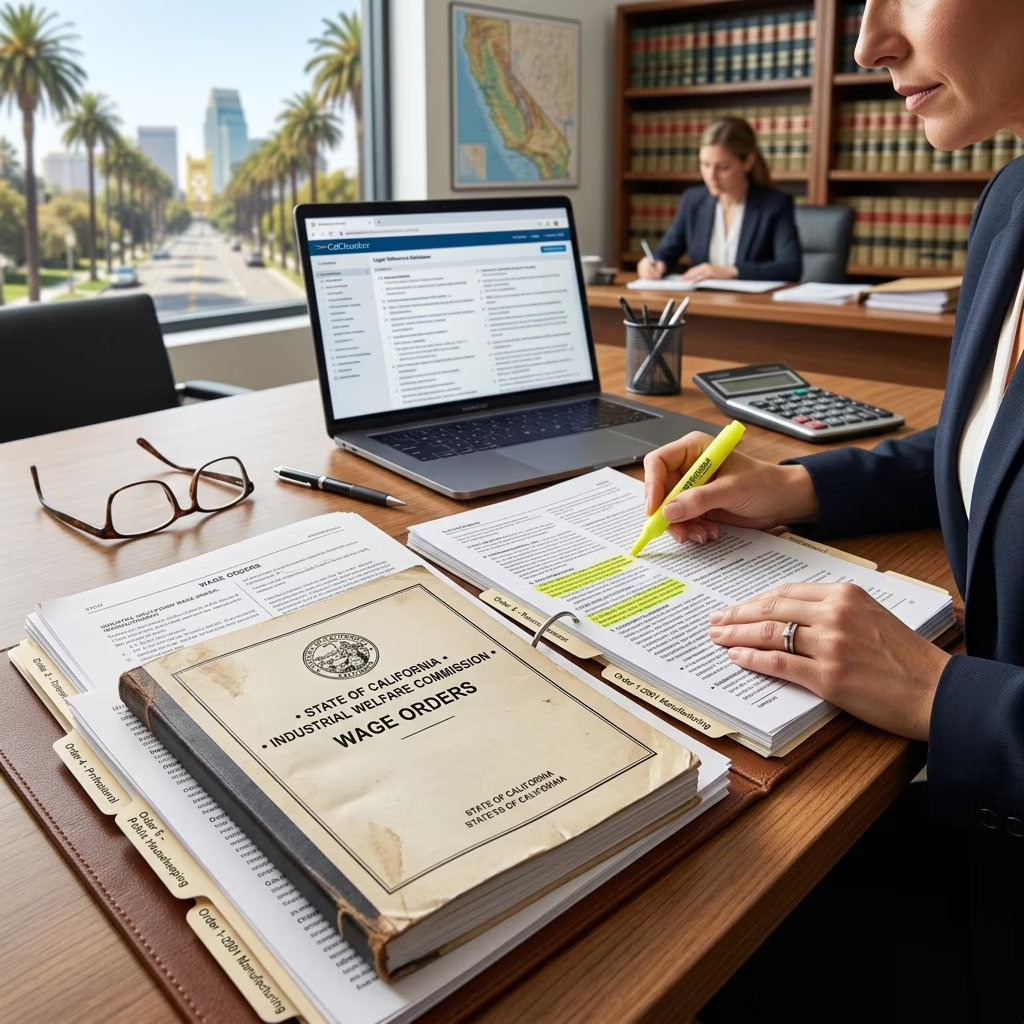
California uses a unique system of Industrial Welfare Commission (IWC) wage orders to regulate wages, hours, and working conditions across a wide range of industries and occupations. These wage orders sit alongside state labor statutes and are enforceable rules that both employers and employees must understand to avoid costly violations. This guide explains what wage orders are, how they are structured, who they cover, and what practical steps are required for compliance.
What Are California Wage Orders?
In California, wage orders are formal regulations issued by the former Industrial Welfare Commission (IWC) that define minimum standards for wages, hours, and working conditions. Although the commission is no longer active, the Department of Industrial Relations (DIR) and the Division of Labor Standards Enforcement (DLSE) continue to amend, republish, and enforce these orders. Wage orders function much like detailed rulebooks for specific types of work.
Key features of California wage orders include:
- They cover particular industries or occupations rather than applying to all workers in the same way.
- They address not only minimum wage, but also overtime, meal and rest breaks, and working conditions.
- They are legally binding; the DLSE enforces compliance and can assess penalties for violations.
- Employers must post applicable wage orders in the workplace so employees can read them during the workday.
Overview of the 17 Wage Orders
California has 17 primary industry and occupation wage orders, plus a separate general minimum wage order. Each order is numbered and describes the specific type of business or work it governs. For example, some wage orders focus on manufacturing, while others cover professional office work or hospitality.
| Wage Order Type | General Focus | Examples of Covered Work |
|---|---|---|
| Industry-based orders | Regulate work in specific industries such as manufacturing, agriculture, or retail. | Factory workers, farmworkers, retail sales staff. |
| Occupation-based orders | Apply to particular occupations regardless of the broader industry. | Professional, technical, clerical, and similar office roles. |
| General minimum wage order | Sets statewide minimum wage rates that interact with each industry wage order. | Most non-exempt employees in California. |
Because the wage orders are framed around what type of work is being done, determining which order applies requires a careful look at the employer’s principal business activity and the actual duties performed by employees. Misclassifying the applicable wage order can lead to underpayment or misapplication of break rules, increasing the risk of disputes and government enforcement.
What Do Wage Orders Regulate?
While every wage order has its own detailed language, they tend to cover a common core of workplace issues. In practice, wage orders act as a comprehensive framework for how employees are paid and how their work environment is managed.
Wages and Minimum Wage
Wage orders incorporate the California minimum wage and often specify how it applies to particular categories of workers. The DIR periodically amends wage orders to reflect statutory minimum wage changes, especially in sections that deal with basic hourly pay and certain types of compensation. Employers must track these updates to ensure that wage rates listed in payroll systems match what is required under both state law and the relevant wage order.
Some of the wage-related issues addressed include:
- Minimum hourly wage for non-exempt employees.
- Rules for piece-rate or commission-based compensation, where applicable.
- Payment for split shifts and reporting time (pay owed when employees are sent home early).
- Extra pay obligations when required breaks are not provided.
Overtime and Hours of Work
Most California employees covered by wage orders are considered non-exempt, meaning they are entitled to overtime when they work more than a certain number of hours in a day or week. Wage orders typically mirror or expand on statutory overtime rules, specifying which employees qualify for overtime and at what rates.
Core overtime concepts found in wage orders include:
- Daily overtime after a set number of hours in a workday.
- Weekly overtime after a threshold number of hours in a workweek.
- Higher overtime rates (such as double time) for very long shifts or seventh consecutive days of work.
- Different treatment for certain exempt categories—executive, administrative, or professional—where the wage orders specify exemptions.
Meal Periods and Rest Breaks
California is known for detailed rules on meal periods and rest breaks, and wage orders are where much of this detail is found. In many wage orders, employers must provide a 30-minute off-duty meal period after a specified number of hours worked, along with paid 10-minute rest breaks for each four-hour segment or major fraction of the workday.
Common break-related requirements include:
- Meal periods that allow employees to be fully relieved of duties, unless a lawful on-duty meal arrangement exists.
- Paid rest breaks that must be counted as hours worked.
- Additional hour of pay at the regular rate when meal or rest breaks are not properly provided.
Working Conditions and Workplace Standards
Wage orders also set minimum standards for working conditions beyond pay and hours. These provisions complement occupational safety rules and can cover a surprisingly broad array of topics.
Examples of working condition requirements in various wage orders include:
- Providing uniforms and tools in certain situations or reimbursing employees when they must supply them.
- Maintaining suitable seating when the nature of the work reasonably permits employees to sit.
- Keeping workplace temperature at a level that provides reasonable comfort consistent with industry standards.
- Recordkeeping obligations, including tracking hours worked and wages paid.
- Posting requirements for wage orders themselves and related notices.
How Employers Determine the Correct Wage Order
One of the most important steps in wage order compliance is correctly identifying which order applies to the business or to specific groups of employees. The state’s official wage order list, maintained by the DIR, organizes wage orders by industry and occupation so employers can compare their operations with the descriptions.
Typical steps employers take to identify the right wage order include:
- Reviewing the company’s primary business activity (for example, manufacturing goods, running a restaurant, or providing professional services).
- Comparing that activity to the industry descriptions appearing at the top of each wage order.
- Examining employees’ actual job duties to see whether an occupation-based order, such as one covering clerical or professional roles, might apply even within a broader industry.
- Consulting legal counsel or HR professionals when a business operates across multiple industries or has complex staffing arrangements.
Employers should document their rationale for choosing a particular wage order, as this can be helpful if the DLSE later reviews the company’s classification decisions. Because misclassification can affect overtime, meal breaks, and other rights, careful analysis is especially important in businesses with hybrid or evolving operations.
Posting and Notice Requirements
California law requires employers to post the applicable IWC wage orders in areas that employees frequent so they can be easily read during the workday. This makes wage orders not just regulatory documents but also workplace communications tools.
Key posting duties include:
- Posting the industry or occupation wage order that applies to the business.
- Posting the general minimum wage order in addition to the specific industry wage order.
- Ensuring the location is accessible, such as a break room, near time clocks, or in another common area.
- Making copies available upon request where physical posting is impractical, such as remote worksites.
The DIR provides downloadable copies of wage orders so employers can print and post them. Maintaining current postings is important, particularly when the DIR republishes wage orders to incorporate changes to minimum wage laws or other statutory updates.
Consequences of Non-Compliance
Failure to follow wage order requirements can lead to penalties, back pay, and litigation. The DLSE enforces wage orders, and employees may also bring civil claims for unpaid wages or missed breaks. Some wage orders specify monetary penalties per violation, per employee, and per pay period, which can add up quickly.
Potential outcomes when wage orders are not followed include:
- Administrative citations for violations of wage, break, or posting rules.
- Liability for unpaid overtime, minimum wage shortfalls, or premium pay for missed meal and rest periods.
- Penalties assessed per instance of noncompliance, with higher amounts for repeated violations.
- Private lawsuits or class actions seeking back pay and statutory damages.
- Reputational harm and increased scrutiny from regulators and workers.
Because wage orders are detailed and state enforcement can be vigorous, many employers integrate wage order review into their regular compliance audits and payroll checks.
Practical Compliance Tips for Employers
Employers can reduce risk and support a fair workplace by embedding wage order rules into day-to-day operations. Compliance is not simply a legal obligation; it can also contribute to better morale and clearer expectations.
Practical measures employers often take include:
- Identify the correct wage order for each segment of the workforce and keep documentation of the analysis.
- Update policies and handbooks to reflect wage order requirements on hours, breaks, uniforms, and working conditions.
- Train supervisors on meal and rest break rules so they understand scheduling limits and premium pay obligations.
- Audit timekeeping systems to ensure meal periods and rest breaks are properly recorded where appropriate.
- Regularly review postings and replace outdated wage orders with current versions from the DIR.
- Consult legal counsel or experienced HR professionals when business models change or when wage orders could overlap.
Guidance for Employees
Employees also benefit from understanding wage orders, since many basic workplace rights are defined in these documents. While the text of wage orders can be technical, workers can focus on key areas such as minimum wage, overtime, meal periods, and rest breaks.
Employees who want to understand how wage orders affect them can:
- Locate the posted wage order in their workplace and read the sections on wages, hours, and breaks.
- Identify whether they are classified as exempt or non-exempt under the relevant wage order and state rules.
- Track their hours worked, including meal periods, to compare with wage order requirements.
- Ask questions of HR or management if policies appear inconsistent with the posted wage order.
- Contact the DLSE or consult a qualified employment attorney if they believe wage order rules are not being followed.
FAQs About California Wage Orders
1. How many wage orders does California have?
California currently has 17 industry and occupation wage orders, along with a separate minimum wage order. Each order targets a specific type of work, so employers must identify which one applies to their business.
2. Are wage orders still enforced even though the IWC no longer meets?
Yes. Even though the Industrial Welfare Commission itself is no longer active, the Department of Industrial Relations and the Division of Labor Standards Enforcement maintain and enforce wage orders. Employers remain fully subject to these regulations.
3. Where can I find the text of the wage orders?
The official text of all current wage orders is available from the California Department of Industrial Relations, which provides downloadable copies for posting and reference. Employers typically print these documents and post them in workplace common areas.
4. Do wage orders cover both wages and working conditions?
Yes. Wage orders are designed to address wages, hours, and working conditions in one integrated set of regulations. They include rules on minimum wage, overtime, breaks, uniforms, seating, temperature, and other aspects of the work environment.
5. What happens if an employer does not comply with a wage order?
Non-compliance can result in administrative penalties, back pay obligations, and potential civil lawsuits from employees. Some wage orders include specific per-violation penalties, and repeated violations may lead to higher fines.
6. Do all employers have to post wage orders?
Yes, California requires employers to post the applicable wage orders in areas frequented by employees, where they can be easily read during the workday. If posting is impractical at a particular worksite, employers must make copies available upon request.
References
- IWC Industrial Welfare Commission Wage Orders — California Department of Industrial Relations. 2024-01-01. https://www.dir.ca.gov/iwc/wageorderindustries.htm
- DIR – IWC Home Page — California Department of Industrial Relations. 2023-06-15. https://www.dir.ca.gov/iwc/iwc.html
- California Wage Orders, What Are They & Why Employers Should Care — California Workplace Law Blog (Seyfarth Shaw LLP). 2022-06-07. https://www.californiaworkplacelawblog.com/2022/06/articles/california/california-wage-orders-what-are-they-why-employers-should-care/
- California IWC Wage Orders — Practical Law, Thomson Reuters. 2021-09-01. https://uk.practicallaw.thomsonreuters.com/w-020-1911
- What California Employers, HR Professionals, and Counsel Need to Know About California’s Wage Order 4 — Straggas Law. 2020-02-10. http://straggaslaw.com/california-employers-hr-professionals-counsel-need-know-californias-wage-order-4/
- State Wage Orders — Compliance Poster Company. 2023-03-01. https://complianceposter.com/state-wage-orders/
- California IWC Wage Orders — Mosey. 2022-05-01. https://mosey.com/blog/california-wage-orders-iwc/