
Understanding DWI Defenses and Legal Strategies
Learn how DWI defenses work, which strategies are most effective, and why experienced legal guidance can dramatically change the outcome of a drunk driving case.
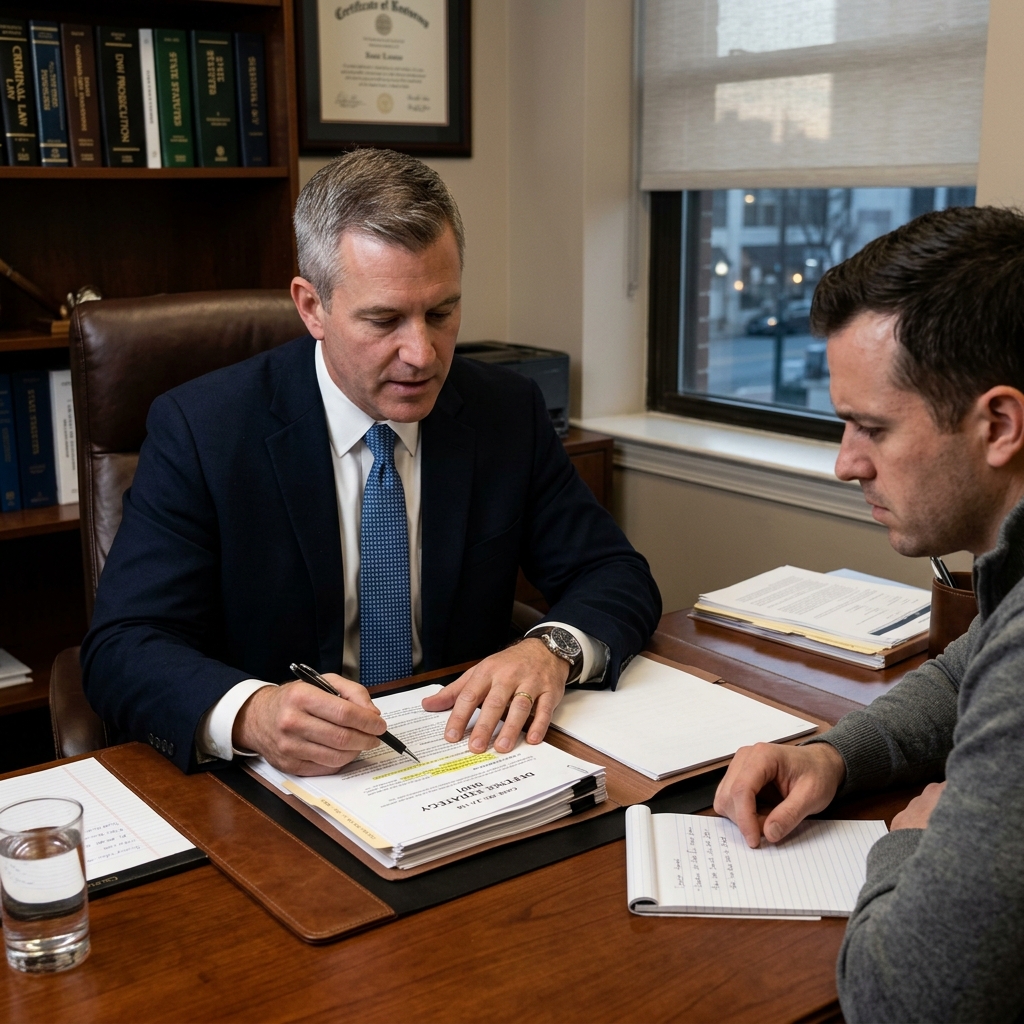
Being charged with
driving while intoxicated (DWI)
ordriving under the influence (DUI)
can be overwhelming. Many people assume a conviction is inevitable once they are arrested, especially if a chemical test shows an elevated blood alcohol concentration (BAC). In reality, DWI cases are highly technical, and there are numerous defenses that can be used to challenge the prosecution’s evidence and protect your rights.This guide explains how DWI cases are built, outlines common defense strategies, and highlights practical issues you should understand when you or someone you care about faces a drunk driving charge. While laws vary by state, the concepts below appear widely in U.S. DWI practice and are grounded in established criminal procedure and evidentiary rules.
How DWI Cases Are Built: Key Elements the Prosecution Must Prove
To secure a conviction, prosecutors must typically prove several core elements beyond a reasonable doubt. Knowing what they must establish helps explain why certain defenses are effective.
- Lawful stop or contact: Police usually must have reasonable suspicion or a lawful basis to stop a vehicle or otherwise encounter a driver.
- Impairment or unlawful BAC: The state must show the driver was impaired by alcohol or drugs, or had a BAC at or above the statutory limit (often 0.08%).
- Driving or actual physical control: In many jurisdictions, the prosecution must prove the defendant was either driving or in actual physical control of a vehicle.
- Proper procedures: Evidence such as field sobriety tests and chemical tests must be collected and handled according to legal and scientific standards.
Defense strategies focus on weakening one or more of these elements, often by challenging how evidence was obtained or whether it is reliable enough to support a conviction.
Challenging the Legality of the Traffic Stop and Arrest
One of the most powerful tools in DWI defense is attacking the
constitutionality of the traffic stop
and subsequent detention. Under the Fourth Amendment, individuals are protected from unreasonable searches and seizures. Police typically needreasonable suspicion
that a law has been violated to stop a vehicle.If an officer pulls a driver over without a legitimate basis, any evidence obtained afterward — including observations, field sobriety tests, and chemical test results — may be excluded from trial.
- Questionable reasons for the stop
Defense counsel may argue the officer’s stated reason (such as swerving or equipment violations) was not actually observed or was insufficient to justify the stop. - Prolonged detention without basis
Even if the initial stop was lawful, continuing to detain a driver without specific facts suggesting impairment can violate constitutional limits. - Unlawful arrest
An arrest usually requires probable cause. If the facts known to the officer at the time did not reasonably indicate intoxication, the arrest may be challenged and key evidence suppressed.
Suppression of evidence can severely weaken the prosecution’s case and may lead to a dismissal or a more favorable plea agreement.
Field Sobriety Tests: Reliability and Common Challenges
Standardized field sobriety tests (FSTs), such as the walk-and-turn, one-leg stand, and horizontal gaze nystagmus, are widely used to gauge impairment. However, these tests are not foolproof, and their interpretation is often subjective.
Courts frequently scrutinize whether the tests were administered according to established protocols. Deviations from approved methods can undermine their evidentiary value.
- Improper instructions or demonstrations
Officers are supposed to give specific instructions and demonstrate certain tasks. Confusing or incomplete directions make test performance far less meaningful. - Medical or physical limitations
Conditions such as inner-ear disorders, injuries, age-related balance issues, or neurological problems can affect performance independently of alcohol use. - Environmental factors
Uneven surfaces, poor weather, inadequate lighting, or distracting surroundings can contribute to mistakes during FSTs. - Non-standardized tests
Some officers use informal exercises that lack scientific validation. These are easier to challenge than standardized, research-supported protocols.
When defense attorneys demonstrate that FSTs were conducted improperly or under unfavorable conditions, judges may give them less weight or exclude them altogether.
Disputing Breath, Blood, and Urine Test Results
Chemical tests play a central role in many DWI prosecutions. Breathalyzers, blood analyses, and urine tests are intended to provide objective evidence of BAC or drug levels. Yet these methods depend on correct procedures, proper calibration, and accurate recordkeeping.
| Test Type | Potential Problems | Defense Focus |
|---|---|---|
| Breath | Calibration errors, mouth alcohol, improper observation period | Device maintenance records, officer training, adherence to protocol |
| Blood | Contamination, incorrect preservatives, chain-of-custody gaps | Lab standards, sample handling logs, cross-contamination risks |
| Urine | Timing of collection, dilution, storage problems | Collection procedure, storage conditions, alternative explanations |
Defense attorneys commonly explore the following avenues when attacking chemical test reliability.
- Calibration and maintenance deficiencies
Many jurisdictions require regular calibration and certification of breath testing devices and other equipment. Gaps or irregularities in these records can support a motion to exclude test results. - Chain-of-custody issues
For blood and urine samples, the prosecution must show a clear, documented path from collection to analysis. Missing signatures, unclear storage conditions, or unexplained delays may call the integrity of the sample into question. - Rising BAC defense
Alcohol absorption continues for a period after drinking stops. It is possible for a driver’s BAC to be below the legal limit while driving and rise above the limit by the time testing occurs. Defense counsel may use thisrising BAC
theory to argue that the driver was not unlawfully intoxicated at the time of driving. - Medical and physiological factors
Conditions such as gastroesophageal reflux disease (GERD), diabetes, or certain diets can influence breath test readings, sometimes creating falsely elevated results.
Because chemical evidence is a cornerstone of many DWI prosecutions, effective challenges can dramatically change the course of a case, leading to reductions or dismissals when test reliability is seriously in doubt.
Questioning Whether the Defendant Was Driving or in Control
In some jurisdictions, a DWI conviction requires proof that the defendant was actually driving, while others require only proof of
actual physical control
of the vehicle. This element can be contested in cases where the driver was found in a parked vehicle or near a vehicle that may not have been operated recently.- Parked or disabled vehicle scenarios
If the person was asleep in a parked car or sitting in a vehicle that could not be readily driven, defense counsel may argue they were not in actual control under applicable statutes. - Unclear identity of the driver
When multiple people are present and no one clearly saw who was driving, the prosecution may struggle to prove that the accused individual operated the vehicle. - Timing of vehicle operation
The alleged driving may have occurred long before police contact, raising questions about whether the person was impaired at the relevant time.
These arguments can be particularly important when chemical test results are borderline or when the prosecution’s narrative depends heavily on assumptions about how and when the vehicle was driven.
Procedural and Constitutional Rights: Miranda, Counsel, and Due Process
DWI investigations must comply with broader constitutional safeguards. Violations of these rights can result in suppression of statements or other evidence, strengthening the defense.
- Miranda warnings
Once a suspect is in custody and subject to interrogation, police must provide warnings about the right to remain silent and the right to an attorney. Statements obtained without proper Miranda warnings may be excluded from trial. - Right to counsel
Defendants generally have a right to consult an attorney during critical stages of a criminal case. In some jurisdictions, courts have held that interfering with a suspect’s reasonable attempts to contact counsel during a DWI investigation can justify suppression of subsequent evidence. - Due process and evidence handling
Government actors must handle evidence fairly and in accordance with established procedures. Destroying or failing to preserve potentially exculpatory evidence can implicate due process concerns and may lead to sanctions or evidentiary remedies.
Defense practitioners thoroughly review police reports, video footage, and agency policies to identify and document violations of these protections.
Alternative Explanations for Apparent Intoxication
Police often rely on observations such as slurred speech, bloodshot eyes, or the odor of alcohol to infer impairment. These signs, however, can have multiple causes that are unrelated to intoxication.
- Medical conditions
Allergies, fatigue, neurological issues, diabetes, or medication side effects can affect speech, coordination, and appearance. - Emotional state
Stress, anxiety, or trauma (such as involvement in a collision) can cause nervous behavior, confusion, or difficulty following instructions. - Environmental factors
Bright lights, roadside hazards, or noise can make it harder for drivers to perform tasks smoothly, independent of any alcohol consumption. - Limited alcohol consumption
Having consumed a small amount of alcohol may explain odor without implying impairment or an unlawful BAC.
By presenting credible alternative explanations — often supported by medical records or expert testimony — defense attorneys seek to show that the officer’s interpretation of behavior was incomplete or incorrect.
Plea Negotiations, Diversion Programs, and Sentencing Considerations
Not every DWI case goes to trial. In many situations, defense lawyers focus on
strategic negotiation
andmitigation
rather than a full evidentiary contest.- Plea bargains
Prosecutors may offer reduced charges (such as reckless driving) or lighter penalties when evidentiary issues exist or when the defendant has minimal prior record. - Diversion or treatment programs
Some jurisdictions provide diversion options or structured treatment programs for eligible offenders, allowing them to avoid a formal conviction upon successful completion. - Mitigating factors
Evidence of rehabilitation, stable employment, community support, or participation in counseling can help secure more favorable sentencing outcomes.
Experienced counsel evaluates the strength of the evidence, the client’s background, and local practices to determine whether trial, negotiation, or alternative programs present the most realistic path to minimizing long-term consequences.
Working Effectively with a DWI Defense Attorney
Because DWI law is complex — spanning criminal procedure, forensic science, and administrative licensing rules — consulting with a qualified attorney is crucial. Defense lawyers examine the case from multiple angles and tailor strategies to the specific facts.
When meeting with counsel, it is helpful to provide:
- Copies of all citations, complaints, or charging documents
- Any paperwork related to chemical or breath testing
- Names of potential witnesses who observed the stop, arrest, or drinking behavior
- Medical records relevant to physical or neurological conditions
- Notes about your recollection of events, including timeline and officer statements
Detailed information enables your attorney to identify strengths and weaknesses in the case and advise whether to pursue suppression motions, negotiate, or prepare for trial.
Frequently Asked Questions About DWI Defenses
Can a DWI be dismissed if the traffic stop was illegal?
It is possible, though not guaranteed. If a court finds that officers lacked reasonable suspicion or otherwise violated constitutional rules when stopping a vehicle, evidence obtained after the stop may be suppressed. Without key evidence, prosecutors sometimes dismiss charges or offer substantially reduced pleas.
What if I passed field sobriety tests but still failed a breath test?
Passing FSTs can support arguments that you were not impaired at the time of driving. Defense counsel may challenge the breath test’s accuracy by examining device maintenance records, officer training, and possible medical or physiological factors that could affect readings.
Is it always better to refuse a chemical test?
Not necessarily. Many states have
implied consent
laws imposing administrative penalties (such as license suspension) for refusing testing, sometimes more severe than penalties following a first-offense conviction. Decisions about refusal are highly fact-specific and often benefit from prior legal advice, which is why educational resources and counsel are important.Can medical conditions really affect DWI evidence?
Yes. Conditions like GERD, diabetes, neurological disorders, and balance problems can influence breath test readings or FST performance. Well-documented medical evidence and expert testimony can be powerful tools in challenging the prosecution’s interpretation of test results and observed behavior.
Do I need a lawyer for a first-time DWI charge?
While some jurisdictions allow self-representation, DWI consequences often include fines, license impacts, insurance costs, and potential jail time. Because evidentiary and procedural issues are complex, legal guidance is strongly recommended for both first-time and repeat offenses.
References
- DUI Defense Strategies — FindLaw. 2023-05-01. https://www.findlaw.com/dui/cases/defenses-to-drunk-driving.html
- DUI Defenses: How to Fight a Drunk Driving Charge — Nolo. 2022-09-15. https://www.nolo.com/legal-encyclopedia/dui-dwi-defenses-32254.html
- DWI Defense Strategies for Winning Your Case — Combs Waterkotte. 2023-11-30. https://www.combswaterkotte.com/2023/11/30/dwi-defense-strategies-for-winning-your-case/
- DWI Defense Strategies: An Insider’s Perspective — Dewey & Braud Law. 2024-01-10. https://www.deweybraudlaw.com/blog/dwi-defense-strategies-an-insiders-perspective/
- How to Choose the Right DUI Defense Strategy — Darling Law. 2023-06-20. https://darlinglaw.com/blog/common-dui-defense-strategies/
- Top 5 Most Common DUI Defenses — The Hamp Law Offices. 2022-04-05. https://www.hamplaw.com/top-5-most-common-dui-defenses
- DUI Defense Strategies: What Your Lawyer Can Do — Koffel Law. 2023-03-18. https://www.koffellaw.com/blog/dui-defense-strategies-what-your-lawyer-can-do/
Similar Articles








Read full bio of medha deb




