
When Can a Child Be Held Criminally Responsible?
A clear, practical guide to how the law treats children who break rules, the age of criminal responsibility, and what parents need to know.
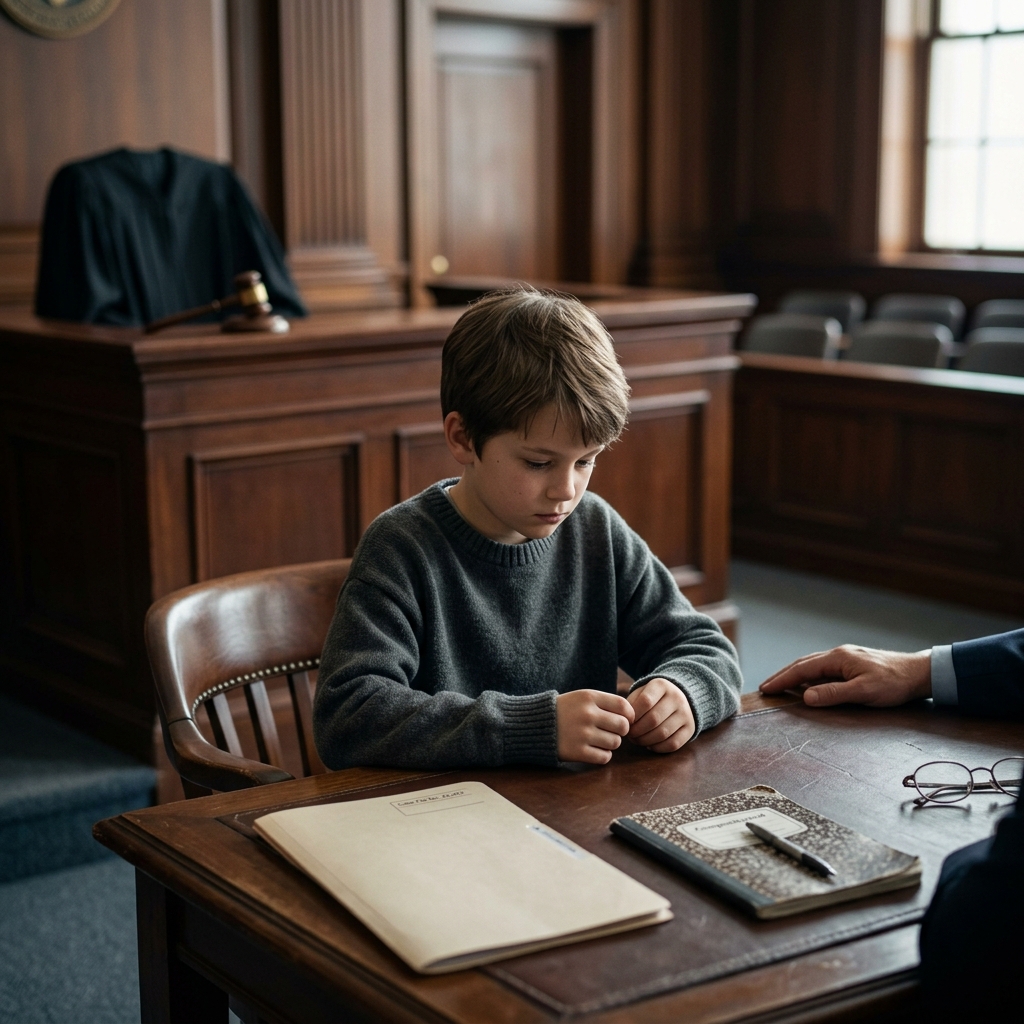
Parents, teachers, and even older children often wonder: can a child commit a crime in the eyes of the law, and if so, at what age? The answer is more complex than a simple yes or no. Modern legal systems distinguish between a child’s behavior and their legal responsibility, and those rules change substantially depending on the child’s age, maturity, and jurisdiction.
This guide explains how the law approaches criminal responsibility for minors, including the concept of infancy, age thresholds, juvenile courts, and what options exist if a child breaks the law or is used by an adult to do so.
Understanding the Idea of Criminal Responsibility
Criminal responsibility refers to the ability of a person to be formally charged, tried, and punished by the state for violating a criminal law. For adults, this is generally assumed. For children, the law asks two key questions:
- Did the child understand that the act was wrong?
- Is the child old enough, under local law, to be prosecuted?
Most systems recognize that very young children lack the cognitive maturity to appreciate the consequences of their actions. As a result, many legal codes either presume children under a certain age are incapable of committing a crime, or they expressly forbid criminal prosecution below a set age threshold.
The Infancy Doctrine: Why Very Young Children Are Not Prosecuted
The traditional legal concept that shields very young children from criminal liability is often called the infancy doctrine. Under this idea, a child below a specified age is presumed unable to form criminal intent (known as mens rea).
In many places, laws state directly that children below a particular age are incapable of committing crimes. For example, Minnesota law provides that children under 14 “are incapable of committing crime,” creating a clear bar to criminal prosecution. This does not mean the child’s action had no consequences; rather, it means those consequences are handled outside the criminal court system.
Some jurisdictions apply a presumption instead of a strict rule. In California, youth under 14 are presumed not capable of committing a crime unless there is proof that they knew their conduct was wrong. This puts the burden on the state to show that the child understood the wrongfulness of the act before they can be held responsible.
Age of Criminal Responsibility Around Different Jurisdictions
The age of criminal responsibility is the minimum age at which a child can be formally charged with a crime. This age varies by country and sometimes even within countries.
| Jurisdiction | General Rule on Minimum Age | Key Notes |
|---|---|---|
| England & Wales | 10 years | Children under 10 cannot be arrested or charged; ages 10–17 are handled in youth courts. |
| Minnesota (USA) | 14 years | Children under 14 are legally incapable of committing crime; special rules for older juveniles certified as adults. |
| California (USA) | No fixed statutory minimum, but presumption under 14 | Youth under 14 presumed incapable unless they knew the wrongfulness of their act. |
| Various U.S. states (adult prosecution) | Sometimes none | In several states, children can be tried as adults without a specified minimum age; some allow adult charges at 10, 12, or 13. |
These examples show that while all systems treat very young children differently, the specific age cutoffs are far from uniform. Parents should always check local law or consult a lawyer when dealing with a potential juvenile case.
Children Can Act Wrongfully Without Being “Criminals”
The law draws a distinction between a child’s conduct and formal criminal liability. A young child can still:
- Destroy property, hurt someone, or steal
- Break school rules or community rules
- Engage in behavior that would be a crime if an adult did it
However, if the child is below the age of criminal responsibility, the state will typically respond through non-criminal measures, such as:
- Child protection or social services involvement
- School discipline, counseling, or behavioral interventions
- Restorative justice or community-based programs
This approach reflects the underlying belief that young children need guidance and support, not criminal punishment.
Juvenile Justice: How Older Children Are Treated
Once a child reaches the age of criminal responsibility, they can be formally charged with offense, but they are generally processed in a separate juvenile justice system rather than adult criminal courts. The juvenile system is designed to be more rehabilitative and less punitive.
In England and Wales, children between 10 and 17 who commit crimes are dealt with by youth courts, receive different sentences, and are sent to secure centers rather than adult prisons. Similarly, U.S. states often have specialized juvenile courts and facilities, and they may restrict the types of sanctions that can be imposed on minors.
Common juvenile justice features include:
- Emphasis on education, counseling, and rehabilitation
- Limited use of incarceration, with preference for community-based programs
- Procedures tailored to the developmental needs of minors
Capacity and Competence: Can the Child Participate in the Case?
Even for children above the age of criminal responsibility, the law often requires that they be competent to take part in the proceedings. Competence involves the ability to understand what is happening and to assist their lawyer.
California, for example, requires that juveniles be able to understand the nature and purpose of the proceedings, assist their attorney rationally, and understand their role and status in court to be considered competent. If a child cannot meet these standards, courts may pause the case, order evaluations, or use alternative measures that better protect the child’s rights.
When a Child Is Prosecuted Like an Adult
In serious cases—such as violent felonies—some jurisdictions permit or require that older minors be prosecuted in adult criminal courts. This is often called transfer, certification, or waiver to adult court.
Under Minnesota law, a child can be prosecuted for a felony in adult court under specific conditions, including prior certification or certain grave offenses like first-degree murder after age 16. More broadly, research by advocacy organizations shows that in many U.S. states, children as young as eight have been charged as adults and held in adult jails. These practices have raised significant concerns about safety, mental health, and fairness.
When deciding whether to treat a child as an adult, courts and prosecutors may consider factors such as:
- Age and maturity of the child
- Seriousness and nature of the alleged offense
- Prior history with the juvenile system
- Availability of effective rehabilitation programs
Status Offenses: Acts Illegal Only Because of Age
Not all juvenile cases involve conduct that would be considered criminal if an adult did it. Many minors are brought into court for status offenses—behaviors that are only prohibited because the person is under a certain age. Examples include:
- Running away from home
- Skipping school (truancy)
- Underage drinking or certain curfew violations
In the United States, tens of thousands of youth enter the system each year for status offenses. These misbehaviors are often rooted in family conflict, school problems, or unmet social needs rather than criminal intent. Many reform efforts argue that such behaviors should be dealt with through social services and community supports, not court involvement.
When an Adult Uses a Child to Commit a Crime
One difficult situation for families arises when a child is drawn into illegal activity by an adult. This can happen through coercion, grooming, or exploitation. While specific legal rules vary, some general principles are common:
- Coercion and manipulation can reduce the child’s culpability. Demonstrating that an adult threatened, controlled, or misled the minor can be vital to the defense.
- Intent is central. If the child did not fully understand the nature or consequences of the act because of adult manipulation, that may undermine criminal responsibility.
- The adult’s role can shift the legal focus. Courts may reframe the case to emphasize the adult’s wrongdoing rather than the minor’s conduct, particularly where the adult held a position of authority over the child.
Parents who suspect that an adult has used their child in criminal activity should seek legal advice quickly. Early documentation of interactions between the child and the adult, along with psychological support for the child, can be critical both for legal defense and the child’s recovery.
Practical Steps for Parents When a Child Breaks the Law
Whether a child is below or above the age of criminal responsibility, parents often feel overwhelmed when confronted with serious misbehavior. These practical steps can help protect the child’s interests:
- Remain calm and gather information. Understand what happened, who was involved, and how authorities learned of the incident.
- Consult a lawyer experienced in juvenile law. Juvenile cases operate under different rules and standards than adult criminal matters; specialized advice is essential.
- Support your child’s emotional needs. Involvement with law enforcement can be frightening and confusing. Consider counseling or psychological evaluation where appropriate.
- Engage proactively with schools and community programs. Collaborative interventions often help reduce future misconduct more effectively than punishment alone.
Key Differences Between Child Misconduct and Adult Crime
| Aspect | Child (Juvenile System) | Adult (Criminal System) |
|---|---|---|
| Primary Goal | Rehabilitation and development | Punishment, deterrence, and public safety |
| Court Type | Juvenile or youth court | Adult criminal court |
| Typical Sanctions | Probation, counseling, community programs, juvenile facilities | Fines, probation, jail or prison, long-term criminal record |
| Age Thresholds | Minimum age of criminal responsibility; status offenses | Presumed fully responsible once adult age is reached |
| Procedural Protections | Additional focus on capacity and competence; confidentiality rules | Standard criminal procedure; public proceedings in most cases |
Frequently Asked Questions (FAQs)
Can a toddler or very young child “commit a crime”?
A very young child can perform acts that would be criminal if done by an adult, such as damaging property or hurting someone. However, in most jurisdictions, children below a certain age are treated as legally incapable of committing crimes and cannot be prosecuted. Their behavior is typically addressed through family, school, or social services rather than criminal courts.
Is there one universal age when children become criminally responsible?
No. The age of criminal responsibility varies widely. England and Wales set the minimum age at 10. Some U.S. states, like Minnesota, effectively treat children under 14 as incapable of committing crimes. Other jurisdictions rely on presumptions tied to whether the child understood the wrongfulness of their actions. It is essential to look at the specific rules where the incident occurred.
Can a child be sent to adult prison?
In some jurisdictions, yes. Children charged as adults for serious crimes may be held in adult jails or prisons, although this practice is controversial and often restricted. Advocacy research indicates that children as young as eight have been prosecuted as adults in certain U.S. states, and some states have no minimum age for trying children as adults.
What is a status offense, and why does it matter?
A status offense is conduct that is only illegal because the person is a minor—for example, truancy or running away from home. These cases can draw kids into court even when they have not committed traditional crimes. Many experts argue for handling status offenses outside of the juvenile justice system to avoid unnecessary criminalization of normal adolescent misbehavior.
What should I do if my child is being investigated by the police?
If law enforcement contacts you about your child’s alleged involvement in an illegal act, you should:
- Politely request information about the allegations
- Seek prompt advice from a lawyer familiar with juvenile law
- Ensure your child does not make statements without legal counsel present
- Support your child emotionally and consider counseling, especially if an adult may have coerced or manipulated them
Final Thoughts: Balancing Accountability and Protection
Legal systems strive to balance two imperatives: holding individuals accountable for harmful conduct and protecting children who lack the maturity to understand their actions fully. By setting an age of criminal responsibility, recognizing the infancy doctrine, and using separate juvenile systems, the law seeks to acknowledge developmental differences while still responding to serious wrongdoing.
For families, the key takeaway is that a child’s age, comprehension, and circumstances profoundly shape how the law will treat their behavior. If your child is involved in an incident that could have criminal implications, early legal guidance and supportive interventions are crucial to safeguarding both their rights and their future.
References
- Sec. 609.055 MN Statutes — Minnesota Office of the Revisor of Statutes. 2023-01-01. https://www.revisor.mn.gov/statutes/cite/609.055
- Under 14 years old — Public Defender’s Office, County of Santa Clara. 2020-05-01. https://pdo.santaclaracounty.gov/cases-we-take/juvenile/age-matters/under-14-years-old
- Age of criminal responsibility — Government Digital Service (GOV.UK). 2023-06-20. https://www.gov.uk/age-of-criminal-responsibility
- Children in Adult Prison — Equal Justice Initiative. 2022-09-15. https://eji.org/issues/children-in-prison/
- Just Kids: When Misbehaving Is a Crime — Vera Institute of Justice. 2017-10-01. https://www.vera.org/when-misbehaving-is-a-crime
- What Can You Do If Your Child Was Used by an Adult to Commit a Crime? — Rudnick, Addonizio, Pappa & Casazza. 2021-03-10. https://www.rudnicklaw.com/blog/what-can-you-do-if-your-child-was-used-by-an-adult-to-commit-a-crime/
Similar Articles








Read full bio of medha deb




