
Criminal Record Searches: What To Know Before Screening In 2025
Learn how criminal record searches work, what they reveal, who can request them, and how privacy and accuracy are protected under U.S. law.
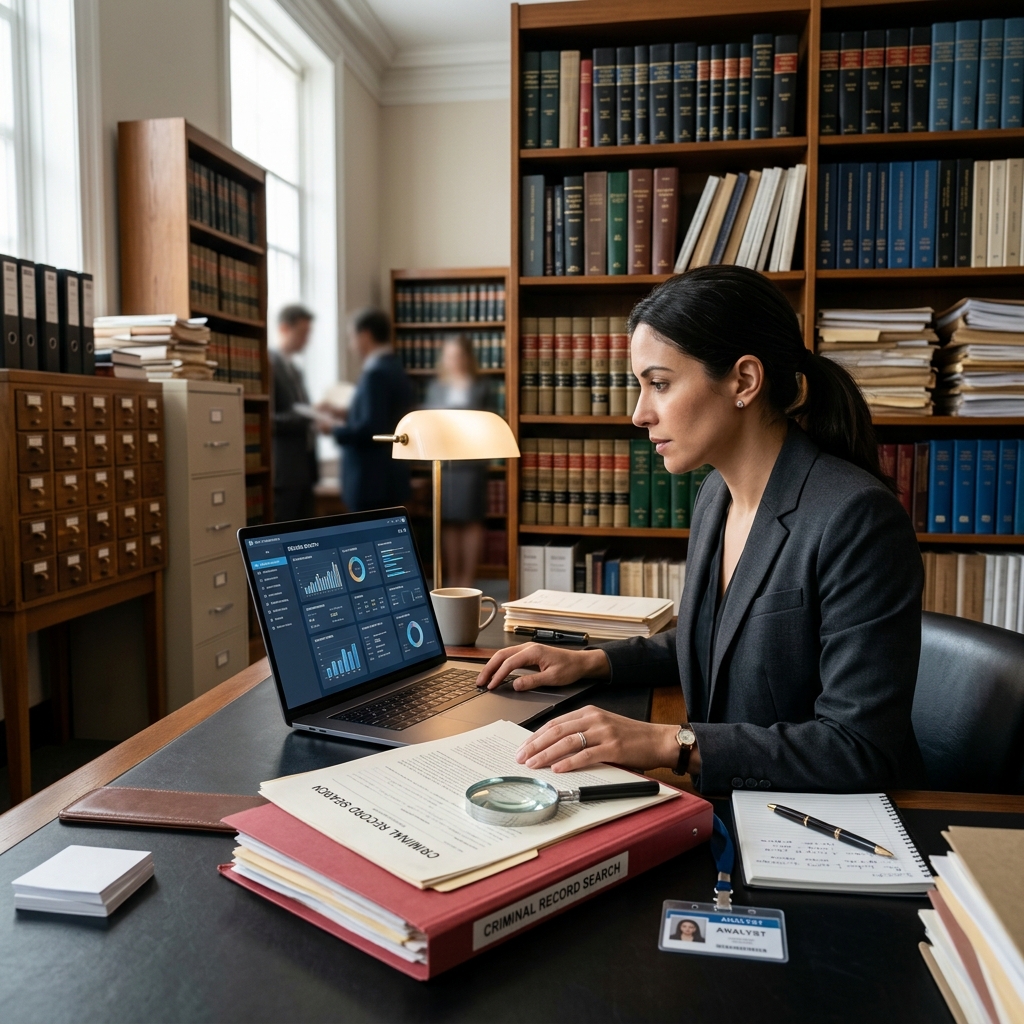
Criminal record searches play a major role in employment decisions, rental applications, licensing, immigration, and many other areas of life. Yet most people do not fully understand what a criminal record is, how searches are conducted, or how the law controls who can see this information. To make informed decisions and protect your rights, it is important to know how criminal history information is created, who maintains it, and how you can review or correct your own record.
What Is a Criminal Record?
A criminal record is an official history of a person’s interactions with the criminal justice system. It typically includes arrests, charges, court proceedings, convictions, and sentencing information recorded by police, courts, and correctional agencies. At the federal level, court case files are maintained by the U.S. courts, while state and local records are maintained by state repositories and local clerks of court.
Key components of a typical criminal record may include:
- Personal identifiers such as full name, aliases, date of birth, and sometimes address
- Arrests and booking details recorded by law enforcement
- Formal charges filed by prosecutors, including case numbers
- Court docket entries showing hearings, motions, and rulings
- Final dispositions, such as dismissal, acquittal, or conviction
- Sentencing information, including fines, probation, or incarceration
- Post-judgment actions such as appeals, expungements, or record sealing
Not every contact with law enforcement results in a permanent record. For example, a stopped-and-released traffic encounter may not appear, whereas a formal citation, arrest, or charge usually does.
What Is a Criminal Record Search?
A criminal record search is the process of looking up a person’s criminal history in official databases or court records. The search may be performed by government agencies, employers, landlords, licensing boards, or individuals for many different purposes, including background checks for jobs or housing.
Common goals of a criminal record search include:
- Verifying whether a person has prior felony or misdemeanor convictions
- Checking for pending criminal charges that have not yet been resolved
- Confirming the outcome of a specific case, such as whether it was dismissed
- Reviewing your own record for errors before applying for employment or immigration benefits
Public Court Records vs. Criminal History Databases
Criminal record searches may draw from several different types of sources. Understanding the distinction between court records and central criminal history repositories is essential.
| Type of Record Source | What It Contains | Who Maintains It | Typical Access Method |
|---|---|---|---|
| Local court records | Case files, dockets, judgments, sentencing orders for cases in that court | County or municipal clerk of court | Public terminals at courthouse or court case search websites |
| State criminal history repository | Statewide arrests and dispositions reported by agencies and courts | State police or justice department | Formal background check procedures; often fingerprint-based |
| Federal court records | Case files from U.S. district and appellate courts | Administrative Office of the U.S. Courts | PACER online system or clerk’s office at the federal courthouse |
| Commercial background databases | Compiled records from courts and public sources | Private data brokers and background check companies | Paid reports, usually subject to federal consumer protection laws |
When and Why Criminal Record Searches Are Used
Criminal record searches are ordered for many reasons. While the specific rules vary by state and by industry, common situations include:
- Employment screening: Many employers, especially in healthcare, education, finance, and transportation, conduct background checks before hiring. Federal law requires that employers who use third-party background reports comply with the Fair Credit Reporting Act (FCRA), including getting written permission and providing notice if information is used to deny employment.
- Housing decisions: Landlords and property managers often review criminal history when screening tenants, subject to federal and local fair housing rules.
- Professional licensing: State licensing boards for professions such as law, medicine, or childcare may review criminal history as part of the license application or renewal process.
- Firearm purchases: Federal law requires background checks for many firearm purchases using the National Instant Criminal Background Check System (NICS), which relies on criminal history and other data reported by courts and agencies.
- Immigration and travel: U.S. immigration authorities routinely review criminal records when adjudicating visas, residency, and naturalization applications.
- Personal reasons: Individuals may search their own records or court files to confirm completeness and accuracy, or to prepare for expungement or record sealing requests.
How Criminal Record Searches Are Performed
The procedure used to conduct a criminal record search depends on whether you are accessing federal, state, or local records, and whether you are using official or commercial systems. Below are common routes to obtain criminal case information.
1. Searching Local and State Court Records
Most states provide access to court records through the office of the clerk of court, often both in person and online. Procedures vary, but generally involve the following steps:
- Identify the correct court (county, municipal, or circuit) where the case was filed.
- Gather basic information, such as full name, approximate year, and, if possible, case number or date of birth.
- Visit the clerk’s office to use public terminals, or use the court’s official online case search portal where provided.
- Search by name, case number, or other criteria to view basic case information like charges and disposition.
- Request copies of specific documents (such as a judgment of conviction) if needed, often for a fee.
Some jurisdictions make clear that online portals are not intended for official background checks and that individuals performing formal checks should rely on the clerk’s office for certified information. Others offer separate paid services to provide certified criminal history checks.
2. Accessing Federal Court Case Information
Federal criminal cases are not included in most state court systems. To access federal case records, the U.S. Courts operate an online system called the Public Access to Court Electronic Records (PACER).
- PACER provides dockets and documents for federal criminal and civil cases across the country.
- Users must register for an account and may be charged fees based on usage.
- Alternatively, you can visit the clerk’s office of the federal courthouse where the case was filed and request access to case records in person.
3. Statewide Criminal History Checks
Many states maintain a centralized criminal history repository, usually operated by the state police or department of justice. These systems compile arrest and disposition data reported by local agencies and courts and may offer statewide background check services for a fee.
Typical features of statewide repositories include:
- Searches by name and date of birth, and sometimes fingerprints for higher accuracy
- Coverage of arrests from multiple counties within the state
- Inclusion of dispositions when courts report case outcomes
- Procedures to request your own record and challenge errors
4. Local Clerk and Municipal Court Searches
In addition to general trial courts, some cities maintain municipal courts that handle local ordinance violations and minor criminal matters. These courts may offer their own public search tools.
- Many municipal courts allow case searches by name, case number, or citation number.
- Some large counties or cities provide specific services to request certified criminal history checks, either online, by mail, or in person.
What Information Is Typically Visible?
Criminal record searches often reveal a mix of publicly accessible and restricted information. The exact content depends on the type of search, applicable law, and whether the case is confidential.
Information commonly visible in public case records includes:
- Defendant’s name and sometimes date of birth
- Case or docket number
- Type of offense (e.g., felony, misdemeanor)
- Specific charges and statutory citations
- Key dates such as filing, hearings, and disposition
- Court orders, judgments, and sentencing details
Certain information may be confidential or restricted, such as juvenile cases, mental health commitments, or other sensitive proceedings, and typically requires special permission or a court order to access.
Limits on Access and Use of Criminal Records
Although many criminal records are public, there are significant legal limits on how they can be accessed and used. These protections come from state laws, privacy statutes, and federal consumer protection standards.
- Confidential case types: Juvenile records, certain mental health cases, and other designated matters may be confidential, with access limited by statute.
- Employer obligations: When employers use third-party background reports, federal law requires notice, consent, and certain procedures before taking adverse action based on those reports.
- State-specific rules: Some states limit how far back employers can look, restrict use of certain older convictions, or protect sealed and expunged records from disclosure.
- Fair housing and discrimination laws: Landlords and others must comply with antidiscrimination law when using criminal history in housing decisions.
Expungement, Sealing, and Correcting Criminal Records
Many jurisdictions offer mechanisms to reduce the impact of criminal records, especially for old or minor offenses. These mechanisms are complex and highly state-specific, but generally fall into a few categories.
Expungement
Expungement usually refers to a legal process that removes or destroys certain criminal records so they are no longer publicly available. Depending on state law, expunged records may be treated as though they never occurred for most purposes, although some government or law enforcement agencies may retain limited access.
Eligibility often depends on factors such as:
- Type of offense (for example, many states exclude serious violent or sex offenses)
- Completion of sentence, including probation and payment of fines
- A waiting period without new offenses
- Number of prior convictions
Sealing Records
Sealing records generally means they remain in existence but are hidden from most public inquiries. Sealed records may be available to law enforcement and sometimes to courts or specific agencies, but they are typically not visible in routine public searches or commercial background checks.
Correcting Errors
Because criminal history information is collected from many sources, errors and omissions can occur. Common problems include outdated information, missing dispositions, or mismatched identities. Many state systems and courts provide formal procedures to contest inaccurate entries and to update records.
Typical steps to correct errors might include:
- Obtaining a copy of your own criminal history or case records
- Identifying the specific error, such as a wrong disposition or incorrect date
- Contacting the reporting agency or court with documentation of the correct information
- Following formal dispute or correction procedures provided by the agency or background check company
Practical Tips Before Requesting a Criminal Record Search
Whether you are an individual reviewing your own record or an organization conducting checks, planning ahead can improve accuracy and reduce delays.
- Verify identity details: Use full legal name, known aliases, date of birth, and, where allowed, other identifiers to avoid mixing records of different people.
- Use official sources: When possible, rely on official court or government websites, typically ending in “.gov,” to minimize the risk of outdated or incomplete data.
- Understand the scope: Decide whether you need local, statewide, or national coverage, and whether federal records should be included.
- Check for confidentiality: Be aware that juvenile and other confidential records may not appear in public searches even if an event occurred.
- Retain documentation: Keep copies of search results, case records, and any correspondence about corrections or expungements.
Frequently Asked Questions About Criminal Record Searches
Are criminal records always public?
No. While many adult criminal court records are public, certain case types such as juvenile proceedings and some mental health or protective cases are confidential by law and not available to the general public without court authorization.
Can I see my own criminal record?
Yes. You can usually review your own records through state criminal history systems, local courts, or both. Many states allow individuals to access their records online or at the courthouse where the case was filed, and some provide special procedures for individual background checks.
Do dismissed charges appear in a criminal record search?
Often they do. Court dockets usually show the full history of a case, including charges that were dismissed, reduced, or acquitted, unless they have been sealed or expunged under applicable law.
Is an online court search the same as a full background check?
Not necessarily. Many court websites provide case information for convenience but are not designed to be comprehensive background check tools and may not include all jurisdictions or older records. A thorough background check often requires searching multiple sources, including state repositories and federal courts.
What should I do if a background check report is wrong?
If you receive a background report that contains inaccurate or outdated information, you can usually dispute the errors. This may involve contacting the background check company, the court, or the state repository, and providing documentation of the correct outcome. Many official and commercial systems have formal dispute processes to correct records.
References
- Court Records — United States Courts. 2023-01-01. https://www.uscourts.gov/court-records
- Court Records – Dane County Clerk of Courts — Dane County Circuit Court. 2024-01-01. https://courts.danecounty.gov/Resources/Court-Records
- How to access court records (FAQ) — Illinois Legal Aid Online. 2023-08-01. https://www.illinoislegalaid.org/legal-information/how-get-copies-your-court-records
- Obtaining Court Records — North Carolina Judicial Branch. 2024-02-01. https://www.nccourts.gov/help-topics/court-records/obtaining-court-records
- Criminal History Record Search — New York State Unified Court System. 2022-10-01. https://www.nycourts.gov/criminal-history-record-search
- Criminal Records — Miami-Dade Clerk of the Courts. 2023-06-01. https://www.miamidadeclerk.gov/clerk/criminal-records.page
- Public Records – Criminal History & Case Dockets — Wisconsin State Law Library. 2023-05-01. https://wilawlibrary.gov/topics/records/index.php
Similar Articles








Read full bio of Sneha Tete




