
Understanding Juvenile Crime and the Justice System
A clear, practical overview of juvenile crime, how the justice system responds, and what families can expect at every stage of the process.
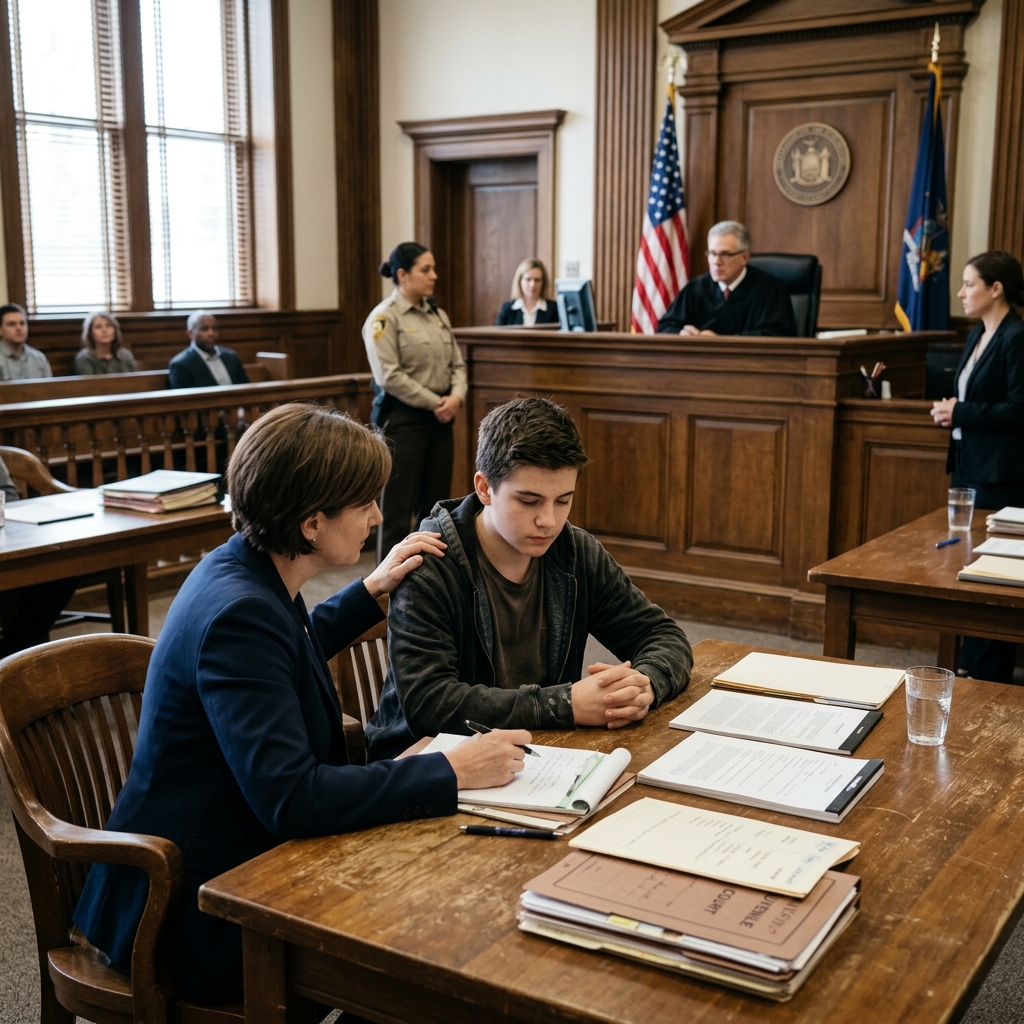
Juvenile crime sits at the intersection of public safety, child development, and the law. When a young person is accused of a criminal offense, families often face confusing procedures, intense emotions, and high stakes. This guide explains how juvenile crime is defined, how the youth justice process works, and what options exist to protect a minor’s rights while supporting their rehabilitation.
What Counts as Juvenile Crime?
In most jurisdictions, juvenile crime refers to unlawful acts committed by a person who has not yet reached the legal age of adulthood, commonly 18 years old.[10] Youth who break the law are typically processed in a separate system designed for minors, often called the juvenile justice system, rather than the adult criminal courts.
Official data show that arrests of people under 18 have declined substantially over the last few decades, even for serious offenses.[10] For example, agencies in the United States made an estimated 424,300 arrests of persons under 18 in 2020, which is 71% less than in 2011.[10] Although most youth will never be arrested, those who do become involved with the justice system often face long-term consequences if their cases are not handled carefully.
Delinquent Acts vs. Status Offenses
Juvenile laws usually distinguish between two broad categories of behavior:
- Delinquent acts – Conduct that would be a crime regardless of the person’s age, such as theft, assault, burglary, or drug distribution.
- Status offenses – Behaviors that are unlawful only because of the youth’s age, including truancy, underage drinking, curfew violations, and running away from home.
Delinquent acts can lead to more formal court involvement and potential confinement. Status offenses, by contrast, typically result in community-based interventions, supervision, or school-based responses rather than secure detention.
Current Trends in Juvenile Offending
Understanding the larger landscape of youth crime can help families and communities put individual cases in perspective. Research indicates that juvenile offending has generally declined in recent years, even though certain serious crimes have risen.
| Measure | Change Over Time | Key Takeaway |
|---|---|---|
| Overall youth arrests | Down more than 70% from 1995 peak in the U.S. | Far fewer youth are being arrested than in the 1990s. |
| Youth incarceration | Approximately 75% decline between 2000 and 2023. | Use of confinement for youth has fallen sharply. |
| Share of violent arrests involving youth | U.S. youth accounted for about 9.4% of violent crime arrests in 2022, down from 19% in 1994. | Youth are now involved in a much smaller share of violent arrests. |
| Homicides by juveniles | Increased around 65% from 2016 to 2022. | Serious violent incidents, especially involving firearms, are a persistent concern. |
These numbers show that while many forms of youth offending are less common, policymakers remain focused on preventing serious violence and addressing persistent racial and ethnic disparities in youth incarceration rates.
Common Types of Juvenile Offenses
Juvenile crime covers a wide spectrum of behavior. Some offenses reflect experimentation or impulsivity, while others involve serious harm to people or property. Typical categories include:
Property-Related Offenses
- Theft and shoplifting – Taking items from stores or individuals without permission.
- Burglary – Entering a building or home without consent, usually to commit another crime inside.
- Vandalism – Damaging or defacing property, such as graffiti or destruction of school facilities.
Many youth property offenses involve low monetary value but can still lead to formal charges, restitution orders, or probation.
Violent and Person-Related Offenses
- Simple and aggravated assault – Fighting, threats, or attacks causing injury.
- Robbery – Taking property directly from another person using force or intimidation.
- Sexual offenses – Ranging from inappropriate contact to more serious violations.
- Homicide – The most serious category, although still rare compared with other offenses.
Violent offenses can result in stricter conditions, longer supervision, and, in rare cases, transfer to adult court if allowed by local law.
Drug and Alcohol Violations
- Possession or use of illegal drugs.
- Distribution or sale of controlled substances.
- Underage drinking and related conduct, such as disorderly behavior.
Courts increasingly look for treatment-based responses to substance-related charges, especially when addiction or mental health issues are present.
Status Offenses and School-Related Misconduct
- Chronic truancy or refusal to attend school.
- Curfew violations and loitering late at night.
- Running away or leaving placements without permission.
- School-based behavioral incidents that escalate into law enforcement involvement.
Many communities now try to handle these issues through education, counseling, and youth services rather than traditional prosecution, recognizing that they often stem from family conflict, trauma, or unmet needs.
Key Stages of the Juvenile Justice Process
Although each state or country has its own procedures, most juvenile cases follow a series of recognizable steps. Knowing what typically happens can help families prepare and advocate effectively.
Investigation and Arrest
The process usually begins when police or school resource officers suspect that a minor has committed an offense.
- Officers may question the youth, gather statements, and collect evidence.
- Depending on the seriousness of the conduct and local policy, the youth may be taken into custody or released to a parent or guardian.
- Even at this early stage, the minor has important rights, including the right to remain silent and, in many places, the right to consult an attorney.
Parents or guardians should be notified promptly when a juvenile is detained. It is often wise to speak with a lawyer before the youth gives a detailed statement, particularly in serious matters.
Intake and Screening
After an arrest or referral, an intake officer or probation department typically reviews the case to decide what should happen next. Options may include:
- Informal handling, such as a warning, referral to counseling, or agreement for the youth to complete certain tasks.
- Diversion programs where the youth avoids formal charges by meeting conditions like attending classes, performing community service, or participating in mediation.
- Filing a formal petition in juvenile court, which initiates a court case.
Intake decisions often take into account the youth’s prior record, the severity of the offense, and any risk factors identified during screening, such as substance use or family instability.
Detention Decisions
If the minor has been taken into custody, a rapid hearing is typically held to decide whether they should be held in a detention facility or released pending further proceedings.
- Courts consider public safety, risk of flight, and the youth’s home situation.
- Many jurisdictions favor keeping youth out of secure detention where possible, in line with data showing long-term harms from confinement.
- Conditions of release may include curfews, school attendance requirements, or supervision by a probation officer.
Adjudication: Determining Responsibility
The central hearing in a juvenile case is sometimes called an adjudication, roughly comparable to a trial in adult court.
- The judge hears evidence about what happened and decides whether the youth committed the alleged acts.
- Some cases are resolved through negotiated agreements, where the youth admits to certain facts in exchange for a recommended disposition.
- The rules of evidence and procedure may be more flexible than in adult court, but the stakes are still significant.
A minor found responsible for an offense is described as having committed a delinquent act, rather than being found “guilty” of a crime, to emphasize the system’s focus on rehabilitation.
Disposition: What Happens After Adjudication
Once a youth is adjudicated, the court must decide on a disposition, or outcome. This can range from minimal intervention to intensive supervision.
- Probation – The most common outcome, often involving regular meetings, school attendance requirements, therapy, and restrictions on activities.
- Restitution and fines – Payment to victims or the court system, which may involve parents as well.
- Community service – Work performed to repair harm or benefit the community.
- Treatment orders – Mandated counseling, substance abuse treatment, or mental health services.
- Placement outside the home – In more serious or repeated cases, the court may order the youth to live in a group home, residential treatment program, or juvenile facility.
Judges typically balance the goals of accountability, public safety, and the youth’s long-term development when making disposition decisions.
Factors That Shape Juvenile Justice Outcomes
Not all youth receive the same treatment when they enter the justice system. Several key factors influence how their cases are handled and what consequences they face.
Age and Prior History
- Younger youth, especially those with no prior record, are more likely to receive diversion or informal handling.
- Older teens with repeat offenses may encounter stricter supervision or confinement.
- Some jurisdictions use structured risk assessment tools to standardize decisions and reduce bias.
Type and Seriousness of the Offense
- Low-level property offenses and status offenses often lead to community-based responses.
- Serious violent offenses, particularly those involving firearms, can result in longer terms of supervision or secure placement.
- Drug-related charges may trigger treatment-oriented dispositions if substance use is a contributing factor.
Racial and Ethnic Disparities
Data consistently show that youth of color are more likely than white youth to be arrested, detained, and confined, even as overall youth incarceration has declined. Addressing these disparities is a major focus of reform efforts, including:
- Reducing unnecessary arrests through school-based interventions.
- Expanding diversion programs that are accessible to all communities.
- Monitoring data to identify and respond to discriminatory patterns.
Protecting a Minor’s Rights and Future
When a young person is accused of a crime, families often worry about both immediate consequences and long-term impacts on education, employment, and safety. There are practical steps they can take to protect the youth’s interests.
Working With a Juvenile Defense Attorney
Juvenile proceedings may be less formal than adult trials, but the need for effective legal representation is just as important. A defense lawyer can:
- Explain the charges, possible penalties, and likely process.
- Help the youth decide whether to admit or contest the allegations.
- Negotiate diversion or reduced penalties where appropriate.
- Ensure that the youth’s constitutional and statutory rights are respected.
Because juvenile records and procedures vary widely by jurisdiction, it is especially valuable to work with an attorney who has specific experience with youth cases and local practice.
Understanding Juvenile Records
Many families assume that juvenile records automatically disappear at adulthood, but this is not always the case. Depending on local law:
- Some records may be sealed from public view but still available to courts or law enforcement.
- Others might be eligible for formal expungement if the youth meets certain conditions.
- School and employment applications may ask about juvenile history in limited circumstances.
Discussing record management and future opportunities with an attorney early in the case can help avoid unexpected barriers later.
Supporting Rehabilitation at Home and School
Legal outcomes are only one piece of the picture. Long-term success often depends on the support a youth receives from family, school, and community.
- Engage actively in counseling, treatment programs, or educational services ordered by the court.
- Maintain communication with probation officers and service providers to monitor progress.
- Advocate for special education services or accommodations if the youth has learning or behavioral challenges.
- Encourage constructive activities, such as sports, arts, or part-time work, to replace harmful peer influences.
Research on youth development emphasizes that most adolescents mature out of offending behavior when they receive appropriate guidance and opportunities.
Frequently Asked Questions About Juvenile Crime
1. Can a minor be tried as an adult?
In some jurisdictions, laws allow certain serious offenses allegedly committed by older teens to be transferred to adult court. Whether this can happen depends on the youth’s age, the nature of the offense, and local statutes. Families facing this possibility should consult a lawyer immediately to understand the criteria and options for contesting transfer.
2. Are juvenile proceedings open to the public?
Juvenile hearings are often closed or limited to protect the youth’s privacy, though rules vary. In many places, only parties and their representatives can attend, and access to records is restricted. Over time, some jurisdictions have adjusted their rules to balance transparency with confidentiality, so local law is important.
3. Do juvenile records disappear at age 18?
Not automatically. Some records may be sealed, others remain accessible, and certain serious adjudications can affect future opportunities. Many areas offer procedures to expunge or limit access to juvenile records, particularly when the youth has completed obligations and remained offense-free for a period.
4. What is a diversion program?
Diversion programs allow youth to avoid formal adjudication by completing conditions such as counseling, education groups, community service, or restitution. Successful completion often results in dismissal of the case or reduced consequences, giving the youth a chance to move forward without a formal delinquency finding.
5. How can families reduce the impact of a juvenile case?
Early engagement with a qualified attorney, cooperation with court-ordered services, open communication with school and service providers, and a stable, supportive home environment all reduce the risk of reoffending and long-term harm. Families can also seek community resources, such as mentoring programs or youth organizations, to strengthen protective factors.
References
- Estimated Number of Youth Arrests — Office of Juvenile Justice and Delinquency Prevention (OJJDP). 2022-10-14. https://ojjdp.ojp.gov/statistical-briefing-book/crime/faqs/qa05101
- Youth Justice by the Numbers — The Sentencing Project. 2024-03-19. https://www.sentencingproject.org/policy-brief/youth-justice-by-the-numbers/
- Trends in Juvenile Offending: What You Need to Know — Council on Criminal Justice. 2023-11-09. https://counciloncj.org/trends-in-juvenile-offending-what-you-need-to-know/
- Juvenile Justice Research Summary — University of Utah, College of Social Work. 2023-04-01. https://socialwork.utah.edu/research/ucjc/juvenile-justice-research.php
- What Juvenile Justice Data Reveal — And What the Numbers Can’t Tell Us — Annie E. Casey Foundation. 2025-01-15. https://www.aecf.org/blog/what-juvenile-justice-data-reveal-and-what-the-numbers-cant-tell-us
Similar Articles








Read full bio of Sneha Tete




