
Enhanced Life Estate Deed Disputes: 6 Common Causes And Fixes
Understand how enhanced life estate deeds work, where disputes arise, and how families can prevent costly conflicts.
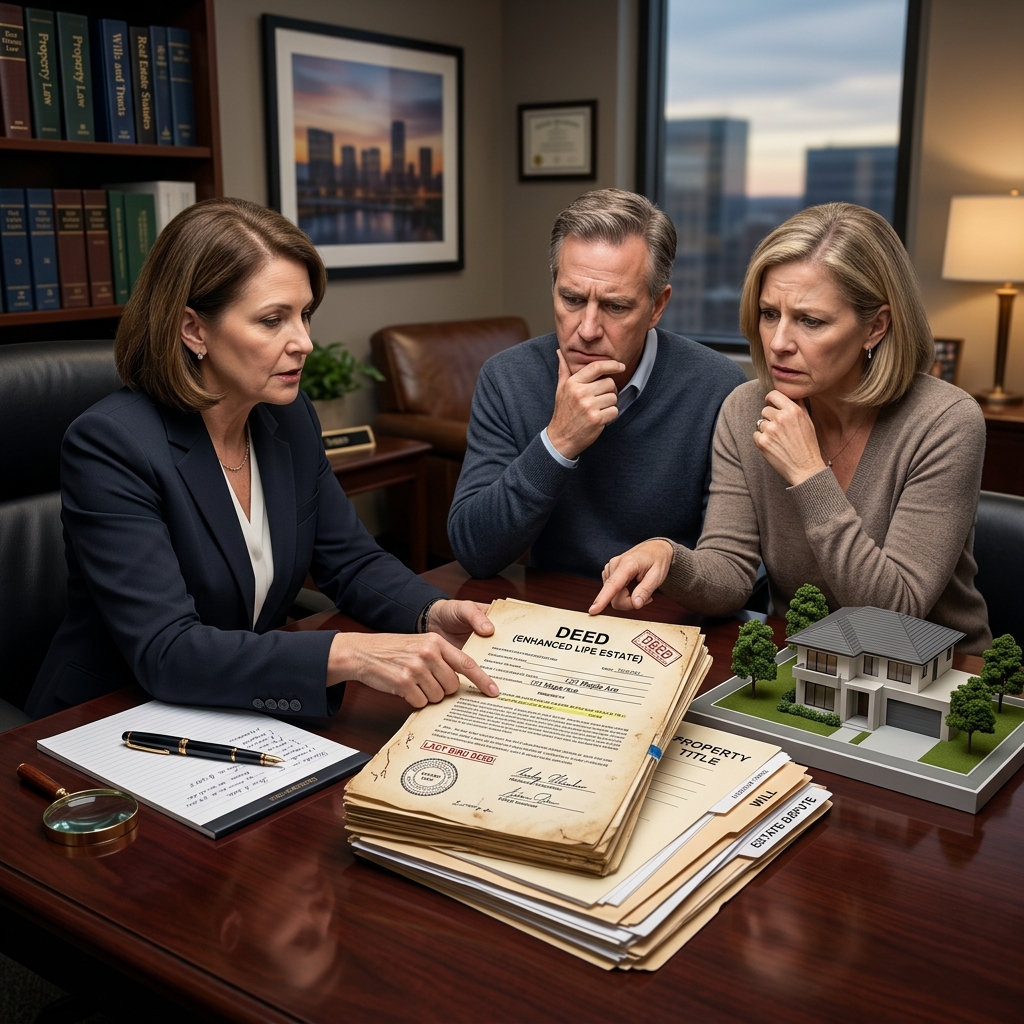
An enhanced life estate deed can be a useful estate planning tool because it lets an owner keep control of real property during life while naming who will receive it at death. When the document is drafted or used without clear planning, however, it can lead to disputes between family members, beneficiaries, and anyone claiming an interest in the property.
These conflicts often involve questions about ownership rights, changes to the deed, alleged coercion, title problems, or disagreements over whether the deed was valid in the first place. Understanding how the deed operates is the first step toward reducing those risks and resolving them before they turn into expensive litigation.
How an enhanced life estate deed works
An enhanced life estate deed is a special form of property transfer that allows the current owner to remain in control while designating a beneficiary to take title automatically at death. In many states, this arrangement is also called a Lady Bird deed. The owner typically retains the right to live in the home, sell it, mortgage it, or change the beneficiary during life.
That flexibility is what makes the deed attractive, but it also creates room for confusion. Family members sometimes assume the named beneficiary already owns the house, while the owner may believe no one can question later changes. In reality, the legal effect of the deed depends on the wording used, state law, and whether the owner had the capacity and intent to create the document properly.
Why these deeds often reduce, but do not eliminate, conflict
One of the main purposes of an enhanced life estate deed is to avoid probate. Because title passes outside the probate process, there is often less opportunity for the kind of courtroom contest that follows a will. That does not mean disputes disappear. Instead, disagreements may shift from probate court to questions about deed validity, fraud, or ownership rights during the owner’s lifetime.
In many situations, the deed can be helpful because it keeps the transfer simple and direct. But if heirs were not informed, if the property has a mortgage or title issue, or if a later deed conflicts with an earlier one, the result can still be litigation. The more valuable the property, the more likely family members are to challenge the transfer.
Common sources of disagreement
Enhanced life estate deed disputes usually arise from a limited set of recurring problems. These problems often overlap, which is why a lawyer may need to review both the deed language and the surrounding facts.
- Questions about capacity: A challenger may argue the owner lacked the mental ability to sign the deed.
- Undue influence: A beneficiary who helped prepare the deed may be accused of pressuring the owner.
- Fraud or forgery: Some disputes involve claims that the signature was altered or the owner was misled.
- Conflicting documents: Later deeds, wills, trusts, or transfer-on-death instruments may create uncertainty.
- Ambiguous wording: Unclear drafting can lead to arguments over who had rights during life and who should receive title later.
- Family expectations: A relative may believe the property was meant for all children, not just one named beneficiary.
Who is usually involved in the dispute
These cases often involve the property owner, the named remainder beneficiary, and family members who were left out. In some matters, a surviving spouse, caregiver, lender, tax authority, or title company may also become involved. If the owner is still living, the owner generally has the strongest control over the property, but disputes may still arise when others believe the deed was procured unfairly or does not reflect the owner’s true intent.
After the owner’s death, the beneficiary may try to record the deed or claim title, while disappointed heirs may object. The conflict can intensify if the property has appreciated substantially, if it is the family home, or if one person has been living there and maintaining it for years.
State law matters more than many families expect
Enhanced life estate deeds are not treated the same way everywhere. Their enforceability, drafting requirements, and effect on taxes or Medicaid planning can vary by state. That means a deed that appears valid in one jurisdiction may fail in another if the legal language is incomplete or the state does not recognize the technique in the same way.
This is why a dispute often turns less on the family story and more on the details of local law. Courts may ask whether the owner had authority to use the deed, whether the deed was executed correctly, and whether the beneficiary’s rights were merely future interests or something more. When the legal framework is unclear, settlement becomes more difficult.
Typical legal arguments in a challenge
When a deed is contested, the legal theory usually falls into one or more of the following categories. Each theory focuses on a different defect in the transfer process.
| Claim | What the challenger argues | Possible result |
|---|---|---|
| Lack of capacity | The owner did not understand the nature of the deed. | The deed may be invalidated if the proof is strong. |
| Undue influence | Someone used pressure or dependence to obtain the transfer. | A court may scrutinize the relationship and circumstances closely. |
| Fraud | The owner signed based on false statements or deception. | The transfer can be set aside if fraud is proven. |
| Improper execution | The deed was not signed, witnessed, or recorded correctly. | Title problems may delay or defeat the transfer. |
How disputes can affect the property during the owner’s life
Because the owner usually keeps broad powers, some disagreements arise before death rather than after it. A beneficiary may object if the owner sells the property, takes out a mortgage, or changes the deed to name someone else. In many cases, the beneficiary has no immediate right to stop those actions, but the situation can still provoke a legal fight if the challenger believes the owner was manipulated or lacked capacity.
Title companies and lenders may also become cautious if the paperwork is unclear. If the owner wants to refinance or sell, a cloud on title can slow the transaction. Even if the deed is eventually upheld, the delay and legal expense may defeat the practical purpose of using the instrument in the first place.
What happens after the owner dies
After death, the property usually passes directly to the named beneficiary if the deed was valid and no later change revoked it. That transfer may be simple in theory, but a dispute can still prevent immediate sale, refinancing, or clear ownership. If someone files suit alleging invalidity, the beneficiary may be unable to use the property freely until the issue is resolved.
In post-death disputes, courts often examine the full history of the property, including prior deeds, estate planning documents, family relationships, and any medical or financial evidence showing the owner’s condition when the deed was signed. The outcome may depend on details that were never discussed with the family at the time of transfer.
Practical ways to reduce the chance of conflict
Many disputes can be avoided through planning and communication. A carefully prepared deed is only part of the solution. Families should treat the document as one element in a broader estate plan rather than as a stand-alone fix.
- Use precise drafting: The deed should clearly identify the owner, beneficiary, and property.
- Review state requirements: Local law should guide the form and wording of the document.
- Explain the plan early: Beneficiaries are less likely to feel blindsided if they understand the owner’s intent.
- Update related documents: Wills, trusts, and beneficiary designations should be coordinated.
- Keep records: Notes showing capacity, intent, and independent legal advice can help later.
Ways families and attorneys resolve disputes
Not every conflict needs to become a lawsuit. In many cases, the parties can try mediation, negotiated settlement, or a title review before going to court. Mediation can be especially useful when the disagreement is rooted in family tension rather than a pure legal defect. A neutral mediator may help the parties reach a solution that preserves relationships and lowers cost.
If litigation is unavoidable, a lawyer may seek to quiet title, defend the deed, or challenge the transfer depending on which side is represented. The choice of remedy matters because the legal claim must match the kind of problem at issue. A vague complaint about unfairness is usually not enough; the party challenging the deed must show a legally recognized defect.
When you may need legal help
Legal help becomes important as soon as a dispute affects the owner’s ability to manage property, refinance, sell, or plan an estate. An attorney can review the deed language, examine whether state law was followed, and identify whether the issue is likely to be resolved informally or through litigation.
It is also wise to get legal advice before signing an enhanced life estate deed. A short review at the drafting stage can prevent years of conflict later. That is especially true when the property is valuable, the family dynamics are strained, or the owner wants to preserve flexibility while still transferring property outside probate.
Frequently asked questions
Can an owner change an enhanced life estate deed later?
In many states, yes. One of the defining features of this deed is that the owner generally keeps the ability to revoke or amend it during life, subject to state law and proper documentation.
Does the named beneficiary own the property right away?
Usually no. The beneficiary typically has a future interest that becomes effective when the owner dies, while the owner keeps control during life.
Can family members challenge the deed after death?
Yes. They may challenge it on grounds such as lack of capacity, fraud, undue influence, or improper execution, though success depends on the evidence and state law.
Is this deed a substitute for all estate planning?
No. It may work well for a single property transfer, but it should still be coordinated with a broader estate plan that addresses other assets, debts, and family goals.
What should a person do before using this deed?
The owner should confirm that the deed is recognized in the relevant state, understand the tax and title consequences, and have the document prepared or reviewed by an experienced estate planning lawyer.
References
- Enhanced Life Estate Deeds and Conflict Resolution — Staples Law, PLLC. 2025. https://www.stapleslawfl.com/enhanced-life-estate-deeds-and-conflict-resolution/
- What Is an Enhanced Life Estate Deed? — The Werner Law Firm, PC. 2025. https://wernerlawca.com/what-is-enhanced-life-estate-deed/
- What Is a Lady Bird Deed? — Texas State Law Library. 2024. https://www.sll.texas.gov/faqs/what-is-a-lady-bird-deed/
- Lady Bird Deeds: A Different Kind of Life Estate — MB Law Firm. 2024. https://mblawfirm.com/insights/lady-bird-deeds-a-different-kind-of-life-estate/
- Using Enhanced Life Estate Deeds to Pass Real Property to Charity: Opportunities, Pitfalls, and Best Practices — University of Florida IFAS Extension. 2024. https://ufan.uff.ufl.edu/newsletter/using-enhanced-life-estate-deeds-to-pass-real-property-to-charity-opportunities-pitfalls-and-best-practices/
Similar Articles








Read full bio of medha deb


