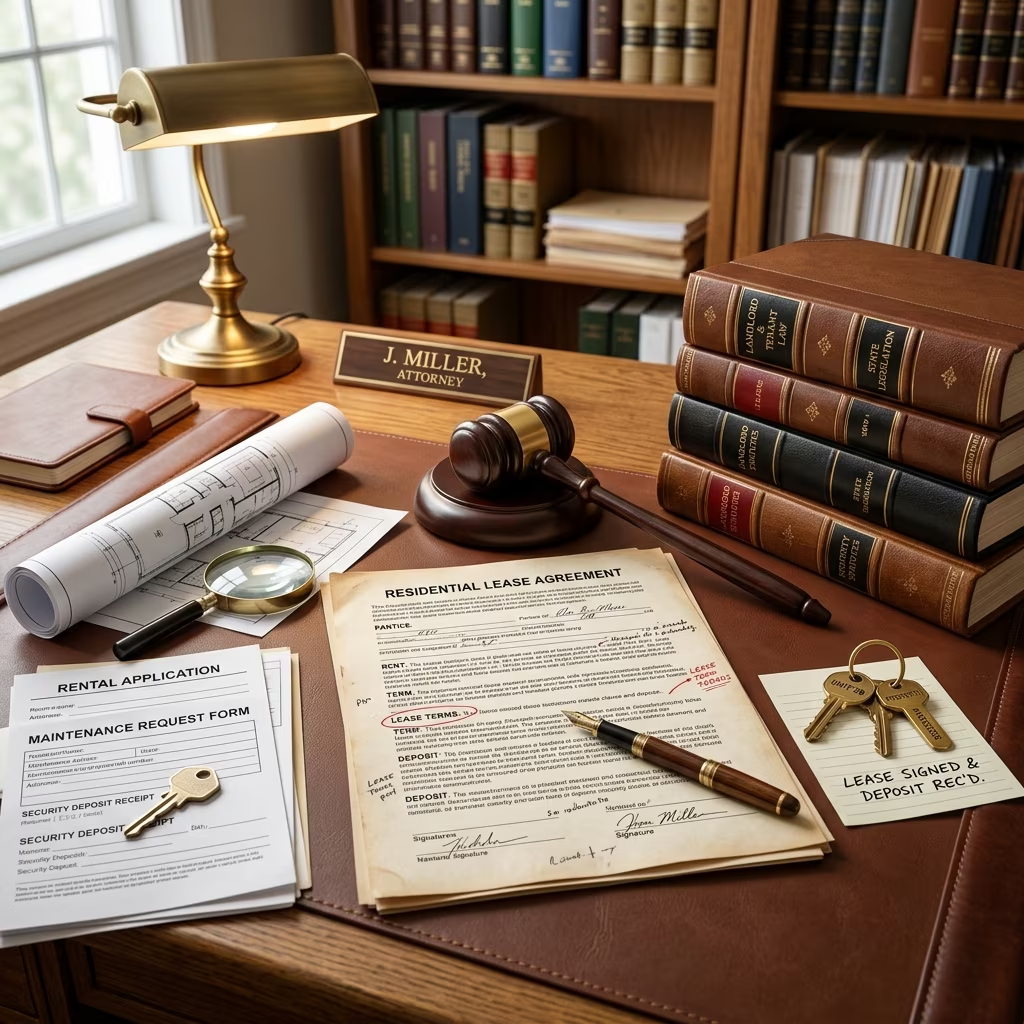
Landlord and tenant law governs the relationship between property owners who rent out homes and the people who live in those homes. Although the specific rules vary by state and locality, most residential rental arrangements share core principles about habitability, payment of rent, privacy, and fair treatment. Understanding these basics before you sign a lease helps prevent disputes and protects your legal rights.
1. The Legal Framework of Residential Rentals
Most states have statutes that specifically regulate residential landlord‑tenant relationships. These laws sit alongside local building codes, health regulations, and anti‑discrimination rules. While technical details differ, a typical legal framework includes the following elements:
- Residential landlord–tenant statutes that define rights, duties, and remedies for both sides.
- Building and housing codes that set minimum safety and habitability standards, like working utilities and structural integrity.
- Fair housing and civil rights laws that prohibit discrimination in rental housing.
- Consumer protection laws that may regulate advertising, fees, and certain lease terms.
Because landlord‑tenant law is largely state‑specific, the same situation—such as late rent or repair delays—can lead to different legal outcomes depending on where the property is located. Checking your state’s official landlord‑tenant guide or attorney general resources is often the best starting point.
2. Types of Rental Agreements and Key Clauses
Rental arrangements are usually memorialized in a lease or a rental agreement. They can be written or oral, but written agreements offer clearer evidence of each party’s expectations and obligations.[10]
2.1 Common Rental Structures
- Fixed‑term lease: Runs for a set period (often 6 or 12 months). Rent amount and major terms stay the same unless both parties agree to changes.
- Month‑to‑month tenancy: Continues indefinitely until either party gives legally sufficient notice to end or change the arrangement.
- Oral agreements: Often month‑to‑month, valid in many states but harder to prove in disputes.[10]
2.2 Important Lease Terms to Review
Before signing, both landlord and tenant should carefully read the lease and understand the terms. Typical clauses address:
- Rent: Amount, due date, acceptable payment methods, late fees, and any grace period.
- Duration: Start and end dates, renewal options, and notice requirements to terminate.
- Use of the property: Limits on occupancy, business use, smoking, pets, or short‑term subleasing.
- Repairs and maintenance: Which tasks the landlord handles and what tenants must do to keep the premises decent and clean.
- Entry and inspections: When a landlord may enter and how much advance notice is required.[10]
- Security deposit: Amount, conditions for refunds, and timelines for accounting and return.
| Lease Clause | Primary Purpose | Beneficiary |
|---|---|---|
| Rent and due date | Clarify payment obligations | Both landlord and tenant |
| Duration and renewal | Define length and notice rules | Both landlord and tenant |
| Maintenance responsibilities | Assign repair and upkeep duties | Both, with emphasis on habitability |
| Entry and access | Balance privacy with inspection needs | Primarily tenant privacy rights |
| Security deposit terms | Address potential damage and refunds | Primarily landlord’s financial protection |
3. Core Duties of Landlords
Landlords have legal responsibilities that go beyond simply collecting rent. Residential landlord‑tenant laws generally require landlords to keep properties habitable, respect tenant privacy, follow proper legal procedures, and comply with anti‑discrimination rules.
3.1 Providing a Habitable Home
Most states impose an implied warranty of habitability, meaning that a landlord must provide and maintain a dwelling fit for human occupation.
Habitability usually includes:
- Working heat and, where required, safe electrical and gas systems.
- Running water and sanitary plumbing facilities.
- Structural safety, such as sound floors, walls, and roofs.
- Reasonable protection against environmental hazards, infestations, and unsafe conditions.
Landlords must repair serious defects within a reasonable time after being notified and may face legal consequences if they fail to do so.
3.2 Respecting Tenant Privacy and Access Rules
Tenants have a right to quiet enjoyment, meaning peaceful use of the property without unnecessary interference. Landlords normally may enter only for legitimate reasons—such as repairs, inspections, or showings—and must give reasonable prior notice, often around 24 hours, unless there is an emergency.[10]
3.3 Handling Security Deposits Lawfully
Security deposits protect landlords against damage beyond ordinary wear and tear or unpaid rent. However, the deposit remains the tenant’s money unless lawfully applied to these purposes.
- Many states strictly regulate the maximum deposit amount and where it must be held.
- Landlords typically must provide an itemized statement explaining any deductions for damage or other charges.
- There are deadlines for returning any remaining balance, often within a window such as 30–45 days after move‑out.
Improperly withholding a deposit can expose landlords to statutory penalties, including multiple damages and attorney’s fees in some jurisdictions.
3.4 Complying With Fair Housing and Anti‑Retaliation Rules
Landlords must avoid discrimination based on protected characteristics under federal fair housing law and applicable state statutes. They also cannot retaliate against tenants for exercising legal rights, such as reporting code violations or contacting law enforcement.
4. Core Responsibilities and Rights of Tenants
Tenants gain the legal right to occupy their rental unit, but they must meet certain obligations to maintain that right. These include paying rent, using the premises responsibly, following the lease, and respecting neighbors.
4.1 Paying Rent and Managing Financial Obligations
- Pay rent in full and on time according to the lease.
- Keep records of all payments, including receipts or bank statements, especially for cash payments.
- Handle utilities and other charges as specified in the lease.
Failure to pay rent can lead to late fees, termination of the tenancy, and eventual eviction, but landlords generally must follow formal legal procedures to enforce those remedies.
4.2 Maintaining the Premises
Tenants are responsible for keeping their units reasonably clean and avoiding damage beyond normal wear and tear.
- Promptly report serious defects that could worsen over time.
- Avoid intentional or negligent damage and pay for repairs if they cause harm.
- Follow community rules that protect safety and quiet enjoyment, such as noise limits.
4.3 Observing Lease Terms and House Rules
The lease may restrict behavior in many ways, including subletting, alterations, smoking, pets, or home businesses. Tenants who violate these provisions risk lease termination or other legal consequences.
4.4 Exercising Rights to Repairs and Habitability
When a unit becomes unsafe or significantly defective, tenants typically have options beyond simply living with the problem. Common steps include:
- Notify the landlord in writing with a detailed description of the issue and a reasonable deadline for repairs.
- Contact local inspectors if the landlord fails to act and serious code violations may be involved.
- Use court‑approved remedies such as rent escrow, rent reduction, or repair‑and‑deduct, where permitted by state law.
5. Entry, Inspections, and Quiet Enjoyment
The balance between landlord access and tenant privacy is one of the most sensitive areas of rental law. Most statutes seek to give tenants a stable, secure home while allowing landlords to protect their investment.
5.1 Reasonable Notice Requirements
Many states specify a notice period—often about 24 hours—before a landlord may enter for inspection, repairs, or showings.[10] Exceptions generally apply for emergencies, such as fire, flooding, or suspected gas leaks.
5.2 Limits on Landlord Conduct
Landlords usually may not:
- Enter the home repeatedly without valid reason.
- Change locks or shut off essential services to force a tenant out (commonly called “self‑help” eviction).
- Harass tenants or interfere with their reasonable use of the property.
Tenants who experience improper entry or harassment may seek court orders to stop the conduct and, in some cases, recover damages.
6. Ending a Tenancy and the Eviction Process
Eventually, every rental arrangement ends. Whether the termination is voluntary or due to dispute, landlord‑tenant law sets out formal steps to protect both parties and avoid abrupt, unsafe displacement.
6.1 Voluntary Move‑Out and Notice
In fixed‑term leases, the tenancy usually ends on the specified date unless the lease provides for automatic renewal or the parties sign a new agreement. In month‑to‑month tenancies, either party can generally terminate by giving written notice a certain number of days in advance, commonly 30 days.
6.2 Grounds for Eviction
Landlords typically must have legally recognized reasons to seek eviction, which might include:
- Nonpayment of rent.
- Serious or repeated lease violations, such as unauthorized occupants or illegal activity.
- Significant property damage or behavior threatening health and safety.
The required notice period can vary with the severity of the violation, with some states allowing shorter notices for serious offenses.
6.3 Court Procedures and Legal Protections
Only a court can generally authorize eviction, and landlords must follow formal steps, often including:
- Serving written notice of the violation and opportunity to cure where required.[10]
- Filing an eviction action if the problem is not resolved.
- Obtaining a court order and using lawful enforcement methods, not self‑help tactics.
Tenants usually have the right to appear in court, present defenses, and appeal adverse decisions where permitted.
7. Frequently Asked Questions (FAQs)
7.1 Can a landlord raise the rent at any time?
In a fixed‑term lease, rent generally cannot be raised until the term ends unless the lease allows specific increases and both parties agree. In month‑to‑month tenancies, landlords often can raise rent with proper advance notice, unless restricted by rent control or other local rules.
7.2 What if a tenant stops paying rent?
Landlords may issue a notice to pay or quit and, if the tenant does not cure the nonpayment, pursue eviction through the courts. However, tenants may have defenses if the landlord is failing major legal obligations, such as maintaining habitability, depending on state law.
7.3 Can a tenant move out early without penalty?
Leaving before the end of a fixed‑term lease often still requires paying rent for the remaining term, unless the landlord breaches a significant legal duty or the parties negotiate a mutual release. Some jurisdictions require landlords to minimize losses by attempting to re‑rent the unit.
7.4 When is a security deposit not refundable?
Landlords may keep part of the deposit to cover unpaid rent or repair damage beyond ordinary wear and tear, but they must typically document these charges and return any remainder within a statutory deadline.
7.5 What should tenants do if living conditions become unsafe?
Tenants should:
- Document the problem and notify the landlord in writing.
- Contact local housing or building inspectors if the landlord fails to act.
- Explore remedies such as rent escrow, court orders for repairs, or lease termination if conditions persist, as allowed in their jurisdiction.
8. Practical Tips for a Stable Landlord–Tenant Relationship
Legal rights matter most when the relationship between landlord and tenant breaks down. Many conflicts can be avoided by clear communication and consistent documentation.
- Use written leases that spell out expectations in detail.
- Conduct move‑in and move‑out inspections with photos and checklists to document the unit’s condition.
- Respond promptly to maintenance requests and repair issues.
- Keep copies of all notices, correspondence, and payment records.
- Consult reliable legal resources or licensed counsel when serious disputes arise.
A basic grasp of landlord and tenant law helps both sides navigate the rental relationship with confidence, reduces the risk of costly court battles, and supports safe, stable housing.
References
- Tenant Rights and Responsibilities — Michigan Legal Help. 2023-05-01. https://michiganlegalhelp.org/resources/housing/tenant-rights-and-responsibilities
- Landlords’ Legal Rights & Duties — Justia Tenant Law Center. 2022-04-15. https://www.justia.com/real-estate/landlord-tenant/information-for-landlords/
- Landlords and Tenants: Rights and Responsibilities — Minnesota Attorney General. 2021-09-10. https://www.leg.mn.gov/docs/2003/mandated/030343.pdf
- Virginia Residential Landlord and Tenant Act Overview — Virginia Department of Housing and Community Development. 2020-07-01. https://www.dhcd.virginia.gov/landlord-tenant-resources
- Landlord/Tenant Rights and Responsibilities — Office of the Attorney General of Virginia. 2022-02-20. https://www.oag.state.va.us/consumer-protection/index.php/tips-info2?view=article&id=157:landlord-tenant&catid=15
- Rights and Responsibilities of Tenants and Landlords — Penn State Altoona Off-Campus Living. 2021-08-30. https://altoona.psu.edu/offices-divisions/student-affairs/off-campus-living/rights-responsibilities-tenants-landlords
- Rights and Responsibilities of Landlords and Tenants in Connecticut — Connecticut Judicial Branch. 2020-01-01. https://www.jud.ct.gov/publications/hm031.pdf