
Understanding Intoxication as a Criminal Defense
A practical guide to how voluntary and involuntary intoxication can affect criminal liability and the ability to prove intent.
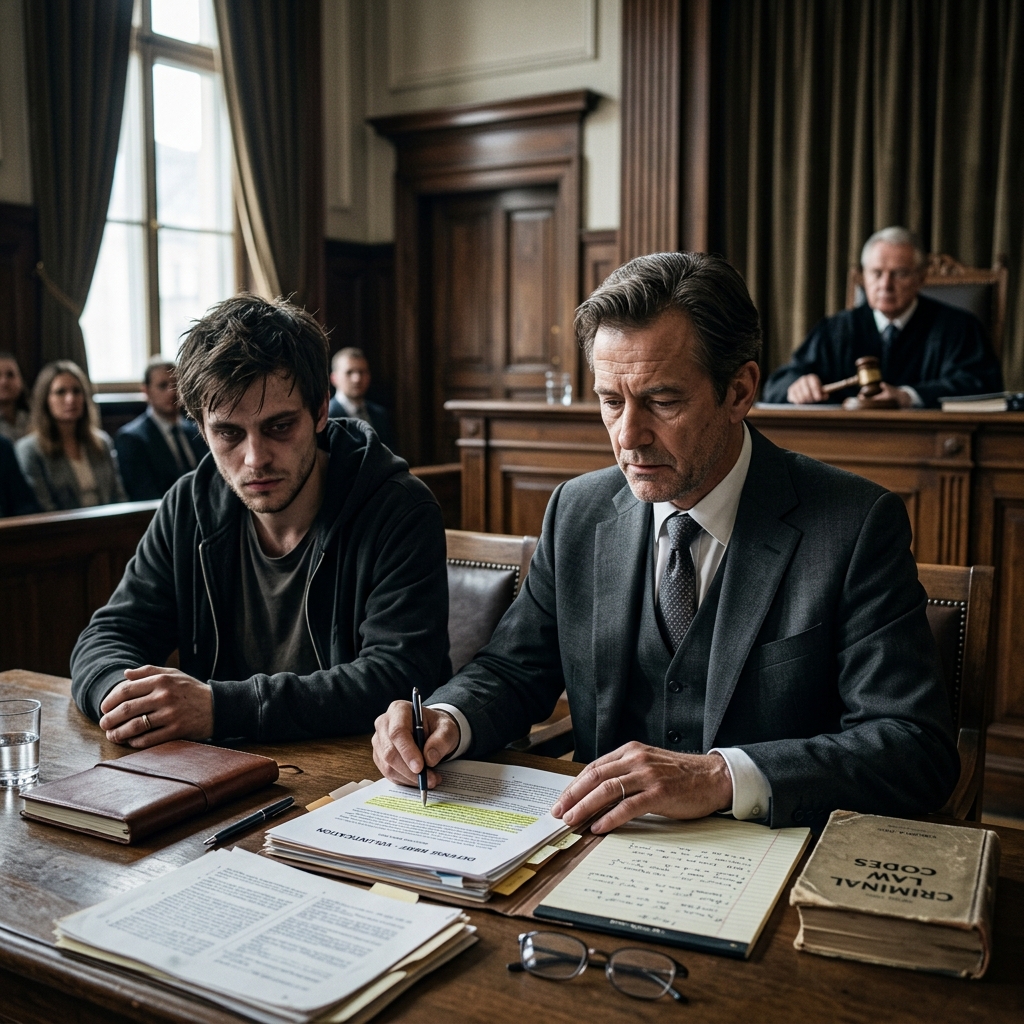
Intoxication can sometimes play a significant role in criminal cases, but it is not a simple excuse for unlawful behavior. Modern criminal law treats alcohol and drug impairment in a highly structured way, focusing on how intoxication affects a person’s mental state, intent, and capacity to understand their actions.
This article explains how intoxication is used as a defense, the crucial difference between voluntary and involuntary intoxication, and why the type of crime charged matters. It also outlines practical considerations for defendants and includes answers to common questions.
Core Idea: Intoxication and Criminal Responsibility
At the heart of any intoxication defense is the concept of mens rea, or criminal intent. To secure a conviction, prosecutors usually must prove that a defendant acted with a particular mental state—such as purpose, knowledge, or recklessness—defined in the relevant statute.
Intoxication becomes legally relevant when it:
- Compromises the defendant’s ability to form the required intent for the offense (for example, a specific plan to commit burglary).
- Prevents the defendant from understanding the nature of what they were doing.
- Impairs the defendant’s capacity to distinguish right from wrong, in a way similar to insanity in some jurisdictions.
Many states recognize intoxication only in narrow circumstances. For most crimes, simply being drunk or high is not, by itself, a complete defense to prosecution.
Voluntary vs. Involuntary Intoxication
Courts draw a sharp line between voluntary and involuntary intoxication. This distinction largely determines whether impairment can help a defendant at trial.
Voluntary Intoxication
Voluntary intoxication refers to the intentional consumption of alcohol, drugs, or other substances that the person knows or should know can cause intoxication. Common examples include drinking at a bar, using recreational drugs, or misusing prescription medication.
Key points about voluntary intoxication:
- It is generally not a defense to crimes requiring only a general intent, such as simple assault in many jurisdictions.
- In some states, it may be used to negate specific intent—for example, premeditation in a first-degree murder charge—potentially reducing the offense to a lesser included crime.
- It rarely leads to complete acquittal; instead, it may be considered in deciding whether the prosecution has proven the required mental state beyond a reasonable doubt.
Involuntary Intoxication
Involuntary intoxication arises when the defendant becomes intoxicated without a meaningful choice or without understanding what they were ingesting. Common scenarios include:
- Being drugged without consent or tricked into consuming an intoxicating substance.
- Taking medication as prescribed but experiencing unexpected, extreme impairment that the person could not reasonably anticipate.
- Consuming something believed to be non-intoxicating, which in fact causes substantial intoxication.
Because the defendant did not choose to become intoxicated, many jurisdictions treat involuntary intoxication much more favorably:
- It can operate as a complete defense if the intoxication prevented the defendant from forming the required mental state.
- It may be treated similarly to an insanity defense, particularly where the person could not understand the nature of their actions or distinguish right from wrong.
- Courts often require strong evidence—such as medical records, toxicology reports, and expert testimony—to substantiate the claim.
Types of Crimes and the Role of Intoxication
Intoxication does not affect all criminal charges in the same way. The legal significance of impairment depends heavily on the structure of the offense and the mental state it requires.
| Crime Type | Typical Mental State | Effect of Voluntary Intoxication | Effect of Involuntary Intoxication |
|---|---|---|---|
| Specific intent crimes (e.g., burglary with intent to steal) | Requires a particular purpose or objective | May be considered to negate specific intent in some jurisdictions, potentially reducing the charge. | Can be a complete defense if it shows the defendant could not form the required intent. |
| General intent crimes (e.g., simple battery) | Requires intent to do the act, but not a further purpose | Usually not a defense; choosing to become intoxicated does not excuse basic harmful conduct. | May be a defense when intoxication is so severe and involuntary that it mimics insanity and negates understanding of the act. |
| Strict liability crimes (e.g., certain regulatory offenses) | No mental state required | Generally irrelevant; guilt does not depend on intent. | Typically also irrelevant, though unusual statutory schemes may allow consideration. |
Mens Rea Defenses and Intoxication
In many jurisdictions, intoxication evidence is used within a broader category of mens rea defenses. These are strategies that aim to create reasonable doubt about the mental element of a crime, rather than justify the conduct itself.
Drug or alcohol intoxication can contribute to such defenses by:
- Showing the defendant was unable to premeditate or deliberate, undermining more serious forms of homicide such as intentional murder.
- Supporting claims that the defendant acted under extreme emotional disturbance, which in some states can reduce murder to manslaughter.
- Providing context that the defendant lacked the mental clarity required for a specific intent element, leading to conviction for a lesser included offense instead.
It is important to note that, especially since the nineteenth century, intoxication alone is generally not treated as an independent, complete defense. Rather, it is evidence bearing on whether the prosecution has proved the required mental state.
Why Many Laws Limit the Intoxication Defense
Modern statutes and case law often limit the use of intoxication to avoid turning impairment into a broad excuse for criminal behavior. Legislatures and courts have emphasized several policy concerns:
- Deterrence: The law seeks to discourage people from voluntarily drinking or using drugs in ways that increase the risk of crime. Treating voluntary intoxication too generously could weaken that deterrent effect.
- Fairness to victims: Victims of crime are harmed regardless of whether the perpetrator was sober. Limiting intoxication defenses reflects a judgment that voluntary impairment should not generally lessen responsibility.
- Evidentiary reliability: It can be difficult to reconstruct exactly how intoxicated a person was at the time of the offense. Restrictive rules help prevent speculative defenses.
- Consistency with insanity doctrine: Involuntary intoxication is more likely to be treated like insanity, whereas voluntary intoxication is not commonly allowed as a basis for claiming legal insanity.
Some jurisdictions go further by explicitly stating in their statutes that intoxication is not a defense, while still allowing evidence of involuntary intoxication to be considered when it directly negates a required mental state.
Building an Involuntary Intoxication Defense
Because involuntary intoxication can sometimes lead to acquittal, courts apply it carefully and typically require substantial proof. Defendants and their attorneys often focus on several kinds of evidence:
- Toxicology reports: Laboratory tests showing what substances were present and at what levels.
- Medical records: Documentation of prescribed medications, side effects, and prior reactions.
- Witness testimony: Statements from people who observed how the defendant consumed the intoxicant—whether they were tricked, coerced, or simply unaware of its nature.
- Expert opinions: Specialists who can link the observed intoxication to an inability to form intent or understand the nature of the act.
In some states, once a defendant introduces credible evidence of involuntary intoxication that could negate the required mental state, the burden may shift back to the prosecution to disprove that defense beyond a reasonable doubt.
Practical Implications for Defendants
For someone facing criminal charges where intoxication is involved, several practical considerations are critical:
- Document everything early: Information about what was consumed, when, and under what circumstances can be lost if not promptly recorded.
- Seek medical evaluation: If intoxication may have been involuntary or unusually severe, medical assessment can provide important evidence.
- Be realistic about voluntary drinking: Courts rarely accept voluntary intoxication as a complete defense. A more realistic strategy may be to use intoxication evidence to challenge specific intent or reduce the severity of the charges.
- Consult experienced counsel: Laws on intoxication vary significantly by state, and local case law can dramatically affect what defenses are available.
Frequently Asked Questions
Is being drunk ever a complete defense to a crime?
Simply being drunk or high is almost never a complete defense. However, involuntary intoxication—where the defendant did not choose to consume an intoxicant or had no reason to know it would be intoxicating—can, in some jurisdictions, be a complete defense if it prevented the person from forming the required mental state.
Can voluntary intoxication reduce a murder charge?
In some states, voluntary intoxication may be considered when determining whether a defendant had the level of premeditation or deliberation needed for more serious homicide charges. This can sometimes reduce a murder charge to manslaughter, especially where intoxication is part of an extreme emotional disturbance defense.
Does intoxication matter for strict liability offenses?
Generally, no. Strict liability offenses are designed so that guilt does not depend on intent or knowledge. As a result, intoxication—whether voluntary or involuntary—typically has little or no effect on liability, unless a specific statute says otherwise.
How is pathological intoxication treated?
Some jurisdictions recognize the idea of pathological intoxication, where a person experiences a disproportionately severe reaction to a relatively small amount of intoxicant and was unaware of their susceptibility. When this reaction is severe enough to prevent understanding of the act or of its wrongfulness, it may be treated similarly to involuntary intoxication and support a defense.
Is intoxication ever considered part of an insanity defense?
Voluntary intoxication is generally not allowed as a basis for claiming insanity. However, long-term substance abuse can sometimes lead to a separate, enduring mental condition—sometimes referred to as “settled insanity”—which may support an insanity claim. Courts are cautious in recognizing such arguments and rely heavily on psychiatric evidence.
References
- Intoxication — Legal Information Institute, Cornell Law School. 2023-05-01. https://www.law.cornell.edu/wex/intoxication
- The Intoxication Defense in Criminal Law Cases — Justia. 2022-08-10. https://www.justia.com/criminal/defenses/intoxication/
- Involuntary Intoxication Defense Strategies That Work — My Rights Law. 2023-02-14. https://www.myrightslawgroup.com/blog/involuntary-intoxication-defense-strategies/
- Intoxication as a Defense in New Jersey Criminal Cases — The Tormey Law Firm. 2021-06-01. https://www.newjerseycriminallawattorney.com/criminal-process/intoxication-defense-in-new-jersey/
- Drug and Alcohol Intoxication: Mens Rea Defenses — American Academy of Psychiatry and the Law Newsletter. 2011-03-01. https://www.aapl.org/docs/newsletter/N241_mens_rea_defenses.htm
- CJI2d Intoxication Jury Instruction — New York State Unified Court System. 2012-01-01. https://nycourts.gov/judges/cji/1-General/Defenses/CJI2d.Intoxication.pdf
- Law on the Rocks: The Intoxication Defenses Are Being Eighty-Sixed — Vanderbilt Law Review. 1999-01-01. https://scholarship.law.vanderbilt.edu/cgi/viewcontent.cgi?article=1788&context=vlr
Similar Articles








Read full bio of medha deb




