
Understanding Sentencing for Drug Crimes
A detailed guide to how courts sentence drug crimes in the United States, from simple possession to large-scale trafficking.
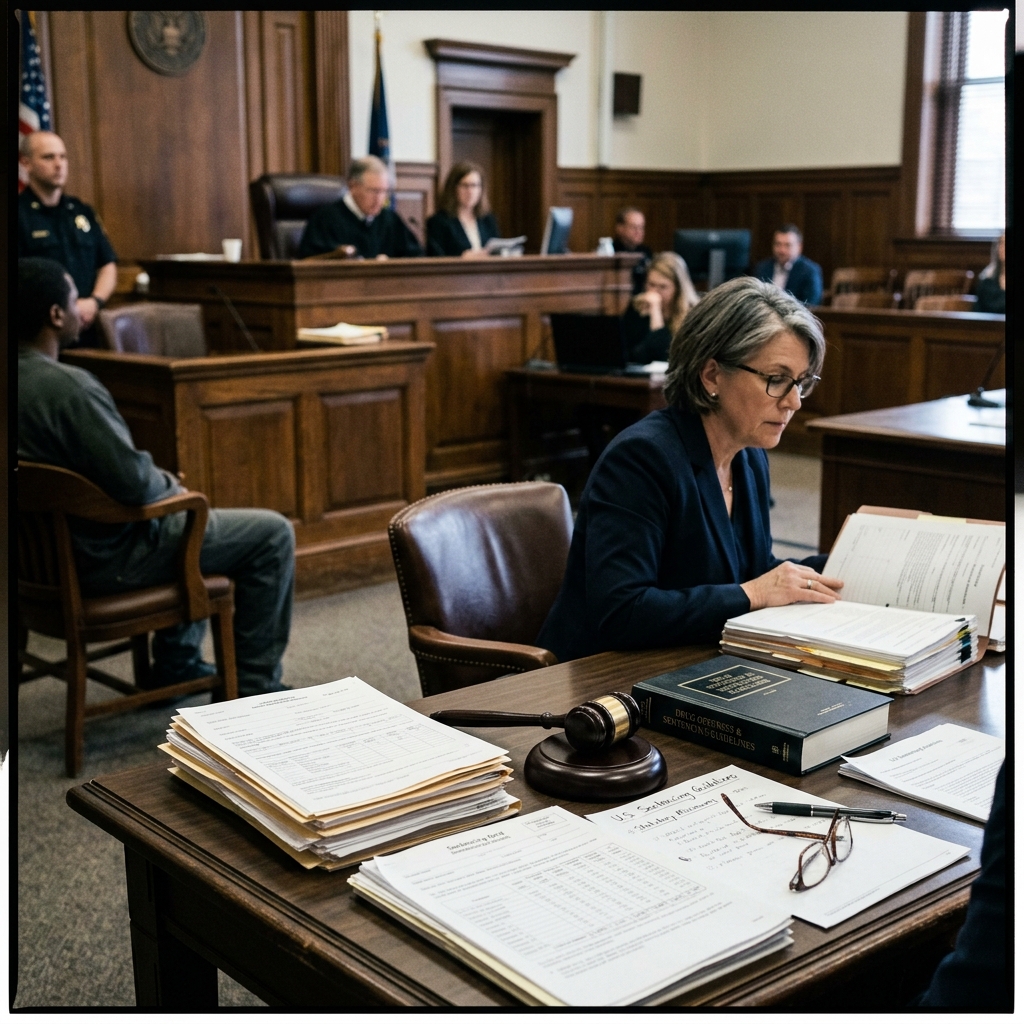
Drug crimes in the United States are punished using a complex mix of federal and state laws, guidelines, and judicial discretion. Sentences can range from small fines and probation for minor possession cases to decades in prison and multi-million dollar fines for large-scale trafficking. If you or someone you care about is facing a drug charge, understanding how sentencing works is critical to making informed decisions about defense and plea options.
This article explains how courts approach sentencing for different types of drug offenses, the key factors that influence punishment, how mandatory minimums operate, and what legal tools sometimes allow judges to reduce otherwise harsh penalties.
1. The Legal Framework Behind Drug Sentencing
Drug sentencing in the U.S. is shaped by two overlapping legal systems: federal law and the individual laws of each state.
1.1 Federal vs. State Authority
Almost every drug offense could be prosecuted under state law, federal law, or both. Federal cases typically involve:
- Large quantities of drugs
- Interstate or international trafficking
- Use of the mail or the internet to distribute drugs
- Organized criminal groups or conspiracy charges
State prosecutions are more common and generally cover local possession, street-level dealing, and smaller distribution schemes. Sentencing ranges differ widely among states: some emphasize treatment and diversion programs, while others impose long prison terms for repeat offenders.
1.2 Controlled Substance Schedules
Both federal and many state laws classify drugs into schedules based on medical use and potential for abuse. The federal Controlled Substances Act organizes drugs into five schedules:
| Schedule | General Characteristics | Examples |
|---|---|---|
| I | High abuse potential, no accepted medical use (under federal law) | Heroin, LSD, ecstasy; marijuana remains Schedule I federally |
| II | High abuse potential, some accepted medical use | Cocaine, methamphetamine, oxycodone |
| III | Moderate abuse risk | Some anabolic steroids, certain combination pain medicines |
| IV | Lower abuse risk | Valium-like anti-anxiety medications |
| V | Lowest abuse potential, often limited quantities of narcotics | Cough preparations with low levels of codeine |
In general, offenses involving higher-schedule drugs (such as Schedule I and II) carry more severe penalties than those involving lower-schedule substances.
2. Types of Drug Offenses and Typical Penalties
Not all drug crimes are treated the same. Legislatures and courts distinguish between possession for personal use and conduct viewed as more dangerous to the public, such as trafficking and manufacturing.
2.1 Simple Possession
Simple possession generally means having a controlled substance for personal use without intent to sell. At the federal level, simple possession is usually a misdemeanor for a first offense, subject to up to one year in jail and a minimum fine of $1,000.
Key points about simple possession:
- First-time federal offenses are often misdemeanors, though states may classify them differently.
- Subsequent federal possession offenses can be treated as felonies with longer prison exposure.
- Judges may impose community service, probation, and mandatory substance abuse treatment in addition to or instead of jail.
Despite relatively lower maximum penalties, a possession conviction can still create a lasting criminal record that affects employment, housing, student loans, immigration, and professional licensing.
2.2 Possession with Intent, Distribution, and Trafficking
Courts impose significantly harsher sentences when they determine that a defendant was selling, transporting, or manufacturing drugs. Terminology varies, but lawmakers often use these categories:
- Possession with intent to distribute – having drugs and circumstances suggesting intent to sell (such as packaging, scales, or large quantities).
- Distribution or delivery – transferring drugs to another person, even without a profit.
- Trafficking – usually refers to high quantities, cross-border movement, or large-scale operations; under federal law, trafficking triggers mandatory minimum sentences for many Schedule I and II drugs.
For many Schedule I and II substances, a first federal trafficking offense carries a minimum of five years in prison, and more if large quantities are involved or if the crime results in serious bodily injury or death.
3. Factors that Shape a Drug Sentence
Even when statutes set broad ranges or mandatory minimums, courts still consider multiple factors when imposing a specific sentence within that range. At the federal level, these factors are organized into the U.S. Sentencing Guidelines, which advise judges on appropriate sentencing ranges based on offense characteristics and criminal history.
3.1 Nature of the Drug and Quantity
Two of the most important drivers of sentence length are the type of drug and the amount involved:
- Schedule I and II substances (such as heroin, cocaine, methamphetamine) trigger the longest sentences.
- Larger quantities suggest trafficking or commercial intent and lead to higher guideline ranges and mandatory minimums.
For example, federal law imposes steep penalties for trafficking large quantities of marijuana: 1,000 kilograms or more, or 1,000 or more plants, can carry 10 years to life in prison, with higher minimums if death or serious bodily injury occurs.
3.2 Criminal History and Repeat Offenses
Judges typically impose harsher sentences for defendants with prior convictions, especially prior drug felonies or violent offenses. Federal laws include sentence enhancements when a defendant has one or more prior serious drug or violent felony convictions, sometimes raising mandatory minimums to 15 or 25 years.
Even without statutory enhancements, criminal history categories in the federal guidelines raise the recommended sentencing range for repeat offenders.
3.3 Role in the Offense and Aggravating Circumstances
Courts also consider how the defendant participated in the offense and whether any aggravating circumstances were present. Factors that tend to increase sentences include:
- Organizing or leading a drug trafficking organization
- Using or possessing firearms in connection with drug activity
- Committing the offense near schools or involving minors
- Causing serious bodily injury or death due to the drug crime
In serious cases, an offense resulting in death can raise penalties dramatically. Under federal law, certain trafficking offenses that cause death or serious injury carry minimum sentences of 20 years and can extend to life imprisonment.
3.4 Mitigating Factors
At the same time, some facts support leniency:
- Minor or peripheral role in a larger conspiracy
- No prior criminal record
- Significant personal addiction issues
- Prompt acceptance of responsibility and cooperation with authorities
These considerations can reduce guideline ranges or justify a sentence below the guideline recommendation, especially when combined with statutory mechanisms that permit lower sentences.
4. Mandatory Minimums and Sentencing Guidelines
One of the most controversial aspects of drug sentencing is the use of mandatory minimum penalties. These are statutes that require judges to impose at least a specified term of imprisonment if certain conditions are met, such as particular drug quantities or prior convictions.
4.1 How Mandatory Minimums Work
Federal drug laws include a variety of mandatory minimum terms, including:
- 5-year minimums for many first-offense trafficking crimes involving designated quantities of Schedule I and II substances
- 10-year minimums for higher quantities or repeat offenders
- Enhanced minimums (often 20 years or more) when death or serious bodily injury results from the offense
These minimums apply regardless of what the Sentencing Guidelines would otherwise recommend. Judges cannot normally go below a mandatory minimum unless a specific legal exception applies.
4.2 Sentencing Guidelines as an Advisory Tool
At the federal level, the U.S. Sentencing Guidelines are now advisory rather than mandatory, but courts must still calculate and consider them. In drug cases, guideline calculations turn heavily on:
- The base offense level tied to drug type and quantity
- Adjustments for role in the offense, weapons, and victim impact
- Reductions for acceptance of responsibility
- The defendant’s criminal history category
Judges may depart upward or downward from the guideline range if they find that unique circumstances justify a different sentence, subject to appellate review for reasonableness.
5. Relief from Harsh Drug Sentences
Although drug statutes can be severe, there are mechanisms that allow courts to impose sentences below mandatory minimums in certain situations or to reduce existing sentences.
5.1 Safety Valve and Cooperation
Federal law includes a “safety valve” that permits judges to impose sentences below mandatory minimums for certain non-violent, low-level drug offenders who meet strict criteria, such as limited criminal history and truthful disclosure of their role in the offense.
Separately, prosecutors can file motions for reduced sentences when defendants provide substantial assistance in investigating or prosecuting others. This cooperation can significantly lower sentences below both guideline ranges and mandatory minimums.
5.2 The First Step Act and Retroactive Relief
In recent years, Congress has enacted reforms that offer sentencing relief in some drug cases. The First Step Act expanded eligibility for safety valve relief and allowed certain individuals sentenced under older, harsher drug laws to seek reductions.
Whether a particular defendant qualifies depends on offense date, charges, prior record, and other specific criteria. Courts evaluate petitions individually, and outcomes vary by jurisdiction and case facts.
5.3 State-Level Reforms and Alternatives
Many states have also adopted reforms to reduce incarceration for low-level drug offenses and prioritize treatment. Common approaches include:
- Drug courts that focus on treatment and close supervision instead of prison
- Diversion programs that allow eligible defendants to avoid conviction upon successful completion
- Reduced penalties for possession of small amounts, especially for marijuana in some jurisdictions
The availability and terms of these alternative programs differ significantly from state to state.
6. Broader Impact of Drug Sentences
Drug sentencing affects not only individual defendants but also the broader criminal justice system and communities. Data show that drug-related crimes make up a substantial portion of arrests and prison populations.
- Roughly one-quarter of all arrests in the U.S. involve drug offenses, including possession, sale, and manufacturing.
- A significant portion of state prisoners are serving time for drug-related crimes, particularly women.
- Many convicted drug traffickers receive a combination of prison, jail, and probation, reflecting differing state sentencing structures.
These patterns raise ongoing policy debates about proportionality, racial and regional disparities, public safety, and the role of treatment versus punishment in addressing substance use disorders.
7. Practical Considerations If You Face a Drug Charge
Sentencing rules are intricate, and small factual differences can drastically change the potential punishment. If you are charged with a drug offense, understanding your position early can influence the outcome.
7.1 Questions to Discuss with Counsel
An experienced criminal defense lawyer can help you evaluate:
- Whether you face exposure to federal prosecution or only state charges
- Which mandatory minimums or sentencing enhancements may apply
- Whether your role in the offense could be considered minor
- Possibilities for diversion or treatment-based alternatives
- Eligibility for safety valve or other relief from mandatory minimums
They can also advise whether to challenge evidence, negotiate a plea, or proceed to trial based on the strength of the government’s case and your tolerance for risk.
7.2 Long-Term Consequences Beyond Prison Time
Drug sentences impact many aspects of life beyond incarceration or probation, including:
- Difficulties obtaining employment and professional licenses
- Limited eligibility for certain federal student aid
- Immigration consequences for non-citizens, including possible removal
- Restrictions on firearm ownership and voting rights (depending on the jurisdiction)
These collateral consequences can sometimes be mitigated through post-conviction relief, record-sealing laws, or pardons, but options are heavily dependent on local law.
8. Frequently Asked Questions About Drug Sentencing
Does simple possession always lead to jail time?
No. For first-time possession cases, especially at the state level, courts often impose probation, community service, fines, and treatment instead of incarceration. However, under federal law a first simple possession conviction can still carry up to one year in prison and at least a $1,000 fine, and state laws may be stricter.
What is the difference between possession and trafficking?
Possession usually refers to having drugs for personal use, while trafficking involves manufacturing, transporting, or distributing drugs, often in larger quantities. Lawmakers treat trafficking as a more serious threat to public safety, so it typically carries higher guideline ranges and mandatory minimum sentences.
Can a judge ignore a mandatory minimum sentence?
In general, a judge must impose at least the mandatory minimum sentence when it applies. Exceptions exist when the defendant qualifies for safety valve relief, provides substantial assistance to investigators, or benefits from specific statutory reforms like those under the First Step Act. Even then, not every case qualifies.
Do all drug crimes become felonies?
No. Many first-time simple possession offenses are misdemeanors, particularly at the state level. However, possession with intent to distribute, trafficking, manufacturing, and repeat offenses are often charged as felonies with significantly higher penalties and more severe long-term consequences.
How do prior convictions affect my sentence?
Prior convictions generally increase the recommended guideline range and can trigger statutory enhancements. In federal cases, repeat drug or violent felony convictions can elevate mandatory minimums to 15 or 25 years for certain offenses, and states often have similar recidivist provisions.
References
- Federal Trafficking Penalties — U.S. Drug Enforcement Administration (DEA). 2022-12-01. https://www.dea.gov/sites/default/files/2022-12/federal%20trafficking%20penalties.pdf
- Federal Sentencing Guidelines for Drugs — Rand Mintzer, Attorney at Law. 2023-01-01 (approx.). https://www.mintzerlaw.com/federal-sentencing-guidelines-for-drugs/
- Penalties for Drug Abuse, Selling, and Smuggling in the USA — American Addiction Centers / DrugAbuse.com. 2024-01-01 (approx.). https://drugabuse.com/addiction/drug-abuse/penalties/
- Federal Trafficking Penalties for Schedules I, II, III, IV, and V — Fordham University, Drug-Free Campus Guidelines. 2023-08-01 (approx.). https://www.fordham.edu/student-life/deans-of-students-and-student-life/student-handbook/university-regulations/drug-free-campus-guidelines/federal-trafficking-penalties-for-schedules-i-ii-iii-iv-and-v-except-marijuana/
- Drug Trafficking: A Sentencing Perspective — Bureau of Justice Statistics (BJS). 1994-05-01. https://bjs.ojp.gov/library/publications/drug-trafficking-sentencing-perspective
- Drug-Related Crime Statistics — DrugAbuseStatistics.org. 2026-01-01 (approx.). https://drugabusestatistics.org/drug-related-crime-statistics/
- Drug Offense Sentencing Relief Under the First Step Act and the Safety Valve — Congressional Research Service. 2023-05-05. https://www.congress.gov/crs-product/IF12651
Similar Articles








Read full bio of Sneha Tete




