
Undefined Guide To Filing A Labor Complaint: What To Expect Now
Learn where to report labor violations, what evidence to gather, and how the complaint process typically works.
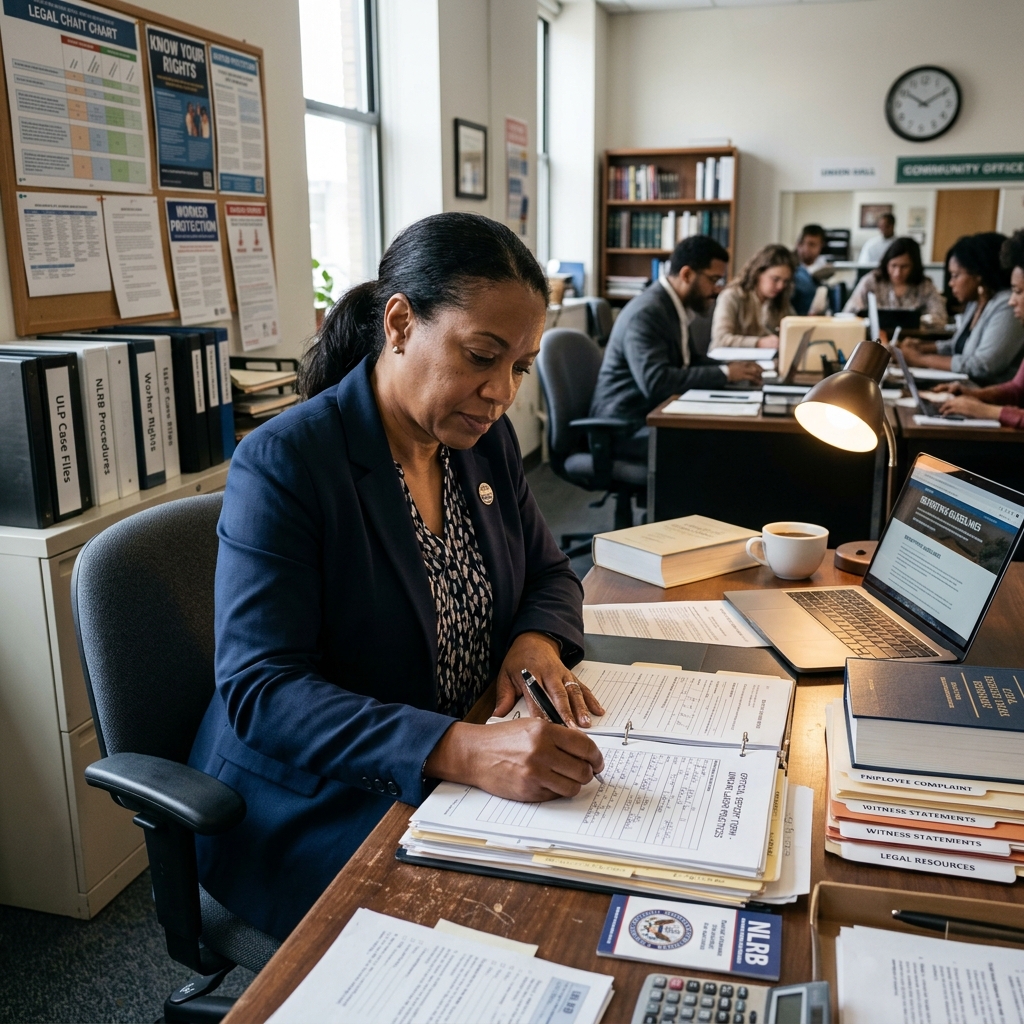
Understanding What Counts as an Unfair Labor Practice
Unfair labor practices are workplace violations that interfere with employee rights, union activity, wage protections, or other employment standards. In many situations, the right agency depends on the kind of conduct involved, because some complaints are handled by state labor departments while others fall under federal enforcement systems such as the U.S. Department of Labor or the National Labor Relations Board.
At the most basic level, the process starts with identifying whether the issue is about unpaid wages, retaliation, misclassification, interference with protected workplace activity, or another legal violation. That distinction matters because filing in the wrong place can delay the outcome or send the complaint to a different office for review.
- Wage theft and unpaid earnings are often handled by labor standards agencies or wage-and-hour divisions.
- Violations involving union rights or protected organizing activity may belong before the National Labor Relations Board.
- Public-sector labor disputes may be covered by separate federal or state labor relations authorities.
- Some claims involve more than one issue, which means you may need to file in more than one forum.
Start by Identifying the Right Agency
The agency you contact should match the legal problem you experienced. For example, California’s Labor Commissioner directs workers to file a report of labor law violation when they have seen wage theft or a broader pattern affecting multiple workers, while making clear that such a report is not the same thing as a wage claim. The U.S. Department of Labor’s Wage and Hour Division also accepts complaints related to wage and hour problems and routes them to the nearest office for follow-up.
If the complaint involves rights protected by federal labor law, the National Labor Relations Board allows charges against employers or labor organizations when NLRA rights may have been violated. In federal employment settings, the Federal Labor Relations Authority addresses unfair labor practices involving agencies or unions under the federal-service labor relations statute.
| Problem Type | Possible Agency | Typical Focus |
|---|---|---|
| Unpaid wages, overtime, or wage theft | State labor department or U.S. Department of Labor | Recovery of earned pay and related violations |
| Union interference or protected concerted activity | National Labor Relations Board | Labor rights under the NLRA |
| Federal workplace labor disputes | Federal Labor Relations Authority | Agency and union conduct in federal employment |
| State labor standards violations | State labor agency | Enforcement of wage and workplace rules |
Gather Your Information Before Filing
Complaint forms usually ask for detailed facts, so it helps to collect documents before you begin. The Wage and Hour Division recommends preparing your name and contact details, the employer’s contact information, the manager or owner’s name, a description of the work performed, the dates of the events, and how wages were paid. State agencies often request similar information, along with copies of any records that support your account.
Supporting evidence does not have to be complicated, but it should be organized and accurate. Pay stubs, time records, schedules, text messages, emails, written policies, and notes about conversations can all help show what happened. If other employees experienced the same conduct, their observations may also strengthen the report.
- Keep copies of pay stubs, schedules, and time sheets.
- Save messages showing shifts, pay rates, threats, or policy changes.
- Write down dates, names, locations, and the sequence of events.
- Do not send originals unless the agency specifically asks for them.
Choose Between an Online, Paper, or Direct Filing Method
Many labor agencies give workers more than one way to submit a complaint. California allows reports online as well as by mail or in person, and its instructions explain that a paper report must be completed, signed, and delivered to the Labor Commissioner office handling the location where the work or violation occurred. The Illinois Department of Labor permits workplace complaints online, by email, or by mail, although it warns that mailed or emailed submissions may take longer to process.
The filing method you choose may depend on urgency, access, and comfort with digital forms. Online filing may be faster, but paper filing can be useful when you need to attach written explanations or when the agency provides a form that is easier to complete by hand. In some systems, a phone call is the first step, after which an investigator or intake officer helps route the matter to the correct office.
- Online filing is often the fastest option.
- Mail or in-person delivery may be required for certain state forms.
- Some agencies will contact you after intake to clarify details.
- Third-party complainants may be allowed in some systems, but direct witnesses and affected workers should provide the most detail possible.
Know the Time Limits Before You Wait Too Long
Deadlines matter because agencies may refuse older claims or limit the period they can investigate. California’s labor violation reporting guidance explains that the filing deadline depends on the legal basis for the report: two years for an oral agreement, four years for a written agreement, and three years when a law or regulation creates liability, such as minimum wage or overtime violations. Waiting too long can reduce the amount of relief available even when the underlying violation is real.
Different laws have different limitation periods, so a worker who has several related issues should check each one separately. A wage claim, a retaliation complaint, and a labor-rights charge may have different deadlines and different enforcement paths. Filing early preserves options and makes it easier for investigators to collect records while they still exist.
- Check the deadline for each claim type, not just the main issue.
- File as soon as you can after the conduct occurs.
- Save records immediately so evidence is not lost.
- Ask whether one filing affects another claim with a different deadline.
What Happens After You Submit the Complaint
Once a complaint is filed, the agency usually decides whether it has jurisdiction and whether the facts justify an investigation. New York’s Labor Standards Complaint Process begins with a review of legal authority; if the matter falls outside the division’s jurisdiction, the worker is directed to another agency or organization. If the claim is accepted, the worker receives a case number and the employer is contacted.
Investigations can involve document requests, interviews, site visits, or settlement conferences. The New York process may include periodic updates and a compliance conference where both sides can attempt to resolve the issue. The Wage and Hour Division similarly states that it works with the complainant to determine whether an investigation is the best next step, and if back wages are owed, the investigator can seek payment.
- The agency screens the complaint for jurisdiction and completeness.
- The employer may be notified and asked to respond.
- An investigator may review records or interview witnesses.
- Some cases end in payment, correction of practices, or dismissal if the claim is not supported.
How to Strengthen a Labor Complaint
A clear complaint is easier to investigate than a broad accusation. The strongest submissions explain what happened, when it happened, who was involved, how it affected pay or workplace rights, and what proof supports the allegation. If there were repeated incidents, describe the pattern rather than only the worst example. If multiple workers were affected, identify whether the conduct was isolated or widespread.
It also helps to separate facts from conclusions. Instead of saying only that a company was unfair, describe the specific actions: refusing overtime pay, changing time records, discouraging workers from speaking to each other about conditions, or retaliating after a complaint. Agencies are more likely to act when the report connects those facts to a legal rule or protected right.
- Use dates, names, and specific events.
- Explain the wage or rights impact in plain language.
- Attach copies of supporting documents.
- Keep your statement factual and organized.
Separate Wage Recovery From Broader Enforcement
One common mistake is assuming that every labor complaint automatically recovers back pay. Some agencies investigate broader legal violations but do not provide the same remedy as a wage claim. California’s reporting page explicitly says that a report of labor law violation is not a wage claim, and workers who want unpaid wages must also file the separate wage claim process if they seek that relief. This distinction is important because a complaint may trigger investigation without immediately producing payment.
In practice, workers sometimes need more than one filing. A wage complaint may address unpaid hours, while a labor-rights charge may address retaliation or interference with protected activity. Understanding the difference allows you to protect both the money owed and the legal rights at issue.
| Goal | Likely Filing Type | Possible Outcome |
|---|---|---|
| Recover unpaid wages | Wage claim or wage complaint | Payment of earned wages or back wages |
| Report broader workplace violations | Labor law violation report | Investigation and possible enforcement |
| Challenge union or concerted-activity interference | NLRB charge | Administrative action under labor law |
When You May Need Legal Help
Many workers can file a complaint on their own, but legal help can be valuable when the facts are complex, the employer has multiple locations, or the complaint overlaps with retaliation, discrimination, or contract issues. A lawyer can also help determine whether state and federal claims should be filed together and whether there is a faster route to relief in court or through an administrative agency.
Legal advice is especially useful when deadlines are close, when several workers are involved, or when the employer disputes the facts. Because labor agencies often require precise forms and supporting records, an attorney can help present the complaint in a way that is easier for investigators to understand.
- Seek help if your complaint involves several legal issues at once.
- Get advice if the employer retaliates after you complain.
- Consider counsel if you are unsure which agency has authority.
- Use legal guidance when the potential recovery is significant.
Frequently Asked Questions
Can I report a labor violation and still file for unpaid wages?
Yes. Some systems treat the report of a labor law violation and a wage claim as separate procedures, so you may need to file both if you want investigation plus payment of unpaid wages.
What if I do not have every document?
You can still file. Agencies commonly accept complaints based on the facts you know, and they may ask for additional evidence later. Detailed notes and copies of what you do have are still helpful.
Will the employer know I complained?
In many complaint processes, the employer is contacted during the investigation, so confidentiality may not be absolute. If retaliation is a concern, report that issue as part of the complaint.
What if my claim belongs to a different office?
The receiving agency may refer you elsewhere if it lacks jurisdiction. That is one reason it helps to identify the issue carefully before filing.
How long does the process take?
Processing time depends on the agency, the complexity of the case, and whether the employer cooperates. Some matters resolve quickly, while others require interviews, records review, or formal conferences.
References
- Report a Labor Law Violation — California Department of Industrial Relations, Division of Labor Standards Enforcement. 2026-07-10. https://www.dir.ca.gov/dlse/howtoreportviolationtobofe.htm
- Filing a complaint with the U.S. Department of Labor’s Wage and Hour Division — U.S. Department of Labor / worker.gov. 2026-07-10. https://www.worker.gov/actions-whd-claim/
- How to File a Complaint — U.S. Department of Labor, Wage and Hour Division. 2026-07-10. https://www.dol.gov/agencies/whd/contact/complaints
- Investigate Charges — National Labor Relations Board. 2026-07-10. https://www.nlrb.gov/about-nlrb/what-we-do/investigate-charges
- Unfair Labor Practice — Federal Labor Relations Authority. 2026-07-10. https://www.flra.gov/cases/unfair-labor-practice
- The Labor Standards Complaint Process — New York State Department of Labor. 2026-07-10. https://dol.ny.gov/labor-standards-complaint-process
Similar Articles








Read full bio of Sneha Tete




