
Understanding and Managing Real Estate Development Conflicts
A practical guide to how real estate developments go wrong, who is involved, and what legal tools help resolve conflicts.
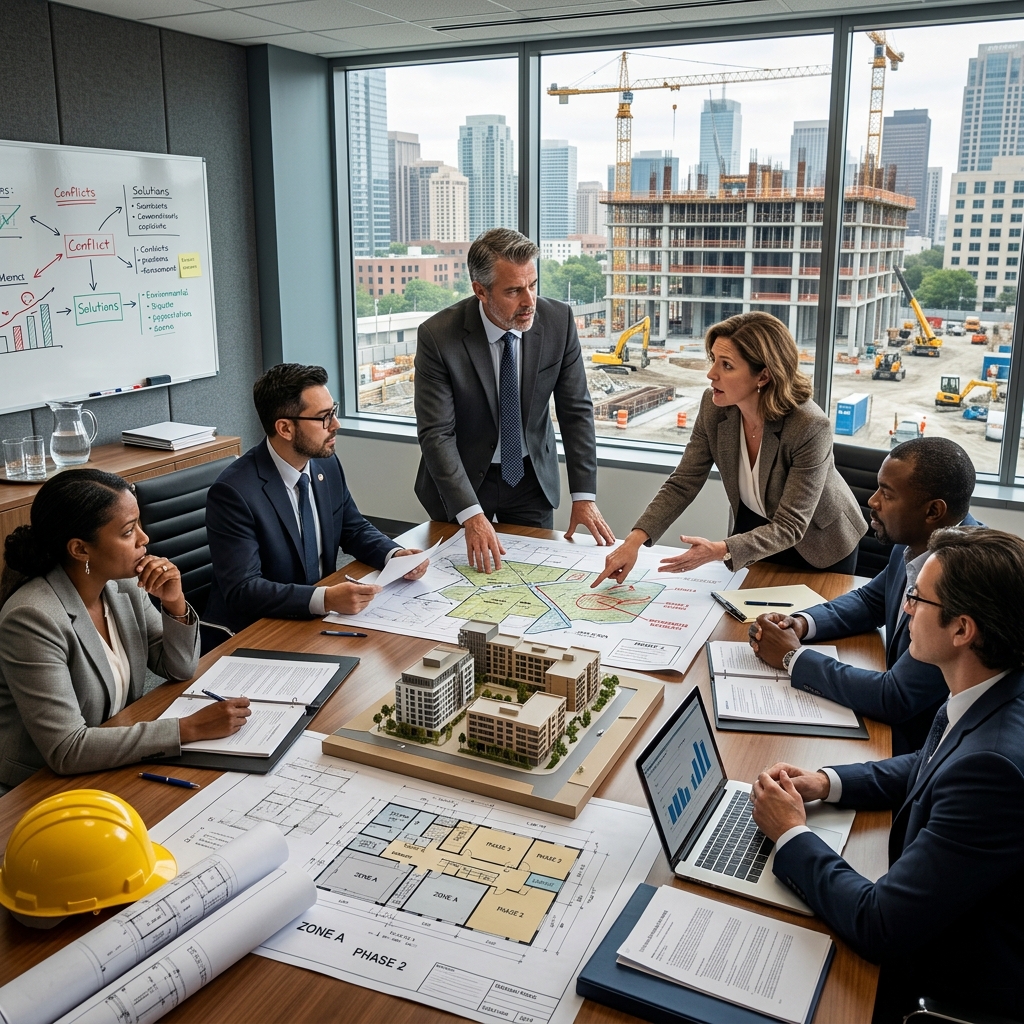
Real estate development projects can transform neighborhoods, create jobs, and generate long-term value, but they also bring a high risk of legal and financial conflict. Disputes can arise at any stage of a project, from land acquisition and zoning approvals to construction and final sales. Knowing where these conflicts typically occur and how the law addresses them is essential for developers, investors, contractors, and neighboring property owners.
This guide explains the major participants in a development project, the stages where disputes commonly arise, typical legal claims, and practical strategies for preventing and resolving conflicts.
Key Players in a Real Estate Development Project
Before examining conflicts, it is useful to understand who is usually involved in a development and how their interests interact. In most projects, several core participants appear repeatedly.
| Participant | Primary Role | Typical Interests |
|---|---|---|
| Developer | Leads and coordinates the project, from concept through completion. | Profitability, timely completion, regulatory compliance, marketability. |
| Landowner / Seller | Transfers land or development rights to the developer or investors. | Maximizing sale price, clear title, timing of closing. |
| Investors / Lenders | Provide capital through equity, loans, or other financing structures. | Return on investment, risk control, adherence to loan covenants. |
| Architects & Engineers | Design the project and ensure technical and structural soundness. | Compliant design, professional reputation, scope clarity. |
| Contractors & Subcontractors | Perform the physical construction work. | Payment, safety, schedule, scope and change order management. |
| Government & Regulators | Apply zoning, land use, environmental, and building codes. | Public safety, environmental protection, lawful land use. |
| Adjacent Owners & Community | Live or operate near the project site. | Property values, traffic, noise, environmental and aesthetic impacts. |
| Purchasers / Tenants | Buy or lease units or spaces in the completed project. | Quality, habitability, timely delivery, clear title and disclosures. |
Because these participants hold different priorities and risk tolerances, conflict is almost inevitable unless expectations are clearly aligned and documented.
The Development Lifecycle and Where Conflicts Arise
Most real estate developments follow a recognizable sequence of stages. Disputes can emerge at each step, often for predictable legal reasons.
1. Site Selection and Land Acquisition
The earliest phase involves researching potential sites, negotiating purchase terms, and confirming that the land can be used as planned. At this stage, conflicts often relate to:
- Title defects or undisclosed liens that impair the buyer’s ability to obtain clear ownership.
- Boundary disputes with neighboring owners after a survey reveals encroachments or inconsistent legal descriptions.
- Failed contingencies, such as financing, zoning, or due diligence conditions that are not satisfied by the deadline.
- Misrepresentation by a seller about property conditions, access, or existing leases.
Careful drafting of purchase agreements, including clear contingency periods, access rights for inspections, and remedies for title problems, helps limit disputes at this stage.
2. Planning, Design, and Approvals
After securing control of the land, the developer works with design professionals to create preliminary plans and seeks necessary approvals and permits. Conflicts often involve:
- Zoning and land use challenges, where a city or county denies a requested rezoning, variance, or special use permit.
- Community opposition to density, building height, traffic, or perceived environmental effects, sometimes leading to administrative appeals or litigation.
- Disputes with design professionals over scope, timing, or fees, especially when plans must be revised to satisfy regulators.
Many local governments require public hearings or notices for zoning changes or large projects, which can trigger formal objections from neighbors and community groups.
3. Financing and Joint Venture Arrangements
Development is capital-intensive, so projects frequently rely on complex financing structures and partnerships. Conflicts arise when economic assumptions change or documents are vague.
- Joint venture disputes over decision-making authority, profit distributions, and responsibility for cost overruns.
- Deadlock between partners in a 50/50 or similar ownership structure when key decisions require unanimous approval.
- Loan covenant breaches, such as failing to meet pre-leasing requirements, cost-to-complete tests, or construction deadlines.
Industry analysis notes that many joint venture disputes stem from imprecise contract language and lack of clear deadlock mechanisms. Detailed operating agreements with voting structures, buy–sell provisions, and dispute resolution clauses can reduce these conflicts.
4. Construction and Performance Issues
During construction, the volume of activity increases exponentially, and so does the potential for conflict. Common sources include:
- Payment disputes between developers and contractors or among tiers of subcontractors, sometimes resulting in mechanic’s liens.
- Change order disagreements when the scope or design is modified and parties disagree on price or time extensions.
- Defective work claims involving alleged code violations, structural issues, or safety hazards.
- Delay and disruption caused by labor shortages, supply chain problems, or weather, leading to liquidated damages or schedule claims.
Well-drafted construction contracts clarify how changes are approved, how delays are documented, and what remedies apply if performance is deficient.
5. Sale, Leasing, and Post-Completion Issues
Even after construction is finished, disputes may continue or emerge for the first time. Examples include:
- Warranty disputes and claims for latent defects discovered by purchasers or tenants after occupancy.
- Disclosure issues, such as failure to report known defects, environmental conditions, or association obligations.
- Common interest community conflicts related to homeowner association governance, maintenance, and use restrictions in condominium or subdivision projects.
In many jurisdictions, statutory warranty periods and consumer protection laws give buyers specific rights when serious defects are discovered after closing.
Common Legal Theories in Development Disputes
When conflicts cannot be resolved informally, parties often resort to legal action based on established doctrines of contract and property law.
Breach of Contract
Most development relationships are governed by written agreements. A breach of contract claim asserts that one party failed to perform a required obligation without a valid legal excuse. In the development context, breach claims frequently involve:
- Failure to close on a land purchase or provide agreed-upon financing.
- Not completing construction by the deadline specified in the contract.
- Refusal to pay for work or services that conform to the contract.
- Violation of covenants in joint venture, loan, or operating agreements.
Damages may include lost profits, cost to complete or repair, or liquidated damages where the contract specifies a pre-agreed sum.
Negligence and Professional Malpractice
When design professionals or contractors fail to meet the applicable standard of care, injured parties may assert negligence or malpractice claims. Common allegations include:
- Substandard architectural or engineering design resulting in unsafe or non-compliant structures.
- Poor workmanship causing water intrusion, structural cracks, or building system failures.
- Failure to comply with building codes or industry standards, leading to property damage or personal injury.
These cases often rely on expert testimony to establish what a reasonably prudent professional would have done under similar circumstances.
Land Use, Zoning, and Administrative Appeals
Developers and neighboring owners may challenge or defend government decisions relating to zoning, permits, variances, and environmental approvals. Typical issues include:
- Denial of a rezoning request or conditional use permit needed for the project.
- Conditions placed on a permit that the developer believes are excessive or unlawful.
- Neighbor appeals asserting that a project is inconsistent with an adopted comprehensive plan or zoning ordinance.
Land use disputes often proceed through administrative hearings before reaching court, and procedures vary widely by jurisdiction.
Nuisance and Neighbor-Based Claims
Adjacent property owners who feel harmed by a development may assert nuisance or similar claims. These typically allege that the project unreasonably interferes with the use and enjoyment of their property through excessive noise, dust, light, traffic, or other impacts.
In some instances, settlement may involve modifications to construction schedules, traffic management plans, or project design to reduce perceived harms.
Preventive Strategies: Reducing the Risk of Conflict
Because litigation can be time-consuming and costly, many developers and investors prioritize preventive measures. While not all disputes are avoidable, several proactive steps significantly reduce risk.
Clear, Detailed Contracts
Ambiguous or incomplete agreements are one of the most common causes of development disputes. Effective contracts should:
- Define scope of work and deliverables with as much specificity as practicable.
- Explain how changes are requested, priced, and approved.
- Spell out payment schedules, retainage, and conditions for final payment.
- Allocate risks for delays, unforeseen conditions, and cost escalation.
- Include dispute resolution mechanisms, notice requirements, and cure periods.
In joint ventures, agreements should also address contributions, management rights, major decisions, deadlock procedures, and exit mechanisms.
Thorough Due Diligence
Early investigation helps avoid surprises that derail a project. Key due diligence items often include:
- Title searches and surveys to identify easements, encroachments, and restrictions.
- Environmental assessments to evaluate contamination risks and compliance obligations.
- Market studies to test assumptions about demand, rents, and sale prices.
- Review of zoning codes, comprehensive plans, and development standards.
Discovering problems early gives parties an opportunity to renegotiate terms or walk away before substantial funds are committed.
Community Engagement and Communication
Many conflicts with neighbors arise when communities feel ignored or surprised by a project. Research on real estate development disputes emphasizes the importance of early communication and ongoing engagement.
- Hold informational meetings to explain project goals and anticipated impacts.
- Listen to community concerns and, where feasible, adjust plans in response.
- Provide regular updates as approvals are obtained and construction progresses.
- Designate a consistent point of contact for questions and complaints.
Proactive outreach does not eliminate all opposition, but it often leads to more constructive dialogue and fewer formal challenges.
Documenting Decisions and Changes
Keeping a clear written record is essential in complex projects. Good documentation practices include:
- Confirming major decisions and approvals in writing, even after verbal discussions.
- Maintaining organized records of change orders, schedules, and cost updates.
- Preserving emails, meeting minutes, and site reports that may later support or defend a claim.
Strong documentation often helps resolve disputes informally and provides critical evidence if litigation becomes necessary.
Dispute Resolution Options in Development Conflicts
When conflicts do occur, parties frequently have several pathways to resolution, some of which may be mandated in their contracts.
Negotiation and Informal Problem-Solving
Most disputes begin with direct negotiation. Developers and other stakeholders often have ongoing relationships and shared interests in completing the project, which can motivate compromise. Typical negotiated solutions include schedule modifications, partial payments, redesigns, or scope adjustments.
Mediation
Mediation involves a neutral third party who helps the participants discuss the issues and explore settlement. It is usually non-binding—meaning the mediator cannot force an outcome—but often leads to creative solutions that courts might not order. Many construction and development contracts require mediation before filing a lawsuit or starting arbitration.
Arbitration
In arbitration, a neutral decision-maker (or panel) hears evidence and issues a binding decision, similar to a private judge. Arbitration clauses are common in construction contracts because parties often seek a faster, more specialized forum than public courts. However, arbitration can still be costly, and rights of appeal are limited.
Court Litigation
Some disputes ultimately go to court, particularly those involving land use decisions, title issues, or statutory rights. Courts have authority to:
- Award damages for breach of contract, negligence, or other civil wrongs.
- Order specific performance in certain real property transactions.
- Review administrative decisions on zoning, permitting, and environmental approvals.
Because litigation outcomes are uncertain and timelines can be lengthy, parties often consider it a last resort after other options have failed.
When to Consult a Real Estate Development Attorney
Legal advice is valuable throughout a project, not just after problems arise. Experienced real estate and construction counsel can assist with:
- Structuring deals and joint ventures to balance risk and control.
- Drafting and negotiating purchase contracts, loan documents, and construction agreements.
- Navigating zoning, land use, and permitting requirements.
- Responding to community opposition and governmental challenges.
- Managing claims during construction and pursuing or defending litigation, arbitration, or administrative appeals.
Because laws vary significantly among jurisdictions, local legal expertise is especially important for development projects.
Frequently Asked Questions
What is the most common cause of real estate development conflicts?
There is no single cause, but many disputes stem from unclear contracts and misaligned expectations. Vague language about scope, timing, and decision-making frequently leads to disagreements, particularly in joint ventures and construction contracts.
Can neighboring property owners stop a development?
Neighbors usually cannot block a project simply because they dislike it, but they may have standing to challenge zoning changes, permits, or alleged violations of land use regulations. They can file administrative appeals, seek judicial review, or assert nuisance claims if a project unreasonably interferes with their property.
How can developers reduce conflicts with the community?
Developers can mitigate conflict by engaging early with neighbors, explaining project benefits and impacts, listening to concerns, and making feasible adjustments. Transparent communication and willingness to collaborate are key themes in professional guidance on resolving development-related neighborhood disputes.
Is mediation required before suing over a development dispute?
Whether mediation is required depends on the governing contracts and local law. Many construction and development agreements include clauses mandating mediation or other alternative dispute resolution before litigation or arbitration can begin.
When should a developer bring in legal counsel?
Developers are generally better served by involving legal counsel at the outset of a project—during land acquisition, financing, and contract drafting—rather than waiting until a dispute erupts. Early legal advice often prevents problems that are far more expensive to fix later.
References
- Construction & Development Conflicts — Itzkowitz Law, PLLC. 2023-06-01. https://www.itzlawfirm.com/real-estate-transactions-and-litigation/construction-development-conflicts/
- Real Estate Development Conflicts — LegalMatch Law Library. 2022-09-15. https://www.legalmatch.com/law-library/article/real-estate-development-conflicts.html
- How to Resolve Conflicts with Neighbors in Real Estate Development — LinkedIn / Industry Commentary. 2023-03-10. https://www.linkedin.com/advice/1/what-do-you-neighboring-property-owners-mx5je
- Five Reasons Real Estate Development Joint Ventures Go Bad — REjournals. 2019-07-22. https://rejournals.com/five-reasons-real-estate-development-joint-ventures-go-bad/
- Common Types of Real Estate Disputes — Macy Hanson PLLC. 2021-04-05. https://www.macyhanson.com/blog/common-types-of-real-estate-disputes/
Similar Articles








Read full bio of Sneha Tete


