
Probable Cause to Arrest: A Practical Legal Guide
Understand how probable cause limits police power, protects your rights, and shapes every arrest and criminal case in the United States.
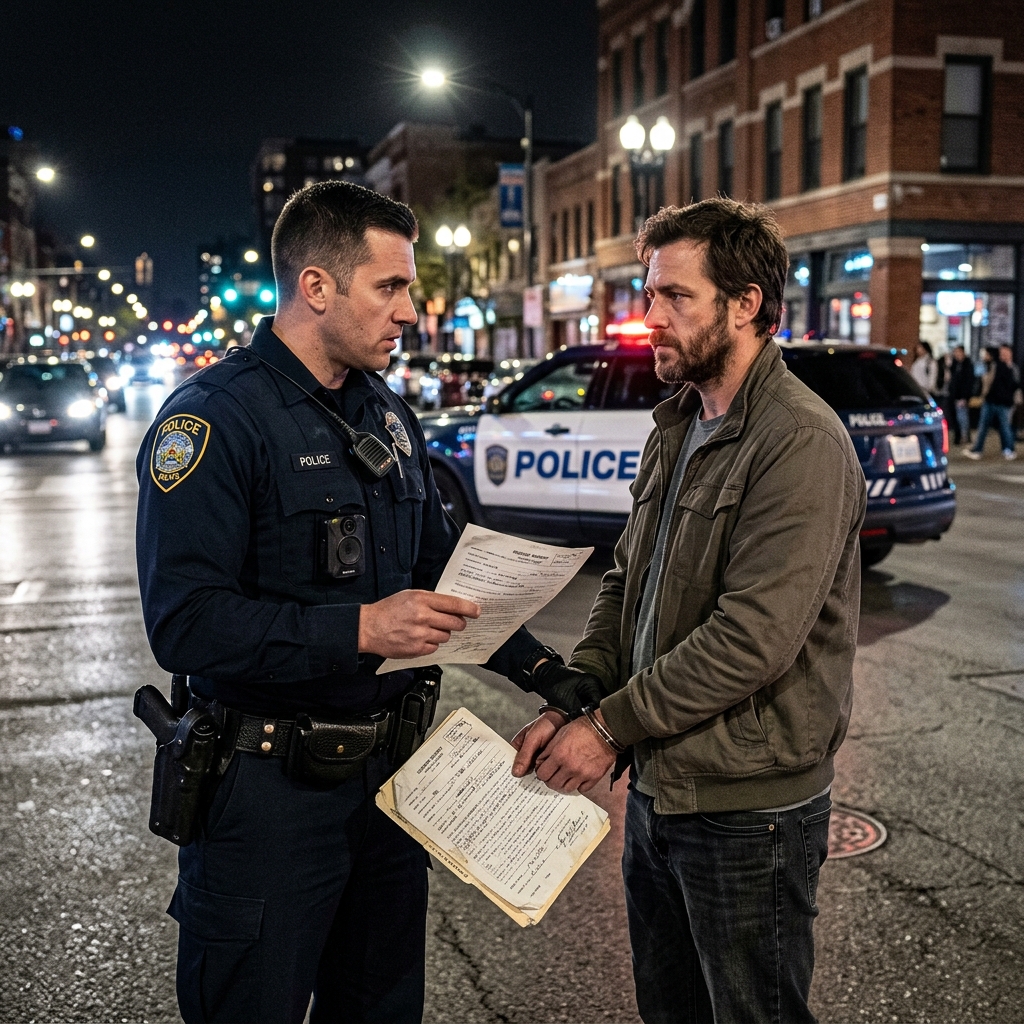
In the United States, the concept of probable cause sits at the heart of every arrest, search, and warrant request. It is the legal threshold that prevents arbitrary police action and protects individuals from unreasonable seizures under the Fourth Amendment to the U.S. Constitution. Understanding probable cause is essential for anyone interested in criminal law, civil liberties, or simply knowing their rights during encounters with law enforcement.
What Is Probable Cause in Criminal Law?
Probable cause is a constitutional standard requiring more than a hunch and less than proof beyond a reasonable doubt. In criminal law, it generally means there are objective facts and circumstances
- A crime has been committed, is being committed, or is about to be committed; and
- The person to be arrested is connected to that criminal activity.
Courts often describe probable cause as a reasonable amount of suspicion supported by circumstances sufficiently strong to justify a cautious person’s belief that certain facts are probably true. It does not require certainty, but it does require evidence that can be articulated and explained, not speculation or guesswork.
Key Features of Probable Cause
- Objective standard: It is based on what a hypothetical reasonable officer or reasonable person would believe, not solely on the subjective views of a particular officer.
- Fact-based: It must be grounded in concrete facts and reasonable inferences from those facts.
- Time-sensitive: The standard must be satisfied at the moment of arrest or warrant request, not justified after the fact.
- Higher than reasonable suspicion: It requires more information than is needed for a brief stop or frisk but less than what is required to convict someone of a crime.
Constitutional Foundation: The Fourth Amendment
The Fourth Amendment provides that people have the right to be secure against unreasonable searches and seizures, and that warrants may issue only upon probable cause, supported by oath or affirmation. This language establishes probable cause as:
- The threshold for issuing arrest warrants and search warrants.
- A core safeguard limiting government power during criminal investigations.
Over time, the U.S. Supreme Court has clarified that probable cause is a practical, non-technical standard that must be evaluated based on the totality of the circumstances, rather than rigid rules. Decisions such as Beck v. Ohio and other Fourth Amendment cases emphasize whether the facts known to officers would warrant a prudent person in believing a suspect has committed an offense.
Probable Cause to Arrest vs. Probable Cause to Search
Probable cause can support different types of law enforcement actions. While the standard is similar, its focus changes depending on whether officers seek to arrest a person or search a place.
| Type of Probable Cause | Primary Question | Common Use |
|---|---|---|
| Probable Cause to Arrest | Is there enough information to believe this person committed a crime? | Arrest warrants; warrantless arrests in public; charging decisions. |
| Probable Cause to Search | Is there enough information to believe evidence of a crime is in this particular place? | Search warrants; automobile searches; some warrant exceptions. |
Despite these differences, both forms of probable cause are evaluated using similar principles: the presence of specific facts, credible information, and reasonable inferences that make criminal activity or evidence likely, not merely possible.
Sources of Information That Can Establish Probable Cause
Police do not need a single perfect piece of evidence to establish probable cause. Instead, courts look at the overall picture created by multiple sources of information, such as:
- Officer observations: Direct visual or sensory observations, such as seeing contraband, witnessing a crime, or detecting signs of impairment.
- Witness statements: Reports from victims, witnesses, or informants who describe criminal activity.
- Admissions by the suspect: Statements in which a person admits involvement or provides incriminating details.
- Information from other officers or agencies: Shared intelligence, previous case files, or coordinated investigations.
- Physical or digital evidence: Items found in plain view, electronic data, or other tangible proof.
Courts emphasize that these sources must be sufficiently reliable and specific to justify the conclusion that a crime occurred and the suspect is responsible. Hearsay or anonymous tips may contribute to probable cause if corroborated by independent police work and surrounding circumstances.
Probable Cause vs. Reasonable Suspicion
Probable cause is often confused with reasonable suspicion, but the two standards serve different purposes and carry different legal consequences. Reasonable suspicion is a lower threshold that allows officers to briefly detain or frisk a person when they have specific, articulable facts suggesting possible criminal activity.
| Standard | Level of Evidence | What It Allows | Typical Use |
|---|---|---|---|
| Reasonable Suspicion | Less evidence; more than a mere hunch but short of probable cause. | Brief stops, questioning, and limited pat-downs for weapons (stop-and-frisk). | Traffic stops; investigative detentions; school safety checks. |
| Probable Cause | Higher level of evidence; reasonable belief based on facts that a crime has likely occurred. | Arrests, search warrants, automobile searches, and other intrusions. | Formal arrests; warrant applications; searches incident to arrest. |
Reasonable suspicion is often described as a step before probable cause: a point where it appears that a crime may have been committed. The situation escalates to probable cause when the evidence suggests that a crime most likely has been committed and the suspect is probably involved.
Probable Cause and Warrantless Arrests
Although the Fourth Amendment highlights warrants, many arrests occur without a warrant, especially when officers encounter suspected crimes in public places. In those situations, probable cause still plays a crucial role.
When Can Police Arrest Without a Warrant?
Officers may make a warrantless arrest when they have probable cause to believe that a person has committed a crime and the circumstances make it reasonable to act immediately. Common scenarios include:
- Crimes committed in an officer’s presence: Seeing a theft, assault, or impaired driving firsthand.
- Felony arrests based on investigation: Relying on credible information and evidence gathered through investigation that a serious crime has occurred.
- Exigent circumstances: Situations requiring urgent action to prevent harm, escape, or destruction of evidence.
In each case, the law requires that probable cause exist at the moment the officer chooses to arrest. Officers cannot arrest first and build their justification later.
Consequences of Arrest Without Probable Cause
If a court later determines that an arrest was made without probable cause:
- The arrest may be deemed unlawful under the Fourth Amendment.
- Evidence obtained as a result of the arrest may be suppressed and excluded from trial, particularly if it is the direct product of the unlawful seizure.
- The government’s case may weaken substantially, sometimes leading to dismissal of charges or plea negotiations.
- The individual may pursue civil remedies for violation of constitutional rights.
This incentive structure encourages officers to carefully evaluate the facts before acting, reinforcing the constitutional balance between individual privacy and public safety.
The Role of Probable Cause Hearings
Probable cause is not only evaluated by officers in the field; judges also review it early in the life of a criminal case. When a person is arrested and brought before a court, many jurisdictions conduct a probable cause hearing or similar review.
At that appearance, the judge examines whether, based on the evidence presented, there was enough probable cause for the arrest or for the charges to proceed. If the judge finds probable cause lacking:
- The charges may be dismissed or amended.
- The prosecution may be required to present additional evidence before moving forward.
These hearings function as an early safeguard against unwarranted prosecutions and help ensure that cases are built on a legally adequate foundation.
Common Misunderstandings About Probable Cause
Despite its importance, probable cause is often misunderstood. Below are some frequent misconceptions and clarifications.
- Myth: Probable cause requires proof beyond a reasonable doubt.
Reality: Probable cause is a lower standard. It asks whether there is a fair probability of criminal activity, not whether guilt is certain. - Myth: If police eventually find evidence, that proves probable cause existed.
Reality: Probable cause must exist before the arrest or search. Discovering evidence after the fact cannot retroactively justify an earlier lack of probable cause. - Myth: Any suspicion or nervous behavior is enough for arrest.
Reality: Nervousness or vague suspicion is generally considered reasonable suspicion at most, not probable cause. Arrests require more concrete, articulable facts. - Myth: Probable cause is purely subjective.
Reality: While officers exercise judgment, courts apply an objective test: would a reasonable person, knowing the same facts, conclude that a crime was likely committed?
Why Probable Cause Matters for Your Rights
For individuals, probable cause is a critical protection against unjustified government intrusion. It affects:
- Whether you can be arrested during traffic stops, street encounters, or investigations.
- Whether your home, car, or devices can be searched with or without a warrant.
- How courts treat the evidence gathered during an investigation.
- The strength of the criminal case the prosecution can bring against you.
When probable cause is missing, you may have grounds to challenge the legality of an arrest or search. Criminal defense attorneys frequently examine police reports, body-camera footage, and witness statements to identify weak spots in probable cause and move to suppress improperly obtained evidence.
Practical Tips for Navigating Police Encounters
This guide is informational and not legal advice, but understanding probable cause can help you interact with law enforcement more knowledgeably. Consider the following points:
- Know that officers need more than a vague suspicion to arrest you; they must be able to articulate specific facts suggesting you committed a crime.
- If you are detained or arrested, you generally have the right to remain silent and to request an attorney.
- Consent searches (for example, agreeing to let officers search your car) may reduce the need for probable cause. You usually have the right to refuse consent in many situations.
- If you believe you were arrested without probable cause, document what happened as soon as possible and consult a qualified criminal defense lawyer.
Frequently Asked Questions About Probable Cause to Arrest
1. Does an officer need a warrant to arrest me if they have probable cause?
Not always. While warrants are required in many situations—especially for arrests in a private home—officers may make warrantless arrests in public when they have probable cause, particularly for felonies or crimes committed in their presence. The key requirement is not the warrant itself, but the existence of probable cause at the time of arrest.
2. Can an anonymous tip create probable cause?
An anonymous tip alone rarely suffices. Courts usually require some independent corroboration by police—such as verifying details or observing suspicious behavior—before an anonymous tip can help establish probable cause. The reliability of the source and the specificity of the information are central to this analysis.
3. What happens at a probable cause hearing?
At a probable cause hearing, a judge reviews the available evidence to decide whether it was reasonable to believe the defendant committed the charged offense. If the judge finds no probable cause, charges may be dismissed or the prosecution may need to provide additional evidence. These hearings serve as an important check on police and prosecutorial decisions.
4. How is probable cause different from the standard used at trial?
At trial, the government must prove guilt beyond a reasonable doubt, which is a much higher standard than probable cause. Probable cause is used in the early stages of a case—arrests, warrants, initial charges—while the reasonable doubt standard controls whether a person can be convicted.
5. Can illegally obtained evidence ever be used if probable cause was lacking?
Generally, evidence obtained through an arrest or search that violates the Fourth Amendment may be suppressed, meaning it cannot be used in court against the defendant. There are exceptions, but the basic rule encourages police to respect constitutional limits and properly establish probable cause before acting.
References
- Probable Cause — U.S. Courts / Supreme Court Doctrine (via secondary discussion). 2019-06-01. https://constitution.findlaw.com/amendment4/annotation04.html
- Probable Cause and Probable Cause Hearings — Justia. 2023-02-10. https://www.justia.com/criminal/procedure/arrests-and-arrest-warrants/probable-cause-and-probable-cause-hearings/
- Probable Cause Versus Reasonable Suspicion — Maricopa County, AZ. 2022-04-15. https://www.maricopa.gov/919/Probable-Cause-Versus-Reasonable-Suspici
- Probable Cause — Federal Law Enforcement Training Centers (FLETC) Audio Transcript. 2018-11-20. https://www.fletc.gov/audio/probable-cause-i-mp3
- Probable Cause Definition — Law.com Legal Dictionary. 2017-05-05. https://dictionary.law.com/Default.aspx?selected=1618
Similar Articles








Read full bio of Sneha Tete




