
Understanding Public Arrest Records in the United States
Learn what public arrest records contain, who can access them, how they affect your life, and what options exist to seal or correct them.
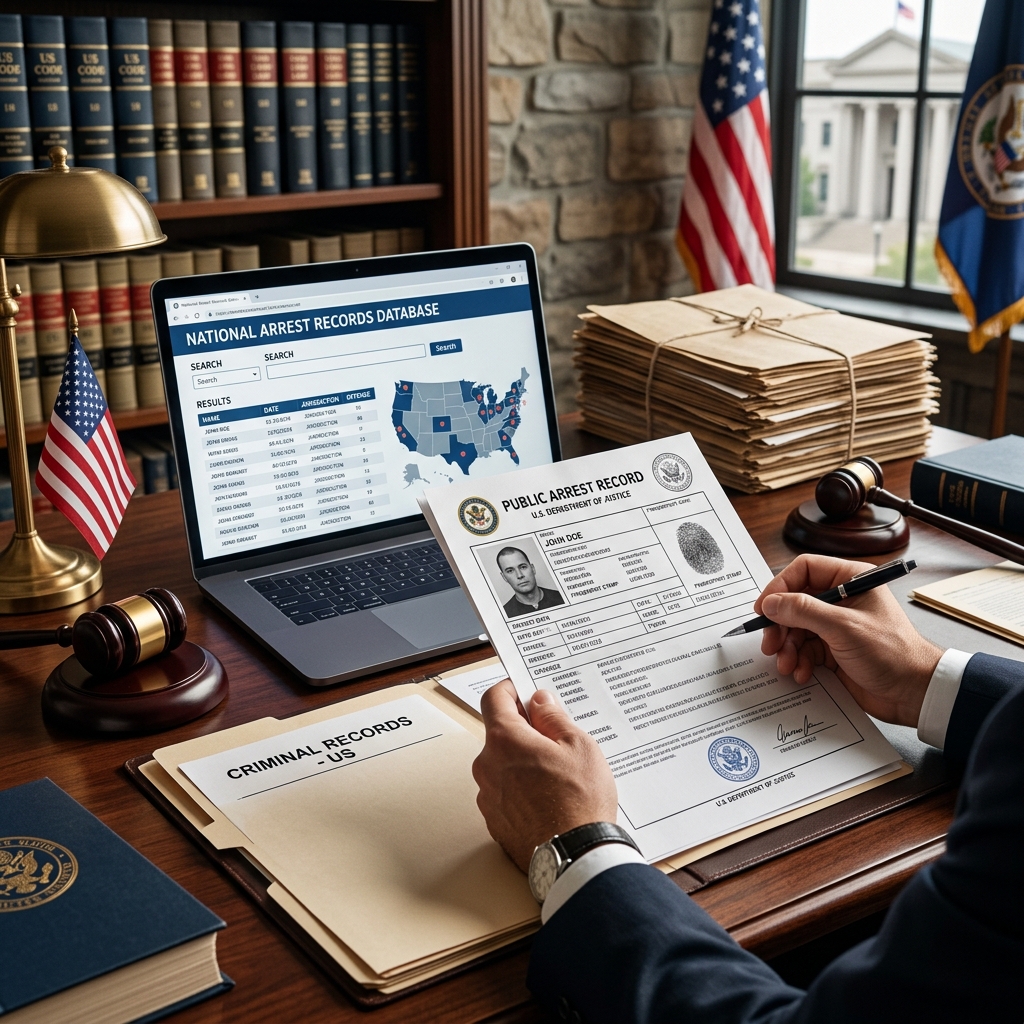
Being arrested can leave a lasting paper trail. Even when a case is dismissed, the record of the arrest itself often remains in government files and may be available to the public. This article explains what a public arrest record is, what information it typically contains, who can see it, and what options you may have to seal, expunge, or correct it.
1. What Is an Arrest Record?
An arrest record is the official documentation created when law enforcement detains a person and processes them through booking procedures. It is separate from a final criminal conviction record, which reflects the outcome of a criminal case in court. In many states, the basic fact that a person was arrested is considered a public record that anyone can access, even if the underlying investigative files remain confidential.
Arrest records are one part of a broader body of criminal history information, which can include:
- Arrests and detentions
- Formal charges (indictments, informations, complaints)
- Case outcomes (dismissal, acquittal, conviction)
- Sentencing details and correctional supervision
- Information about release from custody or supervision
While conviction records focus on proven guilt, arrest records simply show that law enforcement believed there was probable cause to detain someone at a particular time.
2. What Makes an Arrest Record “Public”?
Public access to arrest records is primarily governed by state public records or freedom of information laws. These laws generally start with a strong presumption that government records are open to inspection unless a specific exemption applies. As a result, many states treat core arrest information as public, even when investigative details are shielded.
2.1 Typical Public Information
Although the exact list varies by jurisdiction, statutes often specify that the following information about an adult arrest is public:
- Name and identifying details of the arrested person (such as age and address)
- Date, time, and location of the arrest
- The alleged offense or legal basis for the arrest
- Basic circumstances of the arrest (for example, whether weapons or force were involved)
- Description of property seized in connection with the arrest
In contrast, many states restrict public access to investigative reports, confidential informant information, or sensitive victim and witness details, at least while a case is ongoing.
2.2 Where Public Arrest Information Appears
Public arrest data can spread across multiple systems. Common locations include:
- Local law enforcement databases and daily arrest logs
- Court records, once charges are filed and the case proceeds in court
- State criminal history repositories, often run by a state department of public safety or justice
- Background check companies that compile information from official public sources
Because of this distribution, an arrest record can persist in many places even if a single agency updates or removes its own files.
3. What Information Does an Arrest Record Usually Contain?
The exact contents of an arrest record vary by state and by agency, but they generally include both basic personal data and details about the alleged offense.
| Type of Information | Examples Typically Included |
|---|---|
| Personal identifiers | Name, date of birth, sex, address, sometimes employment; fingerprints and photographs (mugshots) for law enforcement use |
| Arrest details | Arrest date and time, arrest location, arresting agency, booking number, charges listed at the time of arrest |
| Case status | Indication of whether charges were filed, dismissed, or are still pending; links or references to court case numbers |
| Disposition history | Outcome of related charges (acquittal, plea, conviction) if reported back to the criminal history repository |
In some jurisdictions, the official statewide record may be summarized in what is commonly called a rap sheet, short for “record of arrest and prosecution,” which is maintained by a state criminal justice agency. This document often includes every reported arrest and disposition associated with a person’s fingerprints.
4. How Do Public Arrest Records Differ from Other Records?
It is easy to confuse arrest records, police investigative reports, and criminal conviction records, but they serve different functions and may have different rules for public access.
4.1 Arrest Records vs. Criminal Records
A criminal record usually refers to a person’s history of criminal convictions, as recorded by courts and by criminal history repositories. In many legal systems, criminal records emphasize final judgments—where a court has entered a conviction after a guilty plea or a finding of guilt.
By contrast, an arrest record can exist even when no charges are filed or when the case ends in dismissal or acquittal. Some jurisdictions include arrests in their official criminal history record, while others limit their primary criminal record databases to convictions and certain active charges. The distinction is important because background checks and legal consequences often turn on whether an entry shows an arrest, a conviction, or both.
4.2 Adult Records vs. Juvenile Records
Arrest records involving minors are often subject to different rules. Juvenile justice systems in many states emphasize confidentiality and rehabilitation. For example, some laws require that juvenile law enforcement files be kept separate from adult records and shielded from public inspection, with access limited to specific officials or by court order.
However, the protections are not absolute. When youths are charged as adults for serious offenses, their arrest records may be treated the same as adult records and become publicly accessible. The exact line between confidential juvenile records and public arrest records depends on state law and on whether the case is processed in juvenile or adult court.
5. Who Can Access Public Arrest Records?
In principle, public arrest records are open to anyone who requests them, subject to practical and legal limitations. That said, different types of requesters typically gain access through different channels and for different purposes.
5.1 General Public and Media
Members of the public often access arrest information through:
- Written public records requests submitted to law enforcement or justice agencies under state public records laws
- Online searchable databases maintained by courts or state agencies
- Local news reports that draw from arrest logs and police press releases
Public access allows residents and journalists to monitor government activity, track trends, and verify that people are not detained in secret or held without judicial oversight.
5.2 Employers and Landlords
Many employers and housing providers use background checks that pull from public arrest and court records. Criminal history information is frequently consulted for positions involving vulnerable populations, sensitive data, or financial responsibility.
Federal and state laws may restrict what employers can do with this information—for example, by limiting consideration of older arrests or requiring that only convictions be weighed. However, in practice, even records of dismissed arrests can influence hiring decisions if they appear on a screening report.
5.3 Government Agencies and Licensing Boards
Government bodies often have direct access to official criminal history repositories for purposes such as:
- Professional licensing and certification
- Immigration and naturalization decisions
- Security clearances and government employment
- Firearm licensing and restrictions
These agencies may see a more complete record than the general public, including sealed or restricted data, depending on the law.
6. How Public Arrest Records Affect People’s Lives
Although an arrest is not proof of guilt, the existence of a public arrest record can have significant practical consequences, especially in an era of widespread digital background checks.
6.1 Employment, Housing, and Education
Key areas where arrest records can have an impact include:
- Employment: Many employers run criminal history checks and may hesitate to hire applicants with arrest histories, even for arrests that did not result in convictions.
- Housing: Landlords and property managers frequently screen applicants using public court and arrest data, particularly for multi-unit or subsidized housing.
- Education and financial aid: Some schools and scholarship programs inquire about criminal history, and certain offenses can affect eligibility for aid or campus housing.
Some jurisdictions are moving toward limiting the use of arrest-only information, with policies that encourage focusing on recent, relevant convictions rather than dismissals or dated arrests. These reforms aim to reduce long-term barriers to reintegration.
6.2 Stigma and Privacy Concerns
Beyond formal consequences, public arrest records can carry social stigma. Once posted online, an arrest can be searchable indefinitely, even if the person was never convicted. Private websites may repost or archive mugshots and arrest data, sometimes charging fees for removal.
Because of these harms, lawmakers and courts continue to debate the right balance between transparency, public safety, and individual privacy.
7. Sealing, Expungement, and Removal Options
Many states provide legal mechanisms to reduce public access to arrest records, especially when cases end favorably for the accused or involve minor or dated conduct. The terminology and eligibility rules vary, but common tools include sealing and expungement.
7.1 Sealing vs. Expungement
- Sealing generally means that records still exist but are hidden from most public inquiries, such as routine background checks. Certain government agencies or courts may still see the sealed information in limited circumstances.
- Expungement (also called expunction in some states) often refers to deletion, destruction, or legal nullification of the record, making it unavailable even to many government requesters. In practice, some “expungements” merely restrict access rather than physically destroying records, so the real effect depends on the statute.
Availability of these remedies typically turns on factors such as whether the case was dismissed, the nature of the offense, the person’s prior record, and the time elapsed since the incident.
7.2 Correcting Errors in Arrest Records
Errors in criminal history records are not uncommon, especially when information from multiple agencies is combined. Common issues include incomplete disposition data, mistaken identity, or duplicate entries.
Individuals usually have the right to:
- Request a copy of their own official criminal history record from the appropriate state repository or federal agency
- Review the record for accuracy and completeness
- Submit documentation to correct inaccuracies, such as certified court orders showing dismissal or acquittal
State laws and agency rules specify the procedures and fees for obtaining and correcting one’s record. For example, some agencies require fingerprint-based identification to ensure the correct file is accessed.
8. Accessing Your Own Arrest Record
If you have ever been arrested and processed, there is likely a record of that event somewhere in the criminal justice system. Reviewing your own record can help you understand what information employers or agencies might see and whether you should pursue sealing or correction.
8.1 Where to Request Records
Common starting points include:
- The state criminal history repository, often within a department of public safety or justice, which maintains centralized arrest and disposition data
- The court clerk for the courthouse where your case was processed, for docket sheets and case files
- The arresting law enforcement agency, for booking and local arrest records, subject to public records laws and any applicable limitations
Each entity may require different forms, identification, and fees. Some states permit online requests and electronic delivery, while others rely on paper forms and mailed responses.
8.2 Practical Steps
Although the exact process varies, people seeking their own arrest records often:
- Gather all known details (approximate arrest date, location, arresting agency, and case number if available)
- Consult the state justice or public safety website for instructions on criminal history or public records requests
- Submit required forms, identification, and fees, which may include fingerprint cards for a comprehensive search
- Review the returned records and consult a qualified attorney about possible sealing or correction if needed
9. Key Takeaways About Public Arrest Records
Public arrest records are a central part of the modern criminal justice system and have far‑reaching effects. Some core points to remember include:
- An arrest record documents that law enforcement detained and booked a person; it is not proof of guilt.
- In many states, the basic fact of an adult arrest and related details are public, even if investigative files remain confidential.
- Arrest records may appear in local law enforcement files, court records, state criminal history repositories, and private background check databases.
- Public arrest information can affect employment, housing, licensing, and reputation, even where the case ends in dismissal.
- Many jurisdictions offer sealing, expungement, and error‑correction procedures, but the rules are complex and often require legal guidance.
10. Frequently Asked Questions
10.1 Does every arrest automatically create a public record?
In most jurisdictions, once a person is booked after an arrest, an official entry is created in law enforcement databases, and core information about that event is treated as a public record for adults. However, juvenile arrests and certain sensitive cases may be confidential by statute.
10.2 If my charges were dismissed, is my arrest still visible?
Often, yes. Dismissal generally affects the case outcome (disposition), not the fact that an arrest occurred. Unless the record is later sealed or expunged under state law, the arrest entry may remain in public court indexes or criminal history files.
10.3 Are arrest records and criminal records the same thing?
No. Arrest records show that you were detained and processed by law enforcement. Criminal records usually focus on convictions—the cases where a court entered a judgment of guilt. Some systems combine both into a single criminal history record, but the legal and practical consequences of an arrest versus a conviction can differ significantly.
10.4 Can employers consider arrest records when hiring?
Many employers use background checks that reveal arrest and court information. However, federal and state laws may restrict how they use this data, especially for arrests that did not lead to convictions or for older matters. Anti‑discrimination laws also limit the use of criminal history in ways that disproportionately impact protected groups.
10.5 How can I find out what is on my record?
You can typically request your own criminal history from your state’s criminal justice agency or department of public safety, often through a fingerprint‑based process. You can also obtain court records from the courthouse where any case was handled. Reviewing these documents helps you identify errors and consider whether to seek sealing or expungement.
10.6 Do I need a lawyer to seal or expunge an arrest record?
You are not always required to have an attorney, but because eligibility rules and procedures are technical and vary by state, many people benefit from legal advice. An attorney can help you determine whether you qualify, prepare filings, and represent you at any required hearing.
References
- Public Access to Criminal History Record Information — Bureau of Justice Statistics, U.S. Department of Justice. 2001-12-01. https://bjs.ojp.gov/library/publications/public-access-criminal-history-record-information-0
- Criminal Record — Bart Kaspero Law. 2023-01-01 (approximate, based on page access). https://www.bartkasperolaw.com/criminal-record/
- Public Records and Minors Arrested Under Criminal Jurisdiction — North Carolina Criminal Law, University of North Carolina School of Government. 2025-01-28. https://nccriminallaw.sog.unc.edu/2025/01/28/public-records-and-minors-arrested-under-criminal-jurisdiction/
- Know Your Rights: Records of Arrest and Prosecution — The Bronx Defenders. 2018-06-01 (approximate, based on page content). https://www.bronxdefenders.org/records-of-arrest-and-prosecution/
- Criminal Records Basics — New York State Unified Court System. 2023-01-01 (approximate, based on page access). https://www.nycourts.gov/help/criminal/criminal-records-basics
- Public Records — California Department of Justice, Office of the Attorney General. 2022-05-01 (approximate, based on last updated note). https://oag.ca.gov/consumers/general/pra
- Court Records: Criminal History & Background — Texas State Law Library. 2023-04-01 (approximate, based on page content). https://guides.sll.texas.gov/court-records/criminal-history
Similar Articles








Read full bio of Sneha Tete




