
Understanding Prison Rehabilitation Programs
How modern prison rehabilitation programs work, why they matter, and what they mean for safer communities and successful reentry.
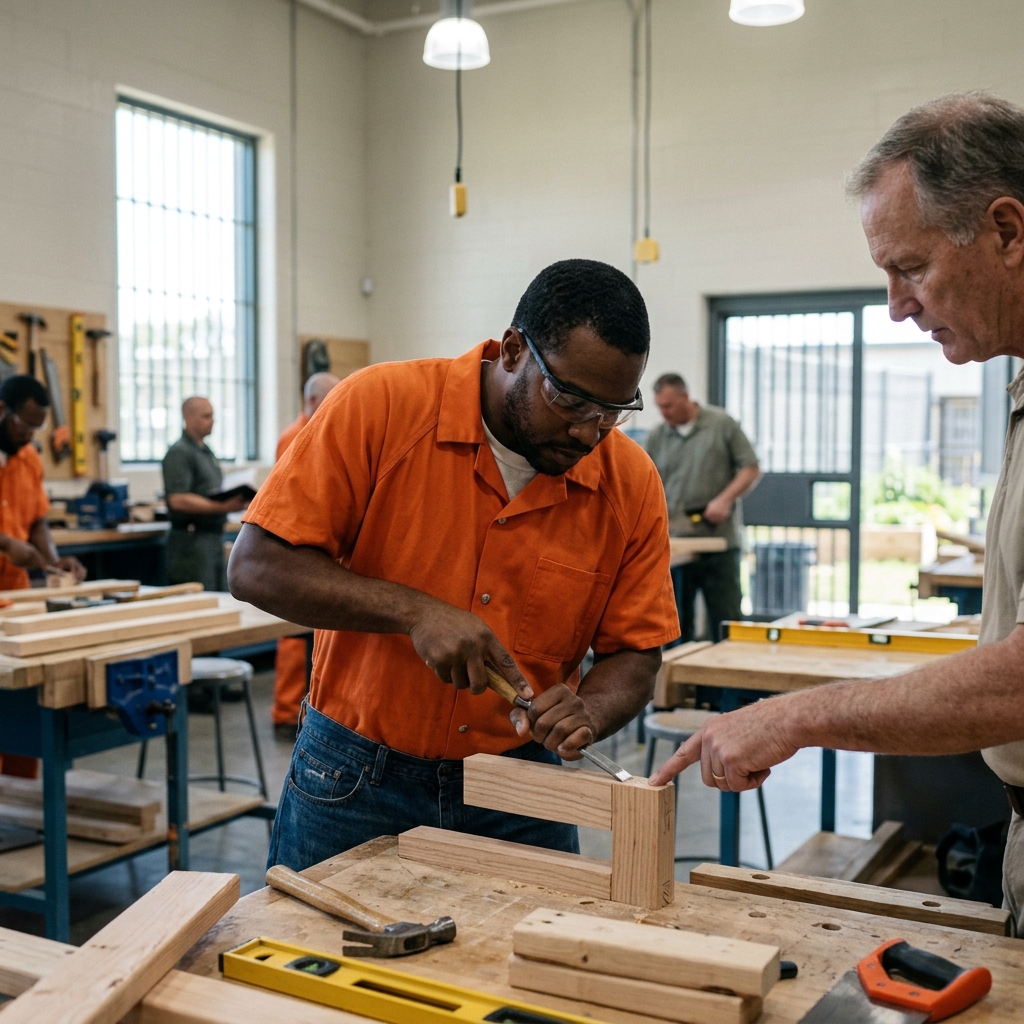
Prison rehabilitation programs are structured services designed to help people in custody change the patterns of behavior that contributed to their offenses, build practical skills, and prepare for a safe and stable return to the community. Rather than focusing only on punishment, these programs aim to reduce recidivism—the likelihood that someone will commit new crimes after release—and, in the process, improve public safety.
Why Rehabilitation Matters in Modern Corrections
For much of the late twentieth century, many prison systems shifted toward more punitive policies, emphasizing long sentences and strict control with limited programming. Over time, however, research and experience have shown that incarceration without meaningful rehabilitation does little to address the underlying causes of crime and can leave people poorly prepared to live law-abiding lives after release.
- High incarceration rates: Millions of people are held in correctional facilities, making what happens inside prisons a major factor in overall public safety.
- Evidence of program effectiveness: Well‑designed programs that target specific risk factors and skills can significantly reduce reoffending and institutional misconduct.
- Cost implications: Successful rehabilitation reduces future justice system costs and can lower the expenses associated with repeat incarceration.
As a result, many jurisdictions now describe rehabilitation as a central goal of corrections policy, often alongside punishment and deterrence.[10]
Core Goals of Prison Rehabilitation Programs
Although individual programs differ, most prison rehabilitation initiatives share several common objectives.[10]
| Goal | What It Includes | How It Supports Reentry |
|---|---|---|
| Reduce recidivism | Target criminogenic needs, such as substance use, antisocial thinking, and limited skills. | Decreases the likelihood of new offenses after release. |
| Address root causes of offending | Treatment for addiction, mental health issues, and trauma; cognitive‑behavioral interventions. | Helps individuals manage triggers and make healthier choices. |
| Build education and employment skills | Academic classes, GED, college courses, vocational training. | Improves chances of obtaining stable work after release. |
| Support safe prison environments | Structured programming, therapy, and pro‑social activities. | Reduces misconduct and violence within facilities. |
| Prepare for reentry | Life skills training, reentry planning, identification and housing assistance.[10] | Simplifies the transition to the community and supports long‑term stability. |
Major Types of Prison Rehabilitation Programs
Prison systems usually offer a mix of program types, each addressing different aspects of an individual’s life and risks. Availability varies by jurisdiction, but the categories below are common in many systems.
Educational Programs
Education is one of the most widely recognized tools for rehabilitation. Many prisons offer basic literacy classes, high school equivalency preparation, and, in some cases, college‑level coursework.
- Adult basic education: Literacy, numeracy, and foundational academic skills.
- High school or GED preparation: Programs that allow inmates to complete secondary credentials.
- Post‑secondary opportunities: Distance learning or partnerships with colleges providing certificates or degrees.
Research has shown that participation in education programs can improve academic performance and significantly lower recidivism rates, especially when coursework is sustained for several months.
Vocational and Job Skills Training
Vocational training focuses on teaching practical job skills that are in demand in the labor market. Programs may cover trades such as welding, automotive repair, culinary arts, and office technology.
- Trade certifications (e.g., carpentry, welding, automotive technology).
- Computer and technical skills, including software development in some specialized programs.
- Job readiness training, such as resume writing, interviewing, and workplace expectations.
When vocational programs are strongly linked to real employment opportunities after release, graduates often experience lower reincarceration rates compared with the broader release population.
Substance Use Treatment
A significant portion of people in prison have a history of substance use disorders, making treatment a central element of rehabilitation.
- Residential therapeutic communities: Intensive programs in separate housing units with structured daily schedules and group‑based treatment.
- Outpatient treatment: Group and individual counseling delivered within general housing.
- Specialized drug programs: Evidence‑based interventions, including cognitive‑behavioral therapy and medication‑assisted treatment where appropriate.
Substance use treatment has been identified as one of the most effective strategies for reducing recidivism, especially when combined with aftercare services in the community.
Mental Health and Behavioral Interventions
Many incarcerated people live with depression, anxiety, post‑traumatic stress, or other mental health conditions. Behavioral programs aim to help participants manage symptoms and change harmful thinking patterns.
- Counseling and psychiatric care: Individual or group sessions provided by mental health professionals.
- Cognitive‑behavioral programs: Courses addressing criminal thinking, impulse control, and decision‑making.
- Specialized treatment tracks: Programs tailored for people with co‑occurring mental health and substance use disorders.
National reforms have emphasized expanding access to standardized, evidence‑based programs that focus on these criminogenic needs, often using structured curricula with proven outcomes.
Life Skills and Reentry Preparation
Reentry programs focus on practical challenges people face when leaving prison: housing, employment, identification, family relationships, and financial management.
- Life skills training (budgeting, communication, conflict resolution).
- Community readjustment and pre‑release courses that cover job applications, interview practice, and basic financial planning.
- Reentry planning services that help coordinate housing, treatment, and supervision conditions, beginning early in the sentence.[10]
Some systems adopt a “day one” approach, treating reentry planning as something that should begin immediately at intake rather than at the end of a sentence.
Restorative and Pro‑Social Programs
Restorative justice and pro‑social programs encourage accountability, empathy, and constructive engagement with others.[10]
- Victim‑offender dialogue or restorative justice processes (where permitted).
- Peer mentorship programs, in which trained incarcerated individuals support others in pursuing education or rehabilitation.[10]
- Structured group activities that promote cooperation, leadership, and community responsibility.
These initiatives complement treatment and education by helping participants rebuild a positive sense of identity and connection to the community.[10]
Evidence of Impact: Do Rehabilitation Programs Work?
A growing body of research indicates that well‑designed correctional programs can reduce recidivism and improve prison safety when they are adequately resourced and implemented consistently.
- Studies of comprehensive jail education programs have documented sizeable reductions in returns to custody and misconduct among participants compared with non‑participants, as well as measurable gains in reading and math skills.
- National data show increased participation in reentry‑related programs—such as life skills training and community readjustment courses—over time, suggesting greater emphasis on rehabilitation across state systems.
- Official reports from federal and state corrections agencies highlight cognitive‑behavioral therapy, substance use treatment, and educational programming as core components of recidivism reduction strategies.
- Independent analyses of specialized vocational initiatives and technology training programs have found substantially lower reincarceration rates for graduates compared with similarly situated individuals who did not participate.
Importantly, the effectiveness of these programs depends not only on the content but also on factors such as program duration, staff training, participant motivation, and the availability of supportive services after release.
How Prison Rehabilitation Relates to Rights and Legal Issues
While there is no universal guarantee that every person in custody will receive every type of program, rehabilitation services intersect with several legal and constitutional principles. Understanding these relationships can help individuals and their families navigate questions about access to treatment and education.
Access to Necessary Treatment
In many jurisdictions, prison authorities must provide basic medical and mental health care, including treatment for serious conditions. Although exact legal standards vary, courts have recognized that failing to address serious medical needs may violate constitutional protections in some circumstances. Rehabilitation programs that include mental health and substance use treatment often operate within this broader duty to provide care.
Equal Opportunity and Nondiscrimination
Programs are generally expected to avoid discrimination based on protected characteristics such as race, religion, or disability. Some systems offer specialized programming for specific groups—such as those with particular mental health diagnoses or language needs—in order to ensure that services are accessible rather than to exclude participants.
Impact on Parole, Release, and Supervision
In many systems, program participation can influence:
- Parole or early release decisions: Demonstrated engagement in rehabilitation may be favorable evidence during parole hearings or other discretionary release processes.
- Conditions of supervision: Requirements for ongoing treatment or education after release may be based partly on prior assessments and program involvement.
- Reentry planning: Completion of certain programs can be a prerequisite for specific reentry services or transitional housing options.
Because these relationships are highly jurisdiction‑specific, people in custody often benefit from consulting defense counsel, appointed post‑conviction attorneys, or local legal aid organizations to understand how rehabilitation programs affect their particular sentence.
Challenges in Delivering Effective Rehabilitation
Despite the demonstrated benefits, prison rehabilitation faces practical and structural challenges.
- Limited resources: Budgets for staff, classrooms, and treatment programs may not keep pace with demand, leading to waiting lists or partial services.
- Variation across facilities: Some prisons have extensive programming, while others offer only basic services, resulting in uneven access.
- Security priorities: Lockdowns and staffing shortages can disrupt classes and treatment sessions, affecting continuity.
- Stigma and motivation: Some individuals may be reluctant to participate in programs due to mistrust, fear of stigma, or past negative experiences.
- Reentry gaps: Support in the community—such as housing, employment opportunities, and ongoing treatment—may be limited, which can weaken the long‑term impact of in‑prison rehabilitation.[10]
Corrections agencies and policy makers are actively exploring ways to address these challenges through reforms, partnerships with community organizations, and expanded funding for evidence‑based programs.[10]
What Families and Advocates Can Do
Family members, friends, and advocates often play a crucial role in encouraging participation in rehabilitation and supporting reentry success.
- Learn about available programs: Contact the facility or review official corrections department resources to understand what services exist and how enrollment works.
- Encourage consistent participation: Regular attendance and active engagement are important for both immediate benefits and long‑term outcomes.
- Support education and training: Families can help by reinforcing the value of education, celebrating achievements, and planning for how new skills will be used after release.
- Plan for reentry: Begin discussing housing, employment, treatment, and documentation (such as identification) well before the release date, in coordination with any reentry staff.
- Connect with community resources: After release, community‑based programs, peer support networks, and treatment providers can help individuals maintain progress made in prison.[10]
Frequently Asked Questions About Prison Rehabilitation
Do all prisons offer rehabilitation programs?
Most modern prison systems offer at least some education, treatment, or reentry services, but the range and quality of programs vary significantly by jurisdiction and facility. Larger or better‑resourced institutions may have more options than smaller ones.
Can participation in programs reduce a sentence?
In some jurisdictions, successful completion of certain programs may be associated with earned time credits, favorable parole decisions, or other forms of relief, but this is not universal and depends on local law and policy. Individuals should consult their attorney or the facility’s classification staff to understand the rules that apply in their case.
Are rehabilitation programs voluntary?
Many programs are voluntary, particularly education and vocational training. However, some forms of treatment—such as substance use programs or sex offense treatment—may be strongly recommended or required based on the nature of the conviction, supervision conditions, or risk assessments.
How are people chosen for specific programs?
Selection typically involves an assessment of risk factors, needs, and security classification. Tools that evaluate criminogenic needs and reentry challenges help staff match individuals to programs that address their highest‑priority issues, such as addiction, unemployment, or limited education.
What happens if someone cannot access needed programs?
If a person in custody believes they are being unfairly denied access to essential treatment or education, they can usually start by using the facility’s internal grievance process. In some scenarios, consulting an attorney or legal aid organization may be appropriate, especially when the denial appears to be discriminatory or affects mandatory release conditions.
Key Takeaways
- Prison rehabilitation programs aim to reduce recidivism, improve public safety, and help individuals build the skills and supports needed for stable lives after release.[10]
- Effective systems offer a mix of education, vocational training, substance use treatment, mental health services, restorative programs, and structured reentry planning.
- Research shows that evidence‑based, well‑implemented programs can significantly reduce reoffending and institutional misconduct, while also producing cost savings.
- Challenges remain, including resource limits and uneven access, but ongoing reforms continue to expand and strengthen rehabilitative efforts in many jurisdictions.[10]
References
- Rehabilitation programs — National Institute of Corrections. 2023-05-01. https://nicic.gov/resources/tags/rehabilitation/rehabilitation-programs
- Reducing Recidivism by Strengthening the Federal Bureau of Prisons — U.S. Department of Justice. 2018-04-13. https://www.justice.gov/archives/prison-reform
- Reentry and Rehabilitation — Utah Department of Corrections. 2024-01-10. https://corrections.utah.gov/inmate-services/reentry-and-rehabilitation/
- Division of Rehabilitative Programs — California Department of Corrections and Rehabilitation. 2023-11-20. https://www.cdcr.ca.gov/rehabilitation/
- Developing a Rehabilitation Program that Works for Incarcerated People — Harvard Kennedy School / NBER Working Paper. 2023-06-15. https://www.hks.harvard.edu/faculty-research/policy-topics/social-policy/developing-rehabilitation-program-works-incarcerated
- The Data Behind Prison Reform — Brennan Center for Justice. 2022-09-01. https://www.brennancenter.org/our-work/research-reports/data-behind-prison-reform
- Prisoner Rehabilitation — United Nations Office on Drugs and Crime. 2015-04-30. https://www.unodc.org/dohadeclaration/en/topics/prisoner-rehabilitation.html
Similar Articles








Read full bio of medha deb




