
South Carolina Tenant Repair Rights and Rent Strategies
Empowering South Carolina renters: Understand your rights to demand repairs, withhold rent legally, and protect your living conditions under state law.
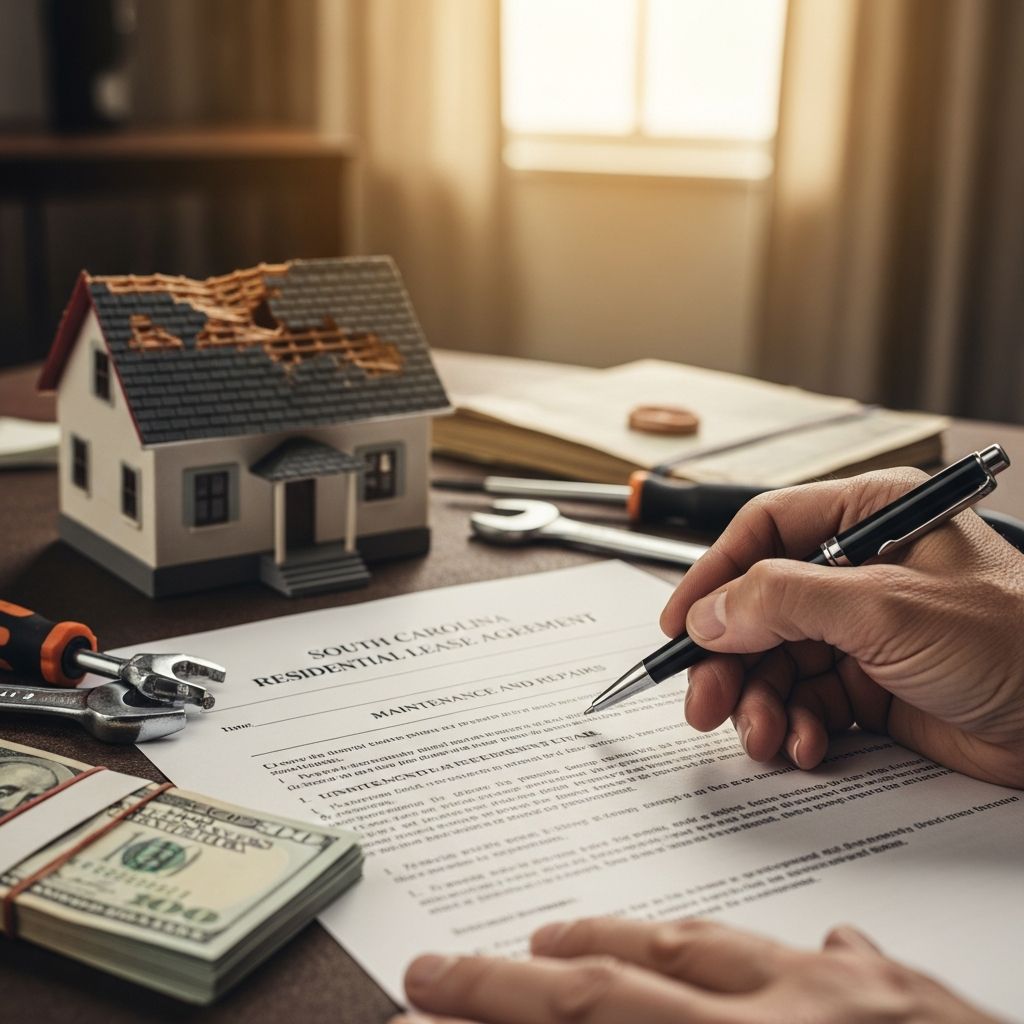
Renters in South Carolina possess specific legal protections to ensure their homes remain safe and livable, primarily governed by the South Carolina Residential Landlord and Tenant Act (SCRLTA). This framework allows tenants to request repairs, withhold rent under certain conditions, or pursue other remedies when landlords neglect essential maintenance, promoting fairness in rental relationships.
Core Legal Foundations for Renter Protections
The SCRLTA, codified in S.C. Code Ann. § 27-40-10 et seq., establishes baseline standards for rental properties across the state. Landlords are obligated to deliver and sustain units that meet habitability requirements, including functional plumbing, heating, electrical systems, and structures free from health or safety hazards. Tenants, in turn, must adhere to lease terms, pay rent promptly, and avoid damaging the property.
These mutual duties form the backbone of rental agreements. Violations by either party trigger defined remedies, with tenants gaining leverage through mechanisms like repair requests and rent adjustments when habitability is compromised. Federal fair housing laws further bolster these protections, prohibiting discrimination in maintenance responses.
Defining Habitable Living Conditions in South Carolina
A habitable rental in South Carolina must comply with local building codes and provide essentials like waterproofing, adequate lighting, ventilation, and safe common areas. Critical failures—such as broken heaters in winter, sewage backups, or major roof leaks—violate these standards and entitle tenants to action.
- Plumbing and Water: Reliable hot/cold running water, functional toilets, sinks, and drains without leaks.
- Heating and Electrical: Working heaters capable of 68°F in cold months; safe wiring and outlets.
- Structural Integrity: No holes in walls/floors, secure windows/doors, pest-free environments.
- Safety Features: Smoke detectors, secure locks, and clear emergency exits.
Landlords bear full responsibility for these unless damage stems from tenant negligence. Courts interpret habitability broadly to safeguard occupant health.
Step-by-Step Guide to Requesting Repairs
When issues arise, tenants should document problems with photos, videos, and dated notes, then notify landlords in writing via certified mail or email for proof. South Carolina law mandates prompt landlord response, typically within 14 days for non-emergencies.
- Inspect and Document: Note the issue’s severity and impact on daily life.
- Send Written Notice: Detail the problem, request timeline for fixes, and reference SCRLTA obligations.
- Follow Up: If no action after 14 days, escalate with a second notice warning of remedies like rent withholding.
- Seek Local Help: Contact code enforcement if health risks persist.
Verbal requests suffice initially but lack legal weight; always prioritize written records to build a case if disputes arise.
Rent Withholding: When and How to Use It Legally
South Carolina permits rent withholding only for serious habitability breaches after proper notice, distinct from ‘repair-and-deduct’ which isn’t explicitly authorized statewide. Tenants may withhold if the landlord fails to remedy within 14 days of written notice, paying withheld amounts into court or escrow during resolution.
| Condition Type | Notice Period | Withholding Allowed? | Example |
|---|---|---|---|
| Essential (Heat, Water) | 14 days | Yes, post-notice | No heat below 68°F |
| Non-Essential (Cosmetic) | 14 days | No | Peeling paint |
| Emergency | Immediate | Yes, with proof | Gas leak |
| Tenant-Caused | N/A | No | Clogged tenant-damaged drain |
Withheld rent must reflect the reduced value of the unit, not full abatement, and tenants risk eviction if misused. Courts determine fair amounts preliminarily.
Alternative Remedies: Court Actions and Self-Help Limits
Beyond withholding, tenants can sue for damages, injunctive relief (court orders for repairs), or attorney’s fees if landlord noncompliance is willful. No bond is required for these actions in magistrate court.
Self-repairs at landlord expense (‘repair-and-deduct’) carry risks in South Carolina; while not prohibited, tenants must prove reasonableness and prior notice to avoid liability. Safer paths include:
- Terminating the lease if conditions are irremediable.
- Filing complaints with housing authorities.
- Joining tenant associations for collective leverage.
Anti-retaliation rules protect against rent hikes or evictions within six months of asserting rights.
Landlord Entry Rules and Tenant Privacy
Landlords require 24 hours’ written notice for non-emergency entry, except in crises like floods. Tenants can refuse improper access, facing remedies like injunctions if abused.
Security Deposits and End-of-Lease Repairs
No cap exists on deposits, but refunds are due within 30 days, itemized if deductions apply. Repairs for normal wear-and-tear can’t be charged.
Eviction Protections During Repair Disputes
Nonpayment evictions need 5-day pay-or-quit notices; lease violations get 14-day cure-or-quit. Repair-related withholding isn’t grounds for immediate eviction if procedures followed.
Frequently Asked Questions
Can I withhold rent immediately for a broken AC in summer?
No, provide 14-day written notice first; AC isn’t always essential unless codes specify.
What if my landlord ignores repair notices?
Escalate to court for orders and damages; document everything.
Is repair-and-deduct legal in South Carolina?
Not explicitly; use cautiously with proof of notice to avoid countersuits.
How much rent can I withhold?
Proportional to habitability loss, determined by court if disputed.
Can landlords evict for requesting repairs?
No, anti-retaliation laws prohibit this for six months.
Recent Legislative Updates and Rent Control Insights
As of 2025, South Carolina introduced rent increase limits tied to 7% plus CPI, with 7-30 day notices required. These don’t alter core repair rights but stabilize costs amid maintenance disputes.
Nonprofit housing rules emphasize fair treatment, aligning with SCRLTA.
Practical Tips for South Carolina Renters
To maximize protections:
- Review leases against SCRLTA; invalid clauses void.
- Maintain rental units to avoid blame.
- Use apps for digital notice tracking.
- Consult free legal aid via SC Bar or Justice organizations.
Renters exercising rights responsibly foster better landlord relations and secure safer homes.
References
- South Carolina Landlord Tenant Rental Laws & Rights 2025 — Innago. 2025. https://innago.com/south-carolina-landlord-tenant-laws/
- South Carolina Tenant-Landlord Rental Laws & Rights for 2025 — Hemlane. 2025. https://www.hemlane.com/resources/south-carolina-tenant-landlord-law/
- South Carolina Landlord Tenant Law — TurboTenant. 2025. https://www.turbotenant.com/rental-lease-agreement/south-carolina/laws/
- South Carolina Residential Landlord and Tenant Act — South Carolina State House (Official Code). 1986 (current as of 2025). https://www.scstatehouse.gov/code/t27c040.php
- South Carolina Landlord Tenant Laws — Landlord Studio. 2025. https://www.landlordstudio.com/landlord-tenant-laws/south-carolina-landlord-tenant-laws
- Landlords & Tenants — South Carolina Bar. 2025. https://www.scbar.org/for-the-public/quicklinks/landlords-tenants/
- Landlord & Tenant Law in South Carolina — SC Justice. 2025. https://www.scjustice.org/brochure/landlord-tenant-law-south-carolina/
Similar Articles








Read full bio of Sneha Tete


