
South Carolina Property Line and Fence Rules
Understand how South Carolina law handles fences, boundary lines, neighbor disputes, and your rights as a property owner.
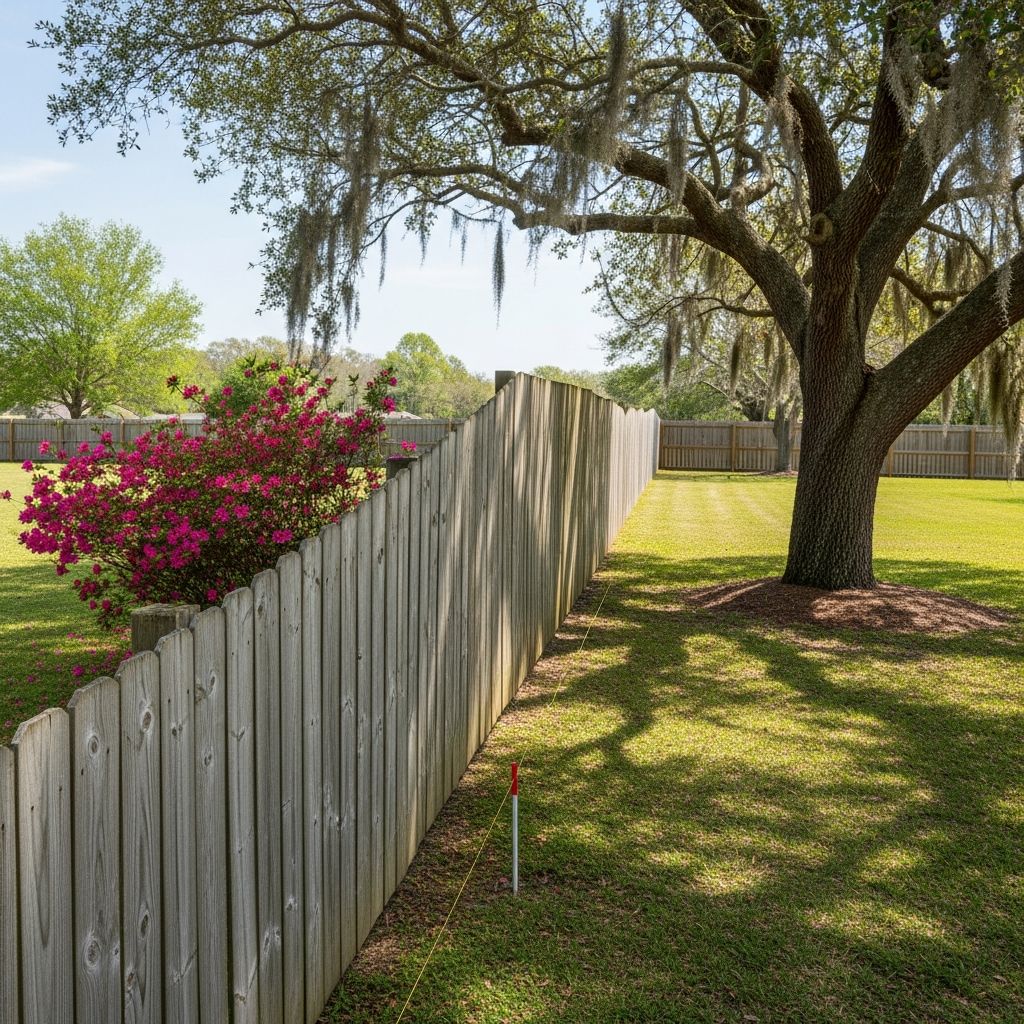
South Carolina landowners frequently run into questions about where a fence may be built, who owns it, and what can be done when a neighbor’s structure or tree crosses the line. This guide explains the core legal concepts that affect property boundaries and fencing in South Carolina, with a practical focus on avoiding disputes and knowing when to seek legal help.
1. Understanding Property Boundaries in South Carolina
Every question about a fence or wall starts with the same issue: the exact location of the property line. Deeds, plats, and surveys work together to define the legal limits of a parcel, but they can be confusing in practice.
1.1 How Property Lines Are Established
In South Carolina, boundaries are usually determined by a combination of:
- Recorded deeds and plats in the county land records, which describe the parcel using measurements, bearings, and reference points.
- Monuments and markers on the ground, such as iron pins, stakes, or natural features noted on the survey.
- Professional land surveys that apply legal descriptions and measurement standards to locate the line with precision.
County land records and properly recorded surveys are usually the starting point when owners disagree about a boundary.
1.2 Why Surveys Matter Before Building a Fence
Putting up a fence without confirming the line can create long-term legal and financial risk. A modern survey can help you:
- Avoid placing posts or footings on your neighbor’s land.
- Identify any existing encroachments, such as sheds or drives that already cross the line.
- Clarify whether historical fences or hedgerows match the legal boundary description.
Although a new survey requires an up-front cost, it is often far cheaper than later litigation over a misplaced fence or structure.
1.3 Marking and Protecting Property Lines
Once a boundary is known, many rural and forested landowners mark it to discourage trespassing and logging mistakes. Clemson University notes that South Carolina’s trespass law requires landowners to post notices in four conspicuous places on the borders of their land for criminal trespass penalties to apply. Common methods include:
- Posting “No Trespassing” or similar signs along the boundary.
- Marking corners with durable stakes or paint.
- Participating in programs such as the South Carolina Department of Natural Resources Property Watch, which helps enforce trespass violations on enrolled properties.
2. Basics of Fence Placement Along Property Lines
South Carolina does not have a single statewide fence placement statute that applies everywhere. Instead, limits are set by a mix of state law, local zoning ordinances, and private covenants.
2.1 State Law vs. Local Fence Rules
At the state level, there is no blanket rule that bans fences on property lines or dictates exact setbacks from the boundary for all situations. Local governments and homeowner associations typically control:
- Maximum fence height by yard or zoning district.
- Setback requirements from roads, sidewalks, or easements.
- Restrictions on materials, visibility, or style in historic or special design districts.
Because these rules differ from one city or county to another, checking the local zoning code or planning department guidance is essential before you build.
2.2 Typical Height Limits in South Carolina Communities
While each jurisdiction sets its own numbers, many South Carolina communities follow a similar pattern:
- Front yard fences usually limited to about 4 feet in height.
- Side and rear yard fences often allowed up to about 6–7 feet.
- Corner lots may have reduced heights near intersections to preserve driver visibility.
| Yard Location (Example: City of Columbia) | Common Maximum Height | Key Safety Condition |
|---|---|---|
| Front yard | Around 4 feet | Must not block driver sight lines at driveways or intersections. |
| Side or rear yard | Up to roughly 7 feet | May be taller if designed as a retaining wall that does not obstruct visibility. |
| Second front yard on a corner lot | Often 4 feet, sometimes up to 6 feet with approval | Administrator may allow extra height if setbacks are consistent with neighboring structures. |
2.3 Sight Distance and Safety Requirements
Even where height is allowed, local codes typically require that fences and walls not block views of traffic at intersections or driveways. The City of Columbia, for example, bars fences that unreasonably impede visibility of street traffic and restricts structures within defined intersection sight areas. Similar concepts appear in many South Carolina zoning ordinances to reduce collision risks.
3. Ownership, Maintenance, and Shared Fences
Once a fence is in place, questions arise about who owns it and who must pay for repairs. South Carolina does not have a universal “half-and-half” fence statute for residential neighbors, so ownership and responsibility often depend on facts and agreements.
3.1 Determining Who Owns the Fence
Factors that may point to ownership include:
- Which side the finished face or “good” side of the fence faces.
- Whose property the bulk of the posts and footings are physically located on.
- Who paid for installation and whether there is a written agreement or receipt indicating ownership.
- Any language in recorded easements, plats, or covenants about boundary fencing.
If the fence is built entirely on one owner’s land, that owner typically controls it, subject to any local rules or private covenants.
3.2 Shared or Boundary-Line Fences
Neighbors sometimes agree to place a fence directly on the boundary, treating it as a shared structure. When that happens:
- Both owners may have some maintenance rights and duties, depending on their agreement.
- Future disputes can be reduced by putting cost and repair terms in writing and, if appropriate, recording the agreement with the county.
- Local rules and homeowners’ association bylaws may still limit height, style, or placement even if both neighbors consent.
Where no clear agreement exists, courts may look at conduct over time (who has maintained or controlled the fence) to resolve a dispute.
3.3 Damage, Removal, and Criminal Liability
South Carolina criminal law protects fences owned by others from malicious damage. Section 16-11-520 of the South Carolina Code makes it unlawful to willfully cut, mutilate, deface, or otherwise injure “a tree, house, outside fence, or fixture” of another person. Penalties vary with the value of the damage and can include fines or imprisonment.
An important proposed amendment clarifies that this statute does not apply to trimming tree limbs that encroach over a property line, so long as the trimming is limited to branches crossing onto the trimmer’s property. That means you can usually trim limbs overhanging your land to the boundary, but cannot intentionally harm the neighbor’s tree itself beyond your property line.
4. Common Boundary and Fence Disputes
Even careful planning cannot eliminate every disagreement. South Carolina attorneys commonly see disputes involving:
- Fences or walls built partially over the line onto a neighbor’s property.
- Driveways or landscaping that gradually expand across the boundary.
- Claims of long-term use leading to adverse possession or prescriptive easements.
- Overhanging trees and roots, particularly when they damage roofs, foundations, or fences.
4.1 Adverse Possession and Long-Term Encroachments
South Carolina recognizes adverse possession in limited circumstances, allowing someone to gain rights to land they have occupied in a particular way for a long period. Lawyers handling boundary disputes in the state typically point out that a claimant must show, among other things, possession that is:
- Continuous for at least ten years.
- Open and notorious (visible and not hidden).
- Hostile (without the true owner’s permission).
Because the requirements are strict and fact-specific, courts do not lightly strip an owner of land based on casual or sporadic use. However, long-standing misplaced fences can add complexity in these cases, especially when multiple owners have relied on them for decades.
4.2 Easements and Access Rights
Some disputes are less about ownership and more about use. Easements are legal rights that allow someone to use another person’s land for a specific purpose, such as a driveway or utility corridor. In South Carolina:
- Easements are often created by written instruments recorded with the county land records.
- They may affect where fences can be placed, since blocking an access or utility easement can violate the rights of the easement holder.
- Boundary and easement language in deeds and plats can significantly influence what each owner may build on or near the property line.
5. Practical Steps to Resolve Fence and Boundary Problems
When a disagreement arises, South Carolina property owners have several tools available, ranging from informal discussions to formal lawsuits.
5.1 Start with Information and Communication
Before escalating a conflict, consider the following steps:
- Gather documents such as deeds, surveys, and plats for both properties.
- Obtain a current survey if no recent professional measurement exists.
- Discuss the issue calmly with your neighbor and share survey information where appropriate.
- Consider simple compromises, such as shifting a proposed fence slightly inward from the boundary to avoid later claims.
5.2 Legal Tools for Clarifying or Moving Boundaries
When negotiation is not enough, South Carolina law provides several court procedures that can clarify rights or address encroachments:
- Quiet title actions to obtain a court order confirming ownership of disputed land.
- Ejectment actions to remove a structure or person wrongfully occupying your property (such as a fence or shed built over the line).
- Declaratory judgment actions asking a court to interpret deeds, easements, or covenants and declare the correct boundary or rights.
- Boundary line agreements that two owners negotiate and formalize in writing, then record to permanently settle the location of the line.
Most of these remedies are best pursued with the help of a South Carolina attorney familiar with real estate and boundary law.
5.3 Trespass, Posting, and Enforcement
In rural areas especially, trespass and unauthorized hunting or recreation near fences are recurring concerns. Clemson University explains that under South Carolina Code § 16-11-600, landowners must post notices in four conspicuous places on the borders of their land for criminal trespass provisions to apply. Landowners may also:
- Use distinctive posting signs or, if authorized by future law, standardized paint markings.
- Enroll in programs such as the Department of Natural Resources Property Watch, which can allow officers to enforce trespass laws even when the owner is not present.
- Work with local law enforcement to document repeated violations near boundary fences or gates.
6. Neighbor Relations and Best Practices
Legal rules matter, but good neighbor relations often do more to prevent disputes than any statute. Following a few basic practices can reduce the chances of a costly conflict:
- Provide advance notice when planning to build or substantially modify a fence near a shared boundary.
- Share survey results or offer to coordinate a joint survey, so both owners are working from the same information.
- Respect existing easements by keeping gates unlocked where required and avoiding construction that blocks utilities or access.
- Trim encroaching trees lawfully by limiting cutting to branches and roots on your side and avoiding intentional damage beyond the property line.
- Put understandings in writing, especially when cost-sharing or deliberately locating a fence on the boundary.
Frequently Asked Questions (FAQs)
Q1: Can I build a fence directly on the property line in South Carolina?
South Carolina state law does not automatically prohibit placing a fence on the exact boundary, but you must comply with local zoning rules and any homeowner association covenants. Many owners choose to build on the line only with a written neighbor agreement to avoid later disputes.
Q2: Who pays to maintain a boundary fence between two homes?
There is no single statewide rule forcing neighbors to split costs. If the fence clearly belongs to one owner and sits on that owner’s property, that owner typically bears maintenance. When a fence straddles the line and both neighbors use it, cost-sharing is often set by private agreement and, in disputes, may be influenced by each party’s past contributions and use.
Q3: How tall can my backyard fence be?
Height limits are primarily controlled by local ordinances. Many South Carolina cities allow side and rear yard fences around six to seven feet tall, with lower limits—around four feet—in front yards or at street corners to preserve visibility. Check your city or county zoning code and, if applicable, your HOA rules for exact numbers.
Q4: What if my neighbor’s fence is on my side of the line?
If a survey shows that part of a fence sits on your land, you can ask your neighbor to remove or relocate it. If they refuse and the encroachment is significant, you may need to consult an attorney about an ejectment action or other boundary litigation. In some situations, neighbors instead negotiate a boundary line agreement or easement to leave the fence in place, often with compensation.
Q5: Can I cut branches from my neighbor’s tree that hang over my fence?
Generally, you may trim branches and roots that extend onto your property, as long as you do not cross the boundary to do so or intentionally damage the tree beyond what is necessary. A pending amendment to South Carolina Code § 16-11-520 confirms that trimming encroaching limbs is not treated as malicious injury to property. When in doubt, especially with valuable or unstable trees, consider consulting a certified arborist and an attorney.
References
- H. 3624 (2025–2026): Tree Limbs Encroaching Over Property Lines; Amendment to S.C. Code § 16-11-520 — South Carolina General Assembly. 2025-01-14. https://www.scstatehouse.gov/sess126_2025-2026/bills/3624.htm
- Sec. 17-5.8 Fences and Walls — City of Columbia Planning & Development. 2022-01-01. https://planninganddevelopment.columbiasc.gov/wp-content/uploads/2022/01/Fences.pdf
- Establishing, Maintaining, and Protecting Property Boundaries — Clemson Cooperative Extension, Clemson University. 2021-12-13. https://blogs.clemson.edu/fnr/2021/12/13/establishing-maintaining-and-protecting-property-boundaries/
- Boundary and Easement Disputes in South Carolina — Max Hyde Law Firm. 2022-09-01 (approx.). https://www.maxhydelawfirm.com/boundary-and-easement-disputes-in-south-carolina/
- How to Handle Property Boundary Disputes in South Carolina — J. Baker Law Group. 2023-03-01 (approx.). https://jbakerlawgroup.com/how-to-handle-property-boundary-disputes-in-south-carolina/
- Understanding Property Line Disputes in South Carolina — Mulet Law Firm. 2022-05-01 (approx.). https://muletlaw.com/understanding-property-line-disputes-in-south-carolina/
- South Carolina Code of Laws, Title 16, Chapter 11, § 16-11-600 (Trespass) — South Carolina Legislature Online. 2020-01-01 (current through latest session). https://www.scstatehouse.gov/code/t16c011.php
Similar Articles








Read full bio of Sneha Tete


