When someone passes away without a valid will in South Carolina, state laws determine how their estate is divided among heirs. This process, known as intestate succession, follows a strict hierarchy prioritizing close family members. Governed by Title 62, Article 2 of the South Carolina Code, these rules aim to mimic what many people might intend but cannot guarantee personalized wishes.
Understanding Probate vs. Non-Probate Assets
Not all property goes through intestate succession. Only probate assets—those solely owned by the deceased without beneficiary designations or joint ownership—are distributed this way. Common non-probate assets include:
- Jointly owned property with right of survivorship, passing directly to the co-owner.
- Life insurance proceeds or retirement accounts with named beneficiaries.
- Property in living trusts or payable-on-death accounts.
If beneficiaries predecease the owner without alternatives, these assets may revert to the probate estate and follow intestate rules.
Priority Order for Heirs in South Carolina
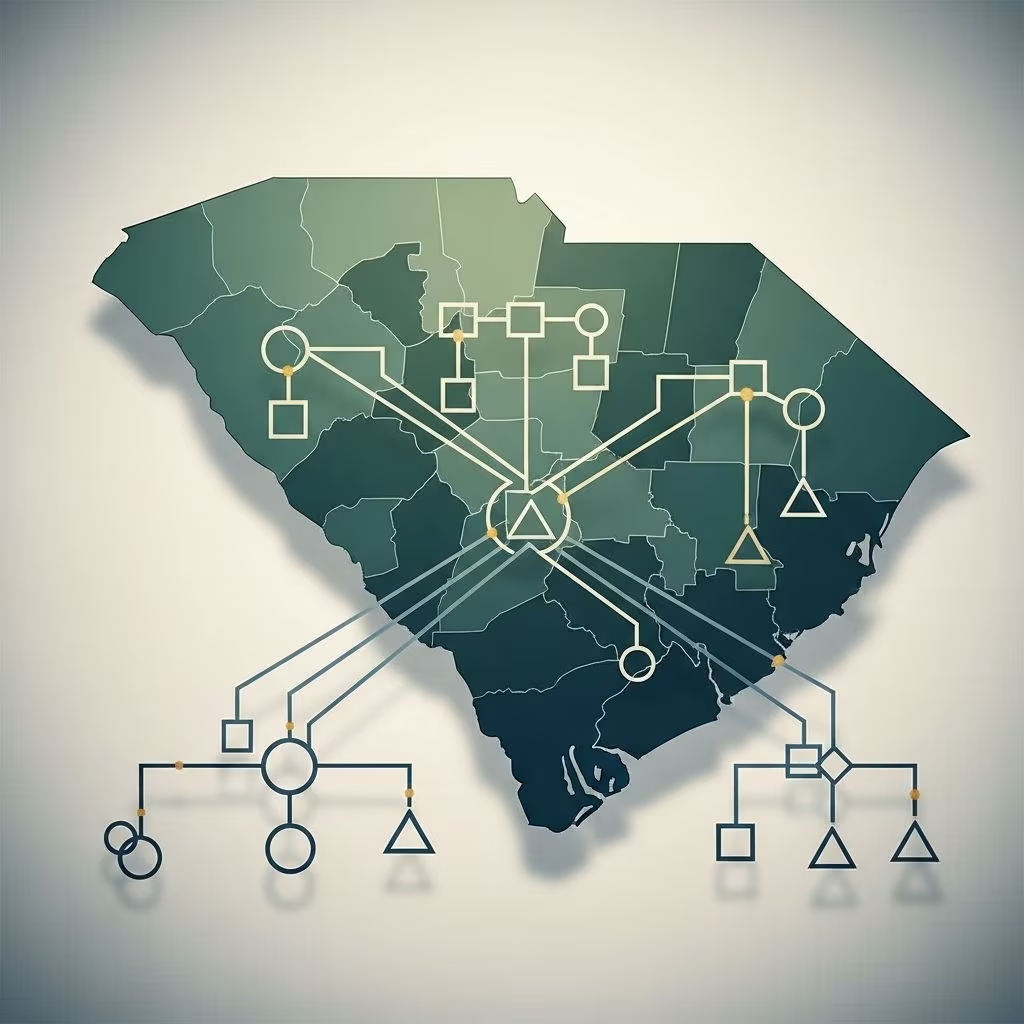
South Carolina’s intestate laws create a clear line of inheritance, starting with the closest relatives. The surviving spouse and children (referred to as ‘issue’ including grandchildren) receive top priority.
| Family Situation | Distribution |
|---|---|
| Married, no children or descendants | Spouse gets 100% of intestate estate |
| Married, with children/descendants | Spouse gets 50%; children share remaining 50% equally or by representation |
| Single/no spouse, with children | Children share 100% equally or by representation |
| No spouse or children, surviving parents | Parents share 100% equally |
| No spouse, children, or parents; surviving siblings | Siblings share 100% equally or by representation |
‘By representation’ means if a child or sibling predeceases, their share passes to their own descendants. This continues down the line to grandparents, aunts/uncles, cousins, and great-grandparents if needed.
Detailed Breakdown: Spouses and Children’s Shares
For married individuals without descendants, the spouse inherits everything passing through probate. This simplifies matters but assumes no other family claims.
When descendants exist, the split is even: 50% to the spouse and 50% divided among children. For example, with three children, each gets one-sixth of the total estate. Grandchildren step in per stirpes if a child predeceases. Note: South Carolina recognizes common-law marriages, so legally valid spouses qualify equally.
Inheritance Rights for Other Relatives
If no spouse or issue survive, parents inherit equally. Without parents, siblings and their descendants take over. The law extends further:
- Grandparents and descendants: Paternal and maternal lines split equally if closer kin absent.
- Aunts, uncles, cousins: Follow grandparent lines by representation.
- Great-grandparents: Final private heirs before escheat.
Stepchildren and friends do not inherit automatically unless legally adopted.
The 120-Hour Survivorship Requirement
To claim an inheritance, heirs must outlive the decedent by 120 hours (five days). This prevents ‘death chain’ scenarios in accidents. Exceptions apply if waiving it leaves no heirs. Posthumous children born within 10 months and surviving 120 hours qualify.
What Counts as the Intestate Estate?
The intestate estate includes solely owned real estate, bank accounts, vehicles, and personal items without transfer mechanisms. Debts, taxes, and expenses are deducted first. Advancements (lifetime gifts) may offset shares under Section 62-2-110. Alienage does not disqualify non-citizen heirs.
Special Rules and Limitations
Parents may lose entitlement if they failed to support the decedent during minority (Section 62-2-114). Heirs related through two lines take only once. Invalid wills trigger intestacy even if partially created.
Escheat to the State: The Last Resort
If no qualifying heirs exist after exhaustive search, assets escheat to South Carolina. This is rare, as the hierarchy is broad.
Why Create a Will? Common Pitfalls of Intestacy
Intestate laws provide a default but often mismatch intentions:
- Unequal shares: All children inherit equally, ignoring needs or estrangements.
- Excluded loved ones: Fiancés, stepchildren, charities, or friends get nothing.
- Family disputes: Probate invites challenges, delaying distribution.
- Spouse misconceptions: Many assume spouses get everything, but children reduce it to half.
A will, trust, or beneficiary updates ensure control. Consult an attorney for holographic or oral wills’ invalidity in SC.
Probate Process Overview
Intestate estates require court-supervised probate:
- Petition by personal representative (often spouse/child).
- Notice to heirs/creditors.
- Inventory and appraisal.
- Pay debts/taxes.
- Distribute per intestate rules.
Small estates (<$25,000) may qualify for simplified procedures.
Frequently Asked Questions (FAQs)
Does a spouse always inherit everything without a will in South Carolina?
No. If children or descendants survive, the spouse gets only half; the rest goes to issue.
Do grandchildren inherit if their parent predeceases?
Yes, by representation: they take their parent’s share.
What if I have no family at all?
The estate escheats to the state after searches fail.
Are common-law spouses recognized?
Yes, if proven under SC law.
Can stepchildren inherit intestate?
No, unless legally adopted.
How long must I survive the decedent?
120 hours, unless waived to avoid escheat.
This guide synthesizes SC Code Title 62, Article 2 (2024 updates via 2013 Act No. 100). Laws evolve; verify with professionals.
References
- Intestate Succession In South Carolina — De Bruin Law Firm. 2024. https://debruinlawfirm.com/intestate-succession-in-south-carolina/
- Intestate Succession in South Carolina — Nolo. 2024. https://www.nolo.com/legal-encyclopedia/intestate-succession-south-carolina.html
- Intestate Succession South Carolina — Nosal & Jeter, LLP. 2024. https://www.nosaljeterlaw.com/south-carolina-intestate-succession/
- South Carolina Code Title 62, Article 2 (2024) — Justia / SC Legislature. 2024-01-01. https://law.justia.com/codes/south-carolina/title-62/article-2/
- South Carolina Code of Laws Title 62 — SC State House. 2024. https://www.scstatehouse.gov/code/t62c002.php