
Understanding Assistance Animals in South Carolina
Navigate South Carolina's laws protecting service dogs and emotional support animals in housing and public spaces.
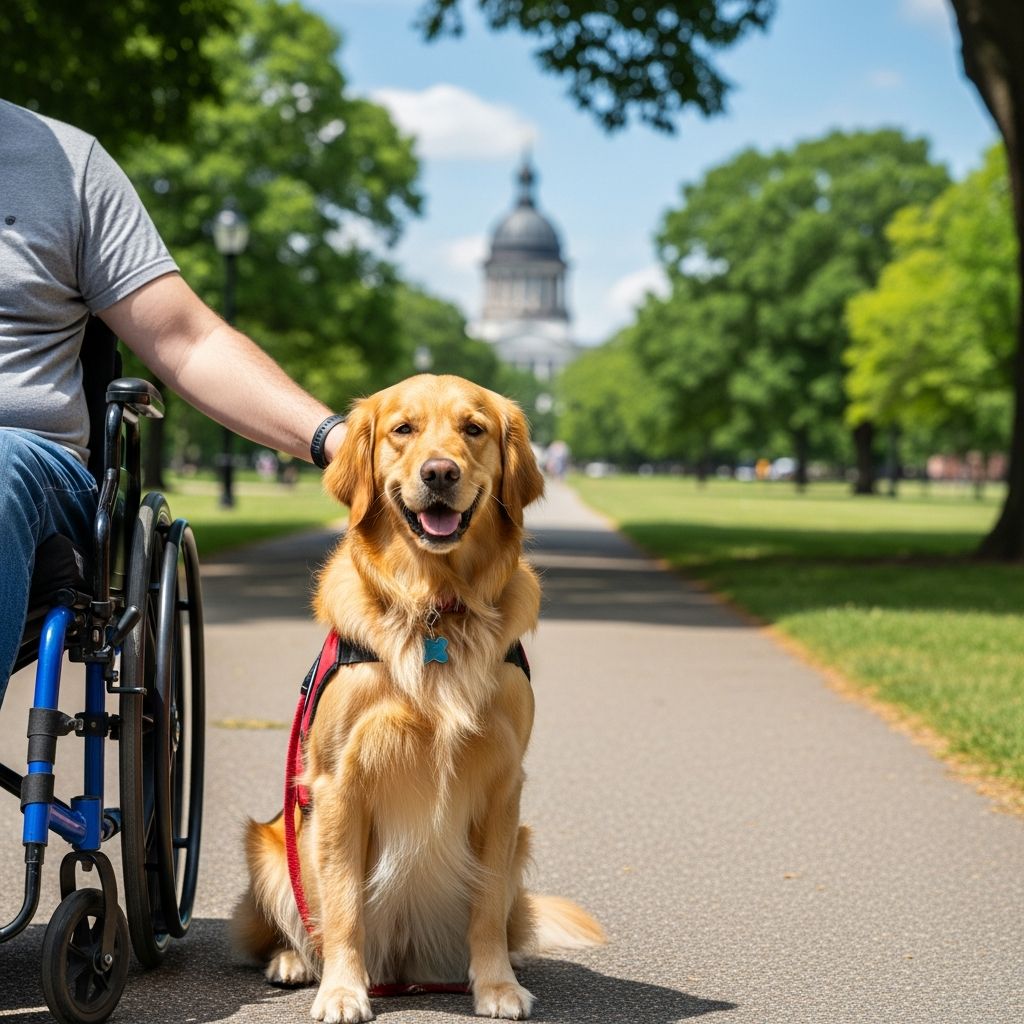
Individuals with disabilities in South Carolina enjoy substantial legal protections when it comes to their assistance animals. These protections stem from both federal legislation and state-specific statutes that recognize the critical role animals play in enabling people with disabilities to participate fully in society. Understanding these laws is essential for both individuals with disabilities seeking access to public spaces and housing, as well as business owners and property managers who need to comply with these regulations.
Core Definitions: What Qualifies as an Assistance Animal
The legal landscape surrounding assistance animals distinguishes between different categories of animals based on their training and function. This distinction is crucial because it determines what protections apply in various settings.
Service Animals Under South Carolina Law
A service animal, as defined by both South Carolina state law and the Americans with Disabilities Act (ADA), is a dog or miniature horse that has been specifically trained to perform work or tasks directly related to an individual’s disability. These tasks must address the functional limitations caused by the person’s condition. Examples include guiding individuals who are blind, alerting those who are deaf to sounds, pulling wheelchairs, assisting with mobility impairments, detecting seizures before they occur, and reminding individuals to take medication at prescribed times.
South Carolina law recognizes that service animals may assist people with various types of disabilities, including physical impairments, sensory disabilities, psychiatric conditions, and neurological disorders. The key distinction is that the animal must be trained to perform specific, disability-related tasks.
Emotional Support Animals in South Carolina Context
Emotional support animals occupy a different legal category from service animals. While service animals are trained to perform specific tasks, emotional support animals primarily provide comfort through their presence. South Carolina’s public accommodation law does not explicitly address emotional support animals, which creates some ambiguity regarding their status in most public spaces.
However, the federal Fair Housing Act provides protections for emotional support animals in residential settings. Under this framework, an emotional support animal can be any domesticated animal, not limited to dogs or miniature horses. The animal must be necessary for a person with a disability to have equal access to housing, and the owner must have documentation from a healthcare provider establishing that the animal provides emotional support or assists with disability-related symptoms.
Public Accommodations and Service Animal Access Rights
South Carolina law, aligned with federal ADA requirements, mandates that individuals with disabilities have the right to bring their service animals into virtually all public spaces. This broad protection covers numerous categories of facilities that interact with the general public.
Covered Public Accommodations
The following types of establishments must permit service animals:
- Retail stores and shopping centers
- Restaurants and food service establishments
- Hotels, motels, and lodging facilities
- Medical facilities including hospitals and clinics
- Offices and professional service providers
- Libraries and educational institutions
- Transportation services including taxis and public transit
- Entertainment venues such as theaters and concert halls
- Recreational facilities including parks and sports venues
- Government buildings and offices
Important Exclusions
Religious institutions such as churches, synagogues, and mosques are not classified as public accommodations under the ADA. This means they are not legally required to allow service animals, even when they offer secular services like childcare facilities open to the public. This represents a significant exception to the general rule of universal service animal access in South Carolina.
Questions Establishments May Ask
Businesses and public accommodations have limited authority to inquire about service animals. To protect the privacy of individuals with disabilities while ensuring legitimate service animals are distinguished from pets, the law restricts what questions can be asked.
Establishments may ask only two specific questions when it is not obvious that an animal is performing a service function:
- Is this animal a service animal required because of a disability?
- What specific tasks or work does this animal perform related to your disability?
Importantly, establishments cannot ask about the nature or severity of a person’s disability. They cannot demand certification documents, identification cards, or proof of training. They cannot require special equipment like vests or harnesses, though some handlers choose to use these for identification purposes. Asking for medical records, disability documentation, or other proof of status is prohibited and constitutes a violation of the individual’s rights.
When Service Animals Can Be Excluded
While the presumption is that service animals must be allowed in public accommodations, the law does permit removal under specific circumstances. An establishment may exclude a service animal if:
- The animal poses a direct threat to the health or safety of others
- The animal is exhibiting aggressive behavior such as barking, snapping, or lunging at patrons or staff
- The animal is not housebroken and has had accidents in the facility
- The handler is unable or unwilling to maintain control of the animal
It is critical to understand that behavioral issues with the service animal itself—not the individual’s disability—are the basis for exclusion. An animal must actually pose a current threat or demonstrate control problems. Hypothetical concerns or stereotypes about certain breeds are not valid grounds for exclusion. Additionally, if a service animal is removed from a facility, the individual with the disability retains the right to enter and receive services; only the animal may be excluded.
Housing and Residential Protections
South Carolina provides additional protections for individuals with disabilities in residential settings through both state law and the federal Fair Housing Act. These housing protections are notably more inclusive than public accommodation rules regarding the types of animals covered.
State Housing Law Protections
Under South Carolina’s housing statute, landlords must allow individuals with disabilities to have assistance dogs in rental properties and cannot charge additional pet fees for these animals. However, the state law uses the term “assistance dog” without providing a detailed definition, which creates some uncertainty about what animals qualify.
Federal Fair Housing Act Protections
The Fair Housing Act provides more comprehensive protections for assistance animals in housing, including both service dogs and emotional support animals. This federal law applies to most residential rental situations, condominiums, and homeowner associations.
Under the Fair Housing Act, a housing provider must make reasonable accommodations for assistance animals if the following conditions are met:
| Requirement | Explanation |
|---|---|
| Person with Disability | The individual must have a physical, sensory, psychiatric, or neurological disability that substantially limits one or more major life activities |
| Disability-Related Need | The animal must perform a service, task, or function directly related to the disability, or provide therapeutic emotional support that alleviates symptoms |
| Healthcare Provider Documentation | For emotional support animals, a licensed healthcare provider must confirm the necessity of the animal for equal housing access |
| Reasonable Connection | There must be a clear nexus between the individual’s disability and the assistance the animal provides |
No Additional Fees
Housing providers cannot charge pet deposits, pet rent, or pet fees for assistance animals, whether service dogs or emotional support animals. These animals are reasonable accommodations for disability, not pets. Some housing providers may require refundable security deposits to cover any actual damages caused by the animal, but this must be based on actual damage, not anticipated problems.
Distinguishing Service Animals from Other Animal Categories
Several categories of animals are sometimes confused with service animals, but they have different legal statuses and protections.
Therapy Animals
Therapy animals are trained to provide comfort to multiple individuals in institutional settings like hospitals, nursing homes, or schools. Unlike service animals, which are dedicated to one person’s specific disability-related needs, therapy animals work with various people in professional capacities. They do not have the same public access rights as service animals.
Emotional Support Animals in Public Settings
While emotional support animals receive protection in housing under the Fair Housing Act, they do not have automatic access rights in public accommodations under South Carolina law. Public accommodation rules are structured around the ADA definition of service animals, which requires training for specific disability-related tasks. Emotional support provided by an animal’s mere presence does not qualify under this definition.
Pets and Companion Animals
Regular pets kept for companionship without specific training have no special legal status regarding public access. They can be excluded from establishments and are subject to standard pet policies and restrictions.
South Carolina’s “Layla’s Law” and Animal Protection
Beyond access rights, South Carolina enacted legislation to protect service animals from abuse and interference. This statute, known informally as Layla’s Law, makes it illegal to interfere with, harm, or abuse a service animal or guide dog. Violations can result in criminal charges, and the federal government can also pursue civil action against violators under the ADA.
Common Misconceptions and Legal Clarifications
Several myths about service animals persist and create confusion in enforcement and daily interactions.
Vests and Documentation Are Not Requirements
Service animals are not required to wear special vests, ID tags, or any other identifying equipment. While some handlers choose to use vests or harnesses for practical reasons, the absence of these items does not indicate an animal is not a legitimate service dog. Similarly, there is no official certification system for service animals, and animals presenting fake certificates are still not legally recognized service animals.
Not All Dogs Can Be Service Animals
Any dog that has been properly trained to perform disability-related tasks can potentially be a service animal under the law. The ADA does not restrict service animals to specific breeds or sizes, with the exception that miniature horses may also qualify. However, individual states and localities may have their own standards for service animal training and certification beyond the basic ADA requirements.
Misrepresentation Creates Legal Problems
Some individuals attempt to pass off pets as service animals by purchasing vests online or falsely claiming their animal is trained. This misrepresentation undermines the legitimacy of actual service animals and makes it harder for people with genuine disabilities to access their rights without question. South Carolina law explicitly recognizes this problem and emphasizes that business owners should not be penalized for denying access to animals that are not truly service animals, provided they base their decisions on legitimate questioning.
Responsibilities of Service Animal Handlers
While the law provides strong protections for service animals in public spaces, handlers also have responsibilities to ensure their animals behave appropriately.
- Maintain control of the animal at all times through leash, harness, or voice command
- Ensure the animal is housebroken and does not have accidents in public places
- Prevent the animal from being aggressive, barking excessively, or jumping on others
- Comply with facility rules that don’t conflict with service animal access requirements
- Remove the animal if it becomes a direct threat or is uncontrollable
Enforcement and Legal Remedies
The Americans with Disabilities Act allows both the U.S. Department of Justice and individuals to pursue legal action against establishments that violate service animal access rights. South Carolina also has state mechanisms for enforcing these protections.
When an individual with a disability is denied access because of their service animal, they may file complaints with federal agencies or pursue civil litigation. Violations can result in civil penalties, and in cases involving intentional discrimination, criminal charges may apply.
Frequently Asked Questions About Assistance Animals in South Carolina
Q: Can a business ask for proof that my dog is a service animal?
A: No. A business can only ask whether your animal is a service dog and what tasks it performs. They cannot ask for certification documents, medical records, or proof of training. Vests and ID cards are not required, and their absence does not indicate the animal is not a legitimate service dog.
Q: Are emotional support animals allowed in restaurants and stores?
A: Under South Carolina’s public accommodation law, emotional support animals do not have automatic access rights. Only service animals trained to perform specific disability-related tasks have guaranteed access to public places. However, emotional support animals do receive housing protections under the Fair Housing Act.
Q: Can my landlord charge a pet fee for my service animal?
A: No. Service animals are reasonable accommodations for disability and cannot be charged pet fees, pet deposits, or pet rent. Your landlord also cannot require a larger security deposit specifically because you have a service animal.
Q: What should I do if a business denies my service animal access?
A: You can file a complaint with the U.S. Department of Justice or contact a disability rights organization for assistance. You may also pursue civil litigation against the establishment for violating your rights under the ADA.
Q: Does my service animal need to be registered or licensed?
A: Service animals are not required to have any special registration or licensing beyond standard pet licensing requirements that may apply in your jurisdiction. Training and actual task performance are what matter legally, not official documentation.
Q: What types of animals can be service animals?
A: Under federal law and South Carolina statute, service animals are limited to dogs and miniature horses. Other animals, regardless of their training, do not qualify for service animal protections in public accommodations.
References
- Americans with Disabilities Act: Service Animals — U.S. Department of Justice Civil Rights Division. 2022-01-01. https://www.justice.gov/crt/service-animals-2
- Fair Housing Act Amendments Design Handbook — U.S. Department of Housing and Urban Development Office of Special Needs Assistance Programs. 2020-06-01. https://www.hud.gov/program_offices/public_indian_housing/publications/documents/fheo/fha_DesignGuidelines_Part1.pdf
- South Carolina Code Title 47, Chapter 3 – Dogs and Domestic Pets — South Carolina General Assembly Legislative Services. 2024-01-01. https://law.justia.com/codes/south-carolina/title-47/chapter-3/
- Service Animals Legal Rights Guide — Disability Rights South Carolina. 2016-06-01. https://www.disabilityrightssc.org/service-dogs-legal-rights/
- 28 C.F.R. Part 35 – Nondiscrimination on the Basis of Disability in State and Local Government Services — U.S. Code of Federal Regulations. 2023-01-01. https://www.ada.gov/2010ADAStandards_2010ADAStandardsURL.html
Similar Articles








Read full bio of Sneha Tete


