
Understanding Sole Proprietorships: Structure, Benefits, and Considerations
A comprehensive guide to sole proprietorships, from formation to tax obligations and personal liability.
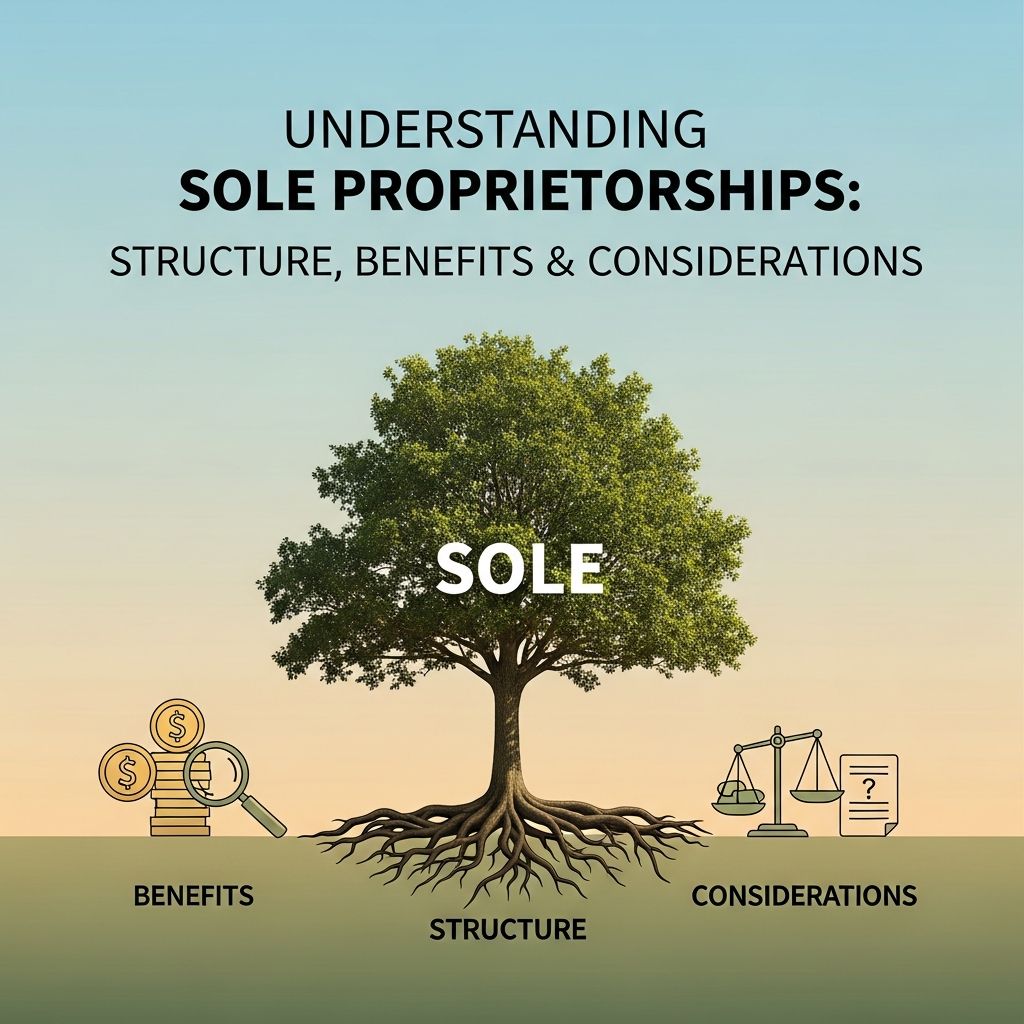
Getting Started with Sole Proprietorships: The Fundamentals of Solo Business Ownership
When an individual launches a business venture without establishing a formally registered business entity, they automatically operate as a sole proprietor. This business structure represents the most straightforward and accessible pathway for entrepreneurs who wish to start their own operations. Unlike more complex arrangements such as corporations or limited liability companies, a sole proprietorship requires no formal filing requirements or complex organizational procedures. The simplicity of this structure has made it the predominant choice for millions of small business operators across diverse industries, from freelance professionals to retail merchants and service providers.
A sole proprietorship exists as a default business arrangement whenever an individual engages in commercial activities without establishing an alternative formal business entity. This means that individuals may operate as sole proprietors without even realizing they have adopted this business structure. The defining characteristic is that one person owns, operates, and maintains complete control over all business operations, decision-making, and strategic direction.
The Mechanics of Formation: Starting Your Solo Enterprise
The establishment of a sole proprietorship stands apart from other business structures due to its exceptional simplicity and minimal procedural requirements. An entrepreneur can commence business operations immediately without submitting organizational documents to state authorities or paying formation fees. This accessibility makes sole proprietorships particularly attractive for individuals testing business concepts or launching ventures with limited initial capital.
While the baseline operation requires no formal steps, certain jurisdictional requirements may apply depending on location and business nature. Many states and localities require entrepreneurs operating under assumed names—commonly known as “doing business as” (DBA) names or trade names—to file registration certificates with county clerks or state authorities. This requirement ensures transparency in business operations and protects consumers by maintaining public records of business ownership. Additionally, specific industries and professions may require licensing, permits, or compliance certifications regardless of business structure.
The minimal formation requirements translate to cost advantages for entrepreneurs. Unlike corporations or limited liability companies that typically incur legal and filing expenses, sole proprietors can begin operations virtually without expenditure, beyond any industry-specific licenses or permits required by local regulations.
Ownership Structure and Operational Control
The fundamental principle governing sole proprietorships is singular ownership. Only one individual may own the business, and this person maintains exclusive control over all operational aspects, strategic decisions, financial matters, and business direction. This concentration of ownership and control distinguishes sole proprietorships from partnerships and other collaborative business structures.
The sole proprietor possesses complete autonomy in decision-making processes. Without partners, board members, or external stakeholders to consult, the proprietor can implement changes, pivot strategies, and respond to market opportunities with minimal bureaucratic constraints. This operational flexibility represents a significant advantage for entrepreneurs who value independence and rapid decision-making.
Notably, the exclusive ownership requirement does not restrict the entrepreneur from hiring employees. A sole proprietor may establish payroll, supervise staff, and delegate operational responsibilities without affecting the business structure classification. The proprietor remains the sole owner regardless of the number of employees, though the owner bears ultimate accountability for all employee actions and business operations.
Tax Treatment and Financial Reporting
The tax framework for sole proprietorships differs significantly from other business entities because the Internal Revenue Service does not recognize sole proprietorships as separate taxable entities. Instead, business income flows directly to the proprietor’s individual tax return, avoiding the double taxation that can occur with corporate structures.
Business income from sole proprietorships is reported on Schedule C of the owner’s Form 1040 individual tax return. This approach simplifies the tax filing process compared to corporations, which must file separate business returns and distribute dividends to shareholders. The proprietor reports all business profits as personal income, subject to standard income tax rates.
An important tax consideration involves self-employment taxes. Sole proprietors remain responsible for self-employment tax obligations, which fund Social Security and Medicare benefits. These taxes represent approximately 15.3% of net business income and constitute a significant financial obligation for entrepreneurs. The proprietor must remit these payments quarterly through estimated tax payments, as no employer withholds amounts from business income.
The absence of separate business tax status offers compensating benefits. Proprietors can deduct all legitimate business expenses from gross income before calculating tax liability. These deductions may include supplies, equipment, professional services, rent, utilities, and numerous other operational costs. Such deductions reduce overall taxable income and decrease total tax obligations compared to gross revenue.
Unlimited Personal Liability: A Critical Consideration
Perhaps the most significant disadvantage of sole proprietorship structures involves unlimited personal liability. Since the law recognizes no legal distinction between the business entity and the individual owner, the proprietor faces complete personal responsibility for all business debts, obligations, and liabilities.
This liability exposure encompasses multiple categories. Business debts incurred through operations, contracts, loans, or credit arrangements become personal obligations of the proprietor. If business revenue proves insufficient to satisfy creditors, they may pursue the proprietor’s personal assets, including savings accounts, vehicles, real estate, and other possessions. This asset seizure extends to property acquired before business formation and property maintained separately from business operations.
Operational liabilities present additional exposure. If business activities result in property damage, personal injury, breach of contract, or other legal violations, the proprietor faces personal liability for resulting damages and legal judgments. This means a lawsuit against the business becomes a lawsuit against the proprietor personally, with potential consequences extending to personal assets.
The liability landscape becomes particularly concerning when proprietors employ staff. While the proprietor remains responsible for employee actions in business contexts, they may also face personal liability if employees commit negligent acts, violate laws, or cause injuries in the course of employment. Additionally, proprietors must maintain appropriate insurance coverage and comply with employment laws, as violations can trigger penalties and lawsuits.
Advantages and Disadvantages: Evaluating Sole Proprietorship Suitability
| Aspect | Advantages | Disadvantages |
|---|---|---|
| Formation | No formal filing required; immediate operation possible | May require assumed name registration in some jurisdictions |
| Cost | Minimal startup expenses and no ongoing filing fees | Potential costs for industry-specific licensing |
| Control | Complete autonomy over all business decisions | Sole responsibility for all decisions and outcomes |
| Taxation | Single-level taxation; business income flows to personal return | Self-employment tax obligations; potential higher overall tax burden |
| Profits | 100% of business profits accrue to owner | Unlimited personal liability for business losses |
| Liability | None—significant disadvantage without protection | Unlimited personal liability for all business debts and obligations |
| Funding | Complete control over business capital allocation | Difficulty securing business loans; banks hesitant to finance sole proprietorships |
| Continuity | Can operate indefinitely at proprietor’s discretion | Business terminates upon owner’s death or retirement |
Financing Challenges and Capital Access
Sole proprietors often encounter obstacles when attempting to secure business financing. Traditional lenders, including banks and institutional investors, frequently demonstrate reluctance to extend credit to sole proprietorships. This hesitation stems from the liability structure and perceived risk profile. Since proprietor and business lack legal separation, lender recourse relies on the proprietor’s personal assets and creditworthiness.
Another financing constraint involves the inability to issue equity securities. Corporations and limited liability companies can raise capital by selling ownership interests to investors. Sole proprietors cannot distribute ownership shares without fundamentally altering the business structure. This restriction limits access to venture capital and equity-based financing mechanisms available to other business entities.
Proprietors must typically rely on personal savings, home equity loans, personal credit cards, and informal lending arrangements from friends and family to finance business operations and expansion. This limited financing capacity can constrain growth potential and restrict the scope of business activities.
Termination and Transition of Sole Proprietorships
Unlike corporations or limited liability companies designed for perpetual existence, sole proprietorships lack permanence. The business structure terminates automatically upon the proprietor’s death, retirement, or decision to cease operations. This discontinuity can create challenges for employees, customers, and creditors dependent on business continuity.
The proprietor may formally establish an alternative business entity—such as a partnership, limited liability company, or corporation—through appropriate state filings. This transition replaces the sole proprietorship with the newly formed entity, triggering changes in liability structure, tax treatment, and operational procedures.
Adding co-owners triggers automatic termination of the sole proprietorship structure. If the proprietor wishes to admit another owner, even a spouse or family member, the sole proprietorship ceases to exist and transforms into a partnership or other collaborative structure. This transition requires formal dissolution of the original structure and establishment of new business arrangements.
When Sole Proprietorships Make Sense
Sole proprietorships prove particularly suitable for specific business contexts and entrepreneur profiles. Low-risk ventures with minimal liability exposure—such as consulting services, freelance creative work, and professional services—may function effectively without formal entity protection. Entrepreneurs testing business concepts or validating market demand benefit from the formation simplicity and minimal costs.
Proprietors comfortable with personal liability exposure and possessing adequate personal assets to absorb potential losses may find sole proprietorships acceptable. Those operating businesses with limited employee involvement and minimal customer interaction face lower liability risks than larger commercial enterprises.
Entrepreneurs prioritizing operational simplicity and autonomy may prefer sole proprietorship structures despite liability drawbacks. The absence of governance requirements, partner agreements, and regulatory filings appeals to those seeking streamlined business operations.
Frequently Asked Questions About Sole Proprietorships
Q: What happens to my sole proprietorship if I die?
A: The sole proprietorship automatically terminates upon the proprietor’s death. The business does not transfer to heirs automatically; instead, probate proceedings determine asset distribution. To ensure business continuity, proprietors should establish succession plans and consider transitioning to more permanent business entities beforehand.
Q: Can I convert my sole proprietorship to an LLC or corporation?
A: Yes, you can establish a new business entity through appropriate state filings, which effectively replaces your sole proprietorship. This conversion typically involves minimal complications, as you’re forming a new entity rather than dissolving an existing formal structure. Consult legal professionals regarding tax implications and asset transfers.
Q: Do I need a business license to operate as a sole proprietor?
A: Requirements depend on your location and industry. Some jurisdictions and industries require specific licenses or permits regardless of business structure. If operating under an assumed name, filing a DBA certificate with local authorities is typically required. Research your local regulations and industry requirements.
Q: How do self-employment taxes differ from regular income taxes?
A: Self-employment taxes fund Social Security and Medicare benefits and represent approximately 15.3% of net business income. These taxes exceed standard employee withholding rates because sole proprietors pay both employer and employee portions. This obligation applies in addition to regular income taxes on business profits.
Q: Can I hire employees as a sole proprietor?
A: Yes, hiring employees does not change your sole proprietor status. However, you become responsible for payroll taxes, workers’ compensation insurance, employment law compliance, and liability for employee actions. These obligations increase complexity compared to operating solo.
Q: How do I protect my personal assets from business liability?
A: The most effective protection involves transitioning to a limited liability company or corporation, which separates personal and business assets. Alternatively, obtain comprehensive business liability insurance to cover potential risks. Maintaining detailed financial records and compliance with regulations also reduces exposure.
Conclusion: Evaluating Sole Proprietorship for Your Business
Sole proprietorships offer unparalleled simplicity and accessibility for entrepreneurs launching business ventures. The minimal formation requirements, operational autonomy, and straightforward tax treatment make this structure attractive for many business owners. However, unlimited personal liability represents a fundamental trade-off that entrepreneurs must carefully evaluate.
The appropriateness of a sole proprietorship depends on specific circumstances: business risk profile, personal asset position, growth objectives, and financing requirements. Those operating low-risk service businesses with minimal liability exposure and adequate personal resources may find sole proprietorships acceptable. Entrepreneurs planning significant growth, seeking investor capital, or facing substantial liability risks should consider alternative structures providing legal and financial protection.
Consulting with business and tax professionals helps entrepreneurs make informed decisions aligned with their specific circumstances and objectives. As businesses evolve and circumstances change, transitioning to more formal structures remains possible, allowing flexibility in business structure selection.
References
- Sole Proprietorships — National Agricultural Law Center, University of Arkansas School of Law. https://nationalaglawcenter.org/wp-content/uploads/assets/readingrooms/businessorgs-sole.pdf
- Choose a business structure — U.S. Small Business Administration. https://www.sba.gov/business-guide/launch-your-business/choose-business-structure
- Sole proprietorships — Internal Revenue Service (IRS). https://www.irs.gov/businesses/small-businesses-self-employed/sole-proprietorships
- What is a Sole Proprietorship & How to Start One — Wolters Kluwer Expert Insights. https://www.wolterskluwer.com/en/expert-insights/what-is-a-sole-proprietorship-and-how-to-start-one
- Sole Proprietorship – Definition, Advantages and Disadvantages — Corporate Finance Institute. https://corporatefinanceinstitute.com/resources/management/sole-proprietorship/
- Selecting A Business Structure — Texas Secretary of State. https://www.sos.state.tx.us/corp/businessstructure.shtml
- What is a Sole Proprietorship and How Do They Work? — Bank of America Business Insights. https://business.bankofamerica.com/en/resources/what-is-sole-proprietorship
Similar Articles








Read full bio of medha deb




