
SOGI Rights: Global Progress, Challenges, And Key Trends 2025
Exploring the global evolution of SOGI protections in human rights law.
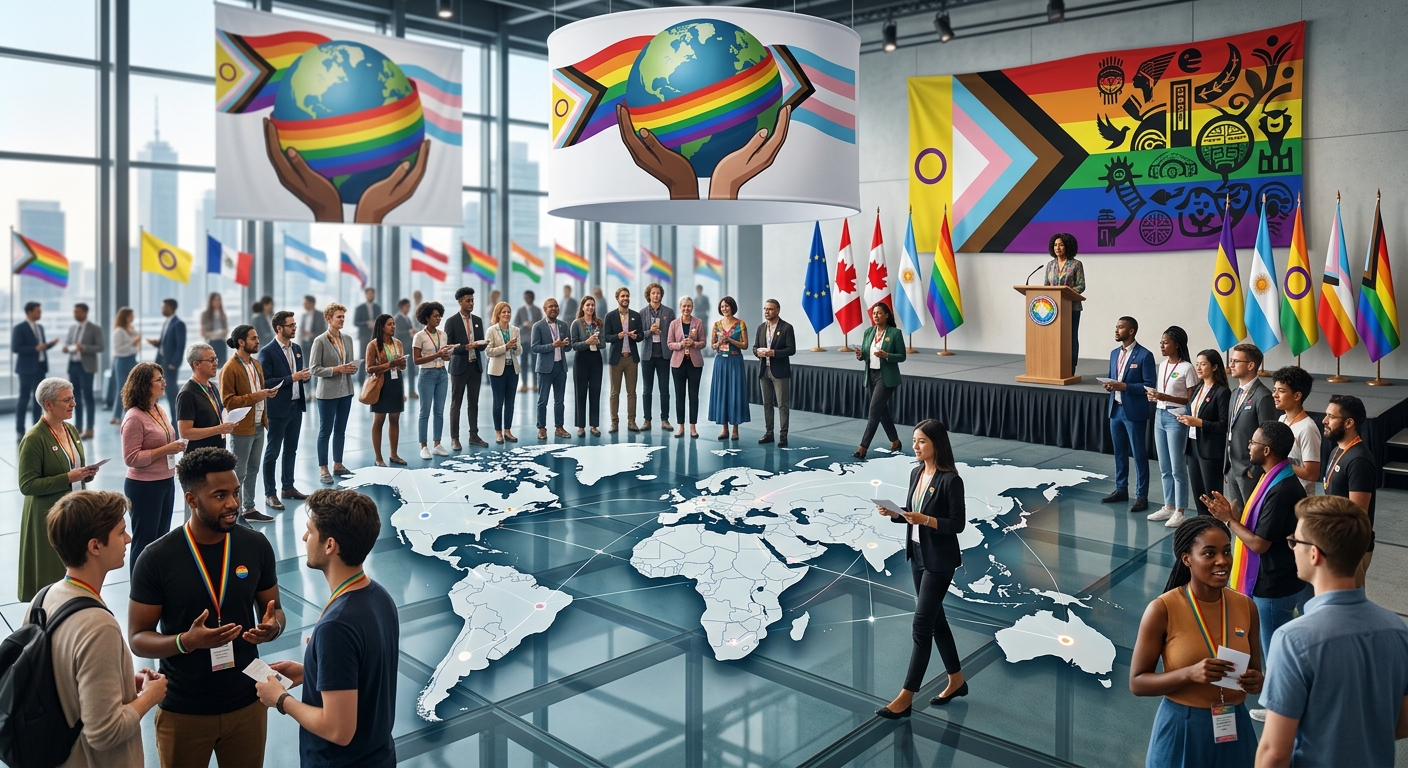
The foundational premise of international human rights law is remarkably simple: fundamental protections are universal, inalienable, and applicable to every individual from birth. Yet, the translation of this grand philosophical assertion into actionable legal reality has historically been fraught with exclusions. For decades, individuals belonging to sexual minorities and gender-diverse communities found themselves relegated to the silent margins of international legal frameworks. Today, however, the global integration of sexual orientation and gender identity (SOGI) rights into mainstream international law represents one of the most significant, dynamic, and fiercely debated developments in contemporary diplomacy and governance.
This evolution does not hinge on the creation of novel or “special” privileges for a specific demographic. Instead, it relies on the strict, logical application of existing international standards. The right to life, the right to bodily autonomy, the freedom from torture, and the fundamental guarantee of equality before the law are severely compromised when states fail to protect individuals based on whom they love or how they express their gender. Exploring this landscape requires a deep dive into historical treaties, the establishment of modern oversight mechanisms, and the pervasive challenges of state-sponsored discrimination that continue to threaten vulnerable populations worldwide.
The Evolution from Implicit to Explicit Legal Protections
When the United Nations General Assembly adopted the Universal Declaration of Human Rights in 1948, the concepts of sexual orientation and gender identity were entirely absent from the text. The sweeping provisions guaranteeing liberty and security of person were theoretically inclusive, but practically silent on the targeted violence experienced by SOGI populations. For nearly half a century, the international community predominantly treated these issues as matters of domestic morality, religious tradition, or internal penal code jurisdictions, effectively shielding widespread abuses from international human rights scrutiny.
The paradigm began to shift noticeably in the 1990s. A defining turning point occurred in 1994 with the landmark Toonen v. Australia decision by the United Nations Human Rights Committee. In this case, the Committee officially ruled that domestic laws criminalizing consensual same-sex relations fundamentally violated the privacy and non-discrimination provisions of the International Covenant on Civil and Political Rights (ICCPR). This jurisprudence established the vital precedent that sexual orientation was indeed covered under the protective umbrella of established international treaties.
This judicial momentum culminated in a watershed moment in 2006 with the articulation of the Yogyakarta Principles. Convened in Indonesia, a distinguished group of international human rights experts, jurists, and academics drafted a comprehensive document outlining precisely how existing, legally binding human rights conventions apply to issues of sexual orientation and gender identity. Rather than inventing unprecedented legal concepts, the Yogyakarta Principles methodically demonstrated that universal rights are inherently breached when states penalize same-sex intimacy or refuse to legally recognize a person’s lived gender. This scholarly and legal endeavor provided the necessary intellectual scaffolding for global advocates to demand formal, institutional action from global governance bodies.
Institutional Frameworks and Global Watchdogs
The transition from theoretical academic frameworks to robust institutional action reached a critical milestone through a series of resolutions by the United Nations Human Rights Council (UNHRC). Moving past abstract condemnations of discrimination, the international community formally recognized the absolute necessity for dedicated, independent mechanisms to monitor, investigate, and address systematic abuses targeting SOGI individuals globally. In 2016, the UNHRC achieved a historic breakthrough by officially establishing the mandate of the Independent Expert on protection against violence and discrimination based on sexual orientation and gender identity.
This mandate irrevocably transformed the institutional landscape of human rights oversight. The Independent Expert acts as a high-level official watchdog, tasked with a complex and multifaceted diplomatic portfolio. Core responsibilities include conducting official, fact-finding country visits to assess national laws, evaluating the lived realities of marginalized citizens, and investigating direct complaints of human rights violations. Furthermore, the Independent Expert publishes comprehensive thematic reports that are presented directly to the UN General Assembly, shedding light on critical intersections such as the specific vulnerabilities of SOGI populations in conflict zones, the economic ramifications of legal exclusion, and the psychological impact of forced conversion practices.
The repeated renewal of this specialized mandate—reauthorized in highly contested votes in 2019, 2022, and subsequently in 2025—signals a robust global commitment to maintaining these issues on the permanent agenda of international governance. Despite facing coordinated opposition from coalitions of member states who frequently attempt to defund or dissolve the position, the preservation of the Independent Expert ensures a formal avenue for accountability. It guarantees that governments are routinely evaluated and questioned about their domestic human rights records in a highly visible international arena, significantly limiting their ability to commit abuses in the shadows.
The Continuing Crisis of State-Sponsored Discrimination
Despite the progressive momentum and the establishment of formal oversight mechanisms at the United Nations, the global reality for sexual and gender minorities remains deeply fractured and profoundly dangerous. The recognition of these protections as fundamental human rights is aggressively resisted by numerous member states. This ideological resistance manifests directly in severe state-sponsored discrimination, where the legislative power of the government is weaponized against its own populace.
According to comprehensive data compiled in the 2024 “Laws on Us” global report published by ILGA World, approximately one-third of the world continues to criminalize consensual same-sex sexual acts. In several jurisdictions, these laws are not mere archaic historical relics; they are actively and fiercely enforced. The maintenance of these punitive legal frameworks goes far beyond the immediate threat of arbitrary arrest, creating a chilling effect that permeates every aspect of daily existence and effectively endorses societal violence with absolute impunity.
To fully grasp the scope of the challenge, it is crucial to categorize the varied mechanisms of state-sponsored discrimination currently in use globally:
| Category of Discrimination | Description of State Action | Impact on Targeted Populations |
|---|---|---|
| Direct Criminalization | Maintaining and enforcing penal codes that explicitly outlaw same-sex sexual relations, sometimes categorized broadly as “unnatural offenses.” | Leads to arbitrary detentions, systemic blackmail, severe prison sentences, and in certain regions, the application of the death penalty. |
| Restriction of Expression | Enacting so-called “anti-propaganda” laws that legally forbid the public discussion, representation, or promotion of diverse identities. | Silences civil society organizations, prevents the dissemination of crucial public health information, and stifles all forms of legal advocacy. |
| Denial of Legal Recognition | Refusing administrative or legal pathways for transgender and non-binary individuals to update their official identification documents. | Results in systemic exclusion from the formal economy, housing, banking, safe travel, and educational institutions. |
| Medical Coercion | Failing to protect intersex minors from non-consensual “normalizing” surgeries, or mandating physical sterilization for legal gender changes. | Constitutes cruel, inhuman, or degrading treatment, inflicting lifelong psychological trauma and violating core principles of bodily autonomy. |
Intersectionality: Linking SOGI to Broader Global Goals
The contemporary discourse surrounding these protections cannot be isolated from the broader spectrum of global public health and socioeconomic development. International watchdogs emphasize that violence and systemic discrimination based on sexual orientation and gender identity directly undermine the achievement of overarching global initiatives, including the United Nations Sustainable Development Goals (SDGs). The exclusion of millions of individuals from the formal workforce and educational systems perpetuates cycles of deep poverty and economic instability.
Consider the critical intersection of legal criminalization and the fundamental right to health. When individuals fear legal prosecution, severe social stigma, or violence at the hands of medical professionals due to their identity, they are fundamentally deterred from accessing life-saving preventive care and treatments. Major global health institutions have repeatedly highlighted that punitive laws serve as major barriers to ending infectious disease epidemics, such as HIV/AIDS. Recognizing this catastrophic impact, an unprecedented joint statement released by twelve distinct UN entities—including the World Health Organization, UNAIDS, and the UN Development Programme—explicitly called upon governments to dismantle discriminatory legal structures.
Furthermore, in humanitarian crises, natural disasters, and conflict zones, individuals marginalized by their identity face compounded vulnerabilities. They are frequently excluded from emergency relief distribution, denied access to safe refugee shelters, and subjected to targeted violence by state and non-state actors alike. Recognizing SOGI protections is therefore not a niche or peripheral issue; it is an absolutely critical component of ensuring the indivisibility and interdependence of all human rights across every global sector.
The Diplomatic Tug-of-War and Future Horizons
The arena of international diplomacy regarding these essential human rights remains a highly volatile tug-of-war. The global divide is stark and actively evolving. On one side, numerous nations across Latin America, Western Europe, and increasingly within parts of Asia have moved swiftly over the past decade to legalize marriage equality, explicitly ban psychological conversion practices, and implement self-determination models for legal gender recognition. These advancements demonstrate a profound domestic internalization of international human rights norms.
Conversely, other regions have witnessed severe, coordinated legislative backsliding. In several countries, reactionary political movements have aggressively expanded punitive legislation, leveraging anti-minority sentiment as a populist tool to consolidate political power, suppress political opposition, and reject international oversight. In these hostile environments, local civil society organizations and human rights defenders operate at immense personal risk, serving as the fragile frontline against state-sponsored oppression.
Looking to the future, the overarching strategy of international bodies relies heavily on institutional mainstreaming. For instance, the recent UN Secretariat strategies underscore a commitment to ensuring that protection from violence and discrimination is permanently embedded into the operational fabric of all UN system work worldwide. The future of global protections depends entirely on maintaining this institutional pressure, supporting grassroots defenders, and continually demonstrating through international law that human dignity is not contingent upon majority approval.
Frequently Asked Questions (FAQs)
What is the core argument for recognizing SOGI rights in international law?
The core argument is rooted in the principle of universal equality. Recognizing these protections does not invent “new” privileges; it merely ensures that existing, fundamental human rights—such as the right to life, freedom from torture, and equal protection before the law—are applied fairly to all individuals, completely irrespective of their sexual orientation or gender identity.
What exactly is the mandate of the UN Independent Expert in this field?
Established formally in 2016 by the UN Human Rights Council, the Independent Expert is a specialized, impartial official appointed to assess the global implementation of international human rights law regarding marginalized sexual and gender populations. Their duties include raising awareness of systemic violence, conducting official country visits to audit local practices, and providing technical policy assistance to help governments reform discriminatory legislation.
How prevalent is the criminalization of same-sex relations globally?
Despite significant regional progress, state-sponsored homophobia remains a pervasive global crisis. According to extensive legal surveys conducted in 2024, approximately one-third of the world’s nations still maintain active laws that criminalize consensual same-sex sexual acts between adults, with penalties ranging from severe fines and prolonged imprisonment to the death penalty.
What are the Yogyakarta Principles?
The Yogyakarta Principles are a foundational set of legal guidelines drafted by leading international human rights experts in 2006 (and subsequently expanded in 2017). They definitively outline how existing, binding international human rights treaties apply to issues of sexual orientation, gender identity, gender expression, and sex characteristics, serving as a critical global guide for judicial advocacy and policy reform.
Why is legal gender recognition considered a fundamental human right?
Legal gender recognition is crucial because, without official identity documents that accurately match a person’s lived reality and appearance, transgender and non-binary individuals face severe, daily discrimination. Discrepancies in identification lead to direct, systemic exclusion from basic societal functions, including securing formal employment, accessing healthcare facilities, opening a bank account, and traveling safely across borders.
References
- Independent Expert on sexual orientation and gender identity — Office of the United Nations High Commissioner for Human Rights (OHCHR). 2024. https://www.ohchr.org/en/special-procedures/ie-sexual-orientation-and-gender-identity
- Laws on Us: New global report maps relentless opposition and progress on LGBTI people’s human rights — ILGA World. 2024-05-30. https://ilga.org/news/laws-on-us-new-global-report-maps-relentless-opposition-and-progress-on-lgbti-peoples-human-rights/
- UN-wide work to combat discrimination and violence against LGBTI people — Office of the United Nations High Commissioner for Human Rights (OHCHR). 2024. https://www.ohchr.org/en/sexual-orientation-and-gender-identity/un-wide-work-combat-discrimination-and-violence-against-lgbti-people
- The Yogyakarta Principles: Principles on the application of international human rights law in relation to sexual orientation and gender identity — International Commission of Jurists (ICJ). 2007-03-26. https://www.icj.org/yogyakarta-principles/
Similar Articles








Read full bio of Sneha Tete


