
Smoking and Tobacco in the Workplace: Rights, Risks, and Policies
Understand how workplace smoking and tobacco rules affect safety, employee rights, and employer responsibilities.
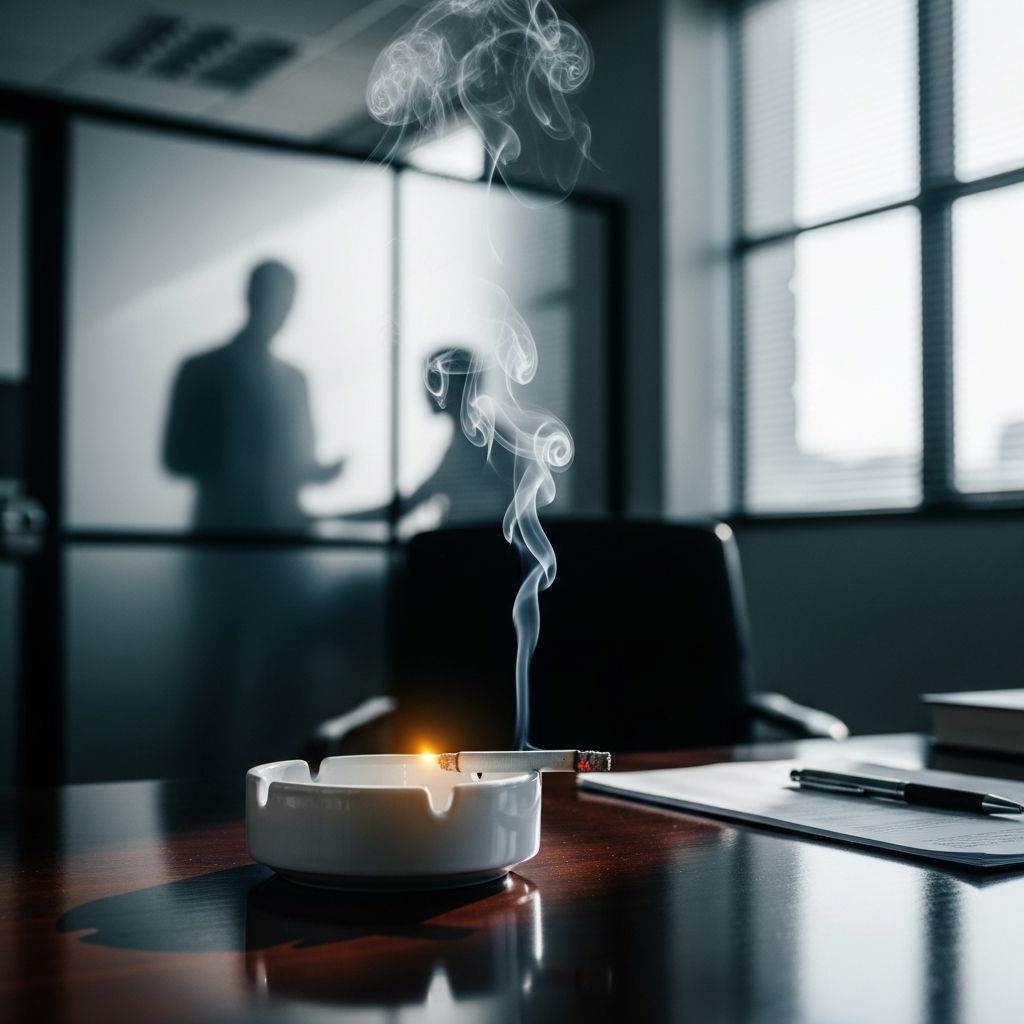
Smoking and other tobacco use have shifted from being a routine part of office culture to a tightly regulated activity governed by health research, public policy, and workplace safety standards. Modern employers must navigate a complex mix of federal guidance, state and local laws, and internal policies that protect workers from secondhand smoke while respecting the legal choices of people who use tobacco.
This guide explains how workplace smoking and tobacco rules work, what they mean for employers and employees, and how organizations can craft policies that are both legally compliant and fair.
Why Smoking and Tobacco Are a Workplace Issue
The regulation of tobacco in the workplace is driven by three core concerns:
- Health and safety: Secondhand smoke (SHS) exposure is a recognized cause of cancer and heart disease, making smoke-free workplaces a public health priority.
- Legal compliance: Many jurisdictions have explicit laws restricting or banning smoking in indoor workplaces, restaurants, and bars.
- Productivity and culture: Smoke breaks, indoor air quality, and tensions between smokers and non-smokers affect morale, absenteeism, and workplace culture.
Because of these factors, employers cannot treat tobacco use as a purely personal matter; it intersects with their duty to provide a reasonably safe working environment and to comply with applicable public health regulations.
The Legal Landscape: How Workplace Smoking Is Regulated
No single nationwide law completely bans smoking in all private workplaces. Instead, tobacco in the workplace is primarily regulated through overlapping layers of law and policy:
- Federal executive orders and regulations for federal buildings and employees
- State and territorial smokefree air laws
- Local ordinances that may go beyond state baselines
- Employer-specific policies that fill gaps and clarify expectations
Federal Protection in Government Workplaces
For federal workplaces, Executive Order 13058 prohibits smoking in most interior spaces of federally owned, rented, or leased buildings, protecting both employees and the public who use those facilities. Federal agencies may designate limited outdoor or separately ventilated areas, but the default rule is that indoor federal workplaces are smoke-free. This order does not directly regulate private employers, but it illustrates the federal stance on secondhand smoke as a workplace risk.
State and Local Smoke-Free Workplace Laws
Most private-sector workplaces are governed by state and local smokefree air laws. According to national cancer surveillance data, as of January 1, 2025, 38 U.S. states plus the District of Columbia and several territories have laws that require one or more categories of venues (non-hospitality workplaces, restaurants, bars, or state-run gambling facilities) to be completely smoke-free. These laws typically:
- Ban smoking in enclosed indoor workplaces and public areas
- Define “smoking” to include cigarettes and often additional products
- Establish distance requirements for smoking near building entrances, windows, or air intakes
- Impose penalties on businesses that do not enforce the rules
Local governments sometimes adopt more protective laws, such as making outdoor patios or certain public spaces smoke-free. In many places, municipalities are the driving force behind comprehensive smokefree environments, especially when state progress slows or stalls.
Coverage Is Widespread but Not Universal
Progress toward smoke-free workplaces has been significant but incomplete. Data from national health surveys show that about 78.8% of workers reported a smokefree worksite rule in 2022–2023, meaning smoking was prohibited in all indoor public or common work areas. However, this still leaves a sizeable minority of workers with partial or no protection, particularly in certain industries or regions.
Secondhand Smoke: Health Risks Employers Must Consider
Secondhand smoke is not merely a nuisance; it is a documented workplace hazard. Public health research consistently shows that SHS exposure increases the risk of heart disease, lung cancer, and other serious conditions in non-smokers. These risks provide the scientific basis for smoke-free laws.
Evidence from smoke-free policy evaluations demonstrates that when workplaces eliminate indoor smoking, measurable improvements quickly follow:
- Sharp reductions in air nicotine and fine particle levels in offices and hospitality venues
- Decreased reported respiratory and eye irritation symptoms among workers
- Lower rates of heart attacks and cardiovascular events at the population level after comprehensive laws take effect
Because the risks are well established, employers that allow indoor smoking may face potential liability if employees allege preventable exposure to a known health hazard, particularly if state law or local ordinances already require smokefree indoor air.
Types of Tobacco and Nicotine Products at Work
Modern workplace policies must address more than traditional cigarettes. Common categories include:
- Combustible products: cigarettes, cigars, pipes, hookah
- Smokeless tobacco: chewing tobacco, snuff, snus
- Electronic nicotine delivery systems: e-cigarettes, vape pens, heated tobacco products
Many state and local laws now define smoking to include e-cigarettes and vaping devices, closing earlier loopholes that allowed indoor vaping in otherwise smokefree spaces. Employers need to review their policies and local statutes to ensure that vaping and other emerging products are clearly covered.
How Employers Typically Regulate Smoking and Tobacco
Even where the law does not require a completely smokefree environment, most employers adopt policies to manage smoking and tobacco use at work. Common elements include:
| Policy Element | Typical Approach | Key Considerations |
|---|---|---|
| Indoor smoking | Prohibited in all indoor areas | Often mandated by state or local law; easier to enforce a total ban than partial rules |
| Outdoor smoking | Permitted only in designated areas | Must respect required distance from doors, windows, and air intakes; need clear signage |
| Vaping and e-cigarettes | Usually treated the same as smoking | Reduces confusion and prevents enforcement gaps; may be specifically addressed in laws |
| Smokeless tobacco | Often allowed, sometimes restricted in customer-facing roles | Spit, waste, and image concerns; some employers ban all tobacco products on premises |
| Breaks for smoking | Subject to normal break rules | Policies should prevent excessive or unfair smoke breaks and ensure equal treatment |
Designated Smoking Areas
Where outdoor smoking is allowed, employers typically:
- Locate areas away from building entrances and air intakes, in line with local distance rules
- Provide clear signage indicating where smoking is permitted or prohibited
- Ensure proper disposal of cigarette butts and related waste
Designated areas are a compromise for employers that are not fully tobacco-free campuses but must still protect non-smokers and public-facing areas from smoke exposure.
Employee Rights and Employer Responsibilities
Workplace smoking disputes often arise from misunderstandings about what the law does—and does not—protect.
There Is No General “Right to Smoke” at Work
In most jurisdictions, employees do not have a legal right to smoke in the workplace. Smoking is typically viewed as a behavior that can be restricted in order to protect health and safety, comply with statutes, or maintain business operations. Employers may:
- Prohibit smoking indoors even if the law would allow designated indoor rooms
- Limit where and when smoking is allowed on the property
- Discipline employees who violate clear, consistently enforced smoking rules
However, employers should apply policies uniformly to avoid claims of discrimination or retaliation unrelated to smoking itself.
Protections for Non-Smoking Employees
Workers exposed to secondhand smoke may have several layers of protection:
- Statutory rights under state or local smokefree laws that require employers to enforce indoor smoking bans
- General workplace safety obligations, which may require employers to address serious health hazards
- Reasonable accommodation requests if a worker has a medical condition aggravated by smoke, depending on disability laws and medical documentation
For example, an employee with severe asthma may ask to be moved away from doorways where smoke drifts in, or to have the employer better enforce distance requirements around building entrances. Whether this is legally required depends on disability law standards and the feasibility of the accommodation.
Off-Duty Tobacco Use
Some employers adopt wellness initiatives or offer incentives to non-smoking employees. In most places, they cannot discipline or fire employees simply for lawful, off-duty tobacco use unless there is a specific state law allowing broader employer control over lifestyle behavior or the employee’s role makes tobacco use safety-critical (for example, in certain healthcare or fire services contexts). Employers considering policies tied to off-the-job smoking should seek legal counsel and confirm whether their state protects lawful off-duty conduct.
Creating a Legally Sound Workplace Smoking Policy
Because laws vary significantly by location, a thoughtful workplace smoking policy should be customized, written, and carefully implemented. Key steps include:
1. Review Applicable Laws and Regulations
- Identify state smokefree air statutes and whether they cover non-hospitality workplaces, restaurants, and bars in your jurisdiction.
- Check for local ordinances that may be stricter than state law, such as 100% smokefree outdoor patios or park spaces.
- Determine how your jurisdiction defines “smoking” and whether e-cigarettes and vaping products are included.
This legal review establishes the minimum floor that your internal policy must meet or exceed.
2. Define Scope and Covered Products
A clear policy should specify:
- Who is covered (employees, contractors, volunteers, clients, visitors)
- What is covered (cigarettes, cigars, pipes, hookah, e-cigarettes, heated tobacco, smokeless tobacco)
- Where the policy applies (indoors, vehicles, outdoor areas, remote worksites)
Defining these terms in plain language reduces ambiguity and helps ensure consistent enforcement.
3. Decide on the Level of Restriction
Employers have options, as long as they meet legal minimums:
- Completely tobacco-free campus: No smoking or tobacco use anywhere on company property, indoors or outdoors.
- Smoke-free indoors, limited outdoor areas: Indoor ban, designated outdoor smoking zones that comply with distance rules.
- Hybrid policies by site: Different approaches depending on location, as long as each site complies with local law.
Public health evidence favors comprehensive smoke-free environments, and organizations prioritizing health outcomes often choose tobacco-free campuses to reduce SHS drift and signal a strong wellness commitment.
4. Integrate Break and Timekeeping Rules
A good policy clarifies how smoking fits into normal rest and meal breaks:
- Smoking is limited to scheduled breaks; extra smoke breaks are not automatically allowed.
- Time away from work for smoking is tracked consistently with other personal breaks.
- Supervisors are trained to manage break-time fairness between smokers and non-smokers.
This helps avoid resentment from non-smoking employees who may feel they have fewer opportunities to step away from their workstations.
5. Communicate and Train
Effective implementation requires clear communication:
- Include the smoking and tobacco policy in employee handbooks and onboarding materials.
- Post signs at building entrances, parking lots, and designated smoking areas.
- Train managers on how to address violations calmly, consistently, and in line with disciplinary procedures.
Employers may also share information about cessation resources, such as quitlines or health plan programs, recognizing that smoke-free rules can prompt attempts to quit.
Policy Enforcement and Common Challenges
Even well-crafted rules will fail if they are not enforced. Typical enforcement strategies include:
- Verbal reminders for first-time or minor violations
- Written warnings for repeated or intentional violations
- Escalating discipline up to termination for continued noncompliance, consistent with general conduct policies
Employers should document incidents and ensure that all employees are treated consistently, regardless of seniority or job role.
Frequent Problem Areas
- Smoking near entrances: Employees or visitors congregating close to doors, allowing smoke to drift indoors despite distance rules.
- Vaping confusion: Workers who assume e-cigarettes are allowed indoors if only “smoking” is mentioned; policies should explicitly address vaping.
- Customer or client behavior: In hospitality or service settings, businesses must decide how they will require or encourage customers to comply with smokefree rules.
- Remote and home-based work: For employees working in clients’ homes or shared vehicles, employers may have additional rules to protect co-workers and clients.
Impact of Smoke-Free Policies on Workers and Businesses
Many employers worry that stricter smoking rules may cause conflict or turnover. Public health evaluations show the opposite: smoke-free policies generally improve conditions for workers without long-term negative impacts on business performance. Benefits can include:
- Reduced exposure to secondhand smoke among employees and customers
- Lower cleaning and maintenance costs from smoke damage and litter
- Fewer fire risks associated with smoking indoors or near flammable materials
- Improved image, especially for health care, education, and family-oriented businesses
At a population level, stronger smoke-free laws are associated with reduced tobacco use, particularly by making smoking less socially acceptable and by prompting more quit attempts.
Frequently Asked Questions (FAQs)
Q: Can my employer completely ban smoking, even outside the building?
Yes, many employers adopt tobacco-free campus policies that prohibit smoking anywhere on company property, including outdoor areas, as long as the policy complies with state and local law and is applied consistently.
Q: Do I have a legal right to smoke during work hours?
Generally no. While adults can lawfully use tobacco outside work, employers may set rules about where and when smoking is allowed on the job, and may limit smoking to standard break times.
Q: Are e-cigarettes and vaping devices treated differently from cigarettes?
Increasingly, no. Many states and municipalities explicitly include e-cigarettes in smokefree air laws, and most employers choose to regulate vaping the same way as traditional smoking to avoid confusion and protect indoor air quality.
Q: What can I do if co-workers smoke near the building and the smoke drifts inside?
You can report the issue to your supervisor or HR, referencing any posted company policy or local law that requires a smoke-free indoor environment or sets minimum distances from entrances. Employers are typically responsible for enforcing these rules.
Q: Can employers offer incentives for non-smokers or higher premiums for smokers?
Many employers use wellness programs and differential health insurance premiums to encourage quitting, but these programs must comply with federal and state anti-discrimination and wellness regulations. Legal advice is recommended before implementing such incentives.
References
- Smokefree Home Rules and Workplace Laws — National Cancer Institute, Cancer Trends Progress Report. 2025-01-01. https://progressreport.cancer.gov/prevention/tobacco/smoke_free_environment
- Who Has the Authority to Ban or Limit Exposure to Secondhand Tobacco Smoke? — U.S. Environmental Protection Agency. 2015-02-18. https://www.epa.gov/indoor-air-quality-iaq/who-has-authority-ban-or-limit-exposure-secondhand-tobacco-smoke
- State Smoking Restrictions for Worksites, Restaurants, and Bars — KFF State Health Facts. 2024-08-01. https://www.kff.org/state-health-policy-data/state-indicator/state-smoking-bans/
- Smokefree Lists and Maps — Americans for Nonsmokers’ Rights Foundation. 2025-01-14. https://no-smoke.org/smokefree-lists-and-maps-january-14-2025/
- The Effect of Smoke-free Policies on Workers’ Health: The Need for Smoke-free Laws — American Cancer Society Cancer Action Network. 2023-06-01. https://www.fightcancer.org/policy-resources/effect-smoke-free-policies-workers%E2%80%99-health-need-smoke-free-laws
Similar Articles








Read full bio of Sneha Tete




