
Smart Shopping Guide for Modern Light Bulbs
Learn how to read bulb labels, compare technologies, and choose efficient lighting that fits your home and budget.
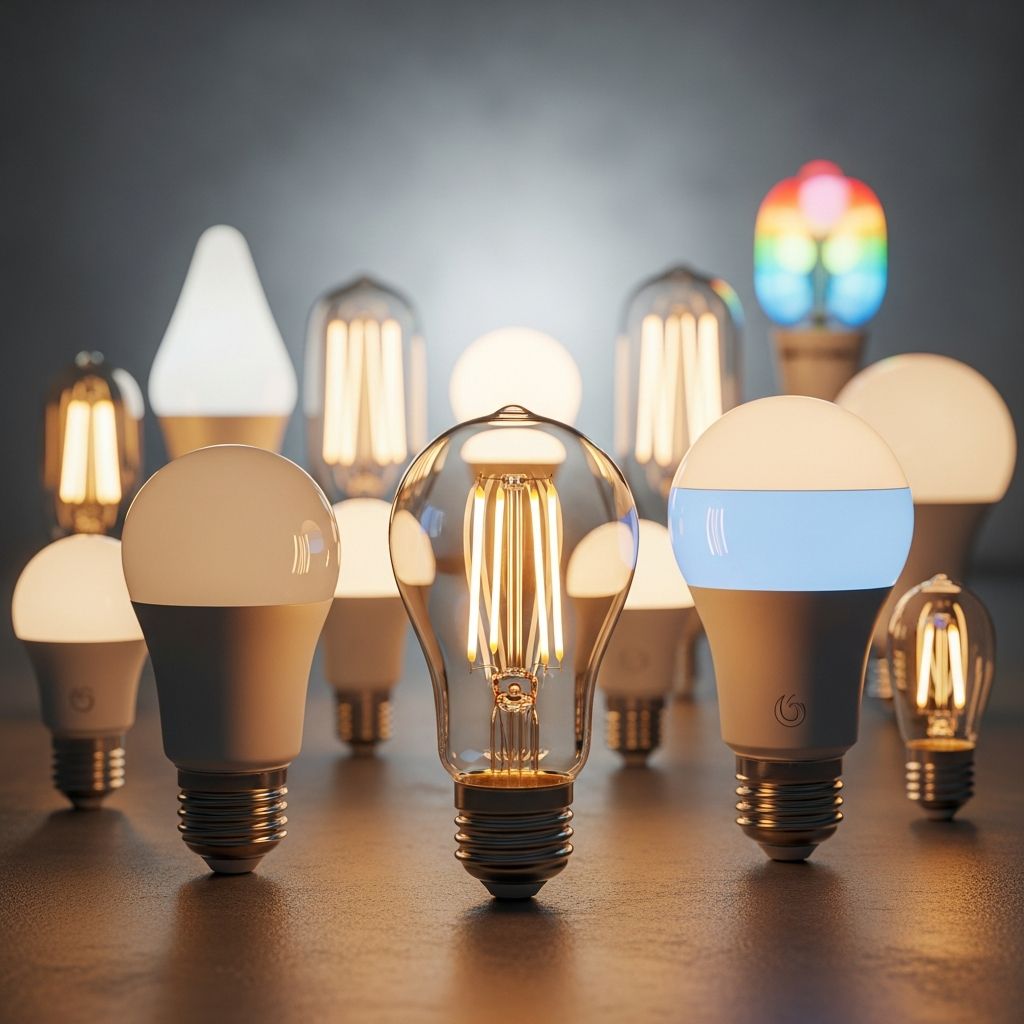
Buying light bulbs used to be as simple as grabbing a 60-watt or 100-watt bulb. Today, the aisle is filled with different technologies, colors, and claims about savings. This guide explains how to read labels, compare options, and choose the right bulb for comfort, cost, and energy savings.
From Watts to Lumens: Rethinking Brightness
For decades, shoppers used watts as a shortcut for brightness: higher watts meant a brighter bulb. Modern efficient bulbs, especially LEDs, use far fewer watts to produce the same light, so watts no longer reflect brightness directly.
Instead, brightness is measured in lumens. The higher the lumen number, the brighter the light output, regardless of bulb type.
| Approx. Lumens | Typical LED Watts | Typical CFL Watts | Typical Incandescent Watts |
|---|---|---|---|
| 450 (dim lamp) | 4–5 W | 8–12 W | 40 W |
| 800 (standard room lamp) | 6–9 W | 13–15 W | 60 W |
| 1100–1300 (brighter kitchen) | 9–13 W | 18–22 W | 75–100 W |
| 1600–1800 (very bright) | 16–20 W | 23–30 W | 100 W+ |
When you replace an old bulb, match the lumens (brightness) rather than the watts. This lets you drop energy use significantly while keeping the same amount of light.
Understanding the Main Types of Light Bulbs
Most household bulbs fall into four broad categories. Knowing how they differ helps you balance energy savings, upfront price, and light quality.
LED (Light Emitting Diode) Bulbs
LEDs are currently the most energy-efficient and long-lasting household bulbs. They can use around 75–90% less energy than traditional incandescents to produce the same light and can last 15–25 times longer in typical use.
- Pros: Very low energy use, very long life, instant full brightness, available in many colors and shapes, run cool to the touch.
- Cons: Higher purchase price than older bulbs (though costs have fallen), quality varies by brand, some low-quality models may flicker or have poor color rendering.
- Best for: Almost all everyday fixtures—lamps, recessed lights, ceiling fixtures, outdoor lighting.
CFL (Compact Fluorescent Lamp) Bulbs
CFLs are twisted or spiral-shaped fluorescent bulbs that fit into standard screw bases. They generally use about 70–75% less power than incandescents for similar brightness and last several times longer.
- Pros: Good energy savings, lower price than many LEDs, widely available.
- Cons: Contain a small amount of mercury and require special cleanup and recycling; some models take time to reach full brightness and can be sensitive to frequent on–off cycles.
- Best for: Fixtures that stay on for longer periods, like kitchens, family rooms, or office areas.
Halogen Bulbs
Halogen bulbs are a more efficient offshoot of traditional incandescent technology. They are about 25–30% more efficient than classic incandescents but still use far more energy than LEDs or CFLs.
- Pros: Excellent color rendering, instant full brightness, often inexpensive, dim well with standard dimmers.
- Cons: Shorter lifespan than LEDs or CFLs, run very hot, only moderate efficiency improvements.
- Best for: Specialty fixtures, task lighting, or where color accuracy is critical and bulbs are used less frequently.
Incandescent Bulbs
Traditional incandescent bulbs generate light by heating a filament until it glows. Much of the electricity becomes heat instead of visible light, making them the least efficient type.
- Pros: Familiar warm light, instant brightness, very low upfront cost.
- Cons: Very high energy use for the light produced, short lifespan, being phased out in many markets in favor of efficient alternatives.
- Best for: Situations where they are already installed and rarely used, but usually not recommended for new purchases.
How to Read a Light Bulb Label
Modern packaging often includes a standardized panel that summarizes key performance details. Learning to scan this information quickly can save time and money.
Key Details to Look For
- Brightness (lumens): Indicates light output. Choose this first to match the light level you want.
- Estimated energy use (watts): Shows how much power the bulb draws. Among bulbs with the same lumens, lower watts mean higher efficiency.
- Estimated yearly cost: Often calculated using a standard number of hours per day and a typical electricity rate; use it to compare bulbs on the same shelf.
- Lifespan (hours or years): Based on assumed daily use (for example, 3 hours/day). Longer life reduces replacement hassle and waste.
- Light appearance (color temperature): Often presented on a scale from warm to cool with numbers like 2700K to 5000K.
- Color Rendering Index (CRI), if shown: Rated from 0–100, with higher numbers meaning colors under that light look more natural and vivid.
- Special features: Phrases such as “dimmable,” “wet location rated,” “enclosed fixture compatible,” or “outdoor use” reveal where the bulb can safely be installed.
Choosing the Right Color and Mood
The color temperature of a bulb dramatically affects how a room feels. It is measured in kelvins (K) and usually falls into three broad categories for home use.
- Warm white (about 2700K–3000K): Slightly yellow light, similar to old incandescent bulbs; good for bedrooms, living rooms, and dining rooms for a cozy feel.
- Neutral or soft white (around 3000K–3500K): Less yellow, more balanced; suitable for hallways, family rooms, and general-use fixtures.
- Cool white or daylight (4000K–5000K+): Whiter or slightly bluish light; works well for task areas like kitchens, garages, workbenches, and home offices where clarity matters.
When in doubt, match new bulbs to ones you already like by checking their color temperature rating on the base or package.
Energy Efficiency and Long-Term Savings
Lighting accounts for a meaningful share of household electricity use, and upgrading bulbs can significantly cut that share without sacrificing comfort. Switching from incandescent to LED lighting can reduce lighting energy consumption by roughly 75%, and the bulbs often last over a decade in normal use.
Comparing Running Costs
To understand long-term value, consider both the purchase price and the energy used over time.
- For a typical 800-lumen bulb (roughly the brightness of an old 60 W incandescent):
- An incandescent might use 60 W.
- A halogen could use around 40–43 W.
- A CFL might use 13–15 W.
- An LED often uses about 8–10 W.
Across many fixtures and hours of use, those wattage differences add up to meaningful bill savings and lower environmental impact. Because LEDs also last longer, you buy and discard far fewer bulbs over time.
Health, Safety, and Environmental Considerations
Lighting choices also touch on safety, comfort, and waste.
Heat and Fire Risk
- Incandescent and halogen bulbs can become very hot in use, which increases fire risk if they are close to flammable materials or enclosed in tight fixtures.
- LEDs and CFLs run much cooler, making them safer to handle after use and reducing heat buildup in small fixtures.
Mercury in CFLs
CFL bulbs contain a small amount of mercury vapor. While they are safe during normal operation, broken or discarded bulbs must be handled carefully. Government energy agencies recommend following specific cleanup instructions for broken CFLs and taking used CFLs to proper recycling facilities instead of throwing them in household trash.
Disposal and Recycling
- LEDs: Do not contain mercury and can often be thrown away with regular trash, though electronics recycling is preferable where available.
- CFLs and other fluorescents: Should be recycled through designated programs or drop-off sites due to their mercury content.
- Halogen and incandescent bulbs: Typically not recyclable in standard glass programs; dispose according to local guidance.
Matching Bulbs to Rooms and Fixtures
Different spaces call for different light levels and colors. Use the guidelines below as a starting point and adjust to your preferences.
Living Rooms and Bedrooms
- Brightness: Moderate (around 450–800 lumens per bulb, depending on the number of fixtures).
- Color: Warm to soft white (2700K–3000K) for a relaxing feel.
- Type: LED bulbs for efficiency, especially if lights are used for many hours each day.
- Options: Consider dimmable LEDs to adjust mood lighting.
Kitchens and Work Areas
- Brightness: Higher; 800 lumens or more in main fixtures, with extra task lighting for counters.
- Color: Neutral or cool white (3000K–4000K+) to improve visibility.
- Type: LEDs or quality CFLs that provide consistent, bright light.
Bathrooms
- Brightness: Moderate to bright around mirrors for grooming.
- Color: Neutral white that renders skin tones accurately; check CRI ratings when possible.
- Type: LEDs rated for damp locations in enclosed fixtures where needed.
Outdoor Fixtures
- Durability: Choose bulbs labeled for outdoor or wet locations.
- Performance: LEDs perform well in cold conditions and turn on instantly for security lighting.
- Control: Consider bulbs or fixtures with built-in motion sensors or dusk-to-dawn controls to save energy.
Using Dimmers, Timers, and Smart Controls
Controls can improve comfort and reduce electricity use, but compatibility matters.
- Dimmers: Only use bulbs clearly labeled as “dimmable” with dimmer switches; many LEDs and CFLs require compatible dimmers to avoid flicker or humming.
- Timers and smart plugs: Allow lights to turn on and off automatically, which is useful for security lighting or for making sure lights are not left on all night.
- Smart bulbs: Some LEDs include built-in wireless control so you can adjust brightness and color from an app or voice assistant.
Practical Checklist for the Store Aisle
When you are standing in front of a shelf full of options, use this quick list to narrow down the choices:
- Match the base type and shape (for example, standard screw base vs. candelabra).
- Decide the brightness in lumens you want (often 450–800 lumens for table lamps).
- Choose an energy-efficient technology—generally LED as a first choice.
- Pick a color temperature (warm, neutral, or cool) that suits the room.
- Check special notes such as “dimmable,” “enclosed fixture rated,” or “for outdoor use.”
- Compare the estimated yearly energy cost and lifespan between similar bulbs.
Frequently Asked Questions (FAQs)
Q: How do I know what lumen level to buy to replace my old 60-watt bulb?
A: A traditional 60-watt incandescent produces about 800 lumens. Look for any bulb—LED, CFL, or halogen—with a brightness near 800 lumens if you want a similar light level.
Q: Are LED bulbs really worth the higher upfront price?
A: In most homes, yes. LEDs can cut lighting energy use by roughly three-quarters compared with incandescents and can last many years, so you usually recover the extra cost through lower bills and fewer replacements.
Q: Is it safe to use CFL bulbs in any fixture?
A: CFLs are safe when used as directed, but they do not suit every fixture. Check packaging for notes about enclosed fixtures or dimmers, and handle broken or burned-out CFLs carefully due to their small mercury content.
Q: Can I put LED bulbs on my old dimmer switch?
A: Only if the LEDs are labeled as dimmable and the dimmer is compatible with LED loads. Incompatible combinations can cause flicker, reduced dimming range, or buzzing. Upgrading to a modern dimmer designed for LEDs usually solves these issues.
Q: What should I do with burned-out CFLs and other fluorescent bulbs?
A: Do not throw them in regular trash because of their mercury content. Instead, follow local guidelines and use authorized drop-off or recycling programs recommended by energy or environmental agencies.
References
- Comparing Light Bulbs — U.S. Department of Energy, Office of Energy Efficiency and Renewable Energy. 2012-08-01. https://www1.eere.energy.gov/education/pdfs/efficiency_comparinglightbulbs.pdf
- LED Light Bulbs: Comparison Charts — Eartheasy. 2023-05-10. https://learn.eartheasy.com/guides/led-light-bulbs-comparison-charts/
- Energy-Efficient Light Bulbs: LED vs CFL vs Incandescent Compared — PowerWizard. 2024-02-01. https://www.powerwizard.com/blog/a-breakdown-of-energy-efficient-light-bulbs/
- What Is the Most Energy Efficient Light Bulb? — BKV Energy. 2025-01-15. https://bkvenergy.com/blog/most-energy-efficient-light-bulb/
- Types of Light Bulbs for Energy Efficiency — Mister Sparky. 2025-01-05. https://www.mistersparky.com/pueblo/about-us/blog/2025/january/types-of-light-bulbs-for-energy-efficiency/
- CFL vs LED: Your Guide to Energy Efficient Light Bulbs — Nexamp. 2023-07-18. https://www.nexamp.com/blog/cfl-vs-led-your-guide-to-energy-efficient-light-bulbs
Similar Articles








Read full bio of Sneha Tete


