
Smart Shopping at “Going Out of Business” Sales
Learn how to spot real deals, avoid fake liquidation claims, and protect your rights at going out of business sales.
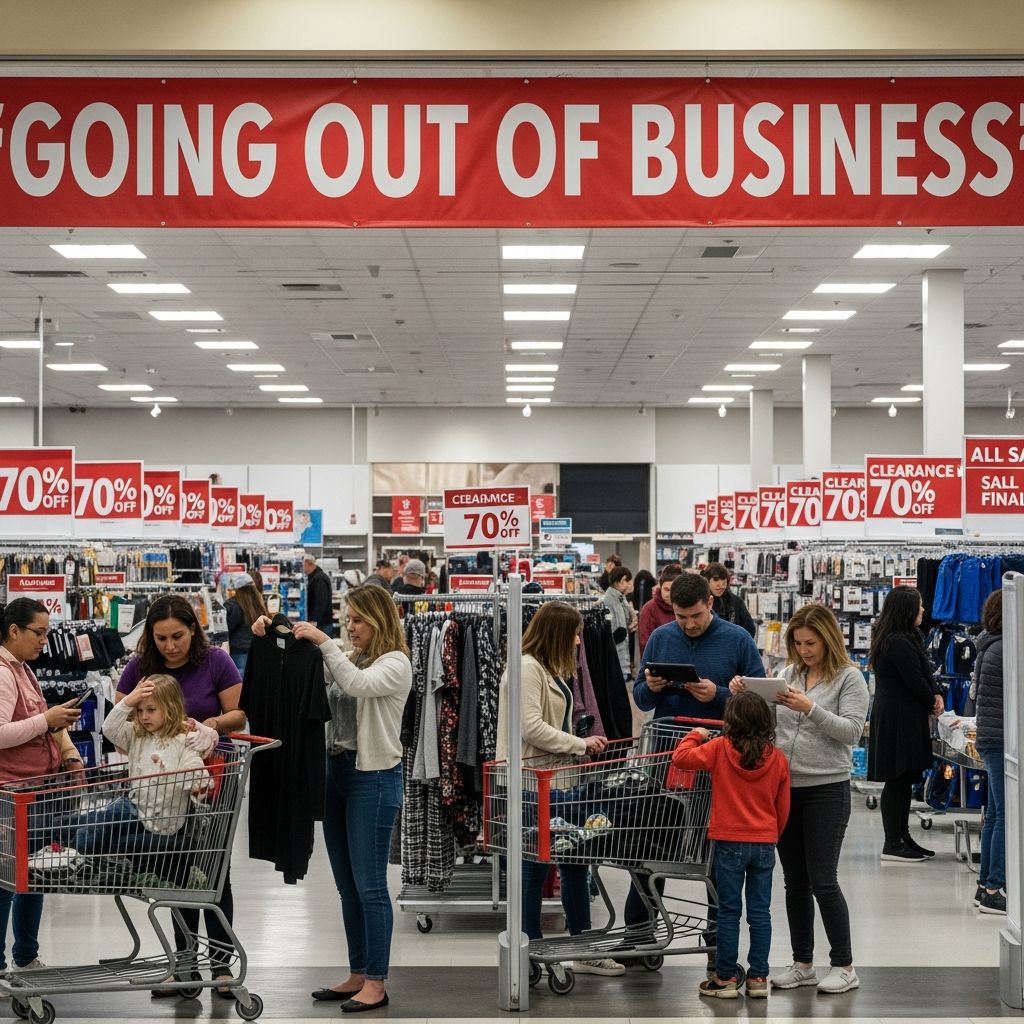
Signs that shout “Going Out of Business!” or “Everything Must Go!” can make almost any shopper feel like they have to act fast or miss out. But these sales do not always mean genuine bargains or even a real closure. This guide explains how these events work, what the law expects from sellers, and how you can protect yourself from misleading practices while still finding fair deals.
What a True Going Out of Business Sale Really Means
In simple terms, a genuine going out of business sale happens when a store is permanently closing and selling off its remaining inventory for the last time. Many states and local governments treat these sales differently from ordinary promotions and may require special licenses or filings from the seller.
Key features of a legitimate going out of business sale often include:
- The business is shutting down permanently at that location, not just remodeling or changing ownership.
- The sale usually runs for a limited, clearly stated period.
- New stock is generally not added just to keep the sale going, except in limited circumstances allowed by local law.
- Advertisements do not mislead shoppers about prices, discounts or availability of goods.
Federal law broadly prohibits deceptive advertising and unfair practices that misrepresent how long a sale will last or how large a discount really is, and many states echo these standards in their own consumer protection statutes.
Why These Sales May Not Be the Bargain You Expect
Shoppers often assume that a closing store guarantees rock-bottom prices. That is not always true. In fact, some liquidation events are run by professional liquidators who carefully manage prices to maximize profit, not necessarily to deliver the lowest price to consumers.
Common reasons the “deal” may disappoint include:
- Discounts based on inflated “regular” prices – Some sellers or liquidators calculate percentage-off claims from a manufacturer’s suggested retail price (MSRP) that is much higher than what the store used to charge before the sale.
- Early days can be expensive – Some liquidation strategies start with modest discounts and deepen them only after shoppers have cleared out the most desirable items.
- Limited comparison shopping – The urgency suggested by huge banners can push people to skip checking other stores or reputable online sellers for better prices.
- All sales final – Prices might not be dramatically lower, yet you may lose the ability to return or exchange items.
To see whether a sale truly benefits you, it helps to approach these events with the same skepticism and price awareness you would use for any major purchase.
How to Verify Whether the Store Is Really Closing
Not every “Going Out of Business” announcement means the company is actually leaving the market. Sometimes the business is only closing one location, changing names, or rebranding under new ownership. Other times, unscrupulous sellers may exaggerate or fabricate the urgency.
Steps you can take to check:
- Look for local licensing or permit notices – Some towns and states require filing a special license or notice to hold a closing or liquidation sale. You may be able to confirm this with a city or county consumer affairs office.
- Check the business’s website and social media – Real closures are usually announced across multiple channels, not just on storefront signs.
- Search for news or court records – In larger bankruptcies or national chain closures, media and court filings often document the company’s status.
- Ask clear questions in the store – You can politely ask employees or managers whether the entire company or just that location is closing and how long the sale is expected to last.
Although the Federal Trade Commission (FTC) focuses more on deceptive marketing than on local licensing, misrepresenting a temporary promotion as a final closing could raise concerns under federal and state consumer protection laws.
Reading Discounts and Pricing Claims Carefully
Sales tags can be confusing, especially when they compare current prices to a “regular price” or MSRP that you never actually saw in practice. Because deceptive pricing is a known problem, the FTC and state law enforcement agencies regularly challenge false or inflated reference prices.
| Pricing Signal | What It Might Mean | What You Should Do |
|---|---|---|
| “50% off MSRP” | Discount based on manufacturer’s list price, not the store’s usual selling price. | Compare with pre-sale prices or other retailers to see if you are truly saving. |
| “Up to 80% off” | Only some items may reach 80%; many may be discounted far less. | Check the actual price on the item you want, not the biggest number on the sign. |
| “Everything must go” | Signals liquidation, but doesn’t automatically guarantee the lowest market price. | Use price comparison tools or apps before buying high-ticket items. |
| “No reasonable offer refused” | May suggest negotiability, but not all staff can authorize deep discounts. | Politely ask what range of negotiation is allowed before assuming flexibility. |
Understand Return, Exchange, and Warranty Policies
In many closing sales, store policies change sharply. Liquidators or owners may limit or completely eliminate returns. Under federal law, sellers must not misrepresent refund or cancellation policies in their advertising and sales practices, and in some settings must clearly disclose when all sales are final.
Before you buy, make sure you know:
- Is there any right to return or exchange? If the store advertises a no-refund or final sale policy, it must clearly disclose that before you pay, especially in remote or telemarketing transactions.
- What happens to existing gift cards? Some businesses stop honoring gift cards once a liquidation begins, while others accept them for a limited time.
- Are warranties affected? Manufacturer’s warranties may still apply, but store warranties or service plans might end if the business closes.
- Will third-party repair or service be available? If you are buying appliances or electronics, check whether independent repair networks are available.
For door-to-door or off-premises sales, the FTC’s Cooling-Off Rule gives consumers three business days to cancel certain purchases, but this rule generally applies to sales at locations like your home or a temporary event site, not to ordinary in-store shopping.
Gift Cards, Credits, and Coupons During Liquidation
Gift cards and store credits can be particularly tricky during a going out of business sale. Once a company enters bankruptcy or liquidation, whether cards are honored depends on the court and the status of the business. In previous large retail bankruptcies, courts have at times allowed limited redemption periods for gift cards, but not guaranteed full value for every customer.
Practical tips:
- Use gift cards or credits as soon as you learn a store is closing or restructuring.
- Check the company’s official announcements, website, or court filings for deadlines to redeem existing balances.
- Understand that partial fulfillment or deadlines are common when a company is under court supervision.
- Save receipts and documentation of gift card purchases in case you need to file a claim in a bankruptcy proceeding.
Protecting Yourself Before and After You Buy
Approaching a going out of business sale like any other significant purchase decision will help you avoid buyer’s remorse and financial loss.
Before You Shop
- Set a realistic budget and treat the sale as an opportunity, not a mandate to spend.
- Research products and normal prices using reputable retailers and price-tracking tools.
- Prioritize necessities over impulse buys, especially when returns may not be available.
- Read sale notices carefully for exclusions, deadlines, and special rules.
At the Store
- Inspect merchandise closely, particularly open-box or display items that may be damaged or missing parts.
- Confirm the final price at the register, especially where signs list complex discounts (“take an extra 20% at checkout”).
- Ask about warranties and returns in writing if the purchase is expensive or complicated.
- Keep detailed receipts in case you later discover defects or misrepresentations.
After the Purchase
- Test items quickly, especially electronics and appliances, while any limited return rights might still exist.
- Register manufacturer warranties promptly and store proof of purchase.
- Monitor your credit or debit statements to ensure charges match your receipts.
- Act fast if you spot a problem by contacting the seller, your card issuer, or relevant agencies.
Recognizing Misleading or Abusive Practices
While many closing sales operate honestly, others may cross the line into misrepresentation or unfair pressure. Federal and state laws generally prohibit deceptive claims about price reductions, inventory levels, or a consumer’s rights to refunds or cancellations.
Red flags to watch for include:
- Signs claiming a store is closing “tomorrow” or “this weekend only” that remain for weeks or months.
- “New” merchandise being constantly brought in even though the store says it is liquidating existing inventory.
- Salespeople telling you that you have no right to cancel when a law like the Cooling-Off Rule might apply to the type of sale (for example, a high-dollar door-to-door transaction at your home).
- Price tags showing a dramatic markdown from a reference price that no one else in the market charges.
If you encounter this kind of behavior, document what you see and keep copies of ads, receipts, and written policies. These records can be important if you later file a complaint.
What to Do If You Think You Were Misled
If a going out of business sale does not match its advertising or you discover that critical information was hidden or misrepresented, you have several options.
- Contact the store or liquidator first and explain the issue. Keep notes of any conversations and copies of emails.
- Dispute the charge with your card issuer if you paid by credit card and believe the seller engaged in deceptive practices. Card networks often allow disputes for goods not received or significantly not as described.
- Report concerns to consumer protection agencies such as your state attorney general, local consumer affairs office, or the FTC. Complaints help enforcement agencies identify patterns and potential violations.
- Look into small claims court if the amount of money is significant and you cannot resolve the problem directly.
Special Considerations for Off-Premises and High-Pressure Sales
Some closing or liquidation events are held in temporary venues like hotel ballrooms, rented storefronts, or traveling sales shows. When sellers meet you away from their regular place of business, different rules can apply. The FTC’s Cooling-Off Rule gives consumers a three-business-day period to cancel certain sales of $25 or more at their home and $130 or more at temporary locations, provided the transaction meets specific criteria.
For these kinds of sales:
- Ask whether the sale is taking place at a temporary location or the seller’s normal place of business.
- Check whether the seller has given you written notice of your right to cancel, if the Cooling-Off Rule applies, and cancellation forms as required.
- Understand that some items and types of transactions are exempt from the rule, including certain real estate, insurance, and securities sales.
Frequently Asked Questions (FAQs)
Q: Are prices always lower during a going out of business sale?
No. Some items may be marked down significantly, while others are priced the same or even higher than before if discounts are calculated from inflated reference prices. Always compare prices with other reputable sellers before buying.
Q: Can a store call it a “going out of business” sale if it is just remodeling or moving?
States vary, but many require that a going out of business sale only be advertised when the store is genuinely closing or permanently ending operations at that location. Misleading claims can be treated as deceptive advertising under state and federal law.
Q: Do I have a right to change my mind after buying at a going out of business sale?
In a normal retail store, there is no automatic federal right to cancel just because you regret the purchase; your rights depend on the store’s return policy. In some off-premises or door-to-door sales, the FTC’s Cooling-Off Rule may give you three business days to cancel, but it does not generally cover standard in-store purchases.
Q: What happens to warranties when a store closes?
Manufacturer warranties typically continue even if the store that sold you the product shuts down, as long as the manufacturer is still operating. Store-specific service contracts, extended warranties, or protection plans may end if the retailer or third-party administrator goes out of business. Always read the warranty provider’s name and terms before you buy.
Q: How can I report a suspicious going out of business sale?
You can report concerns to your state attorney general, local consumer protection office, or to the Federal Trade Commission through its official complaint channels. Include copies of advertisements, receipts, and any written policies you received; these documents help investigators evaluate whether the seller violated advertising or consumer protection laws.
References
- Planning a “Going Out of Business Sale”? — Frankfurt Kurnit Klein & Selz PC. 2019-12-17. https://advertisinglaw.fkks.com/post/102fvh8/planning-a-going-out-of-business-sale
- Complying with the Telemarketing Sales Rule — Federal Trade Commission. 2016-06-01 (updated guidance). https://www.ftc.gov/business-guidance/resources/complying-telemarketing-sales-rule
- Cooling-off Period for Sales Made at Home or Other Locations (16 CFR Part 429) — Federal Trade Commission. 2015-01-01 (rule summary). https://www.ftc.gov/legal-library/browse/rules/cooling-period-sales-made-home-or-other-locations
- Buyer’s Remorse: The FTC’s Cooling-Off Rule May Help — Federal Trade Commission. 2024-04-12. https://consumer.ftc.gov/articles/buyers-remorse-ftcs-cooling-rule-may-help
- Business Guidance — Federal Trade Commission. 2024-10-01 (portal updated periodically). https://www.ftc.gov/business-guidance
Similar Articles








Read full bio of medha deb


