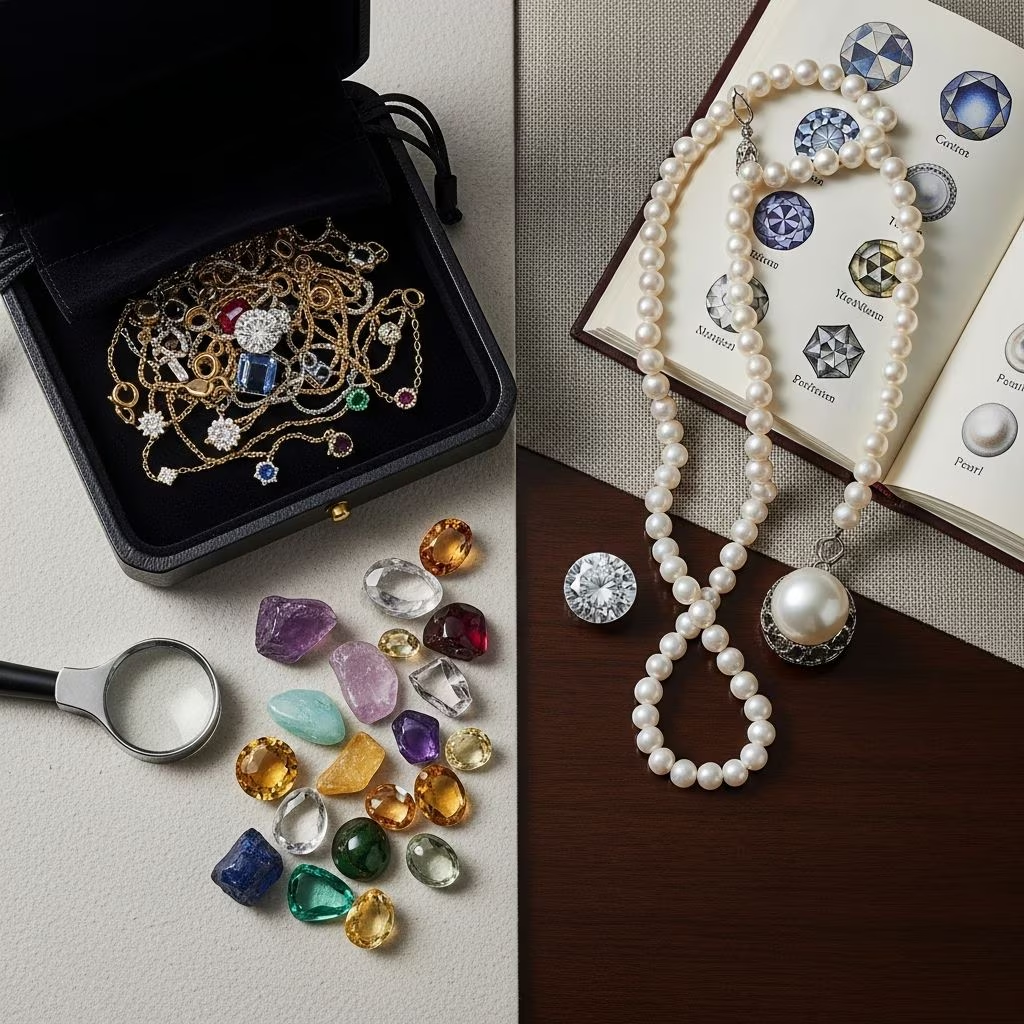
Jewelry can mark major life events, celebrate relationships, or simply express your personal style. But once you start shopping for gemstones, diamonds, and pearls, the wide range of prices, descriptions, and quality claims can be confusing. Understanding the basic terminology, common treatments, and your rights as a buyer helps you compare pieces fairly and avoid paying more than an item is worth.
This guide explains what you need to know before you buy, including how to evaluate stones, what disclosures to look for on labels and receipts, and how to recognize when you should walk away from a sale.
1. Know What You Are Buying: Natural, Lab-Created, and Imitation
Gemstones, diamonds, and pearls on today’s market can come from different origins, and those origins have a major impact on price. Each type should be clearly described by the seller so that you know what you are paying for.
1.1 Core categories of stones
| Type | Origin | Typical Price Range | Key Points for Buyers |
|---|---|---|---|
| Natural | Formed in the earth or in living organisms without human intervention | Usually highest | Rarity and natural formation drive value; often accompanied by laboratory reports for high-value stones. |
| Lab-created | Grown in laboratories using controlled processes that replicate natural conditions | Lower than natural of comparable appearance | Chemically and physically similar to natural stones but must be disclosed as lab-created or synthetic. |
| Imitation | Made from unrelated materials designed only to look like other gems | Lowest | Appearance can mimic expensive stones, but composition and value are very different; must be accurately described and not sold as the real gem. |
1.2 How origin affects value
Natural stones are rare products of geology or biology. Lab-created gems are made in factories, so they are more abundant and usually cost less even when they show excellent color and clarity. Imitation stones may look convincing at a glance but generally have low resale value.
When you shop, pay close attention to wording such as:
- “Synthetic” or “lab-created” for diamonds and colored stones that share the same basic composition as their natural counterparts.
- “Simulated” or “imitation” for materials that only resemble another gem in appearance.
- “Cultured” pearls for pearls formed when people intentionally stimulate pearl growth inside mollusks.
2. Understanding Common Gemstone and Pearl Treatments
Many gemstones and pearls are treated to improve color or clarity. Treatments can be legitimate industry practice, but they should never be hidden from buyers, especially when the effects are not permanent or require special care.
2.1 Typical gemstone treatments
Ask the seller whether a stone has been treated and how. Important treatment types include:
- Bleaching – Used to lighten or whiten some gemstones and pearls, giving them a more uniform appearance.
- Dyeing – Adds or evens out color in gems and pearls. Strong dyes may fade or respond poorly to chemicals and sunlight over time.
- Fracture filling – Fills surface-reaching cracks with glass or plastic to make stones look clearer and less damaged. Extreme heat or ultrasonic cleaning can sometimes damage these fillings.
- Impregnation with oils, waxes, or resins – Used for stones like emeralds to conceal tiny fractures and improve clarity. The effect may diminish over time, especially with exposure to chemicals or heat.
- Diffusion – Adds color mainly to the surface of colorless or lightly colored stones; the center may remain almost colorless.
- Irradiation – Alters or intensifies color in some diamonds, gemstones, and pearls; may or may not be followed by heat treatment.
Sellers should tell you when a treatment:
- Is not permanent or may change in appearance over time.
- Requires special care (for example, avoiding heat, ultrasonic cleaners, or harsh chemicals).
- Significantly affects value compared with an untreated stone of similar appearance.
2.2 Pearl-specific enhancements
Most pearls sold today are cultured and may also be treated for color and uniform appearance.
Common processes include:
- Bleaching to achieve a bright white or even color.
- Dyeing to create black, gold, or fashion colors, or to make color more uniform in a strand.
Because pearls are organic and relatively soft, certain treatments or cleaning methods can easily damage them. Professional organizations recommend gentle care, such as soft cloth wiping and avoiding chemicals like hairspray or perfume directly on pearls.
3. Choosing a Trustworthy Jewelry Seller
Whether you buy online or in a store, the seller’s reputation is as important as the stone you choose. Taking a few steps before you pay can substantially lower your risk of misrepresentation or disappointing quality.
3.1 How to research sellers
- Ask family, friends, or coworkers which jewelry stores or websites they trust and why.
- Search the business name plus terms like “complaints”, “scam”, or “reviews” to see other buyers’ experiences.
- Check whether the jeweler belongs to recognized trade organizations that require ethical standards and ongoing education.
3.2 Policies and paperwork
Before you buy, locate and read:
- Return and refund policies – Know how long you have to return an item, whether there are restocking fees, and what conditions apply.
- Warranty or service policies – Understand what is covered, such as prong tightening, cleaning, or stone replacement.
Ask the seller to document, in writing on the sales receipt or a separate document:
- Type of stone, including whether it is natural, lab-created, or imitation.
- Any known treatments and special care instructions.
- Metal type and purity (for example, 14K gold or platinum).
- For diamonds or high-value colored gems, reference to any grading or identification report and the lab that issued it.
4. Buying Diamonds: Quality, Weight, and Documentation
Diamonds are usually priced based on a combination of quality factors often called the “Four Cs”: color, cut, clarity, and carat weight. Learning the basics allows you to prioritize what matters most to you and compare stones more accurately.
4.1 The main quality factors (Four Cs)
- Color – Many white diamonds are graded on a scale established by the Gemological Institute of America (GIA), running from D (colorless) to Z (light color). The less color a diamond shows, the higher its typical value, all else being equal.
- Cut – Refers to how well a diamond has been shaped and finished, not its outline shape (round, oval, etc.). Cut quality includes proportions, symmetry, and polish, and strongly affects how much a diamond sparkles.
- Clarity – Describes the presence of internal features (inclusions) or surface irregularities (blemishes). On GIA’s scale, clarity ranges from Flawless to I3 (Included), with more visible or numerous imperfections typically reducing value.
- Carat weight – Measures how much a diamond weighs. One carat is 0.2 grams. Two diamonds of the same weight can still differ greatly in price if their color, cut, or clarity are different.
4.2 Understanding diamond weight descriptions
Carat weight may appear in decimal form or as a fraction. These descriptions represent specific ranges:
- When given as a decimal (for example, 0.30 carat), the number should be accurate when rounded to the last decimal place. A diamond labeled 0.30 carat might actually weigh between 0.295 and 0.304 carat.
- When given as a fraction (for example, 1/2 carat), the stone typically falls within a defined range, such as 0.47–0.54 carat. If a seller uses fractions, they should clarify that the number is not exact and provide the weight range.
4.3 Grading reports and who issues them
Many jewelers offer grading reports from independent laboratories for diamonds and, increasingly, for other gemstones. These reports describe quality characteristics but do not guarantee value. Reputable labs use standardized methods and do not buy or sell diamonds themselves.
When reviewing a report, check:
- The name of the laboratory and its reputation in the trade.
- Whether the report lists color, clarity, cut grade, and measurements consistent with what the seller has told you.
- Any comments on treatments or whether the stone is natural or lab-created.
Keep copies of all reports and receipts for insurance, resale, or future identification.
5. Pearls: Natural, Cultured, and Imitation
Pearls are unique because they originate in living mollusks. Today, most pearls sold in jewelry are cultured: people introduce a nucleus or tissue inside the mollusk to encourage pearl formation. Natural pearls, which form without any human involvement, are rare and often very expensive.
5.1 Types of pearls you may encounter
- Natural pearls – Form spontaneously in the wild without human intervention. They are uncommon and typically verified through specialized testing, such as X-ray analysis of internal growth structures.
- Cultured pearls – Produced when technicians implant a bead or tissue into a mollusk, which then deposits nacre around it. Most jewelry pearls are cultured.
- Imitation or shell pearls – Often made from glass or shell coated with a pearlescent substance to imitate real pearls. They are generally smooth when rubbed together, while real pearls feel slightly gritty due to the nacre.
5.2 Key quality factors for pearls
Industry and gemological organizations emphasize several core factors when evaluating pearls:
- Luster – The sharpness and intensity of reflections on the pearl’s surface. High-quality pearls often look almost mirror-like and are considered more valuable.
- Surface – Fewer visible spots, pits, or bumps generally indicate higher quality and higher price.
- Shape – Perfectly round pearls are usually rare and expensive, while baroque or off-round shapes can offer interesting looks at lower prices.
- Size – Measured in millimeters. Larger pearls are less common and typically more valuable, assuming similar luster and surface quality.
- Matching – For strands and earring pairs, close matching in size, color, and luster usually commands a premium.
5.3 Practical buying tips for pearl jewelry
- Ask whether pearls are natural, cultured, or imitation, and have that information written on your receipt.
- Inquire about any treatments such as bleaching or dyeing, and whether they affect care or durability.
- Inspect necklace strands: knots between pearls help prevent loss if the strand breaks and protect pearls from rubbing directly against each other.
- Follow gentle care guidelines: put pearls on after applying cosmetics and perfume, and wipe them with a soft cloth after wearing.
6. Lab-Created vs. Mined Diamonds and Gems
Lab-created diamonds and colored stones have become more common, offering options that may be more affordable or better align with personal values. These stones share many physical and chemical characteristics with natural gems but must be disclosed as lab-created.
6.1 How they are similar and different
- Similarity: Many lab-created gems are chemically and physically identical to natural stones, so standard gemological tests sometimes require advanced instruments to distinguish them.
- Difference: Their man-made origin affects rarity and market value. Lab-created stones typically cost less than natural gems of similar appearance and do not have the same geological history.
When shopping, do not assume that a diamond or colored stone is natural just because it looks like one. Ask the seller what testing they use to identify lab-created products and what documentation they can provide.
7. Protecting Yourself: Questions to Ask Before You Pay
Careful buyers ask specific, written questions. If a seller is unwilling to answer clearly or refuses to document important details, consider another jeweler.
7.1 Essential questions for any jewelry purchase
- Is the stone natural, lab-created, or imitation?
- Has the stone or pearl been treated? If yes, is the treatment permanent, and does it require special care?
- Does this item come with a grading or identification report? Which lab issued it, and can I see it?
- What is your return policy and how is it written?
- How do you recommend I care for this item over time?
Frequently Asked Questions (FAQs)
Q1: How can I tell if a gemstone has been treated?
A: Many treatments are not visible to the naked eye, so rely on disclosure and documentation. Ask the seller directly what treatments were used and request this information in writing. For high-value pieces, consider independent evaluation by a qualified gemological laboratory.
Q2: Are lab-created diamonds real diamonds?
A: Lab-created diamonds have essentially the same crystal structure and chemical composition as mined diamonds, but they are produced in laboratories rather than in the earth. They must be clearly identified as lab-created, and their prices are typically lower than comparable natural diamonds due to their different origins.
Q3: What is the most important factor when buying a pearl?
A: Experts often highlight luster—the brightness and sharpness of reflections—as the most important single factor in a pearl’s beauty and value, followed by surface quality and size.
Q4: Do all diamonds need a grading report?
A: Not every diamond on the market comes with a lab report, but for significant purchases, especially engagement rings or larger stones, a grading report from a reputable gemological laboratory provides independent documentation of quality characteristics and helps you compare stones more reliably.
Q5: What should I keep with my jewelry for the future?
A: Store copies of receipts, grading or identification reports, and any written disclosures about treatments or origin. This documentation can support insurance claims, resale, or repairs and helps verify what you originally purchased.
References
- Buying Gemstones, Diamonds, and Pearls — Federal Trade Commission. 2023-06-08. https://consumer.ftc.gov/buying-gemstones-diamonds-pearls
- How to Buy Pearls — American Gem Society. 2022-05-01. https://www.americangemsociety.org/birthstones/june-birthstones/how-to-buy-pearls/
- Pearl Buying Guide — Jewelers of America. 2021-09-15. https://www.jewelers.org/buying-jewelry/jewelry-buying-guides/pearl-buying-guide
- Diamond 4Cs and Quality Factors — Gemological Institute of America (GIA). 2020-11-10. https://www.gia.edu/diamond-quality-factor
- Diamonds: Properties and Occurrence — U.S. Geological Survey. 2019-02-21. https://www.usgs.gov/centers/national-minerals-information-center/diamond-statistics-and-information