
Skiplagging: Smart Savings or Airline Enemy?
Unlock the truth about skiplagging: save hundreds on flights or face airline backlash and bans?
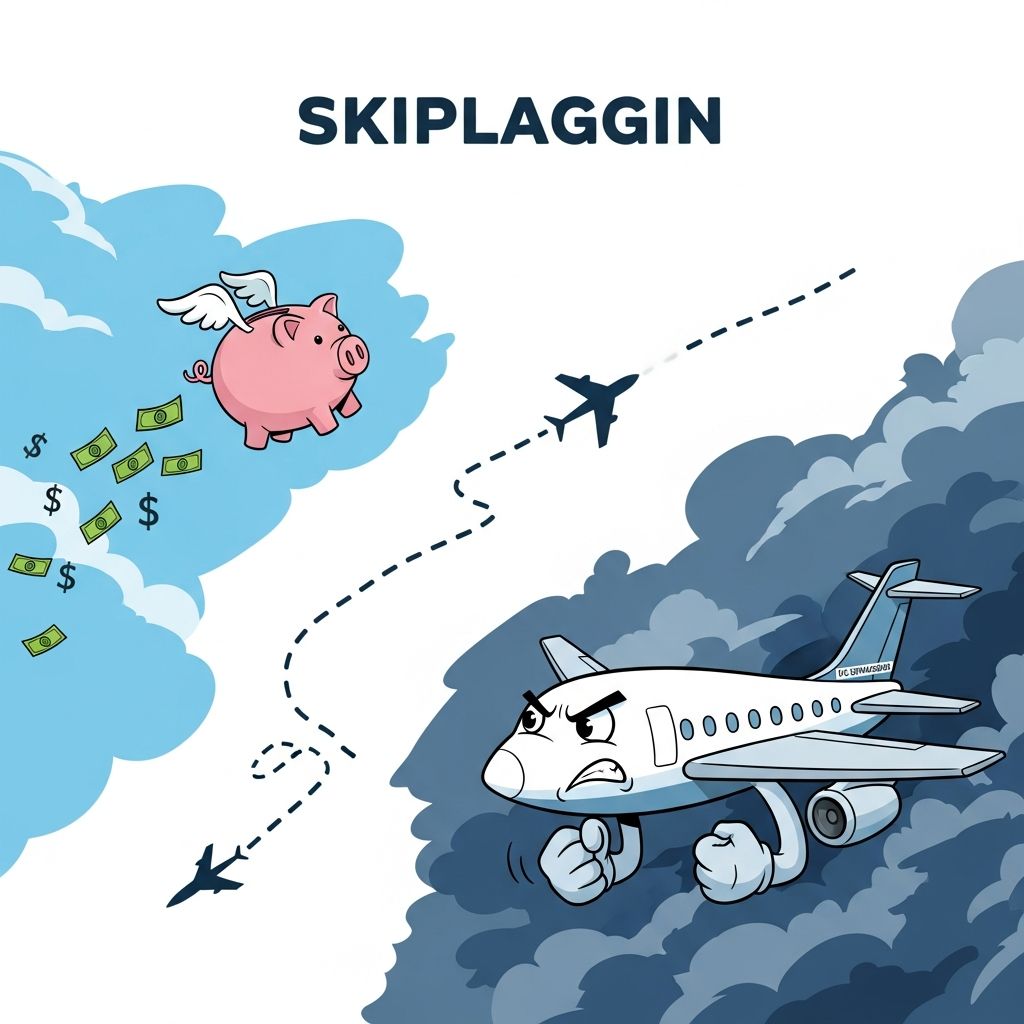
Airline tickets often carry hefty price tags, but savvy travelers have turned to a tactic known as skiplagging—or hidden city ticketing—to slash costs dramatically. This method involves booking a flight with a layover, then intentionally exiting at the layover city instead of continuing to the final destination listed on the ticket. While it can save hundreds of dollars, airlines view it as a direct threat to their revenue models, leading to aggressive countermeasures and potential blacklisting for offenders.
Understanding the Mechanics of Skiplagging
Skiplagging exploits discrepancies in airline pricing algorithms. Airlines employ dynamic pricing, adjusting fares based on demand, route popularity, and booking patterns. A nonstop flight from New York to Chicago might cost $500, while a connecting itinerary via Denver totals $200—even if the first leg matches the direct route exactly. By deplaning in Denver and skipping the second leg, passengers pocket the savings.
This practice thrives because airlines segment markets into fare buckets: low for price-sensitive leisure travelers, high for business routes. Nested booking policies restrict low fares on premium routes like weekends or peak seasons, but creative routing through less popular hubs unlocks cheaper buckets. For instance, flights to vacation spots stay in high-price categories during summer, but midweek connectors dip lower.
How Airlines Price Tickets: The Dynamic Pricing Engine
Modern airline pricing is a sophisticated blend of AI, data analytics, and real-time monitoring. Carriers track competitor fares hourly, using revenue management systems to match or undercut rivals automatically. Predictive models forecast demand from historical data, events, weather, and even browsing behavior, setting prices weeks ahead.
- Competitor Monitoring: Tools scrape rival sites continuously, enabling instant adjustments to protect market share.
- Personalization: Cookies and CRM data tailor prices—returning customers or mobile users might see varied rates based on perceived willingness to pay.
- Geo and Device Pricing: Fares fluctuate by location or device, with region-specific adjustments for currency and demand.
- Bucket System: Seats fill from low to high fare classes; oversold flights prioritize high payers.
These strategies maximize revenue but create arbitrage opportunities like skiplagging, where mismatched pricing across itineraries allows exploitation.
Real-World Savings: Examples and Case Studies
Consider a traveler needing to fly Los Angeles to Boston. Direct flights average $600, but a ticket via Dallas for $250 offers the same LAX-DAL leg. Skiplag the DAL-BOS segment, and you’ve saved $350. Tools like Google Flights reveal these via Explore maps, showing cheapest routes from your origin.
| Route | Direct Price | Skiplag Option | Savings |
|---|---|---|---|
| NYC to Miami | $450 | NYC-ATL-Miami ($220) | $230 |
| LAX to NYC | $550 | LAX-DFW-NYC ($300) | $250 |
| Chicago to LA | $400 | CHI-DEN-LA ($180) | $220 |
These examples highlight potential, but success demands flexibility in dates, nearby airports, and one-way mixes—one outbound with Airline A, return with B.
Risks and Consequences: Why Airlines Fight Back
Airlines lose revenue when seats fly empty on skipped legs, prompting zero-tolerance policies in their contracts of carriage. Major carriers like American, Delta, and United explicitly ban hidden city ticketing, reserving rights to cancel tickets, deny boarding, and ban repeat offenders from future flights.
High-profile cases include passengers blacklisted after frequent skiplagging, forcing bookings through family or incognito modes. Legal battles have tested enforceability—courts generally uphold airline terms as contracts, though class actions challenge unfair practices. No federal U.S. law prohibits skiplagging for individuals, but international routes invoke stricter treaty rules.
- Immediate Penalties: No-show on final leg voids return flights; baggage checked through gets sent to end destination.
- Long-Term Bans: Algorithms flag patterns, leading to lifetime restrictions.
- Financial Hits: Forfeited tickets and rebooking costs outweigh savings if caught.
Legal Perspectives: Contracts, Regulations, and Precedents
Skiplagging hinges on the airline-customer contract. Fine print mandates completing all segments; violations breach terms. The U.S. Department of Transportation oversees deceptive practices but hasn’t ruled on skiplagging directly. European regs under EU261 offer some protections, but carriers dominate disputes.
Experts advise reading conditions before booking. Low-cost carriers tolerate it more due to simpler pricing, but legacy airlines deploy sophisticated detection via booking patterns and no-show data.
Ethical Considerations in the Age of Dynamic Pricing
Proponents argue skiplagging levels the playing field against opaque algorithms that charge more for last-minute or loyal searches. Critics say it harms all passengers via higher base fares to offset losses. Environmentally, empty seats waste fuel, clashing with sustainability goals.
As AI personalizes pricing further, expect tighter controls—facial recognition at gates, integrated itineraries, and blockchain-tracked bookings could end the practice.
Legitimate Alternatives: Ethical Hacks for Cheap Flights
Ditch the risks with proven strategies:
- Flexibility Rules: Fly midweek, off-peak; use ‘Everywhere’ searches for bargains.
- Tools Mastery: Google Flights Explore, Hopper predictions, Skyscanner alerts, Momondo for hidden OTAs.
- One-Ways and Mixes: Book separately; combine carriers.
- Nearby Airports: Alternate hubs often cheaper.
- Points and Alerts: Leverage miles, set notifications for drops.
Combine for 50%+ savings: book domestic 1-3 months ahead, international 2-8 months.
Frequently Asked Questions (FAQs)
Is skiplagging illegal?
No, it’s not illegal, but it violates airline contracts, risking bans and ticket cancellations.
Will airlines ban me for skiplagging once?
Rarely for one-offs, but patterns trigger flags. Use sparingly and vary tactics.
Best tools for finding skiplag opportunities?
Google Flights, Skiplagged.com (dedicated site), Hopper for predictions.
Can I check bags when skiplagging?
No—bags go to final destination. Carry-on only.
How do airlines detect skiplagging?
Via no-show data, repeat patterns, IP tracking, and revenue analytics.
Alternatives to save 50% on flights?
Off-season travel, nearby airports, one-ways, alerts, and budget carriers with fee awareness.
Future of Flight Pricing and Anti-Skiplag Tech
By 2026, AI advancements promise hyper-personalized fares, real-time adjustments, and NDC (New Distribution Capability) standards eliminating fare mismatches. Airlines invest in direct bookings to bypass OTAs, reducing skiplag windows. Travelers must adapt to ethical, transparent savings amid rising scrutiny.
Master dynamic pricing knowledge, wield tools wisely, and fly smarter—without the ban risk.
References
- Travel Fair Pricing: Gaining a Competitive Edge in 2025 — PromptCloud. 2025-01-15. https://www.promptcloud.com/blog/airline-dynamic-pricing-strategy-using-web-scraping/
- The Algorithm behind Plane Ticket Prices and How to Get the Best Deal — USC Illumin. 2024-06-10. https://illumin.usc.edu/the-algorithm-behind-plane-ticket-prices-and-how-to-get-the-best-deal/
- Flight Hacks In 2026: Insider Secrets to Snag the Cheapest Flights — Going.com. 2026-01-01. https://www.going.com/guides/flight-hacks
- Airline Pricing Strategies: History, Evolution and Modern Tactics — FlightAPI. 2024-11-20. https://www.flightapi.io/blog/airline-pricing-strategies/
- How does airline pricing work? — Skyscanner. 2025-03-05. https://www.skyscanner.com/tips-and-inspiration/how-does-airline-pricing-work
- The Story of Airline Pricing Strategies — OAG. 2024-09-12. https://www.oag.com/blog/the-story-of-airline-pricing-strategies
Similar Articles








Read full bio of Sneha Tete


