
Sizzurp and the Law: Understanding Criminal Implications
Explore the legal framework surrounding sizzurp possession, distribution, and use in criminal law.
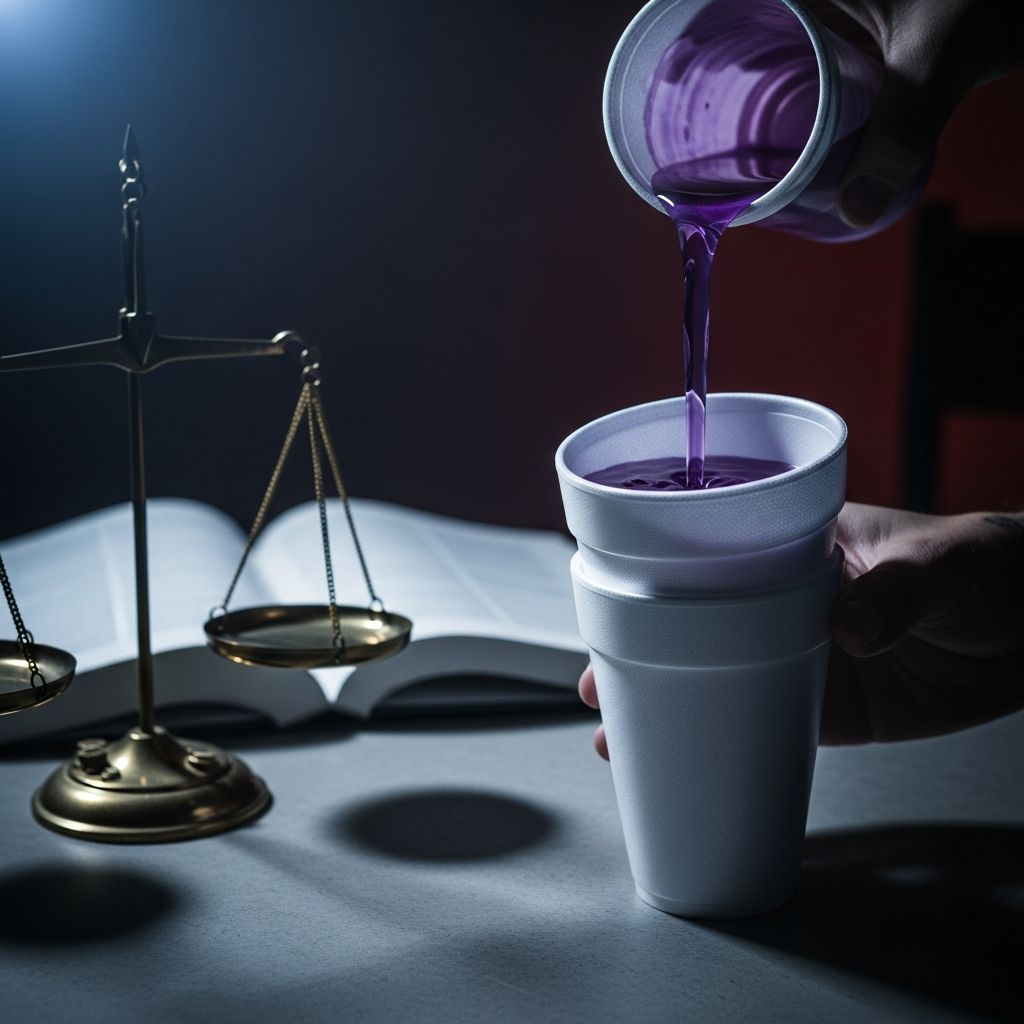
Understanding Sizzurp and Its Legal Status
Sizzurp, commonly referred to as purple drank or lean, represents a significant public health and legal concern in the United States. This recreational substance is created by combining prescription-strength cough syrup containing codeine and promethazine with soda and hard candy, resulting in a mixture that produces sedative and euphoric effects. The legal status of sizzurp is complex because it involves the misuse of legitimately prescribed medications, yet its creation and consumption constitute serious criminal offenses under both federal and state law.
The substance gained widespread attention due to its prevalence in popular culture, particularly within music and entertainment industries, which normalized its use among younger demographics. However, behind the cultural references lies a serious legal framework designed to penalize possession, manufacturing, and distribution of this dangerous drug combination. Understanding the legal implications of sizzurp is essential for anyone who may encounter this substance or be involved in its production.
The Pharmaceutical Components and Legal Restrictions
The foundation of sizzurp’s illegal status rests primarily on its active pharmaceutical ingredients. Codeine, an opioid medication, serves as the primary psychoactive component. In legitimate medical contexts, codeine is prescribed to suppress coughs and manage pain, but when extracted and concentrated for recreational use, it transforms into a controlled substance with significant legal consequences. The Drug Enforcement Administration (DEA) classifies codeine cough syrups as Schedule II controlled substances, meaning they have legitimate medical uses but carry a high potential for abuse and dependence.
Promethazine, the secondary ingredient in traditional sizzurp formulations, is an antihistamine that enhances the sedative effects of codeine. According to research, only 13.5% of sizzurp users actually combine both substances in their traditional ratio, while 74.5% use codeine alone and 31.7% use promethazine as a secondary component. This variation in composition does not diminish the legal consequences, as unauthorized possession of prescription cough syrups in quantities exceeding normal therapeutic use constitutes a criminal offense.
The legal restrictions on these ingredients serve multiple purposes:
- Preventing pharmaceutical diversion from legitimate medical channels to black market distribution
- Prosecuting individuals who obtain prescriptions through fraud or deception
- Penalizing the unauthorized possession and concentration of controlled substances
- Deterring manufacturing and distribution networks that profit from drug trafficking
- Protecting public health by limiting access to substances with high abuse potential
Federal Criminal Charges Related to Sizzurp
At the federal level, sizzurp-related offenses fall under the Controlled Substances Act (CSA), which establishes strict penalties for various violations involving Schedule II narcotics. Federal charges can be categorized into three primary areas: simple possession, possession with intent to distribute, and actual distribution or trafficking.
Simple Possession Charges: Possessing prescription cough syrup containing codeine without a valid prescription represents a federal offense. The penalties for federal simple possession depend on the drug’s scheduling and the quantity involved. For codeine-based cough syrups classified as Schedule II substances, simple possession can result in criminal penalties including up to one year of imprisonment and fines up to $1,000 for first-time offenders, though penalties increase substantially for repeat offenders.
Possession with Intent to Distribute: When law enforcement discovers larger quantities of codeine cough syrup or evidence suggesting preparation for distribution, charges escalate significantly. Possession with intent to distribute Schedule II substances carries potential sentences of five to forty years in federal prison, depending on the quantity and prior criminal history. Federal sentencing guidelines consider factors such as the number of pills or volume of liquid, the presence of distribution paraphernalia like scales or baggies, cash in significant amounts, and communications suggesting sales activity.
Distribution and Trafficking: Individuals involved in manufacturing, distributing, or trafficking sizzurp face the most severe federal penalties. Federal drug trafficking charges can result in sentences ranging from ten years to life imprisonment, with mandatory minimum sentences applying when large quantities are involved. Additionally, federal convictions carry collateral consequences including mandatory supervised release after imprisonment, forfeiture of assets involved in the drug trade, and loss of eligibility for federal student aid.
State-Level Criminal Prosecution and Variations
While federal law provides a baseline for sizzurp-related offenses, individual states have enacted their own laws addressing the misuse of prescription cough syrups. Most states classify codeine-containing cough syrups as Schedule II or Schedule III controlled substances, mirroring federal classifications but often imposing their own sentencing structures and penalties.
State penalties typically differ from federal consequences in several ways:
- State penalties are often less severe than federal penalties, though they vary significantly by jurisdiction
- Many states distinguish between first-time and repeat offenders with escalating penalties
- Some states have created specialized drug court programs offering treatment alternatives to incarceration
- State statutes may address pharmacy fraud and illegal prescriptions separately from simple possession
- Certain states have implemented diversion programs for non-violent first-time offenders
Many states have enacted specific legislation targeting the sale and distribution of cough syrups to minors. These regulations require age verification at purchase, limit quantities sold to individual consumers, and impose restrictions on over-the-counter cough and cold medicines containing dextromethorphan (DXM), which can be substituted for codeine in sizzurp formulations.
Prescription Fraud and Illegal Acquisition
A significant portion of sizzurp-related criminal activity involves the fraudulent acquisition of prescription cough syrups. Several illegal methods are employed to obtain these controlled substances, each carrying distinct criminal charges:
Doctor Shopping: This practice involves visiting multiple physicians to obtain multiple prescriptions for codeine-containing cough syrups without disclosing previous prescriptions. Doctor shopping violates state and federal laws targeting prescription drug fraud. Most states classify this offense as a felony, with penalties typically ranging from one to five years imprisonment plus substantial fines.
Forged or Altered Prescriptions: Creating counterfeit prescriptions or modifying legitimate prescriptions to obtain larger quantities constitutes forgery and fraud. These offenses carry serious consequences including five to ten years imprisonment in many jurisdictions. Forgery charges often accompany the underlying controlled substance charges, resulting in consecutive sentences.
Pharmacy Burglary and Theft: Some individuals obtain sizzurp ingredients through theft from pharmacies or pharmaceutical warehouses. These crimes carry additional charges beyond simple drug possession, including burglary, theft, and potentially armed robbery if weapons are used. Sentences for pharmacy theft can range from five to twenty years depending on the value of substances stolen and the jurisdiction.
Illegal Manufacturing and Processing: Concentrating or processing prescription cough syrups to increase potency or create more efficient delivery methods constitutes manufacturing a controlled substance, a federal felony carrying ten to life sentences.
Consequences Beyond Criminal Penalties
Sizzurp-related convictions trigger collateral consequences extending far beyond incarceration and fines. These secondary effects often create long-term barriers to successful reintegration into society:
- Professional Licensing: Convictions for drug offenses can result in loss or denial of professional licenses, affecting careers in healthcare, law, education, and regulated industries
- Employment Discrimination: Many employers conduct background checks and legally refuse to hire individuals with drug convictions, limiting employment opportunities
- Housing Restrictions: Landlords often deny housing to individuals with drug convictions, and public housing explicitly prohibits residents with certain drug convictions
- Educational Barriers: Federal student aid is suspended or terminated for individuals convicted of drug-related offenses, restricting access to higher education
- Immigration Consequences: Non-citizen convictions for controlled substance offenses can trigger deportation proceedings
- Child Custody Issues: Drug convictions significantly impact custody determinations in family law proceedings
- Voting Rights: Felony drug convictions result in temporary or permanent loss of voting rights in many states
- Gun Ownership: Federal law prohibits firearm possession for individuals convicted of felony drug offenses
Youth Offenders and Enhanced Protections
Because sizzurp use is particularly prevalent among teenagers and young adults aged thirteen to twenty-one, accounting for 66% of documented users, the justice system provides both enhanced protections and stricter consequences for juvenile offenders. Many states treat sizzurp offenses involving minors differently, often emphasizing rehabilitation over punishment.
Juvenile sizzurp offenses may result in diversion programs, drug courts, probation, and mandatory counseling rather than incarceration. However, serious offenses such as large-scale distribution can result in charges being waived to adult court, subjecting minors to adult criminal penalties. Additionally, juvenile drug records may become accessible to college admissions offices and employers, affecting future opportunities despite the traditional confidentiality of juvenile records.
Defense Strategies in Sizzurp Cases
Criminal defense in sizzurp-related cases may involve several constitutional and procedural challenges. Effective defense strategies often include challenging the legality of searches and seizures, disputing evidence collection procedures, questioning the quantity and composition of seized substances, and negotiating reduced charges or diversion to treatment programs.
Search and seizure challenges examine whether law enforcement had proper authorization for searches, whether consent was given freely and knowingly, and whether the circumstances met constitutional standards for warrantless searches. If evidence was obtained illegally, courts may suppress it, potentially eliminating the prosecution’s case.
Many jurisdictions recognize that substance use disorders underlying sizzurp abuse require treatment rather than punishment alone. Drug courts and diversion programs offer alternatives to traditional prosecution for eligible offenders, particularly first-time offenders. These programs typically require completion of substance abuse treatment, regular drug testing, and court supervision in exchange for charge dismissal or reduced sentences.
Frequently Asked Questions About Sizzurp and the Law
Q: Is possession of cough syrup with codeine illegal if I have a prescription?
A: Possessing prescription cough syrup with a valid prescription is legal. However, possessing someone else’s prescription, obtaining prescriptions through fraud, or possessing quantities exceeding the prescribed amount constitutes a criminal offense.
Q: What is the federal penalty for simple possession of sizzurp?
A: Federal simple possession of Schedule II codeine-based cough syrup typically carries penalties of up to one year imprisonment and $1,000 fines for first-time offenders. Penalties increase substantially for repeat offenders, reaching up to five years imprisonment.
Q: Can sizzurp charges be reduced or dismissed?
A: Depending on jurisdiction and individual circumstances, charges may be reduced through plea negotiations, dismissed through successful constitutional challenges, or resolved through participation in drug court or diversion programs that prioritize treatment over punishment.
Q: Are there different consequences for minors caught with sizzurp?
A: Yes, juvenile offenders often receive more lenient treatment emphasizing rehabilitation, including diversion programs and counseling. However, serious distribution offenses may result in charges being transferred to adult court.
Q: What should I do if arrested for a sizzurp-related offense?
A: Immediately request an attorney and exercise your right to remain silent. Do not consent to searches, answer questions, or sign documents without legal counsel present. Your attorney can evaluate evidence, identify constitutional violations, and develop appropriate defense strategies.
References
- Sizzurp (Purple Drank or Lean): Definition, Key Ingredients, Health Effects — Discover Health Group. 2024. https://discoverhealthgroup.com/addiction/sizzurp-definition/
- Purple Drank Ingredients — ACI Rehab. https://www.acirehab.org/purple-drank-ingredients/
- Lean Drink: Definition and Risks of Sizzurp (Purple Drank) — Olympic Behavioral Health. https://olympicbehavioralhealth.com/rehab-blog/lean-definition/
- Lean/Sizzurp Ingredients, Use, and Coping With Mental Health Symptoms — National Institutes of Health (NIH). 2024. https://pmc.ncbi.nlm.nih.gov/articles/PMC10517614/
- Lean (Purple Drank) Addiction And Abuse — Addiction Center. https://www.addictioncenter.com/opiates/codeine/lean-addiction-abuse/
- What Is Lean? 9 Purple Drank FAQs — Healthline. https://www.healthline.com/health/what-is-lean
- Lean (Purple Drank) – Uses, Side Effects, & Abuse — WebMD. https://www.webmd.com/mental-health/addiction/what-is-lean
Similar Articles








Read full bio of Sneha Tete




