
Can You Legally Shoot Someone with a Fake Gun?
Unpacking self-defense laws when fake firearms create real threats: Know your rights and risks across U.S. jurisdictions.
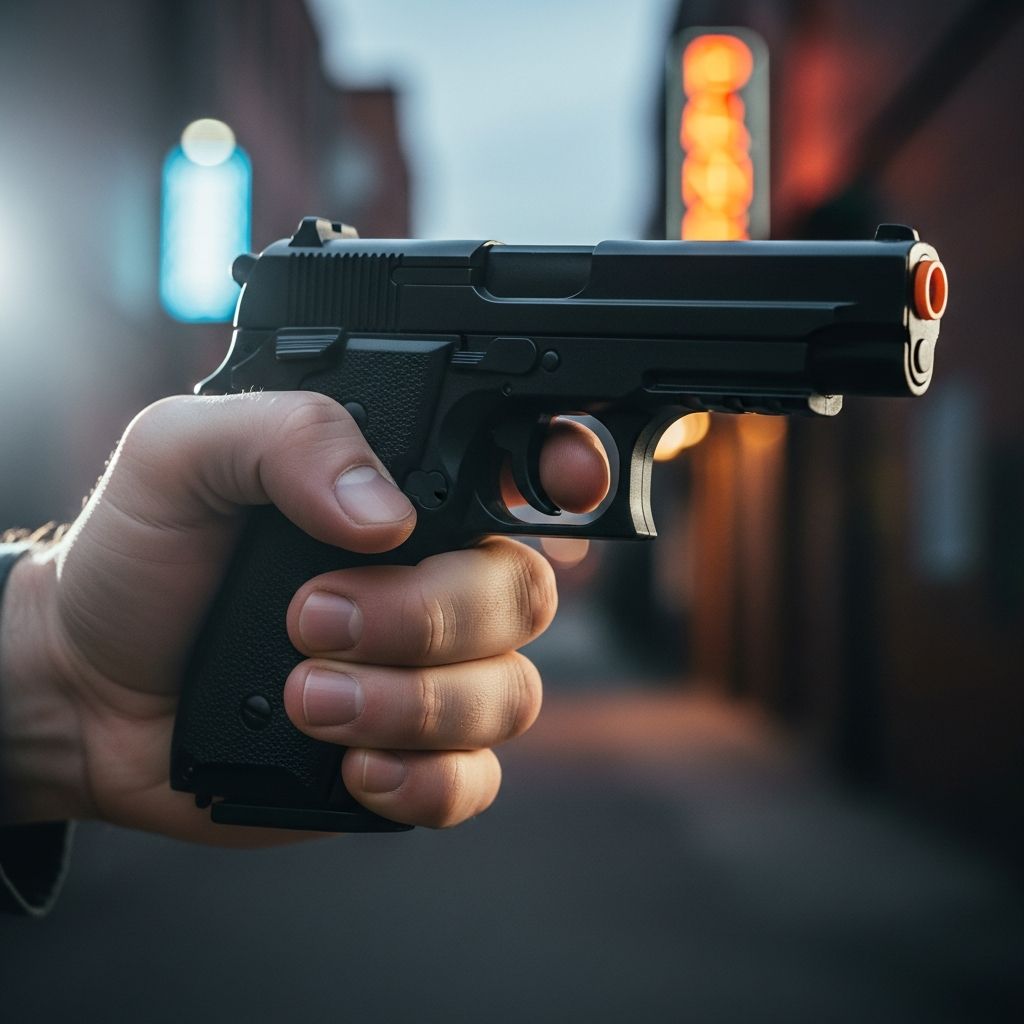
In high-stress encounters, distinguishing a real firearm from a replica can be nearly impossible. When someone points what appears to be a gun at you, your instinct for survival may trigger a self-defense response. But is it lawful to respond with lethal force if the weapon turns out to be fake? This question hinges on principles of reasonable fear, state statutes, and judicial interpretations of threat perception.
Self-defense laws generally permit deadly force when a person reasonably believes they face imminent death or great bodily harm. The key is reasonableness: Would a prudent person in your position perceive the fake gun as a genuine lethal threat? Courts evaluate factors like distance, behavior, lighting, and context to determine if your reaction was justified.
Understanding Self-Defense and the Reasonable Person Standard
At the core of self-defense doctrines is the ‘reasonable person’ standard, which asks whether an ordinary individual, under similar circumstances, would fear for their life. This objective test protects those who act proportionately to a perceived threat, even if the danger proves illusory.
For instance, if an aggressor advances aggressively while displaying a realistic-looking pistol—regardless of its authenticity—the defender may claim justification under laws like Florida’s Stand Your Ground statute or common-law castle doctrine principles. However, post-incident investigations scrutinize the replica’s realism, the aggressor’s intent, and any warnings given.
- Proximity and demeanor: Close-range pointing heightens perceived danger.
- Lighting and visibility: Low light obscures orange tips on toy guns.
- Verbal threats: Accompanying shouts like ‘Give me your money!’ amplify fear.
- Replica quality: Airsoft or BB guns mimicking real models blur lines.
Tragically, real-world errors occur. Law enforcement officers have faced lawsuits after mistaking toy guns for real ones in use-of-force incidents, underscoring how perceptual mistakes can lead to deadly outcomes. Civilians face similar risks, potentially charged with manslaughter if prosecutors argue the threat was not objectively reasonable.
State-Specific Laws on Imitation Firearms and Brandishing
Laws regulating fake guns vary widely, with some states imposing strict bans on public display. California provides a prime example through Penal Code § 417.4 PC, which criminalizes drawing or exhibiting an imitation firearm in a threatening manner that causes reasonable apprehension of bodily harm.
| State | Key Statute | Prohibited Act | Penalty |
|---|---|---|---|
| California | PC § 417.4 | Brandishing imitation firearm threateningly | Misdemeanor: 30 days to 6 months jail |
| California | PC § 20170 | Openly displaying imitation firearm in public | Infraction ($100-$300 fine); repeat as misdemeanor |
| General U.S. | Varies (e.g., disorderly conduct) | Public carry/display of realistic replicas | Fines, jail; escalates with threats |
Under PC § 20170, openly exposing imitation firearms in public places is prohibited, with exemptions for theatrical uses, hunting, or displays in cases. Violations start as infractions but escalate for repeat offenders. These rules aim to prevent confusion that could provoke violent responses, directly impacting self-defense claims.
In contrast, states like Texas emphasize broad self-defense rights under Penal Code § 9.32, allowing deadly force against apparent deadly threats without retreat. A fake gun brandished aggressively could qualify, but defendants must prove reasonableness at trial.
Real-World Scenarios: When Fake Guns Lead to Deadly Force
Consider these hypothetical yet realistic situations drawn from legal precedents and statutes:
- Robbery attempt: A masked individual demands wallet at gunpoint in a dimly lit parking lot. You draw and fire, later discovering it’s an airsoft replica. Justification likely holds if the toy was convincingly real and no safe retreat existed.
- Neighborhood dispute: An angry neighbor shoves you and pulls a BB gun from their waistband. Firing in response might be deemed excessive if verbal de-escalation was possible, risking assault charges.
- Halloween mishap: A costumed teen points a prop gun during trick-or-treating. Shooting would almost certainly be unjustified due to contextual cues like holiday setting and youthful appearance.
These examples illustrate how context determines legality. Prosecutors often argue post facto knowledge (e.g., ‘It was orange-tipped!’) undermines claims, but defenders counter with split-second decision-making under duress.
Legal Defenses Against Imitation Firearm Charges
If accused of brandishing a fake gun, several defenses can lead to dismissal:
- No threatening conduct: Evidence like videos showing playful intent refutes mens rea.
- No reasonable fear induced: Victim testimony or witnesses proving lack of apprehension.
- Self-defense: Proportional response to an actual threat; video or eyewitnesses bolster this.
- Exemptions: Theatrical, hunting, or display uses under PC § 20170.
For those using force against a fake-gun wielder, imperfect self-defense may reduce murder to manslaughter if fear was genuine but unreasonable. Skilled attorneys leverage body cams, 911 calls, and expert testimony on perceptual psychology.
Federal and Manufacturing Regulations on Replica Guns
Beyond state criminal codes, federal oversight influences replica realism. The U.S. Consumer Product Safety Commission mandates blaze orange markings on toy guns to aid identification. However, post-2005 California law requires packaging warnings that imitation firearms may be mistaken for real ones, and altering markings is hazardous.
Violators face civil fines up to $10,000 for repeated non-compliance. These rules indirectly protect self-defense claims by standardizing visibility, though black-market or modified replicas evade them, heightening risks.
Consequences of Misjudging a Threat: Criminal and Civil Ramifications
Justified shootings typically result in no charges, but errors carry severe penalties:
- Criminal: Voluntary manslaughter (2-15 years), murder if malice inferred.
- Civil: Wrongful death suits from victim’s family, draining finances.
- Other: Loss of firearm rights, employment barriers.
Conversely, failing to act against a real gun due to hesitation can be fatal. Training in threat recognition—via courses emphasizing silhouette drills—mitigates errors.
Preventive Measures and Best Practices
To avoid escalation:
- Avoid public display of replicas without clear markings.
- De-escalate verbally before force.
- Transport props concealed or disassembled.
- For gun owners: Practice situational awareness and legal knowledge.
Law enforcement protocols stress verbal commands (‘Show hands!’) before shooting, a model for civilians invoking stand-your-ground.
Frequently Asked Questions (FAQs)
Is brandishing a fake gun always illegal?
No, exemptions exist for performances, parades, and self-defense. Context matters under laws like California’s PC § 417.4.
Can I claim self-defense if I shoot someone with a toy gun?
Yes, if your fear was reasonable based on appearances at the moment. Courts apply the objective standard.
What if the fake gun is used in a costume party?
Public settings increase risks; transport discreetly to avoid disorderly conduct charges.
Do all states treat fake guns the same?
No, California bans public display (PC § 20170), while others focus on misuse.
What evidence helps in self-defense cases?
Videos, witnesses, 911 audio, and replica forensics proving indistinguishability.
Navigating Legal Advice in Threat Scenarios
Self-defense cases demand immediate attorney consultation. Factors like prior criminal history influence outcomes. In 2026, advancing body-cam tech and AI threat-analysis tools may reshape evidence standards, but human judgment remains pivotal.
Ultimately, while fake guns pose genuine dilemmas, understanding statutes empowers informed decisions. When in doubt, retreat if safe—preserving life trumps legal battles.
References
- Penal Code § 417.4 PC – Brandishing an Imitation Firearm — Shouse Law Group. Accessed 2026. https://www.shouselaw.com/ca/defense/penal-code/417-4/
- When a Costume Turns Criminal: Fake Guns and Props Arrest — Hebets & McCallin P.C. Accessed 2026. https://www.hebetsmccallin.com/when-a-costume-turns-criminal-fake-guns-and-props-arrest/
- Penal Code § 20170 PC – Imitation Firearms – California Law — Shouse Law Group. Accessed 2026. https://www.shouselaw.com/ca/defense/penal-code/20170/
- Non-powder & Toy Gun Laws in California — Giffords Law Center. Accessed 2026. https://giffords.org/lawcenter/state-laws/non-powder-toy-guns-in-california/
Similar Articles








Read full bio of Sneha Tete




