
The Shifting Landscape of Voting Rights and Section 2
Exploring judicial shifts in the Voting Rights Act and future ballot access.
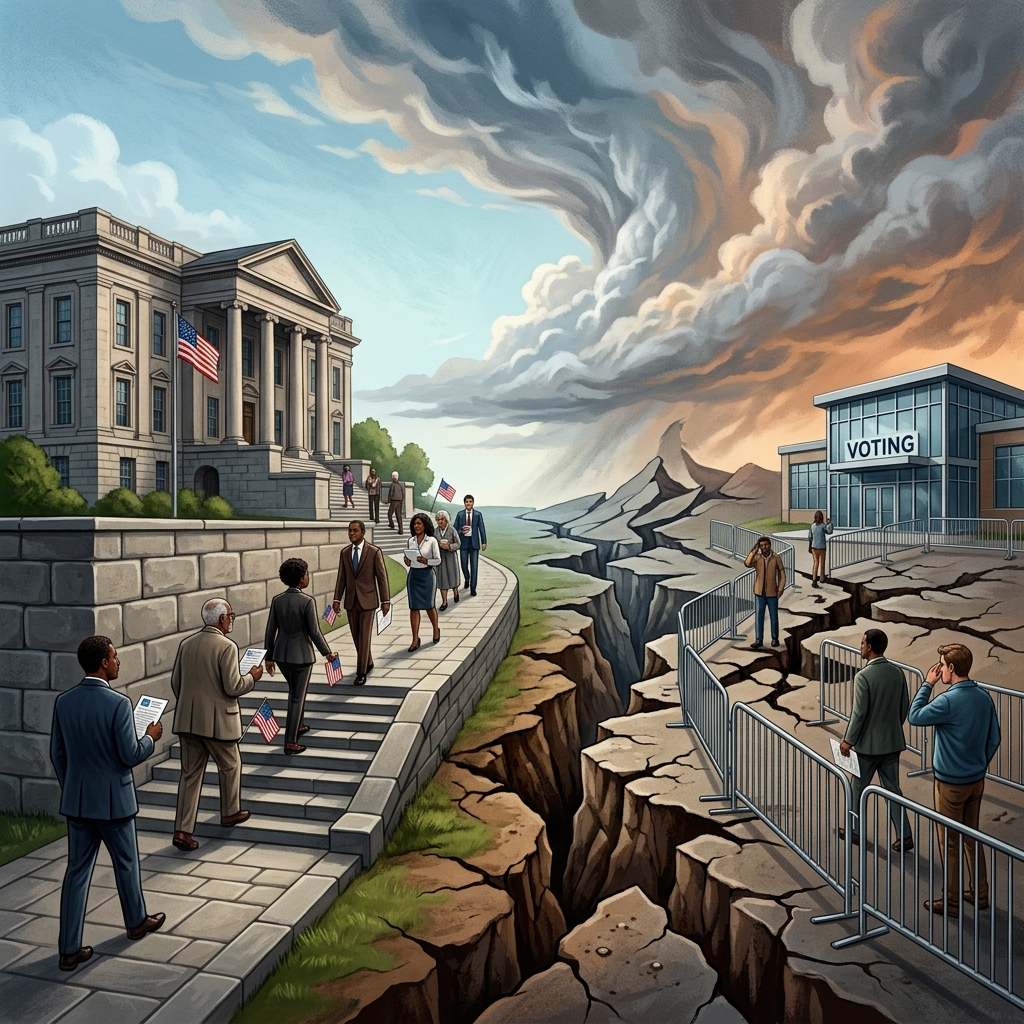
The bedrock of American civil liberties is anchored securely in the fundamental right to cast a ballot. For decades, legal architectures have been meticulously constructed, debated, and occasionally dismantled in the ongoing pursuit of ensuring equitable access for all demographics. The mechanics of democratic participation rely heavily on legislative safeguards that prevent discriminatory practices from disenfranchising vulnerable populations. Historically, the United States has relied on federal statutes to enforce the constitutional guarantees provided by the Fourteenth and Fifteenth Amendments. However, the contemporary legal environment has witnessed a profound transformation in how these statutes are interpreted and enforced by the highest courts in the land.
As the nation grapples with varying state-level election regulations, understanding the trajectory of federal voting protections is paramount. The shift from robust, preemptive federal oversight to a landscape dominated by post-enactment litigation has placed immense pressure on existing legal frameworks. Recent judicial interpretations have fundamentally altered the criteria required to successfully challenge state election laws, creating a complex web of legal standards that advocates, lawmakers, and citizens must now navigate. This article explores the historical context of these protections, the structural mechanics of current legal standards, and the profound implications of recent Supreme Court rulings on the future of electoral equality.
The Historical Significance of the Voting Rights Act
The Voting Rights Act (VRA) of 1965 remains one of the most consequential pieces of civil rights legislation ever enacted in the United States. Conceived during the tumultuous era of the Civil Rights Movement, its primary objective was to eradicate systemic barriers that actively disenfranchised racial and language minorities. Prior to its passage, various jurisdictions employed explicit and implicit mechanisms, such as literacy tests, poll taxes, and discriminatory districting, to suppress minority political participation.
For nearly five decades, the VRA functioned through two primary engines: Section 5 and Section 2. Section 5 established a “preclearance” requirement, mandating that jurisdictions with a documented history of discriminatory practices obtain federal approval before implementing any changes to their election laws. This proactive measure was highly effective in neutralizing discriminatory tactics before they could affect a single election. However, the landmark 2013 Supreme Court decision in Shelby County v. Holder essentially immobilized this preclearance formula, arguing that the coverage criteria were outdated. Consequently, the burden of protecting voting rights shifted almost entirely to the VRA’s other core provision, requiring plaintiffs to reactively challenge laws after their enactment.
Decoding Section 2: Mechanisms and Legal Standards
Section 2 of the VRA has historically functioned as a permanent, nationwide shield against discriminatory voting practices . Unlike the geographically restricted preclearance mandate, this section applies to every jurisdiction in the United States. It prohibits any voting standard, practice, or procedure that results in the denial or abridgement of the right to vote on account of race, color, or membership in a language minority group .
To evaluate claims under this provision, federal courts historically utilized the “totality of the circumstances” test. This legal standard did not require plaintiffs to prove that state legislators possessed explicitly racist intentions when drafting a law. Instead, plaintiffs only needed to demonstrate that the law, in practical application, interacted with historical and social conditions to create a disproportionate burden on minority voters, thereby denying them an equal opportunity to participate in the political process .
Below is a breakdown of the traditional factors courts evaluated when determining the totality of the circumstances:
| Evaluative Factor | Description of the Legal Metric |
|---|---|
| History of Official Discrimination | Whether the specific state or political subdivision has a documented history of official discrimination in voting mechanisms. |
| Racial Polarization in Elections | The extent to working which voting in the elections of the state or political subdivision is racially polarized. |
| Socioeconomic Disparities | The extent to which minority group members bear the effects of past discrimination in areas such as education, employment, and health, which hinder their ability to participate effectively in the political process. |
| Electoral Practices | The use of specific election practices, such as unusually large election districts or majority vote requirements, that may enhance the opportunity for discrimination. |
A Paradigm Shift in Electoral Jurisprudence
The judicial framework surrounding the VRA experienced a seismic shift with the Supreme Court’s 2021 ruling in Brnovich v. Democratic National Committee . The case centralized on two specific Arizona election policies: a rule invalidating provisional ballots cast in the wrong precinct, and a statute criminalizing the collection of early mail-in ballots by third parties (often referred to as “ballot harvesting” by critics or “community ballot collection” by advocates).
Plaintiffs argued that these policies violated federal law because they disproportionately burdened Native American, Hispanic, and Black voters. For example, evidence indicated that Native American voters in rural Arizona faced substantial geographic hurdles to accessing postal services, making community ballot collection a vital tool for democratic participation. Furthermore, frequent changes to precinct locations disproportionately caused minority voters to inadvertently cast out-of-precinct ballots.
However, the Supreme Court upheld both Arizona laws . More consequentially than the immediate outcome was the reasoning employed by the Court’s majority. Rather than adhering strictly to the traditional “totality of the circumstances” analysis that lower courts had utilized for decades, the decision introduced a series of novel “guideposts” for evaluating future claims against time, place, and manner voting restrictions. These new parameters fundamentally raised the threshold required for plaintiffs to achieve legal victory.
Assessing the Impact on Minority Electoral Participation
The introduction of the new judicial guideposts significantly recalibrates the burden of proof in electoral litigation. One of the most critical elements of the new framework is the emphasis on the “size of the burden.” The Court asserted that voting inherently requires some level of effort, and that “ordinary burdens” such as traveling to a polling place or navigating registration deadlines do not automatically equate to a denial of equal opportunity. This perspective arguably minimizes the disparate impact these seemingly neutral administrative hurdles place on historically marginalized communities who face compounded socioeconomic disadvantages.
Furthermore, the ruling placed a heavy thumb on the scale in favor of a state’s interest in preventing voter fraud. Under this newly established standard, a state is not necessarily required to produce concrete evidence that widespread voter fraud has actually occurred within its borders to justify restrictive election laws. The mere theoretical threat of fraud, or the stated goal of maintaining “election integrity,” is now often deemed a sufficient state interest to outweigh statistical evidence showing that a law disproportionately suppresses minority turnout.
This deference to state legislative authority dramatically narrows the pathway for civil rights organizations to successfully dismantle discriminatory laws. By prioritizing the administrative convenience of the state and demanding a higher threshold of evidence to prove a severe burden, the courts have effectively insulated many restrictive voting measures from federal scrutiny.
The State Legislature Response and National Trends
The legal breathing room provided by modern Supreme Court interpretations has catalyzed a wave of new legislative activity across various states. Emboldened by the knowledge that preemptive federal vetoes are obsolete and post-enactment litigation is increasingly difficult to win, numerous state legislatures have aggressively overhauled their election codes.
This national trend is characterized by several recurring legislative maneuvers designed to tighten control over the electoral process:
- Stringent Identification Mandates: An increase in laws requiring specific, often difficult-to-obtain forms of government-issued photo identification for both in-person and absentee voting.
- Reductions in Early Voting: Curtailing the number of days and hours available for early voting, particularly targeting weekend voting hours traditionally utilized by minority congregation drives.
- Mail-in Ballot Restrictions: Implementing narrower windows for requesting mail-in ballots, prohibiting the proactive mailing of ballot applications to registered voters, and severely limiting the availability of secure drop boxes.
- Voter Roll Purges: Accelerating aggressive, systematic removals of voters from registration lists under the guise of list maintenance, often affecting eligible voters who simply missed one or two election cycles.
Legislative Horizons: The Push for Federal Electoral Reform
With the judicial avenues for challenging discriminatory voting laws narrowing significantly, the focus of civil rights advocates has pivoted robustly toward federal legislative reform. The limitations exposed by recent Supreme Court decisions have underscored the reality that existing statutory language is no longer sufficient to guarantee equal ballot access in the modern political climate.
Proponents of comprehensive reform argue that Congress must explicitly define the standards for electoral fairness to override the conservative judicial interpretations. Proposals such as the John Lewis Voting Rights Advancement Act aim to modernize and restore the preclearance formula that was deactivated in 2013. By establishing a new, data-driven geographic coverage formula, this legislation seeks to require states with recent, documented histories of voting rights violations to once again seek federal approval before altering their election protocols.
Additionally, proposed federal reforms seek to strengthen the “totality of the circumstances” test, explicitly instructing courts on how to weigh factors such as disparate impact and state interests. Until such federal legislation is enacted, the battle over ballot access will likely remain fractured, fought state by state, and heavily skewed by the new, demanding judicial standards that currently govern the landscape.
Frequently Asked Questions (FAQ)
What exactly does Section 2 of the Voting Rights Act prohibit?
Section 2 is a permanent, nationwide provision that makes it illegal for any state or local government to apply voting standards, practices, or procedures that result in the denial or abridgement of the right to vote based on race, color, or membership in a language minority group. It targets both intentional discrimination and laws that have a discriminatory result in practice.
Why is the Brnovich v. DNC decision considered a major change?
The 2021 Supreme Court decision is highly consequential because it introduced new legal “guideposts” that make it significantly harder for plaintiffs to win claims under Section 2. The ruling effectively declared that “ordinary burdens” of voting do not violate federal law, and granted states broad leeway to enact restrictive laws based on the theoretical fear of voter fraud, even without evidence of actual fraud.
What are “time, place, and manner” voting restrictions?
These are administrative rules set by state legislatures that dictate the logistics of voting. Examples include hours of operation for polling places, the locations of drop boxes, voter ID requirements, and deadlines for mail-in ballots. While seemingly neutral, these rules can have a disproportionate, negative impact on specific demographic groups depending on how they are implemented.
Can states still be sued for discriminatory voting laws?
Yes, civil rights organizations and the Department of Justice can still file lawsuits challenging state election laws. However, the legal threshold for proving that a law is unlawfully discriminatory has been raised substantially, requiring a much heavier burden of proof to demonstrate that a state’s regulations surpass an “ordinary burden” and lack a legitimate state interest.
References
- Section 2 Of The Voting Rights Act — U.S. Department of Justice. 2023-04-05. https://www.justice.gov/crt/section-2-voting-rights-act
- Brnovich v. Democratic National Committee, 594 U.S. ___ (2021) — Supreme Court of the United States. 2021-07-01. https://www.supremecourt.gov/opinions/20pdf/19-1257_g204.pdf
- Voting Rights Fact Sheet — U.S. Department of Justice. 2024-09-18. https://www.justice.gov/crt/voting-rights-fact-sheet
Similar Articles








Read full bio of medha deb


