
Shifting Baselines in Immigration Detention Standards
An in-depth analysis of how revised detention guidelines impact the health, safety, and rights of confined populations.
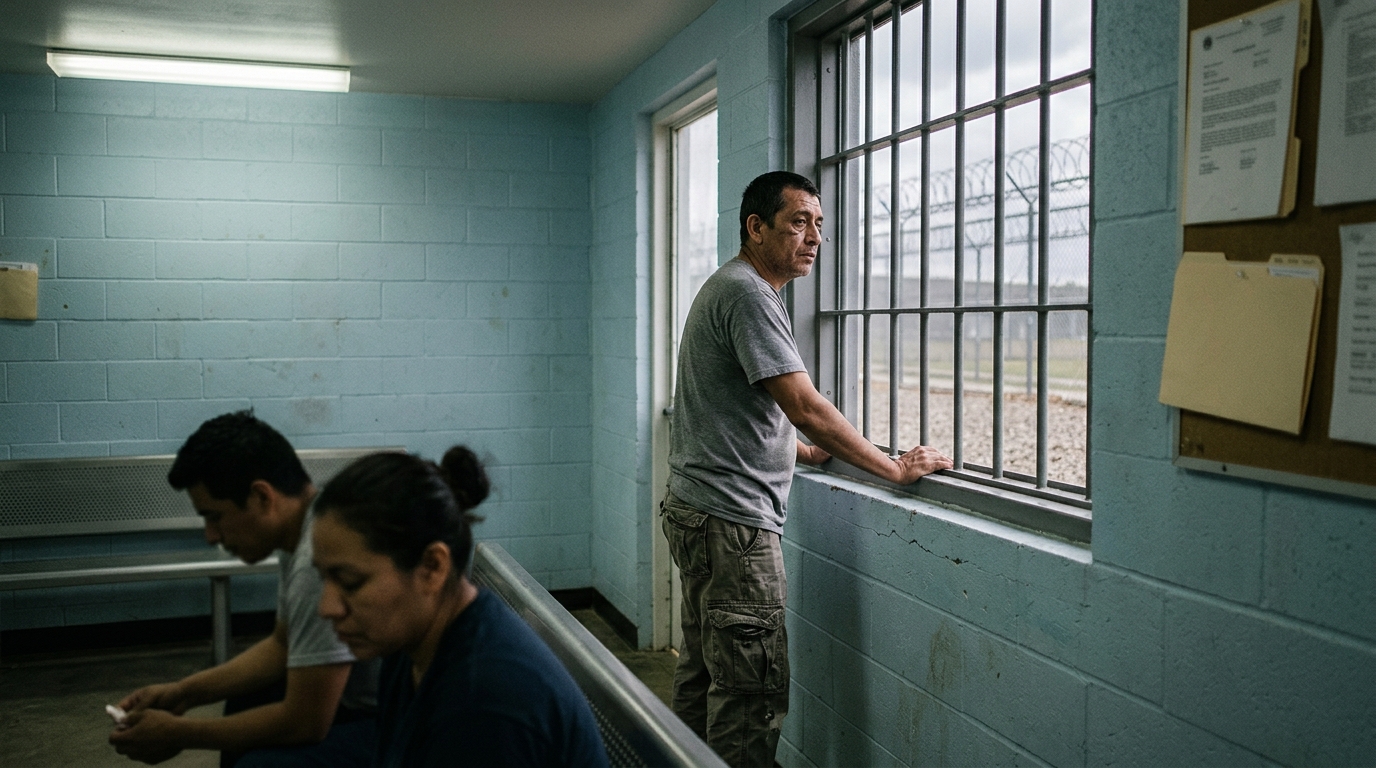
Introduction to the Confinement Ecosystem
The administrative mechanisms governing immigration detention in the United States represent a complex, highly debated intersection of federal enforcement, public health, and human rights. Unlike the criminal justice system, where confinement is explicitly punitive and follows criminal convictions, immigration detention is legally classified as civil in nature. Its primary, stated objective is merely to ensure individuals are present for administrative hearings or deportation proceedings. However, the operational reality of housing tens of thousands of individuals requires comprehensive logistical and regulatory frameworks.
At the heart of this massive infrastructure lies a network of operational guidelines designed to regulate facility conditions, oversee daily operations, and ensure a baseline of humane treatment. The continuous evolution of these guidelines serves as a focal point for policy analysts, legal scholars, and advocacy groups. When administrative authorities alter these standards, the changes ripple through the entire confinement ecosystem, directly affecting the physical and psychological well-being of the populations held within. Understanding these shifts is crucial for evaluating the government’s commitment to basic human rights and legal due process.
Understanding the Architecture of Confinement Oversight
To comprehend the gravity of administrative modifications, one must first understand the stratified architecture of facility oversight utilized by U.S. Immigration and Customs Enforcement (ICE). The agency does not operate under a single, universal set of rules for all its holding centers. Instead, standards are applied based on the type of facility and the nature of the contracts involved.
Historically, the oversight framework has been divided into two primary categories. The Performance-Based National Detention Standards (PBNDS), which were significantly updated in 2011 and revised again in 2016, apply primarily to dedicated federal immigration facilities . These standards are outcome-oriented, meaning they prescribe specific, measurable results that facilities must achieve, particularly regarding medical access, legal representation, and safety protocols. Conversely, the National Detention Standards (NDS) are generally applied to non-dedicated facilities. These are often state or local county jails that contract with the federal government through Intergovernmental Service Agreements (IGSAs) to lease excess bed space for federal detainees . Because these local jails primarily operate under their own state or county regulations, the NDS has historically been designed to bridge the gap between local practices and federal expectations.
The 2019 Policy Shift: Streamlining or Diluting Protections?
In late 2019, a significant administrative pivot occurred when ICE introduced an updated version of the National Detention Standards (NDS 2019) for its non-dedicated facilities . From a bureaucratic standpoint, the agency justified these revisions as a necessary “streamlining” process. The official stance posited that granting local law enforcement partners more operational flexibility would improve efficiency, reduce red tape, and acknowledge the fact that local jails already had their own baseline regulations in place.
However, legal experts and public health advocates immediately raised alarms. By shifting from the more rigorous expectations seen in earlier iterations or the PBNDS framework toward highly discretionary guidelines, the 2019 revisions effectively lowered the compliance floor. Instead of requiring facilities to adapt to strict federal human rights baselines, the new framework allowed the federal government to accommodate the lower standards frequently found in local penal institutions. This policy shift transformed many mandatory requirements into optional recommendations, creating a fragmented landscape where the level of care a detained individual receives is entirely dependent on the zip code of the facility they are placed in.
Impacts on Health Care Access and Mental Wellbeing
Medical and mental health access is perhaps the most heavily scrutinized aspect of immigration confinement, and it is the area most profoundly impacted by shifting administrative standards. Under robust oversight frameworks, facilities are bound by strict timelines for conducting comprehensive health assessments, responding to medical requests, and providing necessary specialized care. The dilution of these standards introduces severe risks to population health.
Research continuously demonstrates that prolonged periods in immigration detention correlate strongly with deteriorating physical health and the onset of severe psychological distress, including high rates of post-traumatic stress disorder (PTSD) and clinical depression . When standards are relaxed, the mandatory response times for medical personnel to evaluate detainees are often extended. Requirements for 24-hour medical coverage, rapid transfer protocols for acute medical emergencies, and the provision of free, culturally competent healthcare services can be reduced to mere suggestions. Furthermore, mental health screenings—which are critical for identifying suicide risks and trauma survivors upon intake—often suffer under streamlined guidelines. The lack of stringent, enforceable medical mandates means that chronic conditions may go unmanaged, and acute psychiatric crises may be overlooked until they result in tragedy.
Environmental Safety and Basic Living Conditions
The physical environment of a detention space is a primary determinant of both physical health and psychological stability. Foundational elements such as sanitation, ventilation, food safety, and fire preparedness are critical in highly dense confinement settings where infectious diseases can spread rapidly.
When regulatory frameworks are weakened, the frequency and rigor of environmental inspections typically decline. Stringent requirements regarding the testing of potable water, the maintenance of hospital-grade sanitation in medical isolation units, and the strict logging of daily cleanliness protocols can be quietly removed from the mandatory checklist. Similarly, safety protocols like emergency evacuation drills may be reduced in frequency. For populations already vulnerable due to the stress of confinement and potential previous trauma, degrading living conditions serve as a massive compounding factor, turning a civil holding period into a physically hazardous experience.
Vulnerable Populations and the Use of Segregation
A critical area of human rights concern within detention networks involves the management of vulnerable demographic groups, including individuals with physical or cognitive disabilities, the elderly, and those suffering from severe mental illness. Robust standards mandate specific accommodations, ensuring compliance with the spirit of the Americans with Disabilities Act (ADA) and preventing discriminatory treatment within the facility.
One of the most controversial practices affected by standard revisions is the use of administrative and disciplinary segregation—commonly known as solitary confinement. Under stricter guidelines, placing an individual with known mental health vulnerabilities into isolation is heavily restricted and permitted only as an absolute last resort. However, oversight investigations have revealed systemic failures in exploring alternatives to segregation for highly vulnerable populations . When guidelines are relaxed, facility administrators gain broader discretion to use isolation as a primary management tool rather than a rare exception. The psychological damage inflicted by solitary confinement is well-documented, and weakening the guardrails that prevent its misuse directly endangers the lives of those requiring specialized care and compassionate intervention.
The Privatization Factor and Accountability Disparities
The intersection of privatized incarceration and administrative oversight complicates the enforcement of humane conditions. A vast majority of the individuals held in civil confinement are housed in facilities operated by private, for-profit corporations or local municipalities seeking to generate revenue through federal contracts. In this financially driven ecosystem, compliance with stringent oversight standards is often viewed as a costly operational burden.
When the federal government opts to loosen its standards—as seen in the transition to the NDS 2019—it inherently reduces the financial and operational pressure on these private operators and local sheriffs. This creates a severe accountability disparity. Because these detention standards are generally not codified into federal statutory law, they exist merely as administrative guidelines or contractual terms. If a facility fails to meet even these lowered standards, the repercussions are often minimal, limited to bureaucratic corrective action plans rather than contract termination or legal liability. This lack of statutory teeth means that public oversight is severely restricted, and individuals suffering under sub-standard conditions have limited avenues for legal recourse.
Conclusion
The architecture of immigration confinement standards is not merely a matter of bureaucratic paperwork; it is a framework that dictates the daily reality, safety, and dignity of thousands of individuals. The shift toward streamlined, highly discretionary guidelines represents a systemic rollback of baseline human rights protections. Without the implementation of strict, outcome-based standards that are uniformly applied and legally enforceable across all facilities, the risks of medical neglect, psychological harm, and environmental hazard will remain deeply entrenched within the system. Ensuring humane treatment requires not just the existence of standards, but the unwavering commitment to comprehensive, transparent oversight.
Comparative Overview of Key Standard Frameworks
| Framework Type | Primary Application | Operational Flexibility | Compliance & Oversight Stringency |
|---|---|---|---|
| NDS 2000 | Early uniform baseline for all contracted facilities | Moderate | Established initial expectations but lacked modern, measurable outcome requirements. |
| PBNDS 2011 (Rev. 2016) | Dedicated federal immigration facilities | Low | High stringency with strict, outcome-focused mandates for medical access and safety. |
| NDS 2019 | Non-dedicated facilities (local jails/IGSAs) | High | Relaxed timelines and discretionary guidelines favoring local operational norms. |
Frequently Asked Questions
What is the difference between PBNDS and NDS?
The Performance-Based National Detention Standards (PBNDS) are comprehensive guidelines that mandate specific operational outcomes, primarily used in dedicated federal facilities. In contrast, the National Detention Standards (NDS) are generally applied to non-dedicated facilities, such as local county jails holding federal detainees, and often provide more flexible, less stringent guidelines that align closer to local jail norms.
Are immigration detention guidelines legally binding?
In most instances, these standards function as administrative guidelines and contractual obligations rather than codified federal laws. While facilities are required to adhere to them through their specific agreements, the lack of statutory codification makes systemic legal enforcement challenging and allows federal agencies to alter the standards without formal congressional approval.
How do revised standards impact medical care in confinement?
Revisions that loosen operational standards often extend the permissible timeframes for initial medical and psychological evaluations, relax the requirements for specialized medical staffing, and remove mandatory provisions regarding the immediate treatment of chronic illnesses. This systemic dilution ultimately increases the risk of negative physical and mental health outcomes for detained populations.
References
- 2019 National Detention Standards for Non-Dedicated Facilities — U.S. Immigration and Customs Enforcement. 2019-12-19. https://www.ice.gov/doclib/detention-standards/2019/nds2019.pdf
- Performance-Based National Detention Standards 2011 (Revised 2016) — U.S. Immigration and Customs Enforcement. 2016-12-01. https://www.ice.gov/detain/detention-management/2011
- Duration in Immigration Detention and Health Harms — National Institutes of Health (PMC). 2025-01-24. https://www.ncbi.nlm.nih.gov/pmc/
- ICE Needs to Improve Its Oversight of Segregation Use in Detention Facilities — Office of Inspector General, Department of Homeland Security. 2021-10-13. https://www.oig.dhs.gov/sites/default/files/assets/2021-10/OIG-22-01-Oct21.pdf
Similar Articles








Read full bio of Sneha Tete




