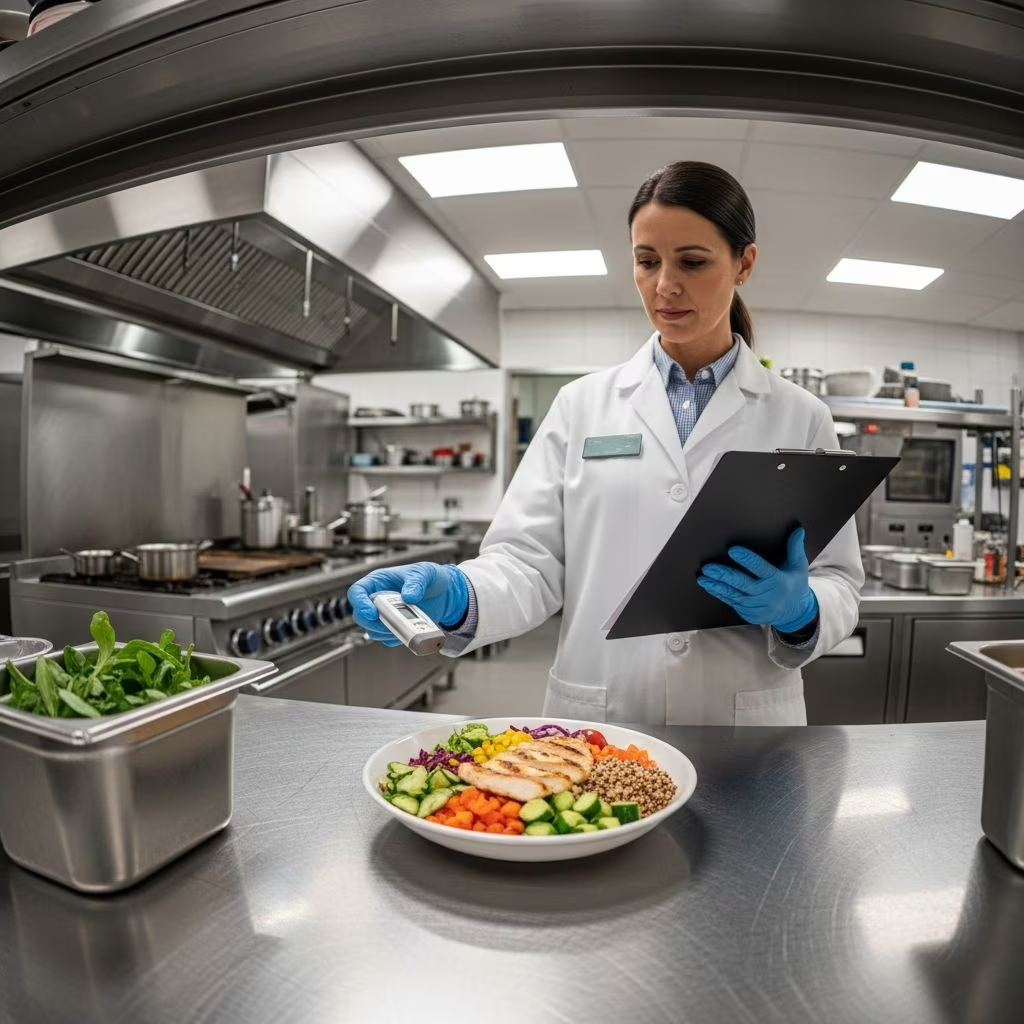
Operating a food business demands strict adherence to public health standards to safeguard consumers from illnesses. Most jurisdictions mandate health permits and inspections before serving food, but nuances exist based on location, business type, and scale. This article delves into the regulatory landscape, helping entrepreneurs navigate compliance effectively.
Core Legal Frameworks Governing Food Service
Food safety regulations stem from federal, state, and local laws designed to prevent contamination and ensure sanitary conditions. At the federal level, agencies like the U.S. Department of Agriculture’s Food and Nutrition Service outline requirements for programs such as the Child and Adult Care Food Program (CACFP) and Summer Food Service Program (SFSP), where facilities must maintain state or local health certifications.
State health departments, such as California’s Department of Public Health (CDPH), enforce broader standards for retail food operations, emphasizing safe handling, storage, and preparation. Locally, cities like Long Beach and Los Angeles impose specific inspection protocols through environmental health bureaus, covering everything from restaurants to mobile vendors.
Without proper permits, businesses risk immediate shutdowns, hefty fines, or legal action. For instance, in Orange County, California, facilities must pass a pre-permit inspection verifying compliance with the California Health and Safety Code.
Do You Need a Health Permit to Serve Food?
Generally, yes. Any operation storing, preparing, packaging, serving, or vending food for human consumption requires a valid health permit. This applies to restaurants, markets, food trucks, and even small-scale vendors. Prepackaged non-hazardous foods under 25 square feet may qualify for registration-only in some areas, but active preparation triggers full permitting.
The permit process involves:
- Submitting a detailed application outlining operations, menu, and equipment.
- Undergoing a site evaluation or pre-opening inspection to assess layout, sanitation, and risk category.
- Paying fees, which vary by jurisdiction and facility type.
- Providing proof of a responsible operator, often requiring a food handler’s card.
In Los Angeles County, conditional approval may allow temporary operation post-inspection, but full documentation must follow within seven days, or face penalties up to three times the permit cost.
Variations by Business Model and Location
Requirements differ significantly:
- Traditional Restaurants and Fixed Facilities: Routine unannounced inspections 1-3 times yearly, more for high-risk operations handling raw proteins or complex prep.
- Mobile and Temporary Vendors: Licensed separately; Long Beach inspects carts, trucks, and event operators.
- Non-Profit or Program-Based: CACFP and SFSP sites in NSLP-participating schools may skip extra checks if compliant with school standards.
- Food Service Management Companies (FSMCs): Must certify preparation facilities and ensure periodic meal inspections.
Local examples highlight enforcement rigor: Long Beach’s program oversees 2,000+ facilities, prioritizing education and prevention. LA County inspectors verify food temperatures, hygiene, and pest control during visits.
The Inspection Process Unveiled
Health inspectors follow structured protocols. Upon arrival, they present ID, explain the visit’s purpose, and seek consent for non-public areas. Refusal prompts a scheduled compliance review.
Key focus areas include:
| Category | Checked Elements | Risk Level |
|---|---|---|
| Food Handling | Temperature control, cross-contamination prevention | Critical |
| Sanitation | Cleaning procedures, utensil sanitizing | Major |
| Employee Practices | Hygiene, illness reporting, knowledge demos | Critical |
| Facility Maintenance | Pest control, equipment function, waste disposal | General |
| Posting Compliance | Grade cards, notifications | Administrative |
Violations are categorized: Critical risks (e.g., improper cooling) demand immediate correction or permit suspension. Major issues get compliance dates based on history.
Inspectors intervene on contaminated food, train staff, and issue grades (e.g., LA’s A/B/C system) for public display.[10]
Exceptions: When Inspections Might Not Apply
Rare exemptions exist. Schools in federal lunch programs satisfy overlapping standards for co-located CACFP/SFSP sites. Purely prepackaged, low-risk items sometimes dodge full permits.
Home-based or cottage food operations follow scaled rules in many states, often self-certifying basic sanitation without routine inspections. However, serving hot or prepared foods typically voids these. Always verify locally—no nationwide bypass exists for commercial service.
Consequences of Operating Without Inspections
Non-compliance invites swift repercussions:
- Immediate Closure: For imminent hazards like vermin or sewage issues.
- Fines and Penalties: Multiples of permit fees; repeat offenders face permit revocation.
- Legal Liability: Outbreaks trace back to operators, leading to lawsuits.
- Reputation Damage: Poor grades deter customers; public records expose violations.[10]
LA County restricts or excludes ill employees and mandates medical evaluations for reportable illnesses.
Steps to Secure Permits and Ace Inspections
Proactive preparation minimizes risks:
- Research Local Rules: Contact your health department early.
- Plan Facility Layout: Ensure proper sinks, refrigeration, ventilation.
- Train Staff: Certify in food safety; enforce handwashing, glove use.
- Schedule Pre-Inspection: Self-audit using public checklists.
- Maintain Records: Temperature logs, cleaning schedules.
- Post-Inspection Follow-Up: Correct issues by deadlines; request re-inspection if needed.
Cities like Long Beach emphasize operator education during visits.
State Spotlights: California as a Case Study
California exemplifies stringent oversight. CDPH’s Food Safety Program coordinates with counties. LA County details employee responsibilities, from professionalism to illness protocols. Orange County requires supporting docs for permit issuance.
High-risk facilities face more visits; all must display grades.[10]
FAQs on Food Service Compliance
What happens if I serve food before getting a permit?
You risk closure, fines, and penalties. Submit applications promptly and await inspection approval.
How often are inspections conducted?
1-3 times per year for most; higher-risk spots get more frequent checks.
Can I operate a food cart without inspection?
No—mobile units need licensing and inspections like fixed sites.
What if my facility is in a school?
NSLP/SBP compliance may exempt additional checks for certain programs.
How do I prepare for an unannounced visit?
Maintain daily standards: check temps, sanitize, train staff per checklists.
Best Practices for Ongoing Compliance
Beyond permits, foster a safety culture. Implement HACCP-like plans for hazard analysis. Regular pest control, vendor audits, and employee health monitoring are key. Use digital tools for logging to streamline inspector reviews.
Stay updated via health department newsletters—regs evolve with outbreaks or tech advances. Partner with certified consultants for complex setups.
Ultimately, compliance protects your business and patrons. Investing in safety yields loyal customers and operational stability.
References
- Health and Safety Inspection Requirements — U.S. Department of Agriculture Food and Nutrition Service. 2023-10-05. https://www.fns.usda.gov/cn/health-and-safety-inspection-requirements
- Food Facility Inspections – Health – City of Long Beach — City of Long Beach. Accessed 2026. https://www.longbeach.gov/health/services/directory/food-program/
- Food Facility Health Permit | Orange County California — Orange County Health Care Agency. Accessed 2026. https://ochealthinfo.com/about-hca/public-health-services/environmental-health-division/food/food-facility-health-permit
- Food Facility Information Packet 2025 — Los Angeles County Department of Public Health. 2025. http://publichealth.lacounty.gov/eh/docs/permit/food-facility-information-packet.pdf
- Restaurant & Retail Food Inspections in Los Angeles County — Los Angeles County Department of Public Health. Accessed 2026. http://ph.lacounty.gov/eh/inspection/restaurant-retail-food-inspection.htm
- Los Angeles Health Inspection Compliance Checklist — Shyft. Accessed 2026. https://www.myshyft.com/blog/health-inspection-checklist-los-angeles-california/
- Food Safety Program — California Department of Public Health. Accessed 2026. https://www.cdph.ca.gov/Programs/CEH/DFDCS/Pages/FDBPrograms/FoodSafetyProgram.aspx