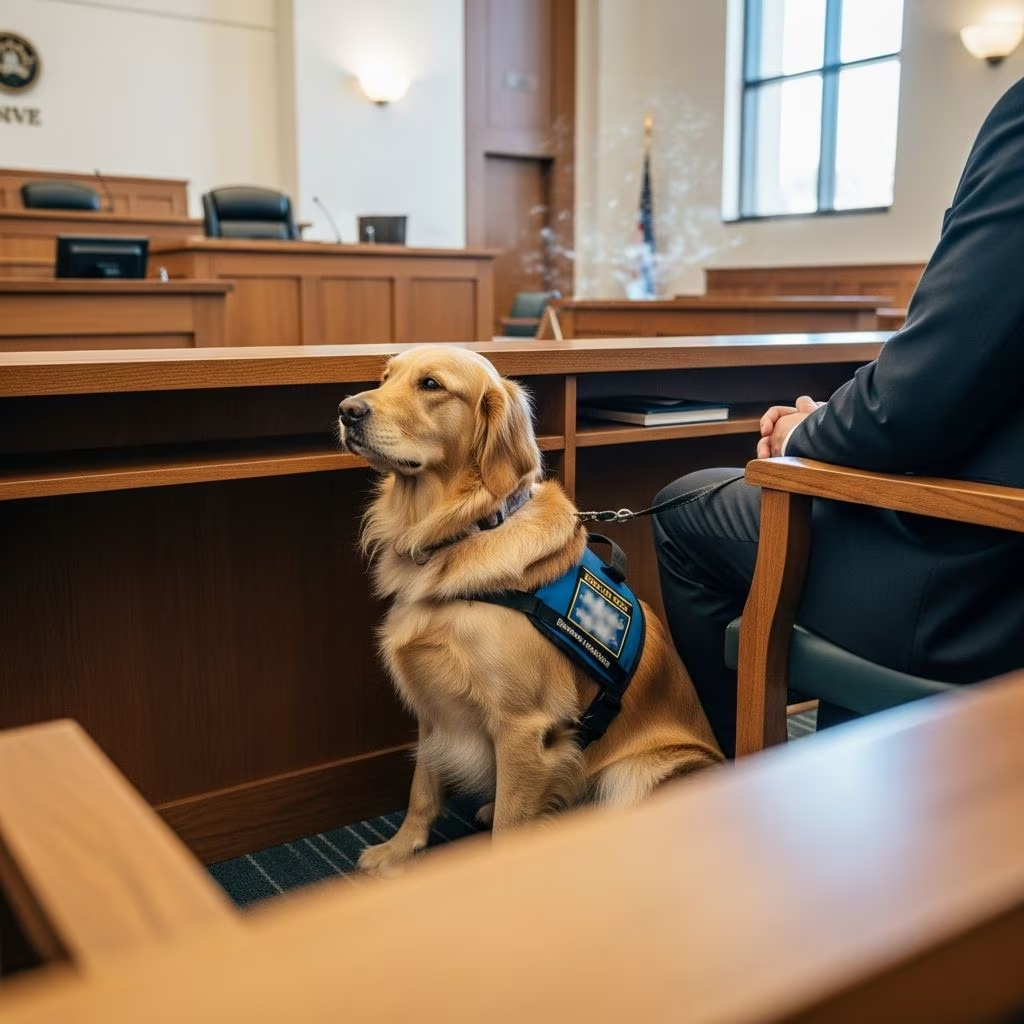
Service animals play a crucial role in supporting individuals with disabilities during legal proceedings, ensuring equal access to justice. Under federal law, primarily the Americans with Disabilities Act (ADA), qualified handlers have the right to bring their service dogs into public facilities, including courthouses, subject to specific conditions.
Defining Service Animals Under Federal Guidelines
The cornerstone of service animal rights is the ADA’s precise definition: a service animal is a dog individually trained to perform tasks directly related to a person’s disability. This excludes emotional support animals, which provide comfort but lack task-specific training, and other species beyond dogs and miniature horses in limited contexts.
- Task examples: Guiding the visually impaired, alerting to seizures, retrieving items, or interrupting harmful behaviors during psychiatric episodes.
- Exclusions: Pets, comfort animals, or untrained dogs do not qualify, even if they offer emotional benefits.
- Training requirement: Must be task-trained; no formal certification is needed, but proof via demonstration may be requested.
Courts, as public entities under ADA Title II, must permit service animals in areas open to the public, such as courtrooms, lobbies, and hearing rooms.
Courtroom Access: Federal and State Overlaps
Courthouses fall under ADA Title II, mandating accommodations for service animals without extra fees or separate areas, provided the animal does not pose a direct threat or fundamentally alter proceedings. Handlers remain liable for damages caused by the animal.
State laws often align with or expand ADA protections. For instance, California’s Fair Employment and Housing Act (FEHA) defines service animals broadly for public accommodations, including judicial facilities. Many states impose criminal penalties for interfering with service animals, reinforcing access rights.
| State Example | Key Provision | Penalties for Interference |
|---|---|---|
| California | Right to service animals in all public facilities under FEHA and Unruh Act | Civil penalties, damages |
| Maryland | Service dogs for blind, deaf, or mobility impaired | Misdemeanor violations |
| Maine | Broad disability coverage, Class E crime for denial | Fines up to $1,000 |
Variations exist; some states include miniature horses or psychiatric service dogs explicitly, but courts prioritize ADA standards for consistency.
Handler Responsibilities and Court Protocols
While access is protected, handlers must ensure control via voice commands, signals, or leash (harnesses optional unless task-required). Courts may inquire only about: (1) if it’s a service animal required due to disability, and (2) what tasks it performs. No demands for documentation, IDs, or vests.
- Control standards: Animal must remain under handler’s direction at all times.
- Health compliance: Subject to local vaccination and licensing like all dogs.
- Court discretion: Judges can exclude if the animal is disruptive, aggressive, or uncontrollably barking, after warnings.
In practice, notify the court clerk or ADA coordinator in advance for smooth integration, though not legally required. Virtual proceedings may limit animal involvement, focusing on audio accommodations instead.
Distinguishing Service Animals from Other Types
Confusion arises with emotional support animals (ESAs), protected under housing (Fair Housing Act) and air travel laws but not ADA public access, including courts. ESAs lack task training, disqualifying them from courtroom entry as service animals.
Key Differences Table:
| Category | Legal Protection in Courts | Training Required | Examples |
|---|---|---|---|
| Service Animal | ADA Title II: Yes | Task-specific | Seizure alert dog |
| Emotional Support | No, unless task-trained | Comfort only | Anxiety relief pet |
| Therapy Animal | No | Public interaction | Visitation dog |
| Pet | No | None | Companion dog |
Misrepresentation can lead to removal and potential contempt charges, emphasizing honest disclosure.
Practical Scenarios: Bringing Your Service Animal to Court
Consider a litigant with PTSD relying on a dog trained to create space during panic attacks. Upon arrival, security screens for threats but cannot deny based on breed or appearance alone. In the courtroom, the dog stays at-foot or in a designated spot, unobtrusive during testimony.
Challenges include high-stress environments potentially triggering behaviors. Preemptive communication with court staff helps; some jurisdictions offer quiet rooms or breaks.
For witnesses or jurors, accommodations extend similarly, though jury sequestration may require separate arrangements.
Legal Recourse for Denials or Interference
Wrongful denial constitutes ADA violation, actionable via DOJ complaints or lawsuits for injunctive relief and damages. States add teeth: California’s Unruh Civil Rights Act allows treble damages. Interfering (e.g., distracting or harming the animal) incurs misdemeanors or civil liabilities in most states.
- File ADA complaint online at ada.gov.
- Contact state AG for local laws.
- Document incidents with witnesses and photos.
Recent Developments and 2026 Considerations
As of 2026, ADA guidance remains stable post-2011 revisions narrowing to dogs only for titles II/III. DOT transportation rules retain broader definitions for transit to courts. Courts increasingly adopt hybrid models post-pandemic, where service animals aid in-person but tech supports remote access.
Pending cases test boundaries, like service animals during jury duty, affirming broad rights absent disruption.
Frequently Asked Questions (FAQs)
Can I bring my service dog to any courtroom?
Yes, under ADA Title II, unless it poses a direct threat or is out of control.
Do service animals need special vests or IDs?
No, vests are optional; courts cannot require certification.
What if my emotional support cat helps me in court?
Cats are not ADA service animals; access denied unless state law differs for housing.
Who pays for damages if my service dog causes any?
The handler is responsible.
Can courts ban service animals for breed reasons?
No, breed-neutral policies required.
What about service animals in training?
Not covered under ADA; some states protect them separately.
How do I report a court denying my service animal?
Use ada.gov complaint form or consult state disability rights office.
This comprehensive guide empowers individuals to advocate effectively, balancing disability rights with judicial decorum. Always verify local court rules for specifics.
References
- Service Animals — California Department of Justice. 2023. https://oag.ca.gov/system/files/media/drb-service-animals.pdf
- Table of State Service Animal Laws — Animal Legal & Historical Center. 2024-01-15. https://www.animallaw.info/topic/table-state-assistance-animal-laws
- Service Animals – Disability Law in the United States — Library of Congress. 2025-06-10. https://guides.loc.gov/disability-law/service-animals
- ADA Requirements: Service Animals — U.S. Department of Justice. 2024-09-20. https://www.ada.gov/resources/service-animals-2010-requirements/
- Service Animals — U.S. Department of Transportation. 2025-03-05. https://www.transportation.gov/resources/individuals/aviation-consumer-protection/service-animals
- What is the Americans with Disabilities Act (ADA) definition of a service animal — U.S. Department of Transportation. 2024-11-12. https://www.transit.dot.gov/what-americans-disabilities-act-ada-definition-service-animal
- Frequently Asked Questions about Service Animals and the ADA — U.S. Department of Justice. 2025-02-18. https://www.ada.gov/resources/service-animals-faqs/