
Selling Products on TV: Your Complete Roadmap
Unlock massive sales potential by mastering TV product marketing, from infomercials to shopping networks and targeted ads.
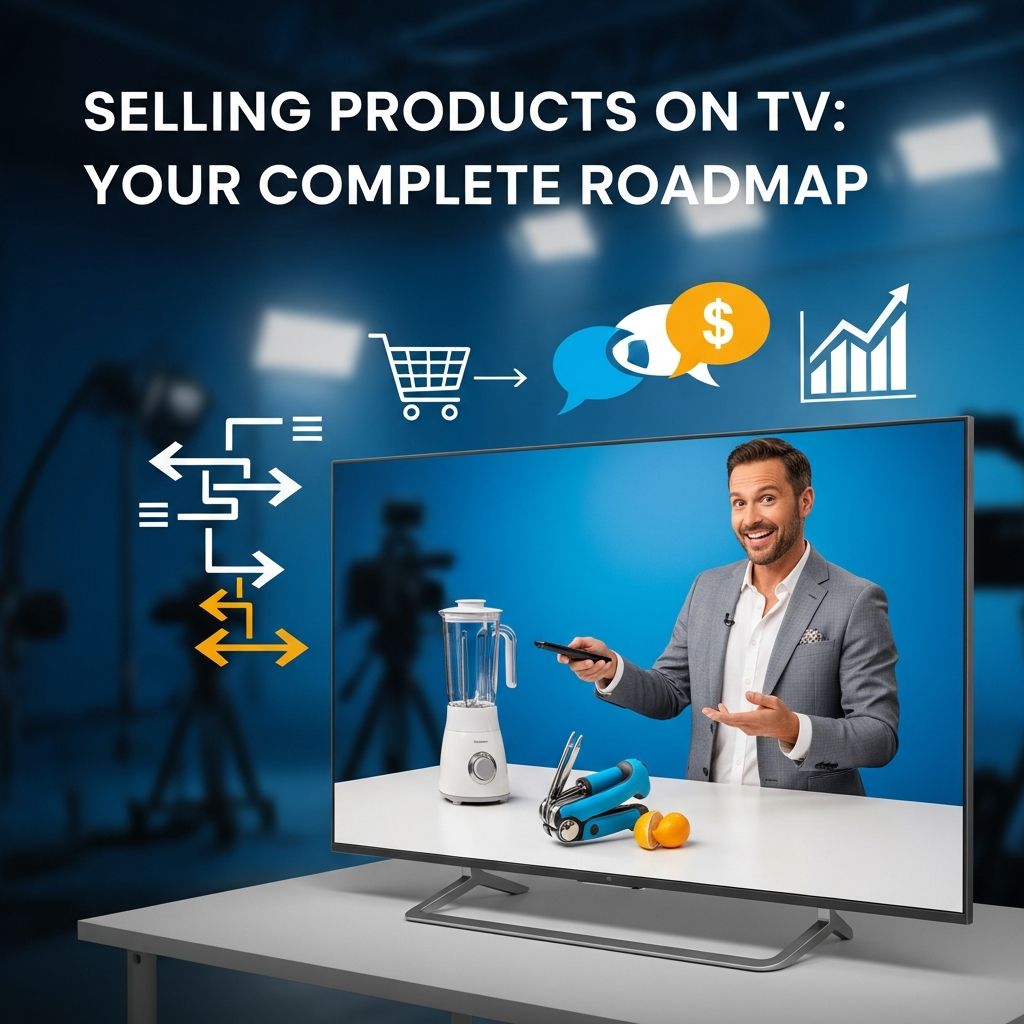
Television remains a powerhouse for product sales, reaching millions through infomercials, home shopping networks, and targeted commercials. Small businesses can tap into this medium by following a structured approach that emphasizes preparation, strategic targeting, compelling content creation, and ongoing optimization. This guide provides actionable insights to help entrepreneurs launch successful TV campaigns.
Understanding the TV Sales Landscape
TV product marketing thrives on creating immediate viewer desire and facilitating quick purchases. Home shopping giants like QVC and HSN dominate by blending entertainment with sales, while infomercials offer longer formats to demonstrate value. Local and national ads provide flexibility for broader reach. According to industry data, TV influences buying decisions more than any other medium, with 90% of U.S. adults encountering product ads daily.
Success hinges on matching your product to the right format: short spots for impulse buys, 30-minute infomercials for complex items requiring explanation, or live shopping for interactive engagement. Emerging trends include connected TV (CTV) platforms, blending traditional broadcast with streaming precision.
Step 1: Evaluate Product Readiness for TV
Before investing, assess if your product suits TV. Ideal candidates solve common problems, offer visual appeal, and promise quick results—think kitchen gadgets, beauty tools, or fitness gear. Test market fit with focus groups or online sales data.
- Visual Demonstration: Can benefits be shown dramatically in under 2 minutes?
- Price Point: $20–$100 range performs best for impulse buys.
- Unique Selling Proposition (USP): Highlight what sets it apart, like patented tech or testimonials.
- Supply Chain: Ensure inventory scales with potential demand spikes.
Conduct a trial run on social media or e-commerce to validate demand. Products with proven online traction convert better on TV.
Step 2: Identify Optimal TV Platforms and Audiences
Select channels aligning with your target demographic. Shopping networks suit lifestyle products; local stations work for regional goods; national cable for mass appeal.
| Platform Type | Best For | Audience Reach | Cost Range |
|---|---|---|---|
| Home Shopping (QVC, HSN) | Consumer goods, demos | 80M+ households | Product-based (revenue share) |
| Infomercial Slots | Detailed pitches | National syndication | $10K–$100K per slot |
| Local TV | Regional products | Designated Market Areas | $500–$5K per spot |
| Connected TV (CTV) | Targeted digital ads | Streaming viewers | CPM $20–$50 |
Research viewer analytics from network sites to match demographics. For instance, food networks favor kitchen innovations.
Step 3: Develop a Compelling Product Presentation
Your on-air demo is the sales engine. Structure it around need creation, information delivery, and urgent calls-to-action. Use storytelling: show the problem, reveal your solution, and prove results with live demos or user stories.
- Before/After Visuals: Demonstrate transformation instantly.
- Testimonials: Feature real customers for credibility—video boosts conversions by 32%.
- Scarcity Tactics: Limited-time offers drive immediacy.
- Clear CTA: Toll-free numbers, websites, or QR codes simplify buying.
Produce high-quality footage with professional crews. Budget 40% of campaign costs for creative. Test variations to refine messaging.
Step 4: Pitching to Networks and Buyers
Craft targeted pitches after researching acquisition teams. Personalize emails with channel-specific insights, like programming gaps.
Essential Pitch Kit:
- High-res product images and video demo.
- One-page sell sheet: USP, pricing, sales history.
- Sales data from prior channels or online.
- Proposed airtime and revenue model.
Contact ad reps via network directories. For shopping channels, submit via vendor portals. Follow up persistently but professionally.
Navigating Legal and Business Essentials
TV sales involve contracts covering licensing, territories, and fees. Consult attorneys for compliance with FTC rules on claims and disclosures.
- Intellectual Property: Trademark products; license endorsements.
- Liability Insurance: Cover product defects or demo mishaps.
- Revenue Models: Per-order fees, flat licensing, or rev-share.
- Manufacturing Scale-Up: Partner with reliable suppliers for volume.
Key terms: exclusivity periods (1–3 years), territories (U.S.-only vs. global), and minimum guarantees.
Budgeting and Media Buying Strategies
TV isn’t cheap—expect $50K+ for starters. Allocate: 40% production, 40% media buys, 20% fulfillment.
Work with media buyers for optimal slots. Use CPM (cost per mille) for ads; negotiate based on ratings. Track ROI with unique phone lines or promo codes.
For local TV, leverage geotargeting for precision. Scale nationally post local success.
Measuring Success and Iterating
Set KPIs: response rate, conversion, ROAS (return on ad spend). Aim for 2–5x return initially.
| Metric | Target | Tracking Tool |
|---|---|---|
| Response Rate | 1–3% | Call tracking software |
| Conversion Rate | 5–10% | E-commerce analytics |
| ROAS | 3x+ | Media agency reports |
Analyze hot/cold spots, refine creatives, and A/B test. Successful campaigns evolve quarterly.
Case Studies: Real-World Wins
Snuggie blankets exploded via infomercials, hitting $200M sales through humor and utility demos. OxiClean leveraged Billy Mays’ energy for household dominance. Small brands like Scrub Daddy scaled from QVC to retail empires. Lessons: authenticity, repetition, and fulfillment speed.
Future-Proofing Your TV Strategy
Integrate TV with digital: retarget viewers online via CTV data. Shoppable TV on Roku/Amazon Fire TV merges broadcast with e-comm. AI optimizes ad placement in real-time[10]. Stay agile amid cord-cutting.
Frequently Asked Questions (FAQs)
What products sell best on TV?
Visual, problem-solving items under $100 with demos, like gadgets and beauty products.
How much does a TV infomercial cost?
$50K–$500K including production and airtime; ROI-focused budgeting is key.
Do I need a lawyer for TV deals?
Yes, for contracts, FTC compliance, and IP protection.
Can small businesses afford TV advertising?
Start local ($1K/month) or product-based models on shopping channels with no upfront media costs.
How long until I see sales results?
Immediate from live spots; 4–6 weeks for optimized campaigns.
References
- How to Sell Content to TV Channels in 5 Steps — Vitrina.ai. 2023-05-15. https://vitrina.ai/blog/how-to-sell-content-to-tv-channels-in-5-steps/
- How To Market Your Product On TV — PTPA Awards. 2024-02-10. https://www.ptpaawards.com/blog/how-to-market-your-product-on-tv/
- Local TV Advertising 101: Beginner’s Guide for 2026 — MNTN. 2025-11-20. https://mountain.com/blog/local-tv-advertising/
- Media Buying 101: Your Guide to TV Buys — Appleton Creative. 2024-08-05. https://www.appletoncreative.com/media-buying-101-your-guide-to-tv-buys/
- How to Sell a Product on TV — Michel & Associates, P.C. 2023-10-12. https://michellawyers.com/how-to-sell-a-product-on-tv/
- TV Advertising Guide 2025: Types, Metrics & Buying — Simulmedia. 2025-01-15. https://www.simulmedia.com/blog/basics-of-tv-advertising-a-beginner-guide
- Local TV Advertising: A Complete Guide & How to Get Started — Amazon Advertising. 2025-06-01. https://advertising.amazon.com/library/guides/local-tv-advertising
Similar Articles








Read full bio of medha deb


