
Seeing Through Deceptive Weight Loss Ads
Learn how to decode bold weight loss promises, spot fake claims, and choose safer, realistic paths to managing your weight.
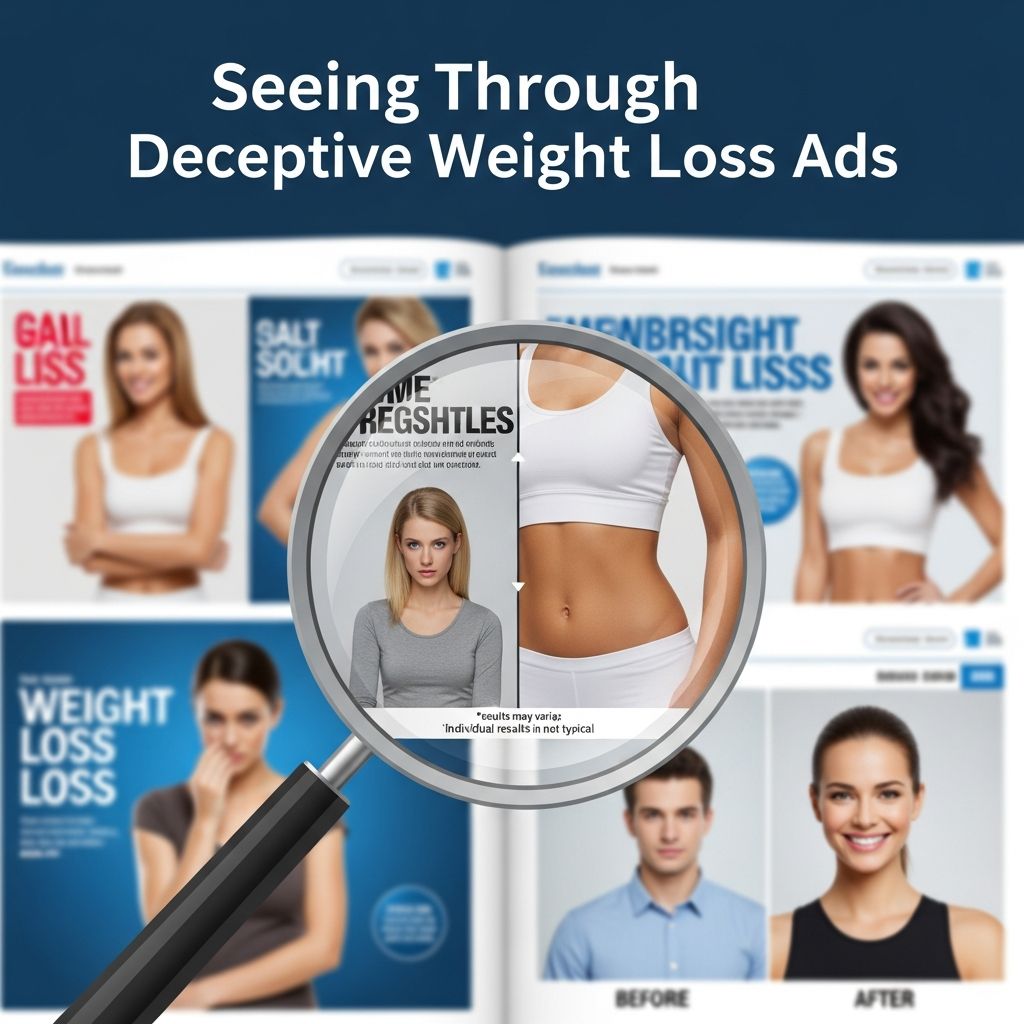
Weight loss is a multi-billion-dollar industry, and deceptive advertisers know that many people feel frustrated, overwhelmed, or desperate about their weight. That makes wild promises and miracle cures especially tempting. This guide explains how to recognize misleading weight loss ads, what healthy weight loss really looks like, how the law protects you, and what to do if you think you have been misled.
Why Weight Loss Advertising Is So Often Misleading
Advertisers know that people looking to lose weight want fast, easy, and permanent results. Dishonest marketers exploit those hopes with products that often have little or no scientific support. According to U.S. health authorities, obesity and overweight are complex conditions influenced by biology, behavior, environment, and medications, not just willpower, so there is no simple one-size-fits-all fix.
Yet many ads ignore this complexity and suggest that a single pill, tea, patch, or powder can overcome all those factors effortlessly. Understanding this disconnect is the first step in resisting unrealistic pitches.
Classic Red Flags in Weight Loss Ads
Most deceptive ads rely on a small set of predictable tricks. If you see any of the following claims, treat them as a warning sign that the product may be bogus or unsafe.
1. Promises of Big Results With Little Effort
- “Lose weight without diet or exercise”
- “Eat whatever you want and still lose weight”
- “No need to change your lifestyle”
Health experts agree that meaningful, sustained weight loss almost always requires some combination of calorie control, healthier food choices, and physical activity tailored to your situation. Any ad claiming you can ignore all of that is highly suspect.
2. Claims of Fast, Dramatic Weight Loss
Another common gimmick is promising rapid, large losses in a very short time, like “30 pounds in 30 days” or “drop four dress sizes this month.” Safe, sustainable weight loss is usually gradual. U.S. public health guidance often notes that losing about 1–2 pounds (roughly 0.5–1 kg) per week is a reasonable goal for many adults, depending on individual circumstances.
Ads that go far beyond this rate—especially without medical supervision—raise serious questions about both truthfulness and safety.
3. “Permanent” Results From a Short-Term Product
- “Lose the weight for good and never worry again”
- “Results last forever – even if you stop using it”
Long-term weight management typically requires lasting changes in habits, environment, and sometimes ongoing medical care. Research consistently shows that many people regain some or all of the weight they lose over time unless they continue supportive behaviors and follow-up. No pill or patch by itself can guarantee permanent results.
4. One Product That Works for “Everyone”
People differ in their health conditions, medications, genetics, and metabolism. That is why official medical guidance emphasizes individualized treatment plans and lifestyle changes. When an ad insists its product works for all users—no exceptions—it’s ignoring basic medical reality.
5. Products You Wear or Rub On Your Skin
- Waist wraps, belts, or shapewear promising “fat melting”
- Creams, gels, or patches claiming to “flush fat”
While some medical patches can deliver specific, approved drugs, there is no credible evidence that simply wearing or rubbing on a non-prescription product can safely cause large, lasting weight loss. Ads suggesting huge losses from a simple patch or wrap should be treated as highly questionable.
6. “Scientific Breakthrough” Without Real Science
Some advertisers dress up their claims in scientific-sounding language or vague references to “clinical studies.” Ask yourself:
- Is the study published in a reputable, peer-reviewed medical journal?
- Was it done in humans, with enough participants to be meaningful?
- Were the results modest and realistic, or extreme and sensational?
Credible weight management research typically reports modest average loss, often combined with diet and exercise advice and conducted under medical supervision—not overnight transformations.
Realistic Expectations: What Healthy Weight Loss Looks Like
To see why many advertising promises are misleading, it helps to know what health authorities consider realistic and safe. This can vary by individual, but some general principles are widely accepted.
| Claim Type | Too-Good-To-Be-True Example | What Health Experts Commonly Support |
|---|---|---|
| Speed of weight loss | “Lose 20 pounds in 2 weeks, guaranteed” | Gradual loss (often about 1–2 lb per week for many adults), adjusted to individual health and under guidance when needed |
| Effort required | “No diet, no exercise, no changes” | Calorie control, healthier food choices, and physical activity are usually involved, adapted to the person |
| Universality | “Works for everyone, no matter what” | Approaches are customized based on health, medications, and preferences |
| Duration of results | “Permanent results after one short program” | Long-term maintenance often requires ongoing lifestyle strategies and follow-up |
The Role of the Law and Consumer Protection
In the United States, advertising for weight loss products is subject to consumer protection laws. Agencies can take action when companies make false or misleading claims or fail to back their promises with reliable evidence.
These laws aim to ensure that claims are truthful, not exaggerated, and supported by sound science. However, enforcement cannot prevent every misleading ad from appearing, especially online and on social media. That makes your own skepticism and knowledge essential.
What Advertisers Are Supposed to Do
- Have solid scientific evidence before claiming that a product causes weight loss.
- Ensure that testimonials and before-and-after photos are not misleading about typical results.
- Disclose important conditions or limitations clearly, not hidden in tiny print or buried in terms and conditions.
- Avoid implying that a product is risk-free or medically endorsed when it is not.
When Companies Get Into Trouble
Enforcement actions have been brought against companies that made inflated claims, misrepresented how much weight consumers could expect to lose, or promoted supplements as if they were proven treatments. In some cases, authorities have ordered refunds to consumers and banned companies from making certain health claims without strong evidence.
How to Evaluate a Weight Loss Ad Step by Step
Whenever you see a weight loss pitch—on TV, in your social media feed, or on a website—use this quick process to assess it.
Step 1: Read Beyond the Headline
- Check for small-print footnotes or conditions that change the meaning of the big promise.
- Look for phrases like “results not typical,” “combined with diet and exercise,” or “individual results vary.”
Step 2: Look for Independent Evidence
- Is there a reference to a real clinical study in a respected medical journal?
- Can you find information about the active ingredients on reputable medical or government websites?
- Does the evidence involve people like you in age, health status, and baseline weight?
Step 3: Question Before-and-After Photos and Testimonials
Testimonials and photos can be staged, cherry-picked, or edited. Consider:
- Are the time frames between “before” and “after” realistic?
- Do testimonials sound scripted or identical?
- Is there any disclosure about what most users can expect, not just the best-case stories?
Step 4: Check for Conflicts of Interest
- Is the “expert” in the ad clearly tied to the company?
- Are reviews sponsored, compensated, or filtered to remove negative feedback?
In some cases, authorities have acted against companies that suppressed negative reviews or used fake positive ones to make weight loss programs look more effective than they are.
Safer Ways to Pursue Weight Management
Being skeptical of ads does not mean giving up on your health goals. Instead, it means focusing on strategies backed by credible science and tailored to your circumstances.
Talk With a Qualified Health Professional
For many people, especially those with medical conditions, consulting a clinician is an important first step. Major medical organizations recommend individualized plans that can include:
- Calorie-aware eating patterns emphasizing nutrient-dense foods
- Physical activity appropriate to your abilities and health status
- Behavioral strategies like goal-setting and self-monitoring
- Evidence-based medications or bariatric surgery in select cases, under strict supervision
Set Modest, Measurable Goals
Even modest weight loss can lead to health benefits, such as improved blood pressure or blood sugar, in some people. You do not need to achieve dramatic numbers for your efforts to matter. Gradual, sustained changes tend to be more realistic and livable.
Be Cautious With Supplements
Dietary supplements marketed for weight loss are not reviewed for effectiveness before they reach the market, and some have been found to contain unsafe or undisclosed ingredients. Before trying any supplement:
- Check whether a government health agency has issued safety alerts about the product or ingredient.
- Discuss it with a healthcare professional, especially if you take other medications.
- Be skeptical of any supplement claiming large or guaranteed losses.
What To Do If You Suspect a Scam
If you believe a weight loss ad tricked you, or you see one that appears deceptive, you can take steps to protect yourself and others.
- Document the ad: Save screenshots, product names, dates, and website or platform details.
- Contact your bank or card issuer if you have concerns about unwanted charges or auto-renewals.
- Report misleading advertising to consumer protection or regulatory authorities in your country.
- Warn friends and family so they can avoid similar traps.
Frequently Asked Questions (FAQs)
Q1: Are any weight loss products advertised on TV or online actually effective?
Some programs and medications do have evidence behind them, but many heavily advertised products exaggerate their benefits. Evidence-based options usually involve some combination of calorie control, physical activity, behavioral support, and, in certain cases, prescription medications or surgery under medical supervision. Always verify claims with reliable health sources and discuss them with a healthcare professional.
Q2: How much weight can I realistically expect to lose?
Realistic expectations depend on your starting point, health conditions, and approach. Public health and medical guidance often describe a common target of about 1–2 pounds per week for many adults, though some people will lose more slowly or quickly depending on their circumstances. Even modest losses can produce health benefits for some individuals.
Q3: Are “natural” or “herbal” weight loss supplements safer?
“Natural” or “herbal” does not automatically mean safe or effective. Some natural products can interact with medications, affect the heart or liver, or be contaminated with other substances. Rely on evidence and safety information, not marketing terms, when evaluating any supplement.
Q4: How can I tell if a testimonial is trustworthy?
Testimonials should never be your main basis for deciding. Even when genuine, they represent individual experiences and may not reflect typical results. If a testimonial implies dramatic results, look for clear statements of what most users can expect and whether independent evidence backs up the claims.
Q5: Is it worth reporting misleading ads?
Yes. Reporting can help authorities identify patterns of deception, take enforcement action, and sometimes secure relief for consumers. Your report may help prevent others from being misled or harmed.
References
- Healthy Weight, Nutrition, and Physical Activity — Centers for Disease Control and Prevention. 2023-05-15. https://www.cdc.gov/healthyweight/index.html
- Clinical Practice Guideline for the Evaluation and Treatment of Obesity in Adults — The Obesity Society / American Association of Clinical Endocrinology. 2022-06-30. https://doi.org/10.4158/GL-2022-0405
- VA/DoD Clinical Practice Guideline for the Management of Adult Overweight and Obesity — U.S. Department of Veterans Affairs & Department of Defense. 2020-02-01. https://www.healthquality.va.gov/guidelines/CD/obesity/
- Dietary Supplements for Weight Loss — National Institutes of Health, Office of Dietary Supplements. 2023-07-01. https://ods.od.nih.gov/factsheets/WeightLoss-Consumer/
- Advertising and Marketing Basics — Federal Trade Commission. 2022-08-01. https://www.ftc.gov/business-guidance/advertising-marketing
Similar Articles








Read full bio of medha deb


