
Understanding the Secretary of State Role
Explore the essential duties and responsibilities of America's chief diplomat.
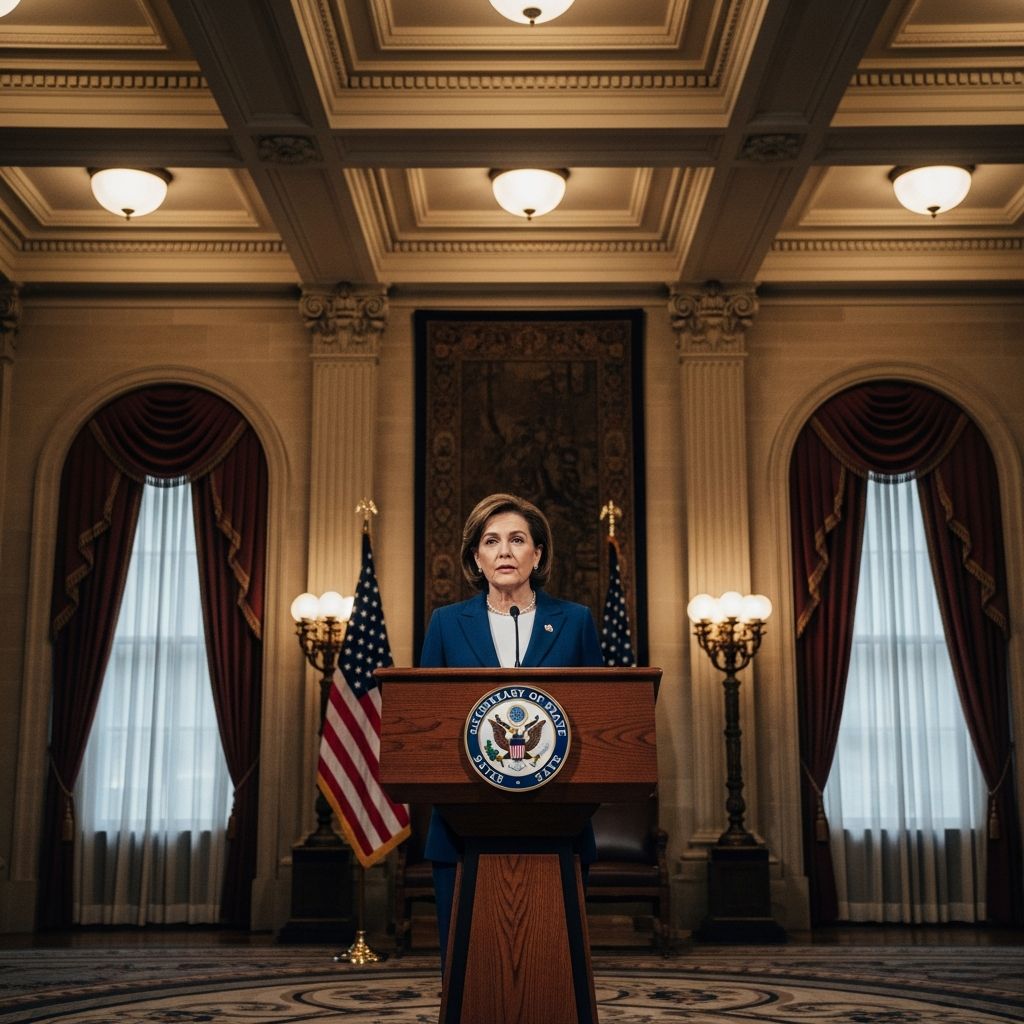
The Nation’s Chief Diplomat: An Overview of the Secretary of State
The Secretary of State represents one of the most influential and prestigious positions within the United States federal government. Serving as the head of the U.S. Department of State, this cabinet official functions as the nation’s chief diplomat, wielding considerable authority over international relations and foreign policy implementation. Established in 1789 with Thomas Jefferson serving as the inaugural officeholder, the Secretary of State has evolved from a position focused solely on diplomatic correspondence to a multifaceted executive role managing thousands of employees and overseeing complex global negotiations. Today, this position encompasses responsibilities ranging from treaty negotiations to visa issuance, making it indispensable to American governance and international standing.
Presidential Cabinet Hierarchy and Succession
Within the presidential cabinet structure, the Secretary of State occupies a position of paramount importance. This official ranks as the second-highest member of the cabinet, superseded only by the Vice President in hierarchical order. Beyond ceremonial ranking, the Secretary of State holds significant constitutional weight: the individual fourth in the presidential line of succession, meaning that if the President, Vice President, and Speaker of the House become unable to discharge their duties, the Secretary of State assumes the presidency. This provision underscores the position’s fundamental importance to national governance and continuity.
When considering cabinet influence, the Secretary of State occupies a unique status alongside three other officials: the Secretary of the Treasury, Secretary of Defense, and Attorney General. These four positions are universally recognized as the most critical cabinet roles due to the scope and significance of their respective departments. The Secretary of State’s inclusion in this elite tier reflects the paramount importance of foreign affairs to national security and economic prosperity.
Core Responsibilities in Foreign Policy Formation
The fundamental obligation of the Secretary of State involves serving as the principal foreign policy advisor to the President. In this capacity, the Secretary provides counsel on all matters pertaining to international relations, helping shape the administration’s approach to global challenges and opportunities. This advisory role transcends mere suggestion; the Secretary actively participates in deliberations concerning which nations to engage with, how to manage diplomatic relationships, and which international agreements to pursue or terminate.
A critical component of the Secretary’s responsibilities includes managing diplomatic personnel appointments and dismissals. The Secretary advises the President regarding the selection of ambassadors, ministers, and consuls who will represent American interests abroad. When diplomatic representatives require recall or dismissal, the Secretary provides recommendations and oversees the administrative processes involved. This personnel management function ensures that qualified, experienced diplomats represent the United States in foreign capitals and international organizations.
Treaty Negotiation and International Agreements
The Secretary of State possesses broad authority regarding international treaties and agreements. Unlike routine diplomatic matters, treaty negotiation represents a fundamental power wielded by this office. The Secretary can conduct negotiations, interpret existing treaties, and recommend termination of agreements no longer serving national interests. This authority extends beyond bilateral agreements; the Secretary frequently participates in multilateral negotiations affecting trade, security, environmental protection, and humanitarian concerns.
The process of treaty development often requires the Secretary to represent American interests at international conferences and within global organizations. Whether participating in United Nations proceedings, regional security forums, or specialized international bodies, the Secretary articulates American positions and negotiates on behalf of the nation. This diplomatic presence at the highest international levels ensures that American perspectives influence global decision-making processes affecting millions of people worldwide.
Department of State Operations and Oversight
Beyond diplomatic functions, the Secretary of State manages one of the federal government’s largest and most complex departments. The Department of State employs approximately 30,000 individuals and manages a substantial budget exceeding $35 billion annually. These resources fund operations spanning the globe, from embassies and consulates to specialized agencies addressing international development and humanitarian concerns.
The Secretary’s administrative responsibilities encompass several critical operational areas:
- Oversight of the United States Foreign Service, which includes career diplomats and specialized staff deployed internationally
- Management of the Civil Service contingent handling domestic policy implementation and administrative functions
- Direction of the U.S. Agency for International Development, which administers foreign aid programs and development assistance
- Supervision of consular operations responsible for passport issuance and citizen services abroad
- Control of diplomatic security divisions protecting American personnel and facilities worldwide
Immigration and Nationality Authority
The Secretary of State exercises significant authority over immigration and nationality matters affecting Americans and foreign nationals. While other agencies share immigration enforcement responsibilities, the Secretary’s department handles specific functions including the determination of nationality for persons not residing in the United States and oversight of consular visa operations. This authority enables the Secretary to influence who enters the country and how American citizenship is recognized internationally.
The Secretary also establishes regulations governing immigration procedures, prescribes required documentation and reporting forms, and issues instructions for consular officers worldwide. These regulatory powers shape the practical experience of millions of individuals seeking to enter the United States or obtain American visas. The Secretary can delegate immigration administration authority to designated administrators and other State Department officials, ensuring efficient execution across thousands of consular posts globally.
Citizen Services and Protection Abroad
A frequently overlooked responsibility of the Secretary of State involves protecting American citizens living or traveling internationally. The Department of State provides essential services including passport issuance, travel advisories, and emergency assistance to citizens facing difficulties abroad. When Americans encounter legal troubles, medical emergencies, or security threats in foreign countries, the Secretary’s department coordinates response efforts through consular officials stationed worldwide.
This protective function extends beyond individual assistance; the Secretary ensures that American property and interests receive recognition and protection under international law and bilateral agreements. Should foreign governments threaten American citizens or investments, the Secretary possesses tools including diplomatic protests, economic sanctions recommendations, and international legal proceedings to safeguard national interests.
Legislative Communication and Public Diplomacy
The Secretary of State maintains critical communication channels with Congress and the American public regarding foreign policy matters. Regular testimony before Congressional committees ensures legislative oversight of foreign policy decisions and appropriations. The Secretary articulates administration positions to elected representatives, responds to constituent concerns, and seeks Congressional support for international initiatives.
Beyond Congressional relations, the Secretary influences public understanding of foreign policy through speeches, media appearances, and diplomatic engagement with foreign publics. This public diplomacy function shapes international perceptions of American values and intentions, contributing to soft power influence that complements military and economic strength.
Selection Process and Congressional Confirmation
The pathway to this prestigious position begins with presidential nomination and concludes with Senate confirmation. The President selects the Secretary of State, though this choice must gain approval from the Senate Committee on Foreign Relations before the full Senate votes on confirmation. This constitutional process ensures that the chief diplomat possesses not only presidential confidence but also legislative support, preventing any single branch from monopolizing control over foreign policy.
The confirmation process subjects candidates to extensive questioning regarding their foreign policy philosophies, diplomatic experience, and vision for American international engagement. Senators scrutinize nominees’ previous statements, financial interests, and international relationships to assess suitability for this sensitive position. Once confirmed, the Secretary serves at presidential pleasure, able to be dismissed if the President determines a change in personnel would better serve national interests.
Evolution and Modern Challenges
Since its establishment in 1789, the Secretary of State’s role has continuously adapted to changing international conditions. The position has expanded from managing diplomatic correspondence and representing American interests at European courts to addressing transnational terrorism, climate change, pandemic disease, cyber warfare, and nuclear proliferation. Modern Secretaries must navigate complex relationships with dozens of nations simultaneously, manage multinational organizations with competing interests, and respond rapidly to international crises affecting American security and prosperity.
The Secretary of State today operates within an interconnected world where decisions in one region immediately affect others. International economic interdependence, global communication networks, and transnational challenges require diplomatic solutions alongside military and economic tools. The modern Secretary must balance traditional alliance relationships with emerging powers, address humanitarian concerns while advancing national interests, and build international consensus on problems that no single nation can solve alone.
The National Security Council Role
The Secretary of State serves as a statutory member of the National Security Council, the President’s principal forum for deliberating national security and foreign policy decisions. In this capacity, the Secretary participates alongside the Secretary of Defense, Director of the CIA, Chairman of the Joint Chiefs of Staff, and other senior officials in reviewing intelligence assessments, evaluating military options, and recommending policy courses of action to the President. This membership ensures that diplomatic perspectives inform security decision-making and that military considerations receive civilian policy guidance.
Frequently Asked Questions
Q: How does the Secretary of State differ from the Secretary of Defense?
A: While both are cabinet-level positions focusing on national security, the Secretary of State emphasizes diplomatic solutions, international relations, and foreign policy development, whereas the Secretary of Defense oversees military operations and defense strategy. Both positions carry equal cabinet rank but different operational focuses.
Q: Can the President remove the Secretary of State without Senate approval?
A: Yes, the President may dismiss the Secretary of State at will without legislative approval. While Senate confirmation is required for initial appointment, continued service depends solely on maintaining presidential confidence.
Q: What qualifications are typically required for this position?
A: Candidates typically possess extensive experience in foreign policy, law, military service, business, or diplomacy. Advanced education, foreign language proficiency, and demonstrated understanding of international affairs strengthen candidacies.
Q: How many people work under the Secretary of State?
A: The Secretary oversees approximately 30,000 employees distributed across the Department of State, Foreign Service, and affiliated agencies worldwide, managing a budget exceeding $35 billion annually.
Q: What happens if the Secretary of State becomes incapacitated?
A: The Deputy Secretary of State assumes responsibilities and becomes acting Secretary of State until the President nominates and the Senate confirms a permanent replacement or the Secretary recovers from incapacity.
References
- United States Secretary of State — Wikipedia. https://en.wikipedia.org/wiki/United_States_Secretary_of_State
- 8 U.S. Code § 1104 – Powers and duties of Secretary of State — Cornell Law School. https://www.law.cornell.edu/uscode/text/8/1104
- DOC0100 DOCUMENT Character Sheet – Secretary of State ROLE — Situation Room Archives. https://situationroom.archives.gov/sites/default/files/file/SRE-Student-Role-Explanations.pdf
- United States Secretary of State — EBSCO Research Starters Politics and Government. https://www.ebsco.com/research-starters/politics-and-government/united-states-secretary-state
- What Does the Secretary of State Do? — Britannica. https://www.britannica.com/topic/What-Does-the-Secretary-of-State-Do
- The Secretary of State — United States Department of State. https://www.state.gov/secretary
Similar Articles








Read full bio of medha deb


