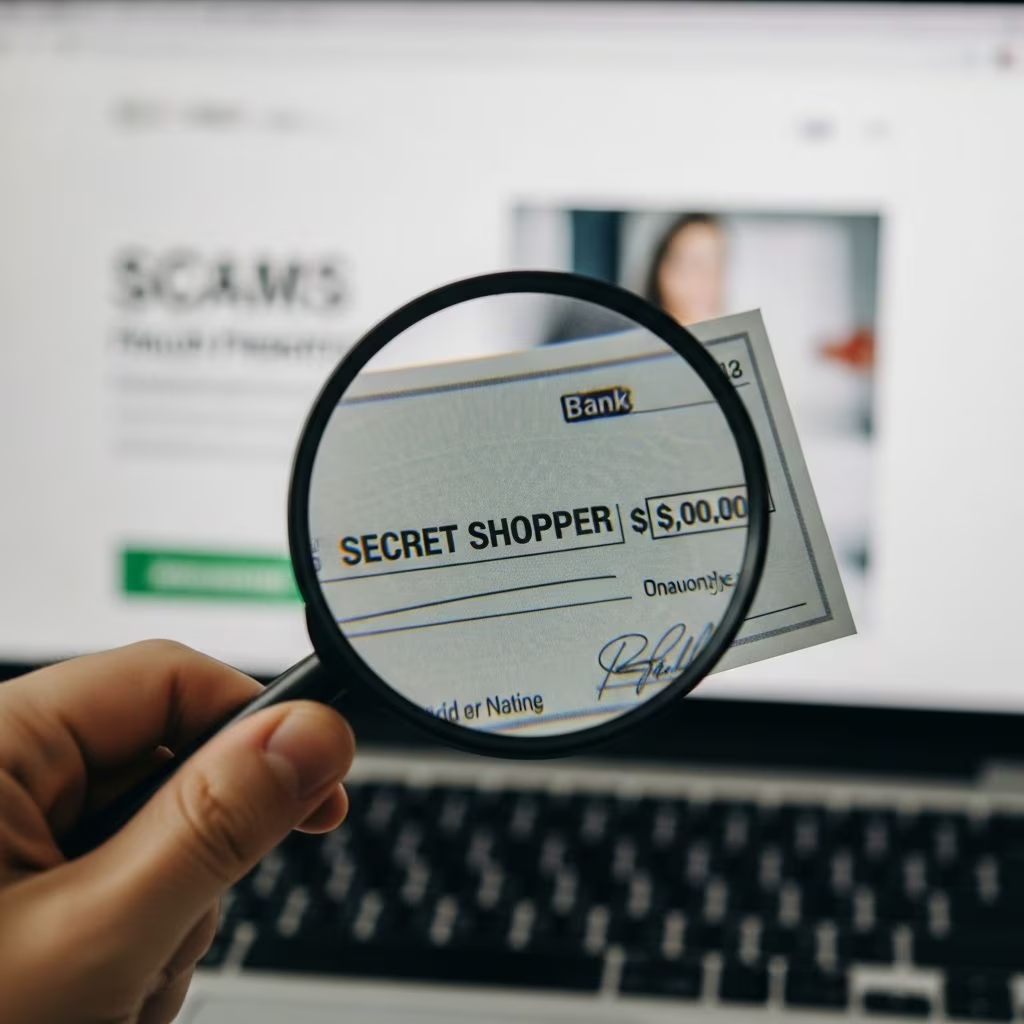
Secret or mystery shopping can be a legitimate way to earn a little extra money, but scammers have turned it into a powerful tool to drain people’s bank accounts. By combining phony job offers, fake checks, and gift card or wire transfer demands, they convince victims to send real money before anyone realizes the payment was counterfeit.
This guide explains how these scams work, the warning signs to watch for, how banks handle fake checks, and what you can do to protect yourself and your family.
What Is a Secret Shopper Check Scam?
A secret shopper check scam is a type of fake check scam in which criminals pose as employers offering paid mystery shopping jobs. They send you a check, tell you to deposit it, keep a portion as your “pay,” and then instruct you to send the rest back using gift cards, money transfers, or other irreversible payment methods.
Days or weeks later, the bank discovers the check is bogus. By then, the money you sent out is long gone, and you are responsible for the full amount of the bad check.
How the Scam Typically Unfolds
While individual stories differ, many secret shopper check scams follow a similar pattern:
- Unsolicited job offer – You receive a message through email, text, postal mail, or social media saying you have been selected as a mystery shopper, often without ever applying.
- Fake check arrives – The scammer sends a check, cashier’s check, or money order that appears to come from a major retailer, financial institution, or well-known brand.
- Deposit instructions – You are told to deposit the check immediately and assured that the money is yours as soon as it shows up as available in your account.
- Secret shopping “assignment” – Your first task is usually to evaluate a money transfer service or buy gift cards at a large retailer, such as a big-box store or supermarket.
- Send money back – You are instructed to send a portion of the funds via wire transfer, peer-to-peer payment app, or by giving the numbers from the back of gift cards. The remainder is described as your fee or reimbursement.
- Bad news from the bank – After the money has been sent, the bank determines the check is fake and reverses the deposit. You must repay the full amount and any associated fees.
Why Banks Release Funds Before a Check Fully Clears
One key reason these scams succeed is confusion about how check processing works. U.S. banking rules require financial institutions to make some or all of a deposited check’s funds available within a few business days, even though it can take considerably longer to uncover a counterfeit.
According to the Federal Deposit Insurance Corporation (FDIC):
- Banks often make funds available quickly as a courtesy and to comply with availability rules.
- However, discovering a fake check can take days or weeks, especially if it was expertly forged or drawn on a distant bank.
- If the check ultimately bounces, the account holder—not the bank—is liable for the full amount and any withdrawals made against it.
This timing gap creates an opening for scammers. They push you to spend or send money while the funds appear to be legitimately in your account but before the fraud is detected.
Common Variations of Mystery Shopping Check Scams
Although the core idea is the same, scammers adjust the details to make the story more convincing. Here are some frequent variations:
- Gift card evaluation – You are told to buy several high-dollar gift cards (often for popular retailers or app stores) and then send the card numbers and PINs as part of your “report.”
- Money transfer test – Your assignment is to rate the service and speed of a money transfer company by sending a transfer to someone you are told is a company evaluator.
- Mobile wallet or P2P payment trial – You are instructed to test a digital payment service by forwarding funds, even though the destination is controlled by the scammer.
- Overpayment scenario – The check is for more than your supposed fee or expenses, and you are asked to send back the extra amount as a sign of honesty.
- Corporate branding misuse – Criminals use names and logos of real companies to make the job offer, check, and instructions appear official, even though the businesses have nothing to do with the scheme.
Red Flags That Signal a Secret Shopper Check Scam
Recognizing the warning signs is one of the most effective ways to stay safe. The following red flags should make you extremely cautious:
- You never applied for the job, yet you are “hired” instantly or told you have been preselected.
- Payment arrives before any work, often by check or money order for a surprisingly high amount.
- Instructions to send money back via wire transfer, money order, peer-to-peer payment app, or gift card.
- Pressure to act quickly before your bank can fully verify the check.
- Requests for gift cards with instructions to scratch off and share the codes or send photographs of the cards.
- Guarantees of high income for simple mystery shopping tasks, such as promises of hundreds or thousands of dollars per week.
- Poor grammar or vague company information in emails or letters, or websites that do not list real clients or contact information.
As the Federal Trade Commission (FTC) emphasizes, any offer asking you to deposit a check and then send money out in any form is almost certainly a scam.
How Genuine Mystery Shopping Jobs Usually Work
Legitimate mystery shopping companies operate very differently from scammers. While each business has its own procedures, these characteristics are typical of real opportunities:
- You apply for the job through a company website or recognized job board rather than being chosen at random.
- Assignments are modest in scope and pay, usually part-time or occasional, not a replacement for a full-time salary.
- You typically use your own money for purchases during the shop and are reimbursed later, along with a small fee.
- Payment is made via more secure methods, such as direct deposit or a scheduled payment platform, not large, unsolicited checks.
- Legitimate companies do not ask you to send money, wire funds, or buy gift cards as part of any assignment.
| Feature | Legitimate Mystery Shop | Secret Shopper Check Scam |
|---|---|---|
| How you get the job | You apply through a company you research | You are contacted out of the blue and “hired” immediately |
| Payment timing | After you complete the assignment and report | Large check sent up front before any work |
| Use of your bank account | No request to move money for the company | Asked to deposit a check and send part of it back |
| Gift cards / wires | Rarely involved; never used to pay the company | Central to the assignment; codes or transfers must be sent |
| Income claims | Small supplemental pay | Promises of easy, high, or guaranteed income |
Steps to Take If You Receive a Suspicious Secret Shopper Offer
If an offer raises any concerns, take the following steps before depositing a check or responding:
- Do not deposit the check and do not use any of the funds.
- Independently verify the company by looking up its official website and contact information—do not rely on numbers or links in the message you received.
- Contact your bank and ask a representative to review the check and discuss your concerns.
- Search for the company name plus words like “scam” or “complaint” to see if others have reported similar offers.
- Ignore pressure to act fast; scammers often insist that delays will cause you to lose the job.
What to Do If You Already Deposited a Fake Check
If you have deposited a suspicious check or sent money as part of a mystery shopping assignment, act quickly. The faster you respond, the more options you may have to limit the damage.
- Contact your bank immediately. Explain what happened and ask whether any outgoing payments can be canceled or reversed.
- Stop communicating with the scammer. Do not respond to further calls, emails, or texts.
- Report the scam to the Federal Trade Commission (FTC), your state attorney general, and any platform where you encountered the offer.
- File a report with local law enforcement, especially if you experienced a significant financial loss.
- Monitor your accounts for unauthorized withdrawals or new accounts opened in your name.
How and Where to Report Mystery Shopping Scams
Reporting scams not only helps you document the incident but also aids authorities in tracking patterns and shutting down fraudulent operations. Consider the following reporting options:
- Federal Trade Commission (FTC): The FTC collects consumer complaints about fraud and uses them for investigations and public education. You can submit a report through its fraud-reporting portal.
- State Attorney General: Many states investigate consumer fraud and may have their own complaint systems.
- U.S. Postal Inspection Service: If the offer or check arrived by mail, postal inspectors may pursue the matter as mail fraud.
- Bank or credit union: Notify your financial institution so they can flag your account and watch for suspicious activity.
Practical Tips to Protect Yourself from Fake Check Scams
Beyond mystery shopping, fake checks are used in a variety of schemes, including online sales, overpayment rackets, and bogus sweepstakes. The following practices can reduce your risk:
- Never send money back to someone who pays you by check, regardless of the story they tell.
- Be skeptical of high-paying, low-effort offers, especially those promising guaranteed income.
- Avoid paying with gift cards for jobs, fees, prizes, or taxes. Government agencies and reputable employers will not require this.
- Watch for urgency and secrecy. Scammers often urge you to keep the assignment confidential or act immediately.
- Educate family members, including teens and older adults, who may be especially targeted by job-related scams.
Frequently Asked Questions (FAQs)
Q1: My bank said the check “cleared.” Does that mean it’s safe?
Not necessarily. Banks often make funds available quickly, but it can take much longer to definitively determine that a check is genuine. If the check later proves to be counterfeit, the bank can reverse the deposit and hold you responsible for the amount withdrawn against it.
Q2: Are cashier’s checks and money orders always safe?
No. Cashier’s checks and money orders can also be forged or altered. Scammers rely on the public’s belief that these items are secure to persuade victims that the payment is legitimate.
Q3: How can I check whether a mystery shopping company is legitimate?
Research the company independently. Look up its official website, verify contact information, and search for reviews and complaints. Authentic mystery shopping firms typically list real business clients and do not pay with large, up-front checks or ask you to send money back using gift cards or wires.
Q4: I already sent gift card numbers to someone. Can I get the money back?
In most cases, once you share gift card numbers and PINs, the funds are quickly drained and are difficult or impossible to recover. Contact the card issuer immediately to report the fraud and ask if any balance remains that can be frozen or restored, but be prepared that recovery may be limited.
Q5: What is the single most important rule to avoid these scams?
If someone sends you a check, asks you to deposit it, and then tells you to send part of the money to someone else by any method—wire transfer, gift card, money order, or digital payment—assume it is a scam and walk away.
References
- A scam story: Secret shopping and fake checks — Federal Trade Commission. 2018-05-16. https://consumer.ftc.gov/consumer-alerts/2018/05/scam-story-secret-shopping-fake-checks
- Mystery shopping, (fake) checks, and gift cards — Federal Trade Commission. 2024-04-10. https://consumer.ftc.gov/consumer-alerts/2024/04/mystery-shopping-fake-checks-gift-cards
- Beware of Fake Checks — Federal Deposit Insurance Corporation (FDIC). 2019-08-01. https://www.fdic.gov/consumers/consumer/news/august2019.html
- How to Recognize and Avoid Secret Shopper Check Scams — Priority Trust Credit Union. 2023-06-01. https://prioritytrustcu.org/how-to-recognize-avoid-secret-shopper-check-scams/
- Fake Check Scams — First Bank. 2022-02-01. https://firstbankweb.com/personal/resource/fake-check-scams
- Check Fraud: A Guide to Avoiding Losses — Office of the Comptroller of the Currency. 2011-01-01. https://www.occ.gov/publications-and-resources/publications/banker-education/files/pub-check-fraud.pdf