
SCRAM Bracelet: 9 Essential Things To Know In Criminal Cases
Learn how SCRAM alcohol ankle bracelets work, when courts use them, and what they mean for your rights in DUI and alcohol-related cases.
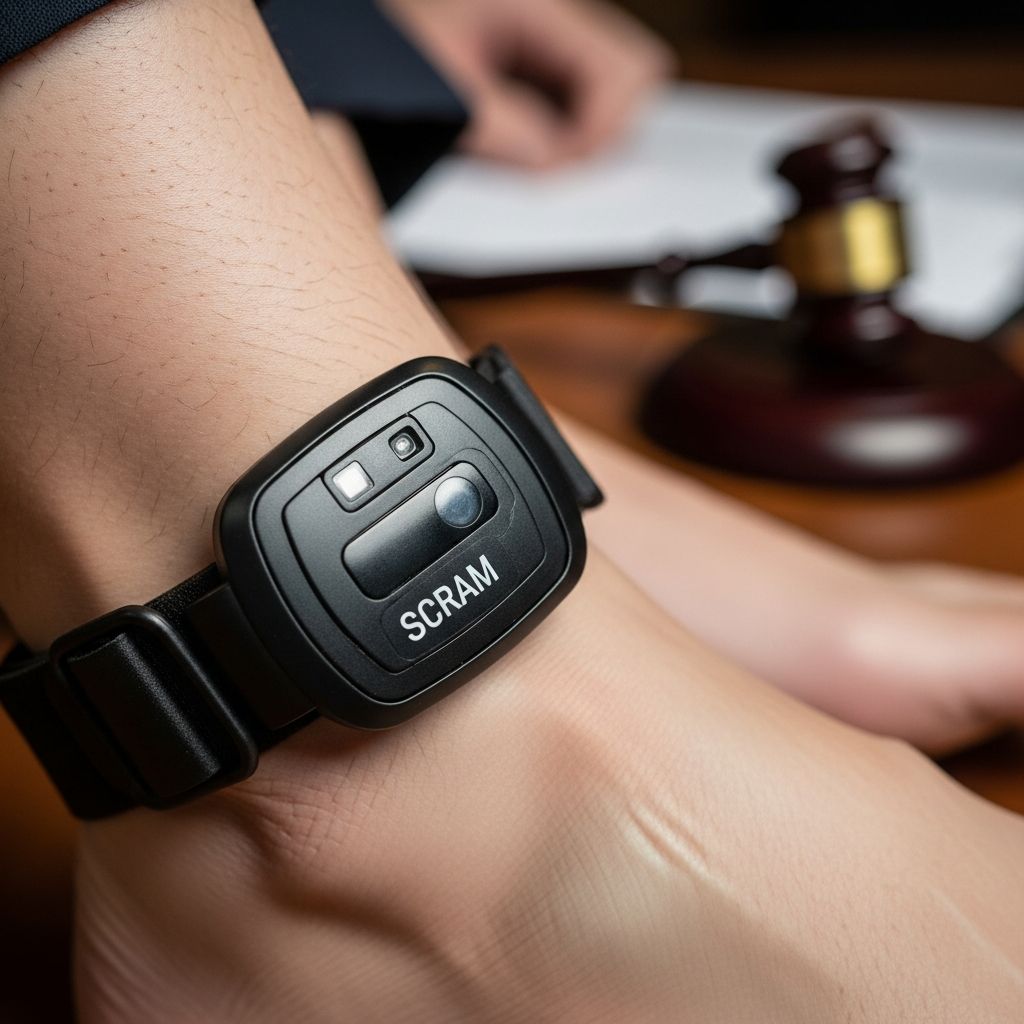
Secure Continuous Remote Alcohol Monitoring, commonly called a SCRAM bracelet, is an electronic ankle device that allows courts to track whether a person has been drinking by continuously testing alcohol in their sweat. Judges across the United States use these devices most often in DUI and other alcohol-related cases as a condition of bail, probation, or parole.
This guide explains how SCRAM technology works, when it might be ordered in your case, what day-to-day life is like while wearing one, the risks of violations, and key legal issues to discuss with an attorney.
1. What Is a SCRAM Bracelet?
A SCRAM bracelet is a court-ordered alcohol monitoring device worn around the ankle, designed to verify that the wearer is not consuming alcohol over an extended period. The term “SCRAM” is an acronym for Secure Continuous Remote Alcohol Monitoring.
- Device type: Electronic ankle bracelet focused on alcohol use
- Primary purpose: Enforce sobriety conditions imposed by a judge or supervising agency
- Typical duration: Ranges from a few weeks to many months, depending on the case
- Common in: DUI/DWI matters, repeat alcohol offenders, and cases where alcohol contributed to the alleged crime
Unlike GPS-only devices, the standard SCRAM Continuous Alcohol Monitoring (SCRAM CAM) bracelet monitors alcohol use but does not track a person’s physical location in real time.
2. How SCRAM Technology Detects Alcohol
SCRAM bracelets use a scientific approach called transdermal alcohol testing, which measures alcohol that leaves the body through the skin. After a person consumes alcohol, a small percentage of ethanol is expelled not just through breath and urine but also through insensible perspiration.
2.1 Transdermal Monitoring Basics
The SCRAM bracelet samples the wearer’s sweat or vapor near the skin to detect ethanol, the type of alcohol found in alcoholic beverages. Roughly 1% of ingested alcohol can be released through the skin, and that tiny fraction is enough for the sensor to analyze.
- Alcohol is absorbed into the bloodstream after drinking.
- A small amount diffuses out through the skin.
- The bracelet’s sensor draws in this vapor or perspiration and measures ethanol.
- Readings are converted to a transdermal alcohol concentration (TAC) value, which can be graphed over time.
2.2 Sampling Frequency and Continuous Testing
SCRAM CAM bracelets are designed for 24/7 monitoring. They typically test the wearer’s sweat every 30 minutes around the clock, including overnight and during weekends and holidays.
- Sampling interval: about every 30 minutes
- Coverage: continuous, not random or scheduled tests
- Data: stored in the bracelet until transmitted to the monitoring system
Because testing is automated and frequent, it is difficult for someone to “time” their drinking to avoid detection, unlike with occasional breath or urine tests.
2.3 Sensitivity and Thresholds
SCRAM devices are highly sensitive and can detect very low levels of alcohol in sweat. Some systems can pick up levels corresponding to blood alcohol concentrations (BAC) below 0.02%, although courts typically set a specific threshold before treating a reading as a violation.
| Aspect | Key Detail |
|---|---|
| Detection capability | Can detect very small amounts of alcohol in sweat |
| Typical violation level | Often treated as a violation around BAC 0.02% or higher, depending on jurisdiction |
| Measurement type | Transdermal Alcohol Concentration (TAC), not direct BAC |
It is important to remember that the bracelet is not providing a breath or blood test on demand. Instead, it is building a continuous picture of alcohol exposure over time.
3. When Courts Order SCRAM Monitoring
Judges use SCRAM bracelets in a range of criminal and traffic cases where alcohol is considered a risk factor. While specific rules differ by state, certain patterns are common across many courts.
3.1 Typical Situations Where SCRAM Is Imposed
- DUI / DWI convictions, especially for repeat offenders or high BAC levels at arrest
- Pretrial release conditions for those awaiting trial on alcohol-related charges
- Probation in domestic violence, assault, or public order cases where alcohol played a role
- Alternative to jail in overcrowded systems, allowing some offenders to remain in the community while under strict monitoring
- Specialty courts (such as sobriety courts) focused on treatment and long-term abstinence
3.2 Legal Goals Behind SCRAM Orders
Court systems often justify SCRAM monitoring as a way to balance public safety with rehabilitation. Key objectives include:
- Deterring further alcohol use during supervision
- Reducing drunk driving and related harms
- Supporting treatment plans by verifying abstinence over time
- Providing judges and probation officers with objective, time-stamped alcohol data
Some public reports have highlighted relatively high compliance rates when SCRAM monitoring is used, suggesting that many participants remain sober during the monitoring period.
4. Daily Life With a SCRAM Bracelet
Wearing a SCRAM bracelet affects both physical comfort and daily routines. While the devices are designed to be durable and water-resistant, they are not easily removed and must remain attached at all times unless a court authorizes removal.
4.1 Physical Characteristics
- Placement: Around the lower leg, above the ankle bone, in close contact with the skin
- Size and weight: Larger and heavier than a typical fitness tracker; some models weigh several ounces
- Materials: Hard plastic or composite shell with straps and tamper-detection features
- Water resistance: Generally safe for showering; wearers are typically instructed not to submerge it in deep water unless specifically allowed
4.2 Activities, Hygiene, and Clothing
Because the bracelet is worn 24/7, it may influence clothing choices and certain activities.
- Many people wear longer pants or socks to cover the device in public.
- Exercise is usually allowed, but contact sports may raise concerns about damage.
- Some devices have rules about using lotions, sprays, or solvents near the unit to avoid false alerts.
Specific restrictions and instructions come from the supervising agency, and it is critical to follow them precisely.
4.3 Emotional and Social Considerations
Beyond the technical aspects, many people experience stigma, embarrassment, or anxiety about being seen with an ankle monitor. Others may worry about device comfort at work, in school, or while caring for family. These concerns do not typically change the court order, but they are important to raise with your attorney when exploring alternatives.
5. Data Transmission, Reporting, and Violations
SCRAM bracelets do more than simply measure alcohol; they also collect, store, and transmit data to a monitoring system that can alert authorities to alcohol use or tampering.
5.1 How Data Reaches the Monitoring Agency
Most SCRAM CAM systems are paired with a home base station or wireless communication method that transfers stored readings to a central database on a regular schedule.
- The bracelet records TAC readings and tamper indicators.
- Data is uploaded to the SCRAM system via base station or network.
- Monitoring personnel review the information, often aided by automated software filters.
If the system flags a potential drinking episode, the supervising officer or court program typically receives an alert and may take further action.
5.2 What Counts as a Violation?
Each court or supervision agency sets its own rules, but common violation types include:
- Positive alcohol use: A TAC pattern that meets or exceeds the program’s threshold for a drinking event
- Tampering or obstruction: Attempting to block the sensor, cut the strap, or otherwise interfere with monitoring
- Failure to communicate: Not maintaining power or phone/internet connections for required data uploads
When a potential violation occurs, monitoring staff may review graphs and metadata (such as skin temperature and device performance) to distinguish real drinking from environmental exposure to alcohol-containing products.
5.3 Possible Consequences of a SCRAM Violation
Consequences vary by jurisdiction, the underlying charges, and the person’s record, but may include:
- Warning and closer supervision
- Additional conditions, such as counseling or increased testing
- Extension of the monitoring period
- Revocation of bail or probation and possible jail time
Because violations can have serious outcomes, it is important to respond quickly if you receive notice of an alleged drinking event or tamper alert and to consult legal counsel.
6. Costs, Administration, and Program Variations
SCRAM monitoring is typically managed through contracts between courts, probation departments, or specialty programs and monitoring service providers. Many of these programs pass some or all of the cost on to the defendant.
6.1 Who Pays for SCRAM?
In many jurisdictions, participants are responsible for daily or monthly fees, as well as possible installation and removal charges. Courts sometimes reduce or waive fees for those who qualify based on financial need, while others make payment a condition of participation.
- Installation fee (one-time)
- Daily or weekly monitoring fees
- Possible late-payment or non-payment penalties
The exact amounts and payment rules depend on local policy and the contract with the monitoring provider.
6.2 Program Design and Flexibility
Some jurisdictions use SCRAM monitoring in combination with:
- Ignition interlock devices for driving privilege restrictions
- Outpatient or residential treatment programs
- Mandatory support group attendance
- Curfew or home confinement enforced by separate GPS devices
The way SCRAM fits into a sentencing or diversion plan can significantly impact both the level of restriction and the opportunity to avoid or reduce jail time.
7. Accuracy, Benefits, and Criticisms
SCRAM technology has been promoted as an objective and efficient tool for monitoring sobriety, but it also raises questions about accuracy, privacy, and fairness.
7.1 Reliability and False Positives
Independent information and manufacturer data report relatively low documented false positive rates for continuous transdermal monitoring when used properly. The systems are designed to differentiate between alcohol consumed by the wearer and environmental exposure (such as contact with cleaning products or perfumes that contain alcohol).
However, accuracy depends on correct installation, careful maintenance, and appropriate interpretation of graphs and device logs. Disputes sometimes arise over whether a spike was caused by intentional drinking, incidental exposure, or technical issues.
7.2 Potential Benefits
- Continuous tracking can provide a clear picture of compliance over weeks or months.
- Abstinence verification can support treatment and recovery efforts.
- Courts may view SCRAM as a way to reduce jail or prison use by supervising people safely in the community.
- Objective data can reduce reliance on subjective reports from defendants or third parties.
7.3 Common Concerns and Critiques
- Financial burden: Monitoring fees can be significant for low-income participants.
- Privacy: Continuous biological monitoring raises questions about bodily autonomy and data security.
- Stigma: Visible ankle monitors may affect employment, housing, and personal relationships.
- Due process: Defendants may feel pressured to accept monitoring terms without fully understanding their rights or alternatives.
Because of these concerns, it is important to treat SCRAM as a serious legal condition, not a minor administrative detail.
8. Legal Rights and Strategy Considerations
If a judge is considering ordering a SCRAM bracelet in your case, or if you are already under such an order, you should understand the legal implications and discuss strategy with a qualified defense attorney.
8.1 Issues to Discuss With Counsel
- Whether SCRAM is mandatory under local law for your charge or an optional condition
- Possibility of alternative conditions, such as outpatient treatment or periodic testing
- How long monitoring is likely to last and what benchmarks could justify early removal
- How alleged violations will be handled and what evidence is needed to contest them
- Fee structure, financial hardship options, and documentation requirements
8.2 Responding to Alleged Violations
If you are notified of a suspected violation, do not ignore it. Promptly contact your attorney and gather any relevant information, such as:
- Medication lists and product labels for anything you used near the time of the reading
- Receipts or witnesses showing your whereabouts
- Any communications from the monitoring agency or probation officer
Your attorney may request underlying data, reports, or expert analysis to challenge the interpretation of the readings, especially where environmental alcohol exposure is plausible.
9. Frequently Asked Questions About SCRAM Bracelets
Q1: Does a SCRAM bracelet track my location?
The standard SCRAM Continuous Alcohol Monitoring (SCRAM CAM) bracelet measures alcohol through transdermal testing but does not include GPS tracking; separate products can provide location monitoring if ordered by the court.
Q2: Can I drink non-alcoholic beer or use products that contain alcohol?
Even small amounts of alcohol may be detected, and most court orders require total abstinence from alcoholic beverages. For household and personal products that contain alcohol, you must follow the specific instructions given by your monitoring agency to avoid accidental exposure that could trigger alerts.
Q3: How often does the SCRAM bracelet test me?
SCRAM CAM bracelets usually take a reading about every 30 minutes, 24 hours a day, storing the results for later transmission to the monitoring system.
Q4: Is SCRAM monitoring used only in DUI cases?
No. While common in DUI and DWI matters, judges can order SCRAM monitoring in other criminal cases where alcohol is believed to be a contributing factor, such as some domestic violence or public order offenses.
Q5: What happens if the bracelet shows I drank alcohol?
A flagged drinking event is typically reported to your supervising officer or the court, which can lead to warnings, modified conditions, extended monitoring, or even revocation of bail or probation, depending on the circumstances and local law.
References
- SCRAM Continuous Alcohol Monitoring (SCRAM CAM) Bracelet — SCRAM Systems. 2024-01-10. https://www.scramsystems.com/monitoring/scram-continuous-alcohol-monitoring/
- How sensitive is the SCRAM bracelet? A DUI lawyer explains — Shouse Law Group. 2023-05-12. https://www.shouselaw.com/ca/blog/how-sensitive-is-the-scram-bracelet/
- What Is A SCRAM Alcohol Monitoring Bracelet? — Knowles Law Firm. 2022-09-30. https://www.criminaldefensene.com/scram-systems-and-how-they-work/
- S.C.R.A.M. Bracelet Supervision — LV Criminal Defense. 2021-07-05. https://www.lvnvlawfirm.com/practice-areas/lv-criminal-law-center/bail-reduction-own-recognizance-release/s-c-r-a-m-bracelet-supervision/
- What is the SCRAM CAM Bracelet and How Does It Work? — SCRAM Systems Blog. 2020-08-18. https://www.scramsystems.com/scram-blog/what-is-scram-cam-bracelet-how-does-it-work/
- SCRAM: Secure Continuous Remote Alcohol Monitoring — Senator Kim Ward, Pennsylvania Senate (Legislative Fact Sheet, PDF).
Similar Articles








Read full bio of medha deb




