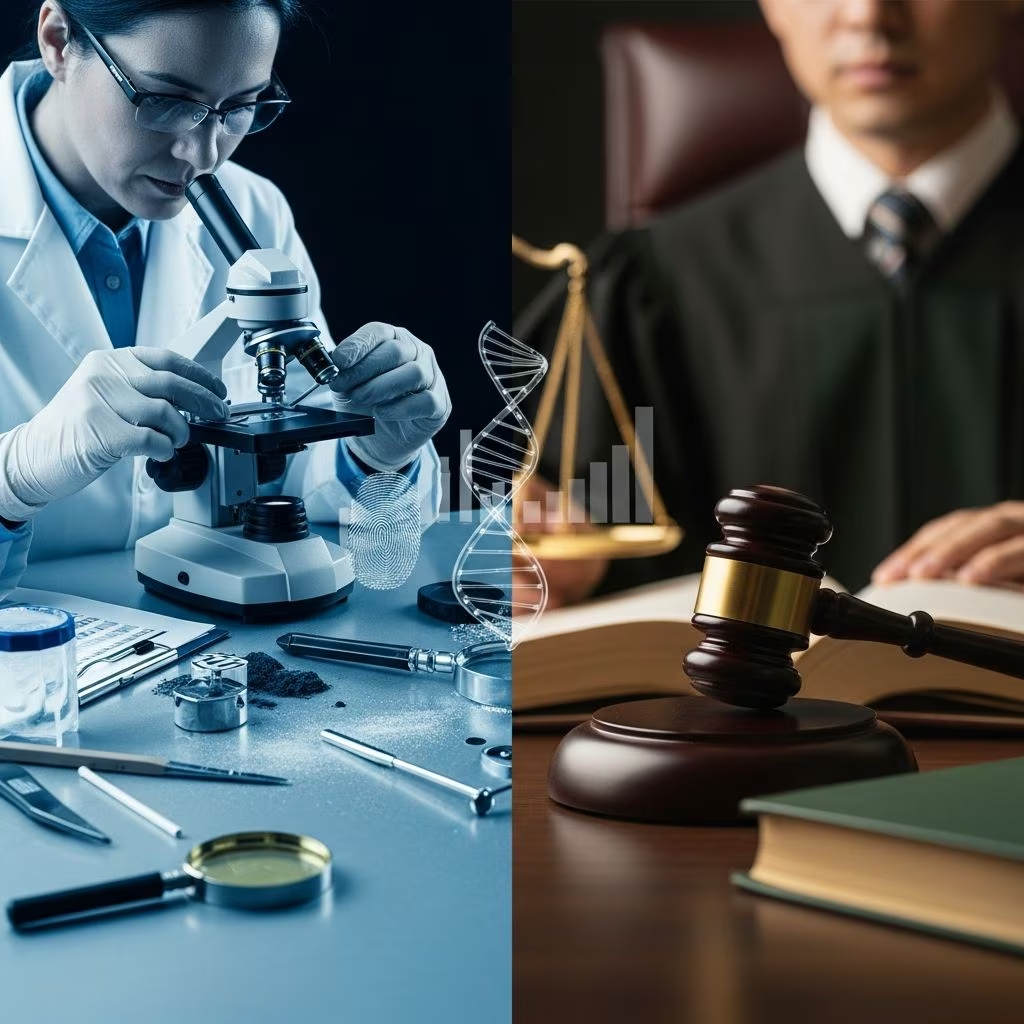
Scientific and forensic evidence now plays a central role in many criminal investigations and trials. When properly collected, tested, and explained, this type of evidence can strongly support either guilt or innocence. When handled or interpreted poorly, however, it can mislead juries and contribute to wrongful convictions.
This guide explains what counts as scientific and forensic evidence, how it is gathered and analyzed, the legal rules that control whether it reaches the jury, and how both prosecutors and defense attorneys use — and challenge — this powerful category of proof.
What Counts as Scientific and Forensic Evidence?
Scientific evidence generally refers to information derived from scientific methods, such as laboratory testing, chemical analysis, or statistical modeling. Forensic evidence is scientific evidence applied to questions of law, particularly in criminal investigations and trials.
In criminal cases, this usually includes:
- Biological evidence – DNA, blood, saliva, hair, tissue, and other bodily materials.
- Pattern evidence – fingerprints, shoeprints, tire tracks, and toolmarks.
- Trace and physical materials – fibers, glass, paint, soil, gunshot residue, and debris from explosions.
- Ballistics and firearms evidence – bullets, cartridge cases, and gun function or trajectory analysis.
- Digital and electronic data – metadata, device logs, GPS traces, and other computer forensics.
- Toxicology and chemical analysis – presence of alcohol, drugs, poisons, or other substances in blood or tissue.
Courts treat this evidence differently from ordinary testimony because it relies on specialized knowledge and testing. That is why it almost always reaches the jury through an expert witness rather than a lay witness.
From Crime Scene to Courtroom: The Life Cycle of Forensic Evidence
Scientific and forensic evidence passes through several stages before it can be used at trial. Each stage can affect the reliability and admissibility of the evidence.
1. Discovery and Collection at the Scene
When police or investigators arrive at a suspected crime scene, they must identify, document, and collect potential evidence under strict protocols.
- Securing the scene: limiting access to prevent contamination or loss of evidence.
- Documentation: photographs, sketches, notes, and sometimes 3D scans to preserve the context of the scene.
- Systematic search: grid or zone searches to locate physical and biological material.
- Initial screening: field tests (for example, presumptive tests for blood or drugs) that help decide what to collect for the lab.
Research funded by the U.S. National Institute of Justice shows that collecting physical evidence at crime scenes is significantly associated with higher rates of arrest, charging, and conviction compared with cases where such evidence is absent.
2. Preservation, Packaging, and Chain of Custody
After collection, evidence must be preserved and tracked carefully.
- Packaging: using appropriate containers (paper bags for biological evidence, rigid boxes for fragile items) to prevent degradation or contamination.
- Labeling: clear identification of who collected the item, when, where, and under what conditions.
- Chain of custody: a documented record of every person who handles the evidence from collection to trial, often maintained on standardized forms.
If there are gaps or mistakes in the chain of custody, defense lawyers may argue that the item was switched, tampered with, or contaminated, which can lead to exclusion or diminished weight at trial.
3. Laboratory Examination and Reporting
Once in the forensic laboratory, specialists use validated methods to test and interpret the items. Typical steps include:
- Intake and triage: logging evidence, assigning case numbers, and prioritizing tests.
- Testing procedures: DNA profiling, fingerprint development, comparison microscopy, chemical analysis, or digital imaging, depending on the discipline.
- Quality control: use of control samples, calibration of instruments, and peer review within the lab.
- Reporting: written reports summarizing methods, results, and sometimes the examiner’s opinion on whether items match or are consistent.
Empirical research across multiple U.S. jurisdictions has found that when forensic evidence is examined in the lab, it greatly increases the likelihood that prosecutors will file charges, sometimes by a factor of five or more for certain violent crimes.
4. Presentation in Court
At trial, scientific and forensic evidence is normally presented through expert witnesses. These experts explain:
- The testing methods used and whether they are generally accepted in the field.
- The results of those tests.
- The limitations and potential sources of error in their analysis.
Jurors may see enlarged photographs, charts, or animations that illustrate the expert’s conclusions, which can make the evidence appear especially persuasive compared with ordinary testimony.
Legal Standards for Admitting Scientific and Forensic Evidence
Before jurors hear scientific testimony, the judge must decide whether it is reliable and relevant enough to be admitted. Different jurisdictions apply slightly different tests, but the core principles are similar.
| Key Question | What Courts Consider |
|---|---|
| Is the evidence relevant? | Whether it tends to make a fact more or less probable and relates to an issue in the case. |
| Is the method reliable? | Peer review, error rates, existence of standards, and acceptance in the scientific community. |
| Will it help the jury? | Whether specialized knowledge is needed beyond ordinary experience. |
| Is there undue prejudice? | Whether dramatic or highly technical evidence would unfairly sway jurors or confuse the issues. |
In many systems, judges act as gatekeepers, screening out techniques that are too novel, unsupported, or misleading before they reach the jury.
Strengths and Limitations of Forensic Evidence
Scientific and forensic evidence is not automatically infallible. Its value depends on how it is generated, interpreted, and explained in court.
Advantages
- Objectivity: Laboratory instruments and standardized methods can remove some of the subjectivity associated with eyewitness accounts.
- Corroboration: Forensic findings can support or contradict witness testimony, helping to reconstruct what actually happened.
- Linking people, places, and objects: DNA profiles, fingerprints, and trace materials can connect a suspect to a scene or victim.
- Impact on case outcomes: Large-scale studies indicate that the presence and analysis of physical evidence increase the likelihood of arrest, charging, and conviction, especially in violent crimes.
Common Weaknesses and Risks
- Contamination or degradation: Missteps in collection, packaging, or storage can compromise samples and alter test results.
- Methodological limits: Some forensic techniques, especially pattern-comparison disciplines, historically lacked rigorous empirical validation or known error rates.
- Cognitive bias: Analysts who know case details may unconsciously interpret borderline patterns in a way that fits the theory of the investigation.
- Overstating certainty: Experts might present probabilities as near-certainties, which can mislead fact-finders about how strong the evidence really is.
- Unequal access: Defense teams may have fewer resources to hire independent experts or conduct retesting, which can affect the adversarial balance.
Role of Expert Witnesses
Because scientific and forensic evidence involves specialized methods, courts rely on expert witnesses to communicate this material to judges and juries.
- Qualifications: Experts must demonstrate education, training, and experience in a particular field, such as forensic biology, toxicology, or ballistics.
- Duty to the court: In principle, experts are expected to provide impartial opinions based on their expertise, not to advocate for either side.
- Scope of testimony: Experts can explain methods, results, and interpretations, but they usually may not state legal conclusions such as whether a defendant is “guilty.”
- Cross-examination: Opposing counsel can question experts about their methods, assumptions, error rates, and potential bias.
The effectiveness of forensic evidence often depends on how clearly and accurately experts translate technical ideas into language that lay jurors can understand.
How Prosecutors Use Scientific and Forensic Evidence
Prosecutors typically rely on forensic evidence to strengthen their cases and meet the burden of proof beyond a reasonable doubt.
- Building the narrative: Forensic findings help prosecutors construct a coherent timeline of events that connects the defendant to the crime scene or victim.
- Corroborating witnesses: Scientific results can support key witness testimony or show that a witness’s account is unlikely to be true.
- Charging decisions: Prosecutors may be more inclined to file serious charges when lab results provide strong support, as research has documented across multiple felony crime types.
- Plea negotiations: Clear, well-documented forensic evidence can encourage early guilty pleas, while weak or ambiguous results may push prosecutors toward reduced charges or dismissals.
How Defense Attorneys Challenge Forensic Evidence
Defense counsel play a crucial role in testing the reliability and fairness of scientific evidence. Their strategies often include:
Scrutinizing Collection and Handling
- Examining whether investigators followed proper protocols in securing the scene, collecting samples, and preserving them.
- Looking for breaks in the chain of custody or unexplained delays that raise questions about tampering or substitution.
- Highlighting contamination risks, especially in cases involving mixed DNA profiles or small quantities of biological material.
Questioning Methods and Assumptions
- Challenging whether the underlying technique has been independently validated and has known error rates.
- Pointing out limitations, such as partial DNA profiles, low-quality fingerprints, or inconclusive comparisons.
- Arguing that the expert overstated the meaning of a “match” or failed to consider alternative explanations for a finding.
Using Independent Experts
- Retaining their own forensic specialists to review raw data, laboratory notes, and quality-control records.
- Requesting retesting by a different lab when the stakes are high and the original results are contested.
- Presenting competing expert testimony to give jurors a more complete picture of the science and its uncertainties.
Forensic Evidence and Wrongful Convictions
DNA exonerations have demonstrated that flawed forensic practices and testimony can contribute to wrongful convictions. Independent reviews of past cases have revealed problems such as overstated conclusions, invalid techniques, and inadequate quality control.
In response, many jurisdictions have taken steps to strengthen forensic science, including:
- Accrediting forensic laboratories and requiring adherence to standardized protocols.
- Improving documentation of methods, error rates, and limitations in expert reports.
- Providing additional training for judges and lawyers on scientific literacy.
- Re-evaluating older convictions that rested heavily on now-questioned forensic methods.
Efforts like these aim to preserve the benefits of forensic evidence — particularly its ability to identify the guilty and exonerate the innocent — while reducing the risk of error.
Practical Tips for Defendants and Families
When a case involves scientific or forensic evidence, defendants and their families can take several steps to better understand what is at stake.
- Ask early about forensic testing: Find out what has been collected, what tests have been done, and whether additional testing is planned.
- Discuss independent review: Talk to defense counsel about retaining an independent expert to review the prosecution’s forensic reports.
- Request full discovery: Ensure that all lab reports, bench notes, protocols, and underlying data are disclosed, not just summary conclusions.
- Clarify the limits of the evidence: Ask your lawyer to explain what the science can and cannot prove in your particular case.
Understanding the strengths and weaknesses of the forensic evidence can help defendants make informed decisions about plea offers, trial strategy, and whether to seek further testing.
Frequently Asked Questions About Scientific and Forensic Evidence
Q: Is forensic evidence always more reliable than eyewitness testimony?
A: Not necessarily. While many scientific methods are more reproducible than human memory, they still depend on proper collection, handling, and analysis. Some forensic techniques are strongly supported by research, while others have limited empirical validation.
Q: Can I demand DNA testing in every criminal case?
A: DNA testing is usually available only when biological material is present and relevant to a disputed issue. Courts may deny requests that are speculative or unlikely to produce meaningful results, although post-conviction statutes in many jurisdictions now give broader access to DNA testing when it could prove innocence.
Q: What happens if the chain of custody is broken?
A: A break in the chain of custody does not automatically exclude the evidence, but it does give defense counsel grounds to challenge its reliability. Judges may bar the evidence in extreme cases, or jurors may give it less weight if they believe it could have been altered or contaminated.
Q: Are all forensic laboratories independent of law enforcement?
A: Many labs are operated by police agencies or government forensic units, while others are independent or university-based. Concerns about institutional pressure and bias have led to calls for greater independence and accreditation of forensic laboratories.
Q: Can old convictions be overturned because of new forensic science?
A: Yes. Advances in DNA and re-evaluation of other forensic methods have led to post-conviction exonerations. When new testing contradicts crucial evidence used at trial, courts in some jurisdictions permit new hearings or even vacate convictions.
References
- Utilization of Forensic Evidence in the Criminal Justice System — H. S. Bakhtiar. 2020-01-01. https://www.atlantis-press.com/article/125977631.pdf
- The Role and Impact of Forensic Evidence in the Criminal Justice Process — U.S. National Institute of Justice (NIJ). 2012-08-01. https://www.ojp.gov/pdffiles1/nij/grants/231977.pdf
- The Criminal Investigation Process: An In-Depth Overview — American Military University. 2021-04-15. https://www.amu.apus.edu/area-of-study/criminal-justice/resources/the-criminal-investigation-process/
- Courts and Forensic Evidence — EBSCO Research Starters. 2019-06-01. https://www.ebsco.com/research-starters/law/courts-and-forensic-evidence
- The Transformation of Criminal Evidence in Light of Forensic Science — Journal of Legal Studies and Research. 2022-03-30. https://jlsda.com/index.php/lsda/article/view/235